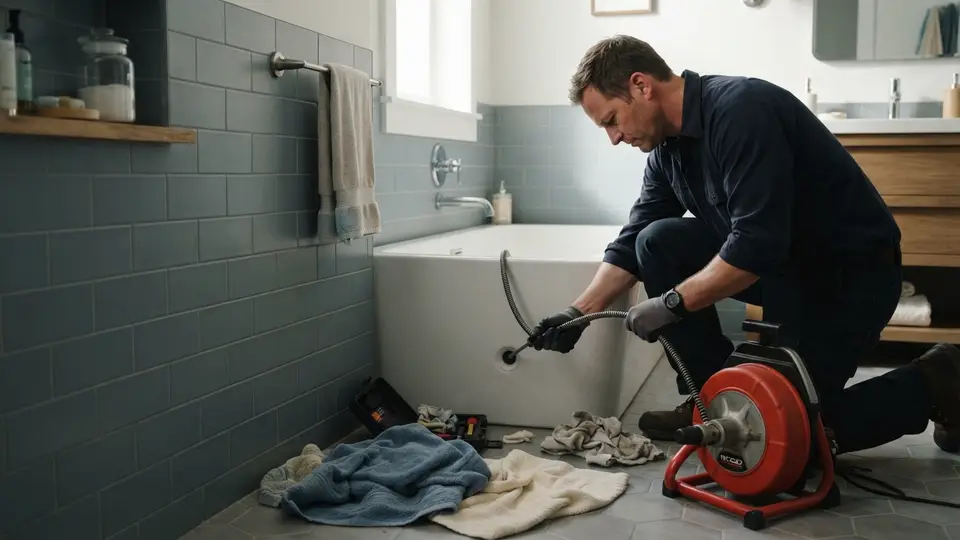
One sink or tub is slow
Likely cause: Hair, soap or grease near the trap
Our method: Hand auger or small machine
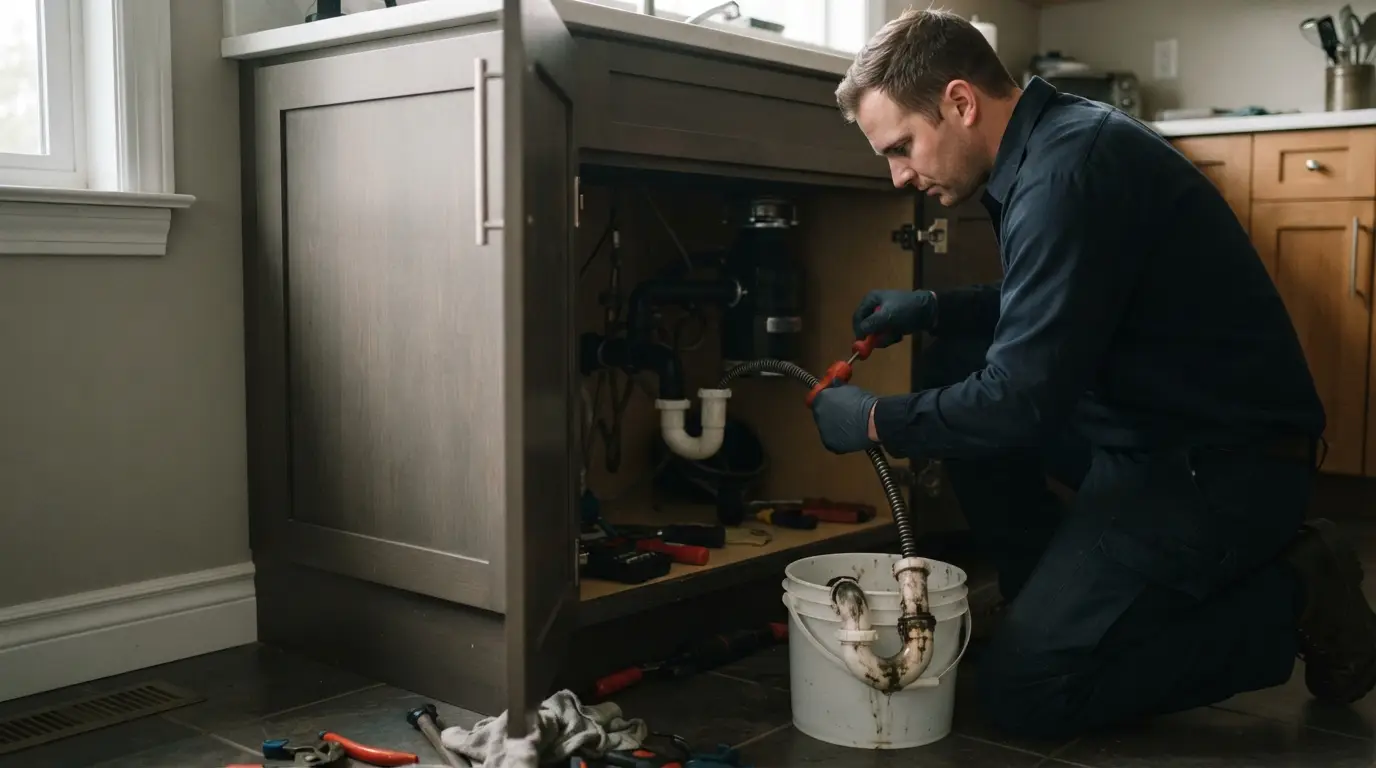
Water rising from the basement floor drain, or a kitchen sink that fills and sits? We handle drain cleaning and clog removal in Connecticut. Many Connecticut homes still drain through cast iron stacks and clay laterals installed before 1960, and the old maples and oaks lining the streets send roots into every joint. Multifamily houses share drains, so one tenant's grease becomes everyone's clog. We clear the line, look inside with a camera when it matters and tell you what caused the problem. Here is how we work and what affects the price.
The service
We clear every drain in the building, from a single bathroom sink to the main line leaving the basement wall and the lateral to the street sewer or septic tank. In two- and three-family houses, we clear the shared stacks and building drain that serve every unit. The goal is a clean, full-diameter pipe and a clear explanation of why it clogged.
Symptoms and how we clear them
Likely cause: Hair, soap or grease near the trap
Our method: Hand auger or small machine
Likely cause: Main line or lateral blockage
Our method: Main line cable from a cleanout, then camera
Likely cause: Clog in the shared building drain
Our method: Clear the building drain and stack
Likely cause: Grease coating the pipe
Our method: Hydro jetting
Likely cause: Roots or cracks in an old lateral
Our method: Root cutting, camera, repair plan
Why Connecticut
47% of the homes in our Connecticut Census data were built before 1960. In Hartford 80% predate 1980, in New Haven 78% and in Bridgeport 80%. Cast iron rusts into a rough, narrow channel inside, and clay laterals have joints every few feet where roots enter.
Connecticut neighborhoods are shaded by old maples, oaks and sycamores. Their roots grow toward the moisture in sewer laterals and fill them with fibrous mats.
Two- and three-family houses common in Hartford, New Haven, Bridgeport and Waterbury send several households through one building drain. Grease, wipes and food waste from every unit add up.
Grease cools fast in pipes running through cold basements and exterior walls in winter and hardens into a coating that narrows the line.
Warning signs
Our process
Which fixtures are affected, and on which floor, tells us where the blockage is.
We clear main lines from the basement cleanout or the yard, not through fixture traps.
Cutting heads for roots and paper; hydro jetting for grease and scale.
For repeat clogs, roots and older laterals, we record the line and locate problems from above.
We run water through every cleared drain and tell you what we found.
Typical cost
You approve a written price before work begins.
Get a written price: (833) 733-2357A sink trap is quick; the main line or lateral takes larger equipment.
Cleanouts behind finished walls or buried outside add time.
Roots and hardened grease take longer than hair.
Jetting costs more than cabling but lasts longer.
Added when we need to see the pipe.
After-hours calls cost more.
Benefits
Clearing the main keeps sewage from coming up through the floor drain.
Jetting removes buildup from the whole wall.
You see roots, cracks or sags and keep a copy.
In multifamily houses, a clean building drain helps every unit.
Jetting sends high-pressure water through a spinning nozzle that scours grease, sludge and scale from the whole pipe wall. We use it on kitchen lines, building drains in multifamily houses, restaurant drains and laterals after root cutting. Old cast iron and clay are checked by camera first, since badly deteriorated pipe may need repair instead of jetting.
Outside sewer areas, every drain in the house flows to a septic tank. When all the drains slow together, the problem may be a full tank, a blocked outlet baffle or a failing leach field, not a clog in the house. We check the tank level before cabling, because cleaning a line into a full tank only moves the backup. If the tank is the issue, we pump and inspect it.
Some older Connecticut bathrooms still have lead or cast iron drum traps under the tub floor, which clog easily and are hard to clean. When we find one during a drain call, we tell you and can replace it with a modern P-trap.
For one slow fixture, a plunger is fine. If the basement floor drain is backing up, stop all water use in the house, and in a multifamily house ask the other units to stop too.
Skip chemical drain cleaners; they rarely clear main line clogs and can harm old pipe and anyone working on it. Move belongings away from the floor drain, keep children and pets out and call us.
Drain cleaning needs no permit. Sewer line repair or replacement usually does, from your town building department and often the sewer authority. Our plumbers hold the Connecticut licenses their work requires, and we pull permits when a repair needs one.
Why choose us
What you can count on every time one of our plumbers comes to your door.
Every job is handled by a plumber who holds the license your state or city requires, backed by liability insurance.
Our plumber explains the problem and the options, and you approve a written price before any work begins.
Burst pipes, sewage backups and failed water heaters get priority scheduling, including nights and weekends.
We pull permits when the job needs one and schedule the inspection, so the work holds up when you sell.
Repairs and installations come with a written warranty on labor, on top of the manufacturer's warranty on parts.
Our pages and plumbers account for your area's water, soil, climate and the age of the homes around you.
Related services
Service area
We clear drains in 215 Connecticut places, from West Hartford, where 86% of homes predate 1980, to Waterbury and New London (83%). Choose yours:
It depends on which line is clogged, access to a cleanout, what is causing the blockage and the method. Our plumber gives you a written price before any work begins.
Yes. Jetting takes more equipment and time, but it scours the full pipe wall, so grease and sludge take much longer to return than after cabling.
It is a separate line on your quote. For repeat clogs, roots and older laterals, it shows the real cause so you only pay for the repair you need.
That is between the owner and tenants. We clear the shared drain, show the owner what caused it and give advice to prevent repeats.
Yes. We show you the inspection as it happens, explain what you see and give you a copy for repairs, insurance or a home sale.
We show you the damage and give written prices for repair options, such as a spot repair, a liner or replacement.
Yes. Sewage carries bacteria. Stop using water, keep people and pets out of the area and let us clear the line before cleanup begins.
We advise against them. They rarely clear main line or root clogs, can damage old cast iron and make the line hazardous to work on.
Many main lines are cleared and inspected in two to three hours. Heavy roots or difficult access can take longer.
Right after we finish testing. If the camera found damage, we tell you whether normal use is safe until the repair.
Often every year or two until it is repaired or lined. A camera check shows how quickly roots return.
Ask every unit to put cooled grease in the trash and use strainers. Periodic jetting of the building drain helps in busy multifamily houses.
Stop all water use in the building and call us. Main line backups get priority scheduling to limit damage.
Many are old clay with joints every few feet, and mature street trees send roots into those joints looking for water.
No. A full tank or failing field can slow every drain. We check the tank before cabling the house line.