Meter test and isolation
What it tells us: Whether water is escaping and which branch is leaking
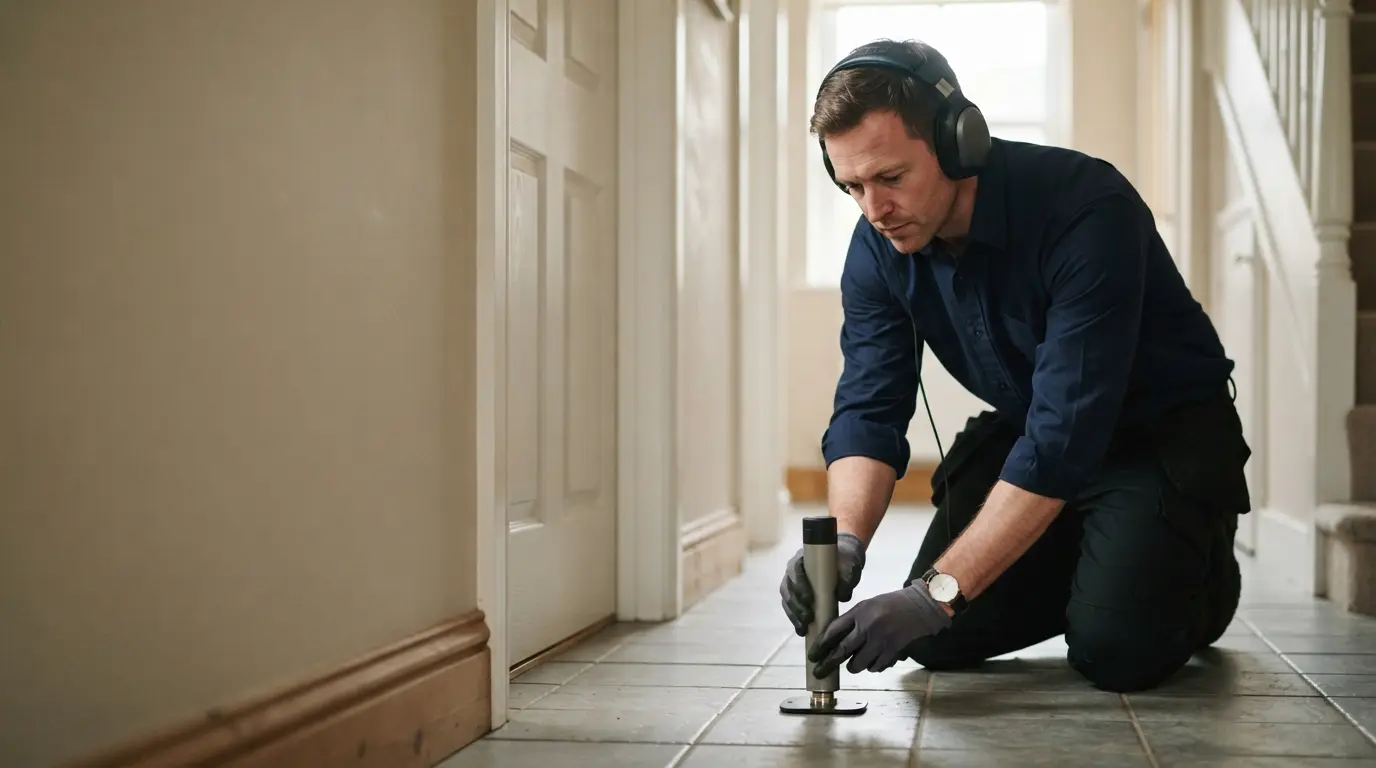
Stain on a plaster ceiling, or a pipe that split in the cold? We provide leak detection and repair in Connecticut, opening as little as possible. Older Connecticut homes hide plumbing behind plaster and lath, under hardwood floors and inside exterior walls that get very cold in January. Leaks come from frozen pipes, corroded galvanized and copper, boiler piping and old fixture connections. We pinpoint the leak with pressure tests, listening gear and thermal imaging, then fix it. Here is our approach.
The service
We search for leaks in hot and cold water lines, drain lines, fixture connections, water heaters, boiler piping and the buried service line from the curb box. Once the leak is located, we open only what is needed, repair it, and confirm the fix with a pressure test and a meter check.
Detection tools and what they show
What it tells us: Whether water is escaping and which branch is leaking
What it tells us: Escaping water inside walls, under floors or underground
What it tells us: Temperature patterns from leaking lines behind plaster or drywall
What it tells us: How far water has spread into plaster, wood and insulation
What it tells us: The path of buried service lines before excavation
Why Connecticut
Pipes in exterior walls, enclosed porches, kitchen sink cabinets on north walls and crawl spaces under additions freeze when temperatures drop below zero or a boiler quits. Leaks often appear only when the pipe thaws.
47% of the homes in our Connecticut data were built before 1960. In Hartford 80% predate 1980 and in Meriden 75%. Galvanized steel corrodes at threaded joints, and old copper develops pinholes.
Hot-water heating systems have their own piping, relief valves and expansion tanks. A leaking boiler pipe or radiator valve can look like a plumbing leak until we trace it.
Old supply tubes, stop valves and toilet connections fail with age, often slowly, damaging ceilings below before anyone notices.
Warning signs
Our process
We check the meter with all water off and test the boiler system separately.
Testing hot, cold and service lines separately narrows the search.
Listening equipment and thermal imaging locate the leak behind plaster or floors.
You approve a written price before we open anything.
We fix the leak, pressure test and recheck the meter.
Typical cost
You approve a written price before work begins.
Get a written price: (833) 733-2357Basement pipes are quick; leaks behind plaster or under floors take longer.
Plaster and tile cost more to open and patch.
Freeze damage can involve several splits.
Corroded pipe may need a longer section replaced.
After-hours calls cost more.
Benefits
Plaster ceilings and walls stay mostly intact.
Continuous leaks stop wasting water.
Early repair protects framing, floors and ceilings below.
Photos and notes support a claim.
We locate the frozen section, thaw it with controlled heat, never open flame, and check it for splits before restoring pressure. Then we deal with why it froze: missing insulation, an air leak in the wall, or a pipe routed too close to the outside.
We shut off the water, replace the split section and check the run, since freezes often split pipe in more than one spot. Where a line keeps freezing, we reroute it inside the heated space.
Plaster and lath crack and crumble when opened carelessly, and old hardwood floors are hard to patch. Pinpointing the leak first means we open one small, neat access point instead of chasing water across a ceiling. Where possible, we reach pipes from the basement, a closet or the back of a cabinet. We tell you exactly where we plan to open before we cut.
Renters occupy 43% of Connecticut homes in our data, many in multifamily houses where water from an upstairs unit shows up in the ceiling below. We trace the leak to the right unit or shared pipe and coordinate access through the owner. Separate shutoffs for each unit, which many older buildings lack, make the next repair much easier, and we can add them.
The buried line from the curb box to the basement wall is often old copper or galvanized steel in Connecticut, and it can leak where it passes through the foundation or where stones have pressed against it. Signs include a wet basement wall at the entry point, a soggy patch in the yard or a meter that keeps turning. We trace the line, locate the leak acoustically and repair the section or replace the service, coordinating with your water utility for any work at the curb box.
Shoreline cottages and lake houses that sit empty in winter are at risk if heat fails. We winterize them, add low-temperature alarms and install automatic shutoff valves so a leak cannot run for days.
Close the main shutoff in the basement where the water line comes through the wall. Turn off the water heater. If water is near light fixtures in the ceiling, switch off that circuit from a dry location.
Put buckets under drips, move belongings and take photos. For a frozen pipe, open the faucet it serves. Never use a torch. Then call us.
Most leak repairs need no permit. Larger work, such as repiping or replacing a water service, usually does, from your town building official. Our plumbers hold the Connecticut licenses required, and we pull permits when needed.
Why choose us
What you can count on every time one of our plumbers comes to your door.
Every job is handled by a plumber who holds the license your state or city requires, backed by liability insurance.
Our plumber explains the problem and the options, and you approve a written price before any work begins.
Burst pipes, sewage backups and failed water heaters get priority scheduling, including nights and weekends.
We pull permits when the job needs one and schedule the inspection, so the work holds up when you sell.
Repairs and installations come with a written warranty on labor, on top of the manufacturer's warranty on parts.
Our pages and plumbers account for your area's water, soil, climate and the age of the homes around you.
Service area
We locate and repair leaks in 215 Connecticut places, from Stamford (58,655 homes) and Norwalk to Middletown and Newington. Choose yours:
It depends on the size of the home, where the leak is and the equipment needed. You receive a written price for the search before we begin.
Yes. Once we locate the leak and see the pipe, we give you a written price for the repair options before opening anything.
Usually a little, because plaster takes more care to open and patch. Pinpointing the leak first keeps the opening small.
Isolation tests narrow the leak to one line, and acoustic and thermal tools locate it. Then we open a small access point.
Yes. We test the boiler system separately from the domestic water lines to find which one is leaking.
Yes. Flow-sensing shutoff valves close the main when they detect a leak, which helps homes left empty in winter.
Close the main shutoff, turn off the water heater and stay away from wet ceiling fixtures. Then call us.
No. Open flames can crack pipe and set old framing on fire. Open the faucet and let us thaw it safely.
Many leaks are found within one to two hours. Buried service lines and complex homes take longer.
Most repairs restore water the same visit, and we tell you how long it will be off before we start.
Drain outdoor faucets, insulate exposed pipes, keep heat on in every room with plumbing and open cabinets on cold walls.
Check the meter every few months with all water off, and look under sinks and around the water heater seasonally.
Shut off the main, switch off the ceiling light circuit if safe and call us. Active leaks get priority scheduling.
Older homes often have little or no insulation in exterior walls, and January cold reaches pipes routed there.
Often. Galvanized and early copper pipe from before 1960 corrodes and develops leaks at joints and pinholes.