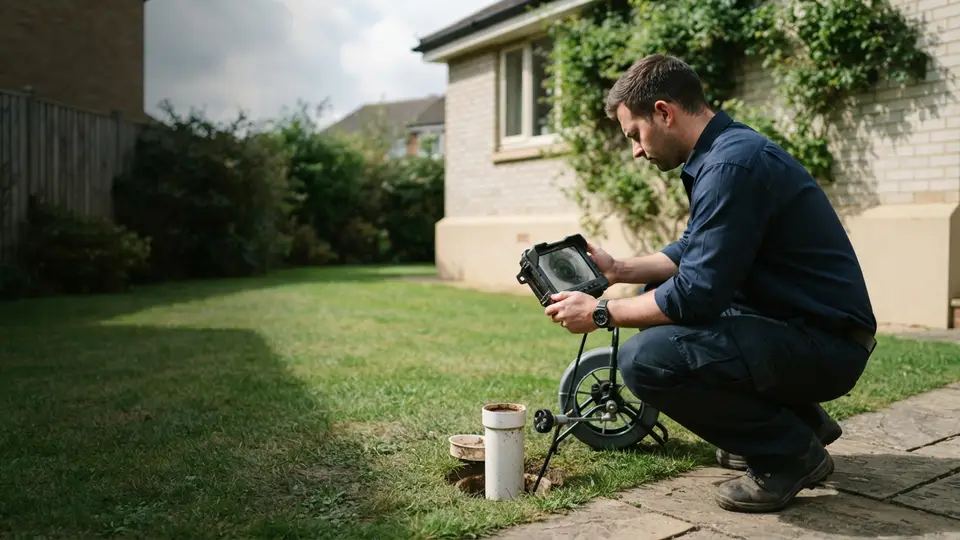
Spot repair
When it fits: One broken joint or short damaged section
What it involves: Single excavation at the marked spot
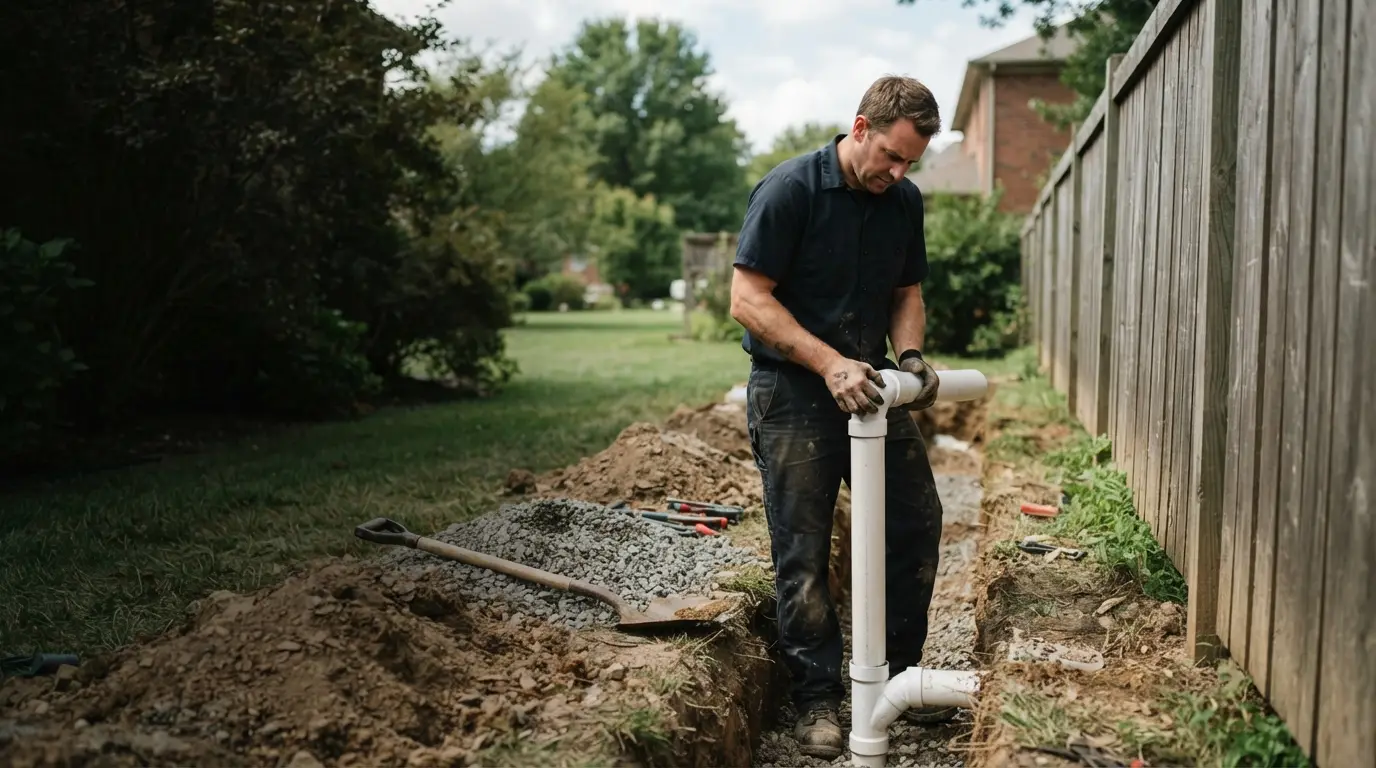
Basement drain backing up again, or a soft spot in the front lawn? We do sewer line repair and replacement in Connecticut after a full camera inspection. Many Connecticut laterals are clay or cast iron laid 60 to 100 years ago, and they fail from roots, settling, frost and age. Rocky glacial soil and ledge make digging harder than in many states, so trenchless methods are often worth a look. We show you the damage on video, explain each option with a written price and handle the town and sewer authority permits.
The service
The lateral carries wastewater from the house to the public sewer main. In most Connecticut towns, the owner is responsible for the lateral from the house to the main or to the property line, depending on local rules. Because most homes have basements, the line usually leaves through the foundation wall several feet down.
How we fix damaged laterals
When it fits: One broken joint or short damaged section
What it involves: Single excavation at the marked spot
When it fits: Cracked or root-filled pipe that is still round
What it involves: Resin liner forms a new pipe inside the old one
When it fits: Long runs under driveways, walls or trees
What it involves: New pipe pulled through between two pits
When it fits: Collapsed, sagging or badly offset pipe
What it involves: Excavate and relay at proper slope
Why Connecticut
47% of the homes in our Connecticut data predate 1960. In Manchester 86% of homes predate 1980, in New Britain 83% and in East Hartford 82%. Clay joints from those decades loosen, and cast iron rusts through on the bottom.
Mature maples, oaks and willows send roots into lateral joints. Cutting them brings relief, but they return until the joint is sealed.
Freeze-thaw cycles and settling fill soil can shift a lateral, creating offsets and sags. Shallow sections near driveways and walkways are most exposed.
Laterals laid in rocky trenches can be cracked by stones pressing on them over time, and excavation through ledge is slow.
Warning signs
Our process
We record the full lateral and note depth and distance for every defect.
The camera head transmitter lets us mark the route and trouble spots above ground.
You see the footage and get written prices for each method that fits.
We pull town and sewer authority permits and call Call Before You Dig for utility markouts.
We complete the agreed repair and add a cleanout if none exists.
A final camera run confirms the work, then we backfill and restore the surface.
Typical cost
We give you a written price for each option before you choose.
Get a written price: (833) 733-2357Basement homes have deeper laterals.
Spot repair costs least; full replacement under hardscape costs most.
Bedrock and boulders slow excavation.
Road openings need permits, traffic control and paving.
Stone walls, trees and driveways add care and time.
These vary by town and sewer authority.
Benefits
A sealed line keeps roots out.
A sound lateral stops sewage from rising through the floor drain.
New pipe keeps waste moving.
A new cleanout makes future work faster.
Connecticut yards often have stone walls, mature trees, steep driveways and ledge between the house and the street. Excavating through all of that is slow and costly. When the camera shows a lateral that is cracked or root-filled but still round, lining it from inside can avoid most of the digging. Pipe bursting replaces a line with two small pits. When the pipe has collapsed or sags badly, an open trench is still the right answer, and we explain why.
With so much older housing, a sewer scope is a smart part of buying a Connecticut home. A failing lateral is invisible during a showing and can be one of the costliest repairs after closing. We scope the line, record defects with distances and give a written repair price so you can negotiate or plan.
In older cities like Hartford, New Haven, Bridgeport and Waterbury, one lateral often serves two or three households. It carries more flow and more grease than a single-family line, and when it fails, every unit is affected at once. We schedule repairs to keep the outage short, coordinate with the owner on tenant notice and, where the building lacks one, add an exterior cleanout so future service does not require entering a tenant unit.
Homes in low areas or near the shoreline can see sewage pushed back into the basement when heavy rain overloads the public sewer. A backwater valve on the building drain lets wastewater leave but closes when flow reverses. We install them during lateral work or on their own and show you how to check the flap.
Frozen ground and snow slow excavation, and town paving plants may close for the season, so road patches can be temporary until spring. If the line has failed, we repair it right away. If it still flows, we may clear it and schedule replacement after the thaw, which often costs less. We explain both choices in writing.
If sewage is backing up, stop using water everywhere in the building. Move belongings away from the floor drain and keep people and pets out.
Do not dig near the line; gas, water and electric lines may be close, and street work needs a permit. Call us.
Sewer repair and replacement usually need a permit from the town building department, and many sewer authorities require their own connection permit and inspection. Road openings need a separate permit. Our plumbers hold the Connecticut licenses required, and we handle permits, markouts and inspections.
Why choose us
What you can count on every time one of our plumbers comes to your door.
Every job is handled by a plumber who holds the license your state or city requires, backed by liability insurance.
Our plumber explains the problem and the options, and you approve a written price before any work begins.
Burst pipes, sewage backups and failed water heaters get priority scheduling, including nights and weekends.
We pull permits when the job needs one and schedule the inspection, so the work holds up when you sell.
Repairs and installations come with a written warranty on labor, on top of the manufacturer's warranty on parts.
Our pages and plumbers account for your area's water, soil, climate and the age of the homes around you.
Service area
We repair laterals in 215 Connecticut places, including Wethersfield (81% of homes before 1980), West Haven (80%) and Norwich (73%). Choose yours:
Depth, length, method, ledge, street work and permit fees set the price. After the camera inspection, you get a written price for each option.
Often, especially when stone walls, trees, driveways or ledge lie above the line. Collapsed or sagging pipe may still need excavation.
Bedrock and large stones slow digging and may need special equipment. Trenchless methods can avoid much of that work.
It records the inside of the lateral, showing roots, cracks, offsets, sags and collapses, with distance and depth for each.
Yes. We scope the line, provide the video and give a written repair price if needed.
Yes. We pull the town and sewer authority permits, arrange inspections and get road opening permits when needed.
It can be. Leaking sewage contaminates soil and can back up into the basement. Keep people away from affected areas and call us.
We advise against it. Buried utilities run nearby and street work needs a permit. We call for markouts before digging.
Lining and spot repairs often take a day. Full replacements, especially with ledge or road work, can take several days.
Not while the line is open. We tell you when to stop using water and keep that time short.
Modern PVC and properly installed liners are expected to last for decades with normal use.
Lined or new pipe has no open joints. Plant new trees away from the line.
Stop using water and call us. Sewer backups get priority scheduling; we clear the line first, then find the cause.
Usually the property owner, often to the main. Your town or sewer authority sets the exact boundary.
Shallow sections can freeze in extreme cold, especially with little flow. Deeper laterals below frost depth rarely do.