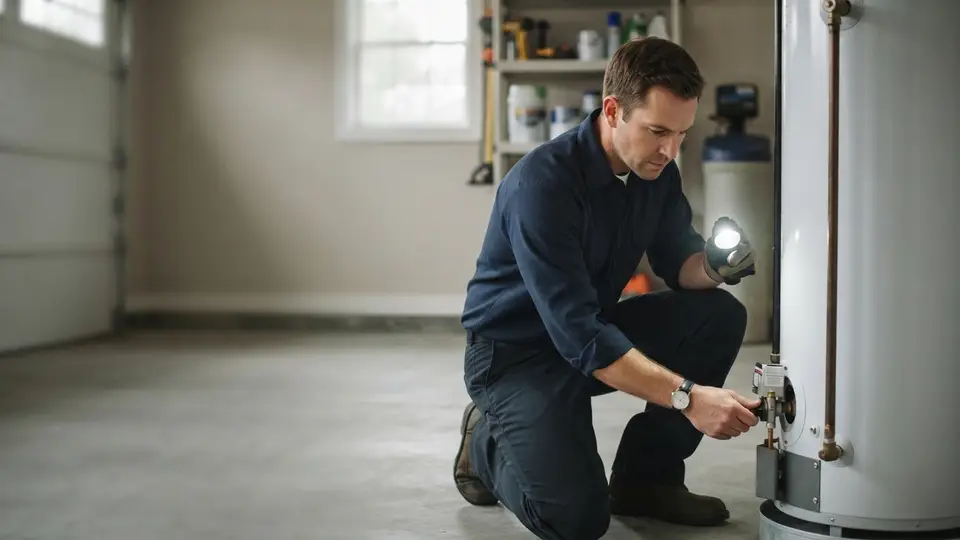
Gas tank
How it works: Burner under a storage tank
Points to know: Needs a sound flue or power vent and combustion air
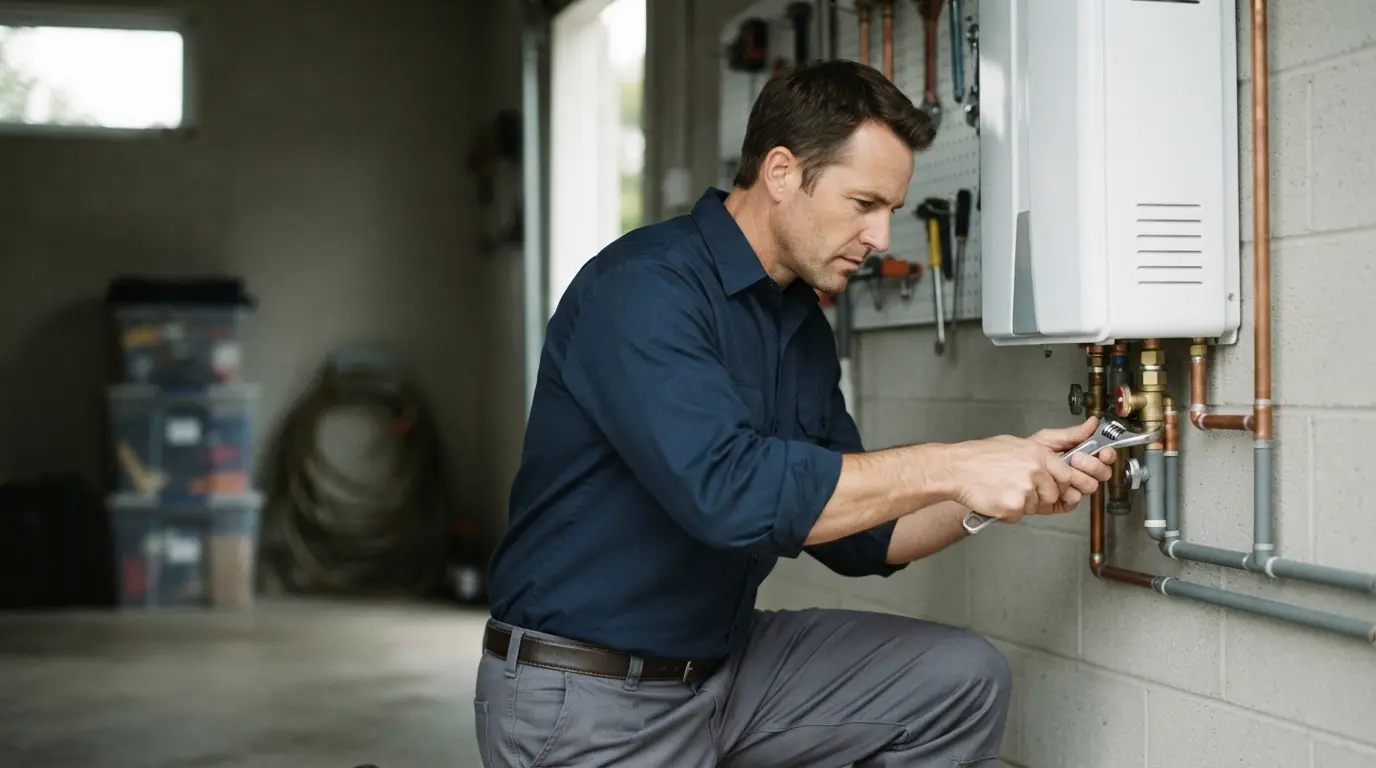
Showers turning cold halfway through, or rust and water under the tank? We handle water heater repair and replacement in Connecticut for every common type. Connecticut homes make hot water in more ways than most states: gas tanks, oil-fired tanks, coils inside oil and gas boilers, indirect tanks heated by the boiler, electric and heat pump tanks, and tankless units. Most sit in basements, where a leak can go unnoticed for a while. We repair what is worth repairing, replace what is not and match the new heater to your heating system.
The service
In our Connecticut Census data, 43% of homes heat with utility gas, 28% with heating oil and 22% with electricity. Gas dominates in cities such as New Britain (65%) and Hartford (64%), while oil leads in places like Shelton (45%), Naugatuck (44%) and Bristol (40%). The heating fuel usually decides how the house makes hot water.
Common hot water setups
How it works: Burner under a storage tank
Points to know: Needs a sound flue or power vent and combustion air
How it works: Boiler heats water through a coil inside a separate tank
Points to know: Efficient and long-lived; depends on the boiler
How it works: Water heated as it passes through a coil in the boiler
Points to know: Boiler must run in summer; coils scale up and lose flow
How it works: Oil burner under a storage tank
Points to know: Fast recovery; needs burner service
How it works: Elements or a heat pump heat stored water
Points to know: No venting; heat pump units need space and airflow
How it works: Heats water on demand
Points to know: May need a larger gas line and new venting
Why Connecticut
Homes on private wells may have hard or mineral-heavy water that scales tanks and clogs boiler coils, cutting hot water flow.
When hot water depends on the boiler, an aging boiler or failed zone valve means no hot water. Older tankless coils also lose capacity as scale builds inside them.
Older homes, 47% of Connecticut housing in our data built before 1960, often vent gas and oil appliances through masonry chimneys. When a boiler is replaced with a sealed high-efficiency model, the old chimney may no longer vent the water heater safely.
Winter ground water temperatures make heaters work harder, and undersized units struggle most in January and February.
Warning signs
Our process
We test thermocouples, gas valves, igniters, elements, thermostats, mixing valves and relief valves, check the anode rod and flush sediment. For boiler-fed hot water, we check the coil or indirect tank, the aquastat and the zone valve or pump that serves it.
We size the new heater to your household, connect it with a relief valve discharge, an expansion tank where needed and a mixing valve where water must be tempered, and handle venting changes. Indirect tanks are piped as a boiler zone. Old heaters are hauled away.
We check that your gas line and meter can support a tankless unit, size it for cold winter inlet water and install new venting and isolation valves for descaling.
Typical cost
You receive a written price before work begins.
Get a written price: (833) 733-2357A part costs far less than a new heater.
Indirect, tankless and heat pump units cost more upfront than standard tanks.
Indirect tanks need zone piping and controls.
Chimney liners or power venting may be needed.
Tight basements and bulkhead stairs add labor.
Required for replacement in Connecticut towns.
Benefits
Proper sizing accounts for cold inlet water.
Correct flues keep exhaust out of the house.
Indirect tanks and heat pumps cut summer boiler running.
Flushing and anode checks fight scale and corrosion.
Many oil and gas boilers make hot water through an internal coil. That means the boiler stays hot all summer just to provide showers, and coil output drops as it scales up. An indirect tank heated by the boiler as a separate zone stores hot water, gives stronger flow and lets the boiler rest between calls. We evaluate your boiler and price the change so you can compare.
Heat pump water heaters pull warmth from the surrounding air and use much less electricity than standard electric tanks. Connecticut basements are often a good location, and the unit also dehumidifies the space. They need a dedicated circuit, a condensate drain and enough room for airflow. Utility programs sometimes offer incentives; check what is available for your address.
If the tank is leaking, close the cold water valve above it and turn off its gas, oil burner switch or breaker. If you smell gas, leave the house and call your gas utility from outside.
Do not cap or plug the relief valve and do not drain a hot tank. If your carbon monoxide alarm sounds, get everyone outside and call 911. Then call us.
Water heater replacement requires a permit from your town building official, and inspectors check venting, gas or oil connections, relief lines and carbon monoxide alarms. Our plumbers hold the Connecticut licenses required for this work, and we pull the permit and schedule the inspection.
Why choose us
What you can count on every time one of our plumbers comes to your door.
Every job is handled by a plumber who holds the license your state or city requires, backed by liability insurance.
Our plumber explains the problem and the options, and you approve a written price before any work begins.
Burst pipes, sewage backups and failed water heaters get priority scheduling, including nights and weekends.
We pull permits when the job needs one and schedule the inspection, so the work holds up when you sell.
Repairs and installations come with a written warranty on labor, on top of the manufacturer's warranty on parts.
Our pages and plumbers account for your area's water, soil, climate and the age of the homes around you.
Service area
We repair and replace water heaters in 215 Connecticut places. Choose yours:
Most repairs replace a single part, such as a thermocouple, gas valve, element or mixing valve, so the part and access set the price. You get a written price before we start.
For homes with a working boiler, often yes. It gives stronger hot water flow than a coil and lets the boiler rest in summer, which can lower fuel use.
Yes, upfront. It may need a larger gas line and new venting. We check your gas supply and include everything in one written price.
We look at household size, bathrooms, how much hot water runs at once and cold winter inlet water, then choose a heater that keeps up.
Yes. Removal and disposal of the old tank are included in our installation and listed on your written price.
Yes. We descale or replace coils, service mixing valves and controls, and can convert to an indirect tank if you prefer.
Get everyone outside and call 911 or your gas utility. Do not go back in until it is cleared; then have us check the appliances.
Pressure or temperature is too high, or the valve is worn. Do not cap it. We find the cause, which is often a missing expansion tank.
A standard tank swap takes a few hours. Indirect tanks, tankless units and venting changes can take most of a day.
Most repairs are completed on the first visit. Replacements depend on the model and any venting work, and we give you the timeline.
Once a year for most homes, more often with well water. Boiler coils and tankless units need periodic descaling.
Many tanks last about eight to twelve years, and indirect tanks often longer. Hard water and poor maintenance shorten life.
Close the cold supply valve, shut off the burner or power and call us. Leaking tanks get priority scheduling.
Oil and gas boilers are common here, and using the boiler to make hot water through a coil or indirect tank has long been a standard setup.
Often, in a basement with enough space. It uses less electricity and dehumidifies the basement as it runs.