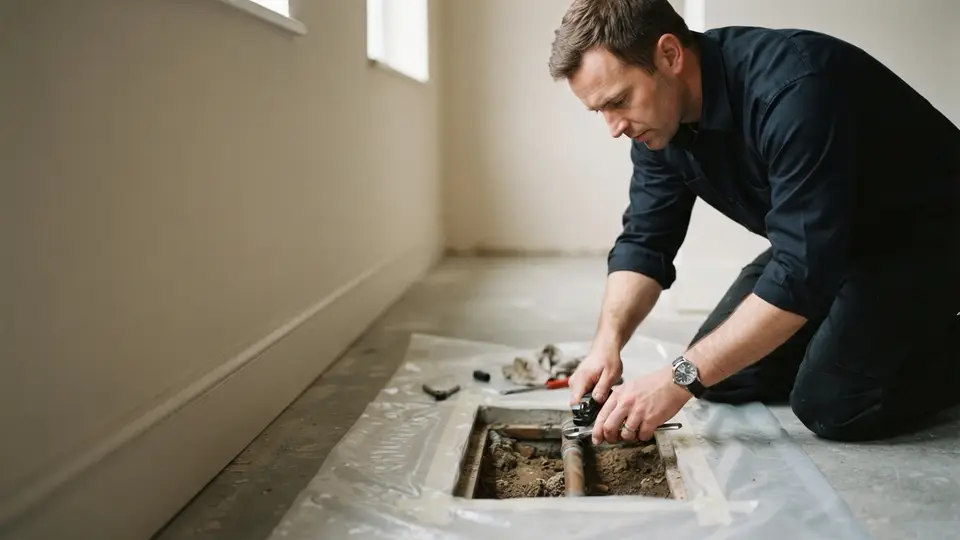
Direct repair
Best when: A single leak in otherwise sound pipe
What it involves: Small opening in the slab, repair, then patch
Basement floor damp in one spot, or the meter turning with every tap closed? We do slab leak repair in Connecticut, for basement floors and slab-built homes. Most Connecticut houses have basements, and the water service, drain lines and sometimes heating loops run under or through the concrete floor. Ranches, additions and condos built on slabs carry their pipes under the concrete too. Corrosion, frost, settling and old radiant heating loops all cause leaks there. We locate the leak precisely, then repair it in place or reroute the line.
The service
A slab leak is a leak in a pipe beneath or inside a concrete floor. In Connecticut that usually means the basement slab, where the water service may enter through the floor and the building drain often runs beneath it to the foundation wall. Slab-on-grade ranches, garages, sunrooms and newer condos also have lines under concrete.
Some homes from the 1950s and 1960s have radiant heating with copper or steel loops embedded in the slab. Those loops are part of the heating system, not the plumbing, but they leak in a similar way and we find them with the same tools.
Repair options
Best when: A single leak in otherwise sound pipe
What it involves: Small opening in the slab, repair, then patch
Best when: Older pipe or leak under finished flooring
What it involves: New line along joists or walls; old section capped
Best when: Cracked drain under the basement floor
What it involves: Spot repair through the slab or a liner from inside
Best when: Leak where the service comes up through the floor
What it involves: Replace the section and reseal the floor or wall penetration
Why Connecticut
72% of the homes in our Connecticut data predate 1980. Copper and steel lines laid in or under concrete decades ago corrode where they touch the slab or damp soil.
Slabs in garages, porches and additions on shallow footings move with frost and settling, stressing lines that pass through them.
Old cast iron building drains under basement floors rust through on the bottom and crack, leaking every time water drains.
Pipes laid in stony glacial backfill can be worn or dented by stones pressing against them over many years.
Warning signs
Our process
We test the meter and isolate supply, drain and heating lines.
Acoustic listening and thermal imaging locate the leak under the floor; a camera checks drains.
We weigh pipe age, location and finishes and give you written prices for repair and reroute.
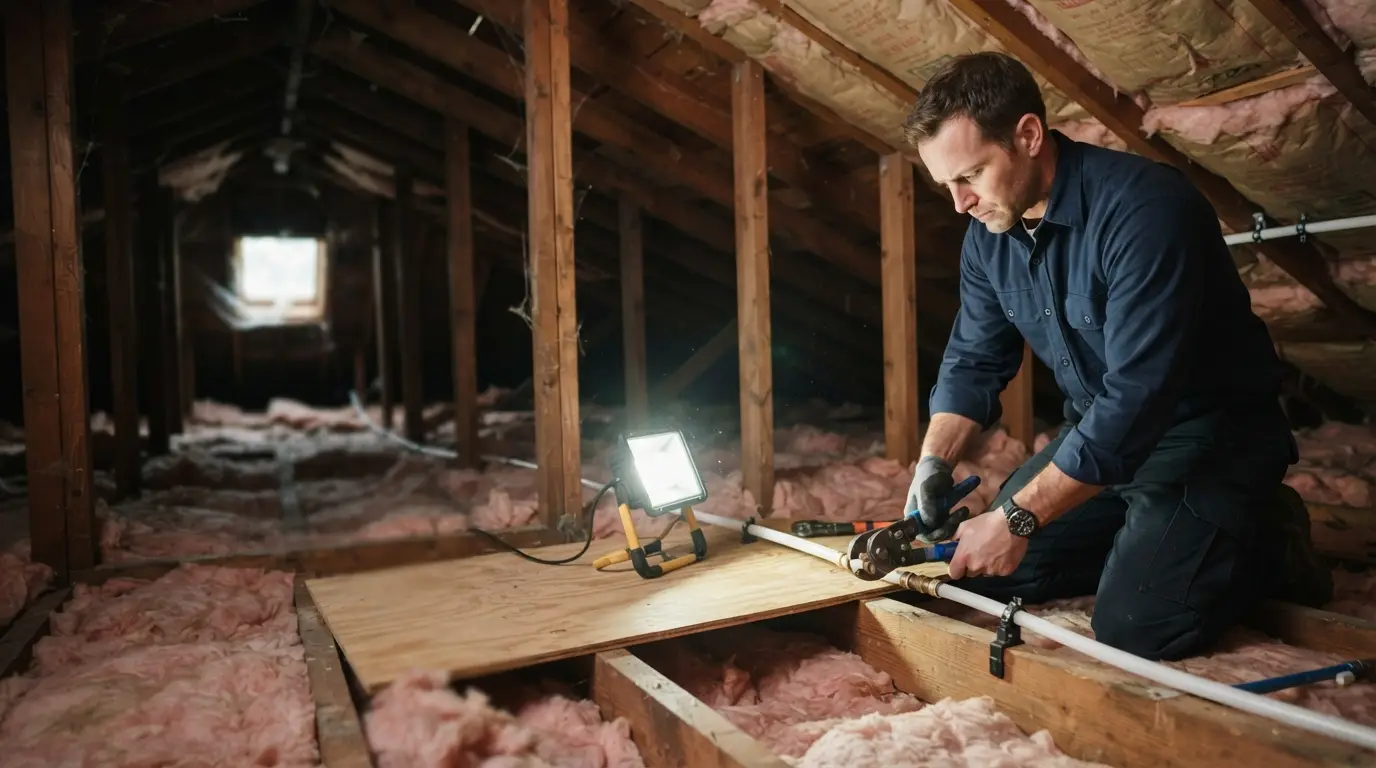
Direct repairs open the slab at one spot; reroutes run new pipe through the basement ceiling or walls.
We pressure test and recheck the meter before leaving.
Typical cost
You approve a written price before work begins.
Get a written price: (833) 733-2357Under open concrete is easier than under tile or a finished room.
Reroutes avoid the slab but use more pipe.
Each needs a different approach.
Tile and wood cost more to patch than carpet.
Reroutes and service replacements usually need one.
Benefits
Stopping the leak keeps water out of finishes and storage.
Damp concrete and carpet feed mold quickly.
Hot water and boiler leaks waste energy as well as water.
Early leaks can often be repaired before finishes are ruined.
Many Connecticut basements take on groundwater in spring, and water seeping up through cracks can look like a slab leak. Our meter and pressure tests tell the difference before anyone breaks concrete. If it is groundwater, a sump pump and drainage may be the answer instead of plumbing repair.
In a finished basement, a slab leak soaks the carpet pad and wicks into the bottom of the drywall. We stop the leak first and tell you which areas are wet so they can be dried. Rerouting new pipe through the basement ceiling often avoids opening the finished floor at all.
Some Connecticut ranches and capes from the 1950s and 1960s have radiant heat from copper or steel loops buried in the slab. After 60 years, those loops corrode and leak. The signs are a boiler that keeps losing pressure, a feed valve that runs often and warm, damp spots on the floor. We pressure test each zone, locate the leak and explain the options: repairing a section, abandoning a failed zone and adding baseboard or another heat source in that area, or replacing the system.
Condos built since the 1970s and many additions and sunrooms sit on slabs with supply lines underneath. In a condo, a slab leak can also affect neighboring units and the association. We locate the leak, coordinate access with the HOA and document the cause so owners and the association can sort out responsibility.
Policies differ on slab leaks. Some cover access and water damage but not the pipe itself. We document the leak location, cause and repair with photos so you have what your insurer asks for.
Close the main shutoff between uses if the leak is on a water line. If the boiler is losing pressure, do not keep adding water; call us. Pull back wet carpet if you can and run fans.
Photograph the damage for your insurer. Do not break the concrete yourself. Call us to locate the leak first.
Small repairs often need no permit, but reroutes, service replacements and drain replacements usually do, from your town building official. Our plumbers hold the Connecticut licenses required, and we pull permits and schedule inspections.
Why choose us
What you can count on every time one of our plumbers comes to your door.
Every job is handled by a plumber who holds the license your state or city requires, backed by liability insurance.
Our plumber explains the problem and the options, and you approve a written price before any work begins.
Burst pipes, sewage backups and failed water heaters get priority scheduling, including nights and weekends.
We pull permits when the job needs one and schedule the inspection, so the work holds up when you sell.
Repairs and installations come with a written warranty on labor, on top of the manufacturer's warranty on parts.
Our pages and plumbers account for your area's water, soil, climate and the age of the homes around you.
Service area
We locate and repair slab leaks in 215 Connecticut places, including Stamford (median home built 1973), Danbury (1975) and Shelton (1977). Choose yours:
It depends on where the leak is, whether it is a supply, drain or heating line, and whether we repair or reroute. We give you a written price for each option.
Often, since new pipe can run through the basement ceiling. We price both options so you can compare them before deciding.
It depends on the loop layout and the leak location. Sometimes a section can be repaired; old systems may be better replaced. We price both.
We isolate the leaking line, then use acoustic listening and thermal imaging. For drains, we use a camera.
Usually a small opening over the leak, just enough to repair the pipe. Precise location keeps it small.
Often, yes. A liner installed from inside can seal a cracked drain without breaking the floor if the pipe is still round.
Continuous water under a slab can wash out fill and contribute to settling. Fixing the leak early limits that risk.
For short periods, usually. Close the main between uses and call us. Large leaks need the main closed.
Most direct repairs or reroutes are completed in one or two days.
Usually on the first visit, often within a few hours.
A meter test shows whether house water is escaping. Groundwater seepage happens even with the main shut off.
Yes. A steady pressure drop that needs refilling can mean a heating leak, possibly under a slab.
Shut off the main and call us. Surfacing leaks get priority scheduling.
Yes, mainly under basement floors, garages and slab-built ranches, condos and additions.
Copper and steel in contact with damp concrete and soil corrode over decades, and settling stresses joints.