Orange or black stains
Usual cause: Iron or manganese in well water
Typical treatment: Iron or manganese filter
Orange stains in the tub, or well water that smells odd? We install water softeners and filtration in Connecticut after testing your water. City water from Connecticut reservoirs is generally soft to moderately hard, but private wells, which serve a large share of suburban and rural homes, vary widely. Some carry iron and manganese that stain everything, some are hard, some are acidic enough to eat at copper, and some contain naturally occurring minerals worth testing for. We test, explain the results and install the right treatment.
The service
Each kind of equipment handles a different problem, and most homes need only one or two. A softener removes hardness. An iron or manganese filter removes staining metals. A neutralizer raises the pH of acidic water so it stops corroding pipes. Carbon removes chlorine taste. Reverse osmosis at the kitchen sink makes highly filtered drinking water, and specialized systems address contaminants a lab test finds.
Common problems and treatments
Usual cause: Iron or manganese in well water
Typical treatment: Iron or manganese filter
Usual cause: Acidic, corrosive water
Typical treatment: Neutralizer
Usual cause: Hardness
Typical treatment: Water softener
Usual cause: Hydrogen sulfide
Typical treatment: Oxidizing filter
Usual cause: Disinfection
Typical treatment: Carbon filter
Usual cause: Varies by well
Typical treatment: Treatment matched to a lab report
Why Connecticut
Many bedrock wells in Connecticut carry iron, manganese or both. The water may look clear from the tap and then stain fixtures and laundry as it meets air.
Some wells produce water with low pH. Over time it dissolves copper from pipes, causing blue-green stains and pinhole leaks, and can raise metals in the water.
Wells in some areas, particularly where bedrock includes marble or limestone, produce hard water that scales heaters and fixtures.
Depending on the local bedrock, some wells contain naturally occurring elements, and radon in water is found in parts of the state. A certified lab test shows what is present.
Warning signs
Our process
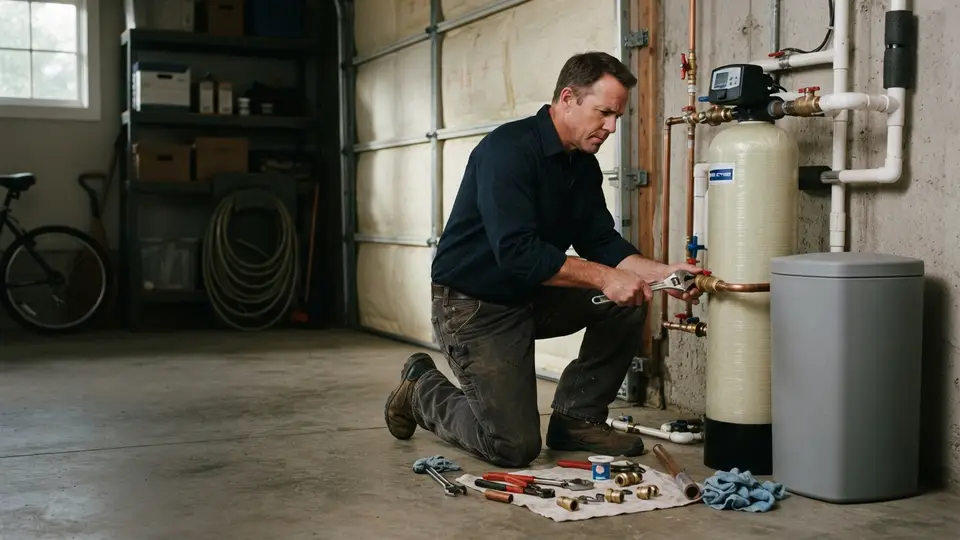
We test hardness, iron and pH, size the softener to your household and install it with a bypass valve and an air-gapped drain. In septic homes, we discuss where the backwash should go.
We install iron and manganese filters, neutralizers, sediment filters and carbon systems at the point where water enters, in the right order so each treatment works.
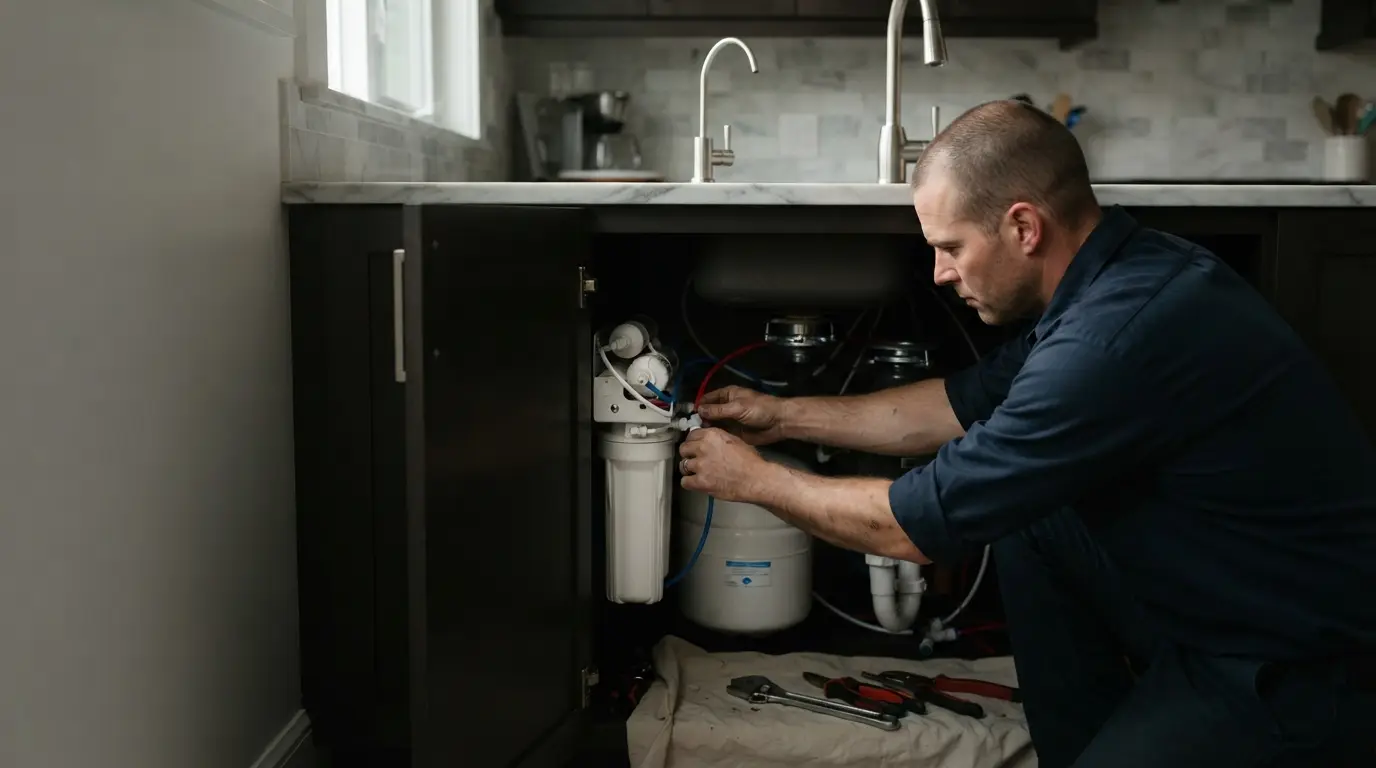
We mount the system under the kitchen sink with a dedicated faucet and set a filter and membrane change schedule.
Typical cost
You get a written price and a maintenance plan before we install.
Get a written price: (833) 733-2357Iron, manganese and pH correction cost more than softening alone.
Some wells need two or three stages.
Larger households need more capacity.
Basements near the pressure tank are simplest.
Salt, media and filters are recurring costs.
Benefits
Iron filters stop orange and black stains.
Neutralizers slow copper corrosion and pinhole leaks.
Less scale and sediment in tanks and coils.
Carbon and reverse osmosis improve drinking water.
Our data includes 185 Connecticut villages and town sections, many of them served by private wells, and wells are common around towns such as Torrington, Danbury and Norwich. Well owners are responsible for their own water quality. We test for treatment basics, but we recommend a certified lab test for bacteria and other contaminants, and your local health department can advise on what to test for in your area. We then size treatment to the lab results.
Softeners and some iron filters backwash water and salt into the drain during regeneration, which adds load to a septic system. Modern efficient units use less water, and in some cases backwash can be directed to a separate drywell where local rules allow. We discuss the options and set regeneration to what your water actually needs.
Regional utilities supply much of the state from reservoirs, and that water is usually soft to moderately hard. Most city homes do not need a softener, but some want a carbon filter for taste or a reverse osmosis tap for drinking water. Old service lines and interior pipe can also affect water quality; a test helps sort that out.
An ion-exchange softener removes hardness minerals and can also remove small amounts of iron, but it uses salt and sends brine to the drain or septic system. A salt-free conditioner reduces scale on heaters and pipes without salt or a drain, but leaves the minerals in the water, so spots on glass can remain, and it does nothing for iron. For most Connecticut wells with iron, a dedicated iron filter plus a softener works best. For moderately hard water without iron, a conditioner may be enough. We explain both after testing.
Treatment equipment sits after the well pressure tank, and some filters need a minimum flow rate to backwash properly. We check the well pump output and pressure tank before sizing equipment, and replace a waterlogged pressure tank if it is cycling the pump on and off, which also helps the new equipment work as designed.
Renters occupy 43% of Connecticut homes in our data, and many condo owners share a building water supply. Where a whole-house system is not possible, a reverse osmosis unit under the kitchen sink or a carbon filter on the kitchen line gives better drinking water. Renters should get the owner's approval first.
If you have a recent well test or a city water quality report, keep it ready. Note stains, odors and when they appear. Clear access to the pressure tank or main shutoff in the basement.
If existing equipment is leaking, put it in bypass and unplug it, then call us. Do not add chemicals to the well yourself.
Many treatment installations need no permit, though some towns require one for new connections or drain changes. Our plumbers hold the Connecticut licenses required, and every drain connection includes an approved air gap.
Why choose us
What you can count on every time one of our plumbers comes to your door.
Every job is handled by a plumber who holds the license your state or city requires, backed by liability insurance.
Our plumber explains the problem and the options, and you approve a written price before any work begins.
Burst pipes, sewage backups and failed water heaters get priority scheduling, including nights and weekends.
We pull permits when the job needs one and schedule the inspection, so the work holds up when you sell.
Repairs and installations come with a written warranty on labor, on top of the manufacturer's warranty on parts.
Our pages and plumbers account for your area's water, soil, climate and the age of the homes around you.
Service area
We test and treat water in 215 Connecticut places. Choose yours:
It depends on hardness, iron content, household size and installation space. We test first and give you a written price for the right equipment.
Often, yes. Iron and manganese need specific media, and heavy levels may need a dedicated filter ahead of a softener.
The media dissolves as it corrects pH and needs topping up periodically. We tell you how often based on your water.
Yes. We test hardness, iron, manganese and pH at your tap and review any lab report before recommending anything.
Usually in the basement near the well pressure tank or main shutoff, with access to a drain and outlet.
Backwash adds water and salt. Efficient units and correct settings limit that, and some towns allow a separate drywell.
Treatment tests do not cover bacteria and other contaminants. Have a certified lab test your well; your health department can advise.
Yes. Low-pH water dissolves copper over time, causing pinhole leaks. A neutralizer protects the pipes.
Most single systems take a few hours; multi-stage well treatment can take most of a day.
Treated water is immediate. Existing stains need cleaning, but they will not keep returning.
Often every month or two, depending on hardness and use.
Every year or two, and whenever taste, smell or color changes.
Put it in bypass, unplug it and call us. A stuck valve or drain line problem is the usual cause.
Many do. Iron and manganese are common in Connecticut bedrock wells and cause the orange and black stains owners notice.
Reservoir water supplied by regional utilities is usually soft to moderately hard, so most city homes do not need softening.