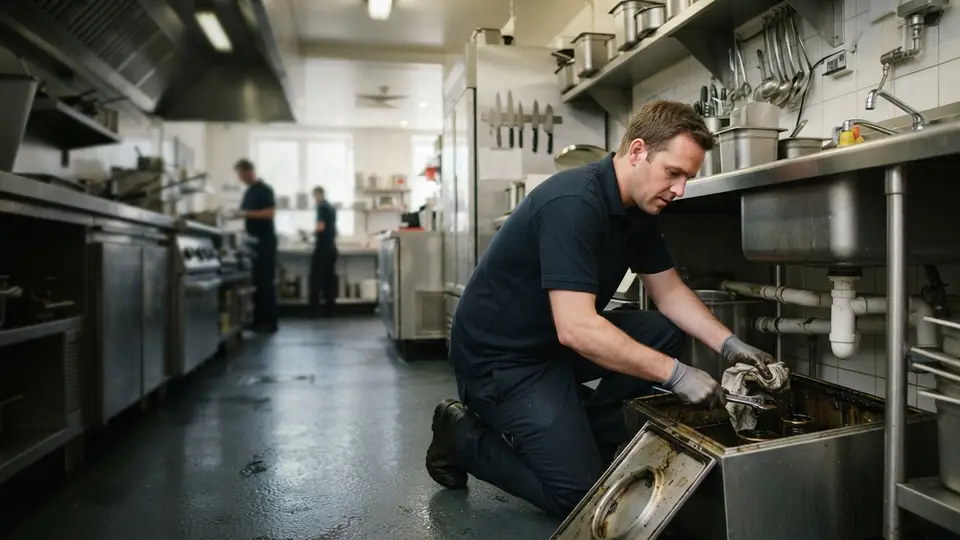
Restaurants and food service
Typical work: Grease interceptors, kitchen lines, water heaters
What matters most: Passing inspections, no downtime at service
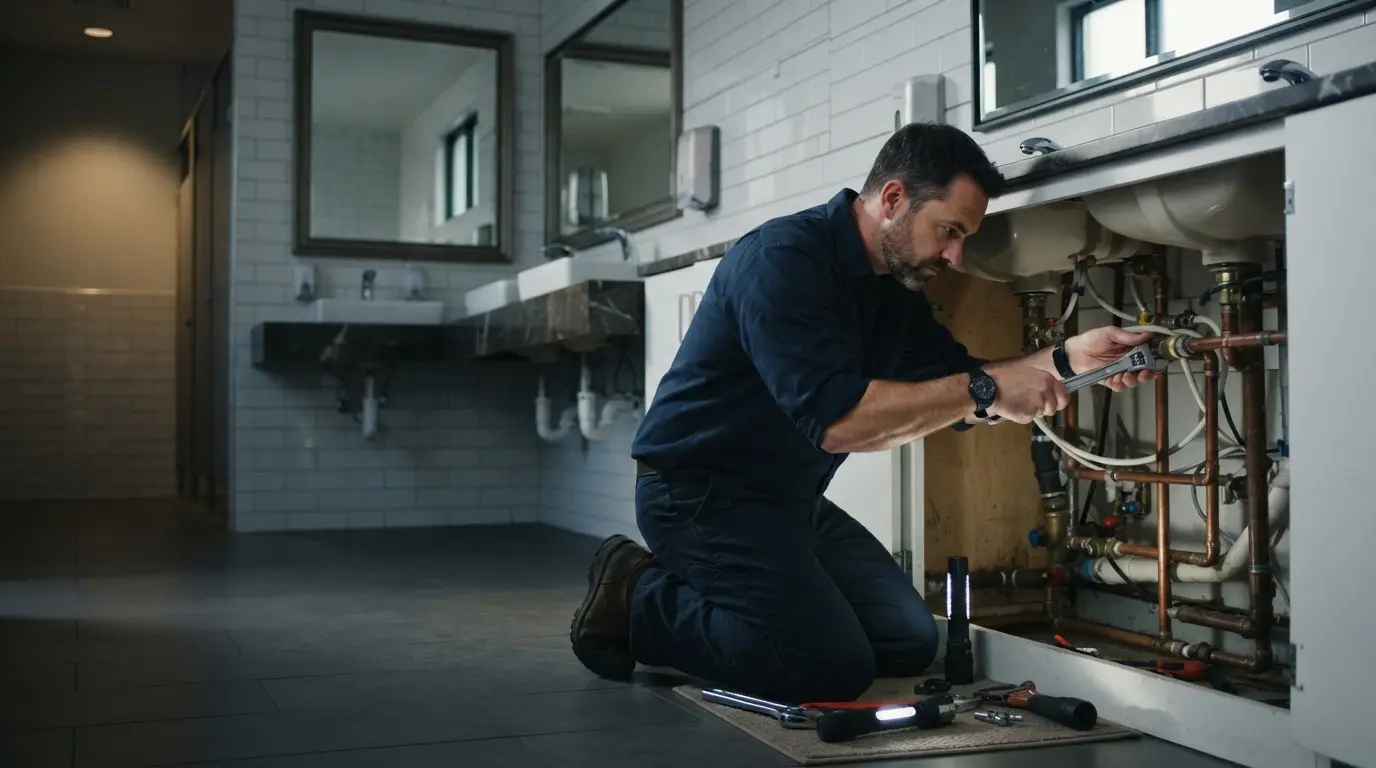
Grease line backing up, or a riser leaking? We provide commercial plumbing in Hawaii for restaurants, offices, shops and multi-unit buildings. Kitchen lines tend to fail right before the lunch rush. Island businesses depend on plumbing that keeps running through tourist seasons, storms and salt air. Kitchens fight grease, hotels and condos manage aging risers and booster pumps, and every shutdown costs money. We repair, maintain and install commercial systems with as little disruption as we can, and handle the permits and inspections.
The service
Hawaii's commercial plumbing is concentrated in a few places: Honolulu, where 60% of homes are in buildings with five or more units, the resort coasts of Maui and the Big Island, and town centers such as Kahului, Hilo, Kapolei and Lihue. Each brings different systems, from food courts to resort condos to light industrial parks.
Our commercial services
Typical work: Grease interceptors, kitchen lines, water heaters
What matters most: Passing inspections, no downtime at service
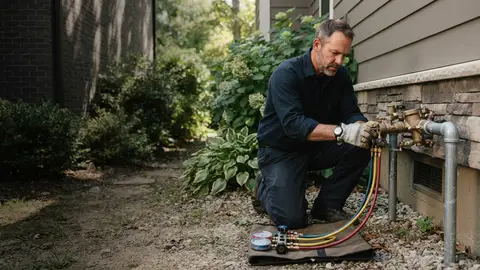
Typical work: Restrooms, water heaters, backflow, leaks
What matters most: After-hours work, tenant coordination
Typical work: Risers, stacks, booster pumps, unit repairs
What matters most: Resident notice, phased shutoffs
Typical work: Fixture repairs, hot water, drain cleaning
What matters most: Turnover schedules, guest comfort
Why Hawaii
Busy kitchens send grease and starches down the line every day, and interceptors fill faster than many owners expect.
Many Honolulu buildings date from the 1960s to 1980s, with cast iron stacks and steel or copper risers near the end of their life.
Pumps, valves and exposed pipe in coastal buildings corrode quickly.
Resorts and restaurants see peaks that stress water heaters and drains.
Warning signs
Our process
We jet kitchen lines, repair and install grease interceptors and traps, and service commercial water heaters, dishwashers and prep sinks, with work timed around service.
We repair restrooms, water heaters, drains and leaks, and handle plumbing for tenant improvements, often outside business hours.
We repair and replace risers, stacks and unit lines, service booster pumps, and plan phased repiping with management and residents.
Typical cost
We give you a written price before work starts.
Get a written price: (833) 733-2357Larger systems take more time.
After-hours work to avoid disruption costs more.
Interceptors, pumps and commercial heaters vary widely.
Required for many commercial jobs.
Shipping can affect cost and timing.
Benefits
Work is planned around your hours.
Grease, backflow and permits kept current.
Reports for owners and associations.
Maintenance catches problems early.
Prevention
Regular service costs less than emergencies. We set up schedules for drain jetting, water heater flushing, backflow testing and pump checks, and give you a record of each visit for owners, associations and inspectors.
Call (833) 733-2357County wastewater agencies require food service businesses to control grease, usually with an interceptor sized to the kitchen and pumped on a set schedule, with records kept. A neglected interceptor lets grease reach the sewer, which can lead to backups and enforcement. We install and repair interceptors, jet the lines feeding them and help you set a maintenance routine; licensed haulers pump and dispose of the grease.
Resort areas carry a large rental stock: 40% of homes in Napili-Honokowai were not a primary residence at the Census count, and Kihei has 12,155 homes, many in condo complexes. Managers need repairs done between guests and building systems kept running all season. We work with front desks and managers on scheduling, keep common parts on hand where we can and report back after every visit.
Tall buildings, which hold 63% of homes in Waimalu and a majority in central Honolulu, rely on booster pumps to deliver pressure to upper floors. When a pump, controller or pressure tank fails, upper units lose water. We service duplex pump systems, replace worn pumps and controls, and check pressure-reducing stations on lower floors.
Commercial work on the neighbor islands centers on Kahului (8,879 homes in the community), Hilo, Kailua-Kona and Lihue. Shipping times affect parts for larger equipment, so we plan repairs to keep businesses open while parts arrive, using temporary fixes where safe.
Restaurants, hotels and laundries use a lot of hot water, and island electricity prices make the choice of system matter. Many larger buildings use central gas or heat pump water heating, sometimes with solar preheat, and recirculation loops to keep hot water at every fixture. We repair and replace commercial tanks and tankless banks, service recirculation pumps and mixing valves, and size new systems to real peak demand rather than guesswork. Dishwashers and food prep sinks need specific temperatures for health rules, so we check those too.
Clinics, dental offices and salons have plumbing needs beyond restrooms: dedicated sinks, eyewash stations, vacuum and compressor drains, and fixtures that require backflow protection. We install and repair these systems, test the backflow devices that serve them and work outside patient or client hours whenever possible so your schedule is not disrupted.
Restrooms in shopping centers, beach parks, offices and restaurants see constant use and frequent clogs from sand and paper. We repair flushometer valves, sensor faucets and urinals, clear lines and replace worn fixtures with durable commercial models that stand up to heavy traffic.
Industrial parks around Kapolei, Kahului and Hilo house warehouses, food processors and shops with floor drains, wash stations, oil and sand separators and process water lines. We repair and install this piping, keep separators flowing and add backflow protection where process equipment connects to the water supply. Work can be scheduled between shifts.
For a leak, close the nearest shutoff or the building riser if staff can do so safely. For a kitchen backup, stop running water to the affected line and stop dishwashing.
Notify tenants or residents who may be affected, then call us.
Commercial plumbing work usually needs county permits and inspections. We pull them and coordinate inspections. Our plumbers hold the licenses Hawaii requires.
Why choose us
What you can count on every time one of our plumbers comes to your door.
Every job is handled by a plumber who holds the license your state or city requires, backed by liability insurance.
Our plumber explains the problem and the options, and you approve a written price before any work begins.
Burst pipes, sewage backups and failed water heaters get priority scheduling, including nights and weekends.
We pull permits when the job needs one and schedule the inspection, so the work holds up when you sell.
Repairs and installations come with a written warranty on labor, on top of the manufacturer's warranty on parts.
Our pages and plumbers account for your area's water, soil, climate and the age of the homes around you.
Service area
We serve businesses and buildings in 163 Hawaii communities. Choose yours:
We price each job on the system, access, scheduling needs and permits. You approve a written price before work starts.
Yes. Working nights or weekends to avoid disruption costs more than weekday hours, and we price it upfront.
For restaurants and larger buildings, usually. It reduces emergency calls and keeps inspections on track.
Yes. We schedule early mornings, evenings or weekends when that keeps you open.
Yes. We coordinate with boards and managers on notices, shutoffs and phased projects.
Yes. We work from the plans, coordinate with the contractor and handle permits and inspections.
Shut off appliances if safe, evacuate and call the gas company or 911 from outside. We repair the piping once it is safe.
Yes. Stop food preparation in the affected area and call us; health rules may apply until it is cleaned.
It depends on size and location; many take several days including excavation and inspection.
Riser projects are usually done in phases, a stack at a time, over days or weeks.
As often as your county permit requires and your volume demands, often monthly or quarterly.
Busy kitchen lines often every few months; building stacks less often, based on camera findings.
Call us. We check booster pumps, valves and supply, and these calls get priority scheduling.
Yes. County wastewater agencies set grease control rules for food service businesses.
Yes. Pumps, valves and exposed pipe in coastal buildings corrode faster and need regular checks.