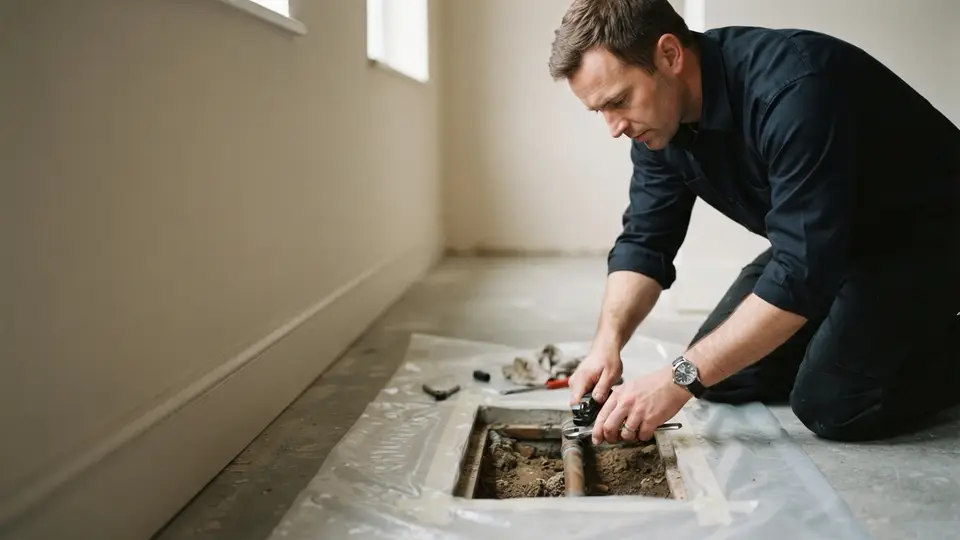
Spot repair through the slab
When it fits: One leak, otherwise sound pipe
Trade-offs: Breaks flooring at one spot
Warm patch on the tile floor, or the water meter spinning with every tap off? We handle slab leak repair in Hawaii for homes built on concrete. Many Oahu subdivisions from the 1960s onward, and much of the newer housing on the Ewa Plain, in Central Oahu and in Kihei and Kona, sit on slabs with supply lines underneath. When those lines leak, water soaks the slab and the soil below. We locate the leak precisely, then repair it through the floor or reroute the line overhead.
The service
A slab leak is a leak in a water or drain pipe below or inside a concrete floor. Single-family detached houses make up 65% of homes in Mililani Town and 68% in Ewa Gentry, and many such subdivision homes were built on slabs. Older Hawaii homes were more often raised on posts, which keeps plumbing visible; slab homes hide it, so leaks run longer before anyone notices.
Ways to fix a slab leak
When it fits: One leak, otherwise sound pipe
Trade-offs: Breaks flooring at one spot
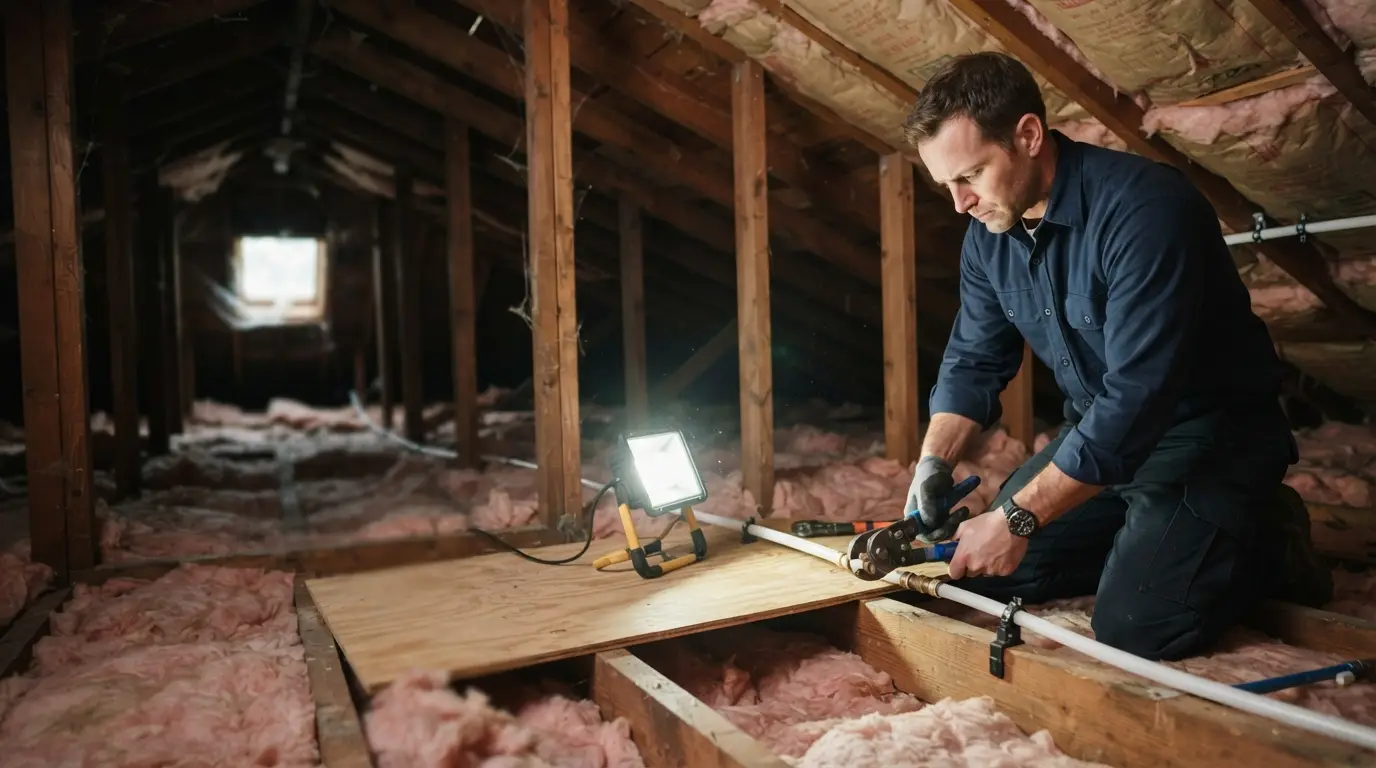
When it fits: Older copper, repeat leaks
Trade-offs: New pipe through walls or attic; slab untouched
When it fits: Many leaks or failing pipe throughout
Trade-offs: Highest upfront cost, removes the slab risk
Why Hawaii
Soft copper laid under slabs can corrode where it touches soil, concrete or rebar, and water chemistry pits it from inside.
Some Oahu and Maui soils are clay rich and swell when wet. The movement stresses pipe under the floor.
Hot water lines expand and contract and rub against concrete or gravel where they cross it. Over years, that wears through the wall.
Hillside subdivisions such as Makakilo can see high pressure, which puts extra stress on every joint.
Warning signs
Our process
We isolate hot and cold lines, pressure test, then use acoustic and thermal tools to mark the leak on the floor within a small area.
We cut a small opening, replace the damaged section, pressure test and patch the concrete, ready for flooring.
We abandon the leaking line under the slab and run new PEX or copper through walls or the attic, which avoids breaking more floor and future leaks in that line.
Typical cost
You approve a written price before we break concrete or open walls.
Get a written price: (833) 733-2357Quiet or multiple leaks take longer to pinpoint.
A spot repair differs from a reroute or repipe.
Tile and stone cost more to open and replace.
Attic space and wall layout affect labor.
Reroutes and repipes generally need one.
Benefits
Constant water softens soil under the slab.
Damp flooring and walls dry out.
Hot water leaks waste both.
Dry ground and wood draw fewer of them.
Kapolei (median home built 2006), Ewa Gentry and Royal Kunia (4,360 homes) grew through the 1990s and 2000s on slabs. Mililani Town is older, with a median build year of 1978. Newer homes often have PEX, which rarely pinholes, but fittings and early installs can fail. Older Mililani and Pearl City slab homes are more likely to have copper reaching the end of its life.
Kihei (12,155 homes) and Kailua-Kona (9,923 homes) grew quickly from the 1980s on, much of it slab-on-grade houses and low-rise condos. Dry, sunny weather there means leaks seldom show as wet ground; a high bill or warm floor is usually the first sign.
If this is the first leak and the pipe looks sound elsewhere, a spot repair makes sense. If it is the second or third leak, or the copper shows pitting at the repair, rerouting usually costs less over time. Homes with tile or stone floors throughout often favor rerouting, since breaking finished floors is costly. We show you the pipe condition and price both before you decide.
Ground-floor units in low-rise complexes often have supply lines in the slab that serve one unit or several. We confirm which lines are involved, coordinate with the association on shutoffs and responsibility, and reroute through walls or ceilings when the building allows.
Hot water slab leaks are the most common, because heat and expansion wear the pipe faster. They also waste the electricity or solar heat used to warm the water, so the power bill can rise along with the water bill. Cold line leaks are quieter and often found only by a meter test. Our first step is to isolate the two, which tells us which line to trace and whether turning off the water heater will limit the damage while you wait.
Not every slab leak is a supply line. Cast iron or plastic drain lines under the floor can crack or separate, leaking only when fixtures drain. Signs include odors, slow drains and damp spots near a bathroom. We camera the drain and, if needed, test it by plugging and filling the line, then repair or line the damaged section.
Many homeowner policies cover water damage from a sudden leak and sometimes the cost of reaching the pipe, but not the pipe itself. Coverage varies. Call your insurer early and keep our written findings, photos and invoices for the claim.
If you suspect a hot water slab leak, close the cold water supply to the water heater and turn its power off. If water is pooling, close the main shutoff.
Pull back wet rugs, photograph the area for insurance and do not cut into the floor yourself. Then call us.
Reroutes and larger repairs generally need a county plumbing permit, which we pull and close with an inspection. Our plumbers hold the licenses Hawaii requires.
Why choose us
What you can count on every time one of our plumbers comes to your door.
Every job is handled by a plumber who holds the license your state or city requires, backed by liability insurance.
Our plumber explains the problem and the options, and you approve a written price before any work begins.
Burst pipes, sewage backups and failed water heaters get priority scheduling, including nights and weekends.
We pull permits when the job needs one and schedule the inspection, so the work holds up when you sell.
Repairs and installations come with a written warranty on labor, on top of the manufacturer's warranty on parts.
Our pages and plumbers account for your area's water, soil, climate and the age of the homes around you.
Service area
We find and repair slab leaks in 163 Hawaii communities, including Waipahu (9,800 homes) and Pearl City. Choose yours:
It depends on finding the leak, the repair method and the flooring we must open. You approve a written price before work starts.
Upfront, a spot repair usually costs less. With repeat leaks or tiled floors, rerouting often wins over time.
Many policies cover sudden water damage and sometimes access, but rarely the pipe. Check your policy and keep our written report.
We isolate lines, pressure test, then use acoustic listening and thermal imaging to mark the leak on the floor.
No. We open a small area over the marked leak, or avoid the slab entirely by rerouting.
Usually PEX, which resists corrosion and flexes through walls and attics. Copper is available when preferred.
Not immediately, but long-term it can soften soil under the foundation and cause mold. Hot water leaks can also overheat flooring.
If the leak is on the hot side, yes: close its cold supply and turn off power or gas. That limits damage until we arrive.
A spot repair is often done in a day. A reroute usually takes one to two days, depending on access.
Usually, yes. Water is off only while we work on the line.
Keep pressure normal, watch your bill, and reroute aging copper before more leaks appear.
Yes, yearly. A failed pressure-reducing valve lets high pressure stress every pipe under the slab.
Close the main shutoff and call us. Active leaks get priority scheduling.
They are common in slab subdivisions with older copper, especially on Oahu. Newer homes with PEX see far fewer.
Dry weather and sandy fill drain the water away, so there is rarely a wet spot. A high bill is often the only sign.