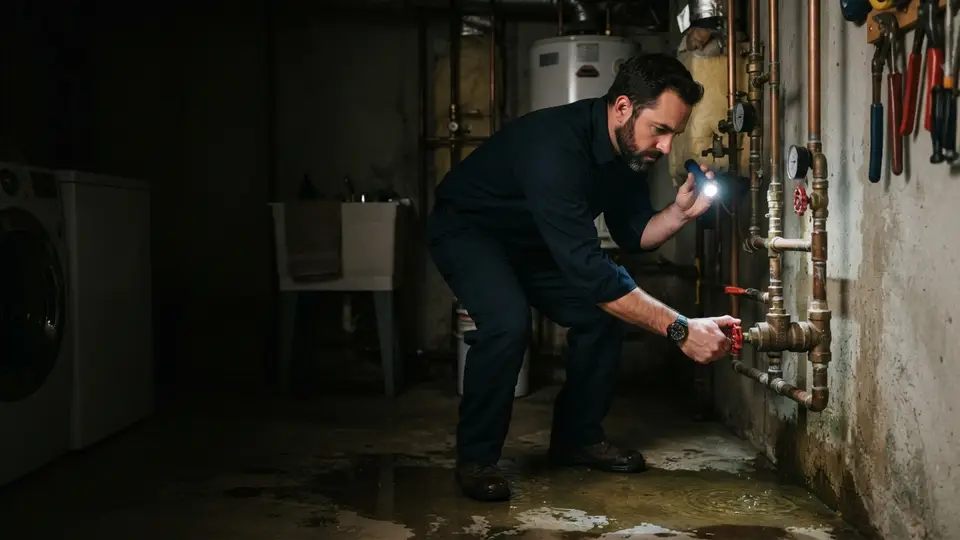
Burst pipe or supply line
First step for you: Close the main or unit shutoff
What we do: Stop the leak, replace the failed section, check nearby pipe
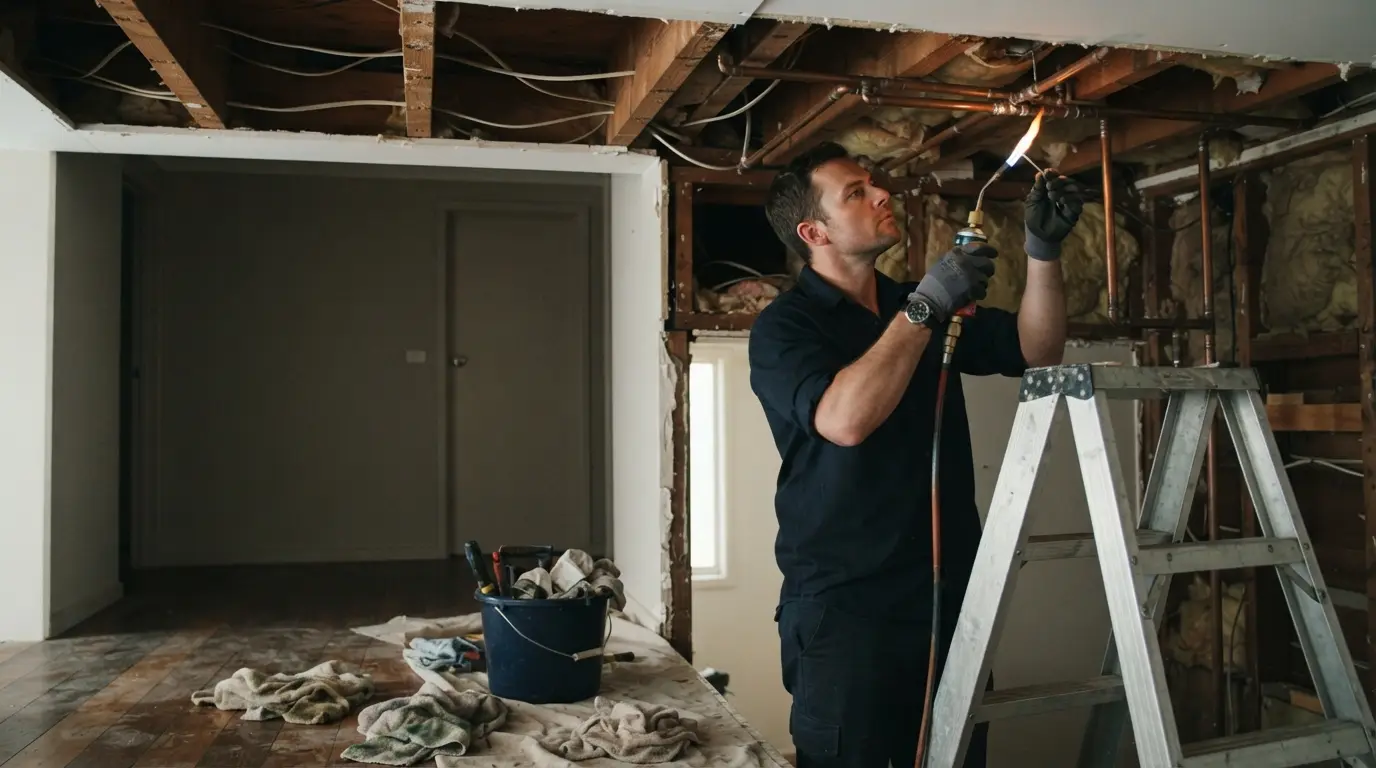
Water pouring through the ceiling, or sewage in the tub? We handle emergency plumbing in Hawaii for burst pipes, sewage backups, loss of water and gas odors. Island emergencies have their own shape: a riser fails in a Honolulu tower and floods three floors, a Kona storm overwhelms a cesspool, a catchment pump dies and leaves a Puna family without water. These calls get priority scheduling, including nights and weekends, and we keep you updated on timing while you take the safe first steps below. Every call ends with a written record of what failed and what we did.
The service
An emergency is anything that is causing damage now or makes the home unsafe or unusable. In Hawaii, where 31% of homes in our data are in buildings with five or more units and 60% in Urban Honolulu, a leak rarely stays in one home. Water travels down to neighbors, and the clock starts for everyone below.
Emergencies we handle
First step for you: Close the main or unit shutoff
What we do: Stop the leak, replace the failed section, check nearby pipe
First step for you: Stop using water
What we do: Clear the line, find the cause, advise on cleanup
First step for you: Check with the water supplier, or check the catchment pump
What we do: Find the failure in the line, pump or valve and restore supply
First step for you: Leave and call the gas company from outside
What we do: Repair piping once the site is safe
Why Hawaii
Decades-old risers, stacks and valves in high-rises fail at joints and threads, often with little warning.
Kona storms and heavy trade-wind rain overload drains, cesspools and pumps.
Rubber hoses on washers and toilets, and corroded water heater tanks, burst suddenly.
When the pump or pressure switch fails on a catchment system, the whole house loses water.
Warning signs
Our process
We isolate the failed line, replace the damaged section and test it, then check for related weak spots so the next leak is not around the corner.
We clear the blockage, camera the line to find the cause and tell you whether the fix is cleaning, repair or cesspool pumping.
We check the meter side, main line, pressure-reducing valve or catchment pump and pressure tank, and restore supply.
After the gas company or fire department makes the site safe, we find and repair the leak and pressure test the line.
Typical cost
Even in an emergency, we explain the work and you approve a written price before repairs beyond stopping the damage.
Get a written price: (833) 733-2357After-hours and weekend visits cost more.
A hose costs less than a riser or main line.
Walls, ceilings, slabs and vaults add work.
Some repairs need a second visit or permit.
Benefits
Stopping the leak quickly limits drying and repairs.
Warm, humid air grows mold fast on wet materials.
Written findings support insurance claims.
We repair the cause, not only the symptom.
In a condo, the first call is often to building security or the resident manager, who can shut off a riser and check units below. Then call us. We work with building staff to isolate the right section, repair the failed pipe or valve and restore water to the rest of the building as quickly as the repair allows. We leave a written record of what failed for the association and insurers.
Second homes and rentals sit empty for weeks: 67% of homes in Princeville and 50% in Wailea were not a primary residence at the Census count. A neighbor or property manager often discovers the leak. We can work with whoever has the key, report back with photos and recommend leak sensors and automatic shutoffs so it does not happen again.
Windward towns such as Kaneohe (11,980 homes) and Hilo (19,265 homes) see the heaviest rain. During a storm, cesspools fill, low drains back up and power outages stop pumps. Know where your main shutoff is before the wet season, keep a battery backup on any sump or ejector pump, and call us as soon as water is where it should not be.
On catchment lots in Puna, such as Hawaiian Paradise Park (5,432 homes), no water usually means a failed pump, pressure switch, check valve or a tank that has run dry. We diagnose and replace the failed part and, where the tank is empty, tell you so you can arrange a water delivery. We also check the tank liner and overflow for leaks that drained it faster than expected.
Many homes in older areas such as Waipahu and Pearl City (15,509 homes) have a main shutoff by the meter at the street and sometimes another where the line enters the house. Condos usually have a unit shutoff in a closet or behind a panel. Find yours now, make sure it turns and keep a meter key handy. We replace stuck or broken shutoffs during any visit, so the next emergency starts with a valve that actually closes.
Close the main or unit shutoff for a leak. Turn off power to a leaking water heater. Stop using water during a sewage backup. Keep away from water near electrical equipment.
For a gas odor, leave first and call the gas company or 911 from outside. In a condo, alert building staff. Then call us.
Emergency repairs come first, and if the permanent repair needs a county permit, we pull it afterward and schedule the inspection. Our plumbers hold the licenses Hawaii requires.
Why choose us
What you can count on every time one of our plumbers comes to your door.
Every job is handled by a plumber who holds the license your state or city requires, backed by liability insurance.
Our plumber explains the problem and the options, and you approve a written price before any work begins.
Burst pipes, sewage backups and failed water heaters get priority scheduling, including nights and weekends.
We pull permits when the job needs one and schedule the inspection, so the work holds up when you sell.
Repairs and installations come with a written warranty on labor, on top of the manufacturer's warranty on parts.
Our pages and plumbers account for your area's water, soil, climate and the age of the homes around you.
Service area
We answer urgent plumbing calls in 163 Hawaii communities. Choose yours:
The repair, access and time of day set the price. After-hours visits cost more. You approve a written price before repairs beyond stopping the damage.
Yes, after-hours work costs more than a weekday visit. We tell you the price before we start.
Many policies cover sudden water damage, though not always the pipe itself. Keep our written report and photos for your claim.
We ask what is happening, walk you through safe first steps such as shutting off water, and schedule our plumber with priority.
Yes. We coordinate riser shutoffs and access to other units with security or the resident manager.
Often, yes. Some repairs need parts, a permit or a second visit, and we explain that before we leave.
Leave right away without using switches or phones inside, and call the gas company or 911 from outside.
Avoid the affected area, keep children and pets away and stop using water until the line is cleared.
Emergencies get priority scheduling, including nights and weekends. We keep you updated on timing.
Most burst pipes and backups are handled in a few hours. Risers and main lines can take longer.
Replace rubber hoses with braided stainless ones and check them yearly.
For second homes, rentals and condos, yes. It closes the main when it senses a leak.
Stay away from the water and call the electric utility or 911 if needed. Then call us for the leak.
Failed risers, valves and water heaters, and stack backups that reach the lowest units.
Check the tank level and pump breaker, then call us to check the pump, pressure switch and tank.