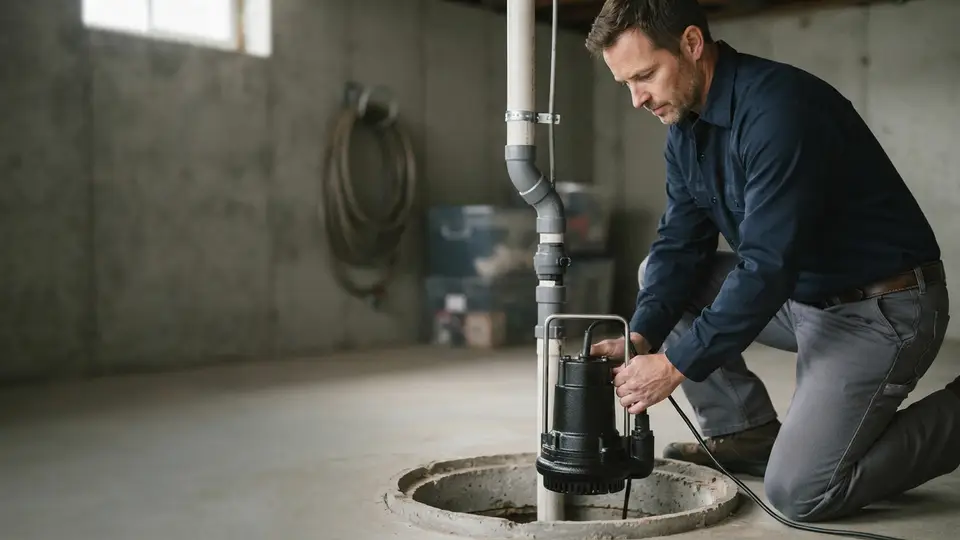
Submersible sump pump
Where: Pits in lower floors and garages
Points to know: Quiet, sits in the water; most common choice
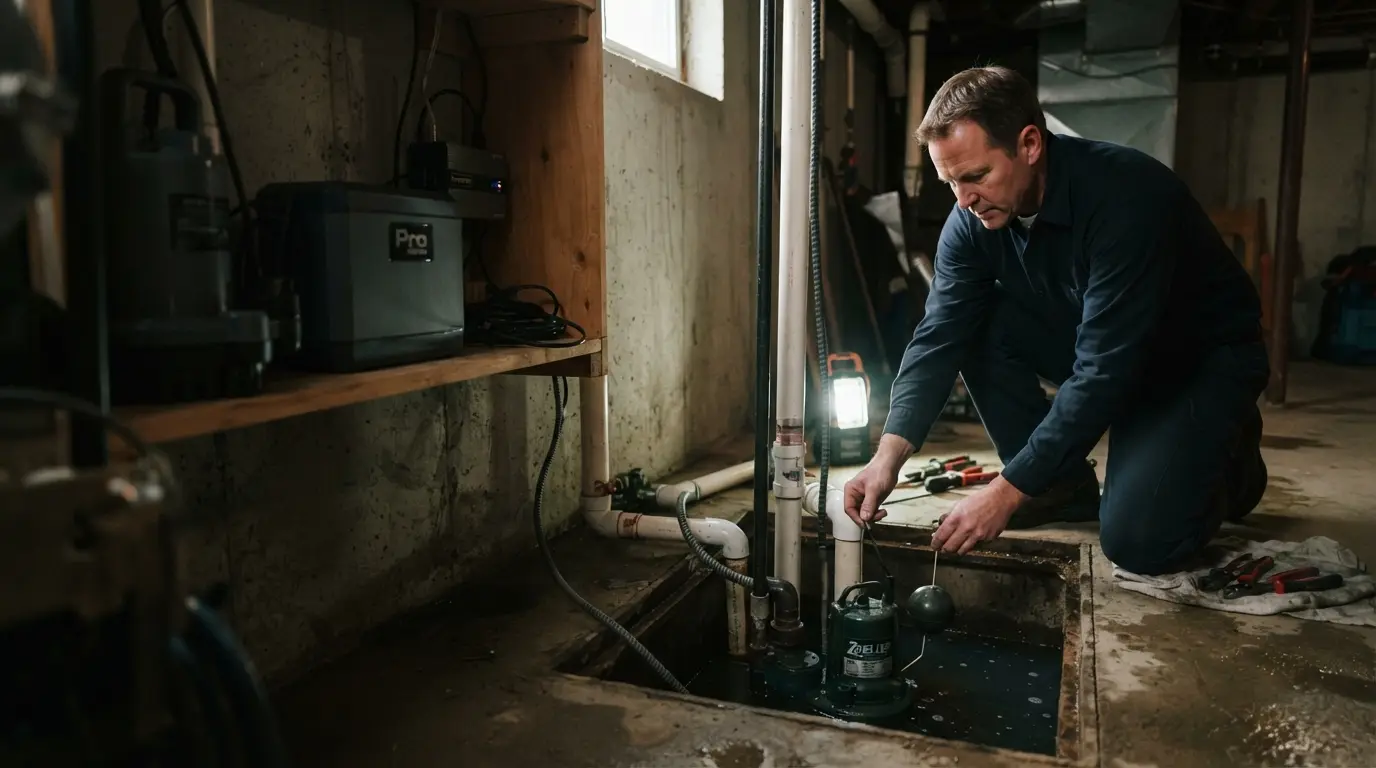
Lower level flooding after a Kona storm, or a pit pump that just hums? We do sump pump repair and installation in Hawaii for homes and buildings. Few island homes have full basements, but many hillside houses have lower floors set into the slope, garages below grade, or yards where storm runoff collects against the foundation. High-rises have sump and ejector pits in parking levels and elevator shafts. When those pumps fail, water rises fast. We repair, replace and back them up.
The service
Sump pumps lift water from a pit to a safe discharge point. On the islands they show up in specific places rather than in every home: lower levels of hillside homes in areas such as East Honolulu (19,393 homes), drainage pits at low garages, and the parking levels and elevator pits of the buildings that hold 60% of Urban Honolulu homes. Sewage ejector pumps, a close relative, lift waste from bathrooms below the sewer line.
Pumps we service
Where: Pits in lower floors and garages
Points to know: Quiet, sits in the water; most common choice
Where: Narrow or shallow pits
Points to know: Motor above the pit, easier to service
Where: Paired with a primary pump
Points to know: Keeps pumping when the power fails
Where: Bathrooms or laundry below the sewer
Points to know: Sealed basin, vented, needs alarms
Where: High-rise and mid-rise buildings
Points to know: Often required with oil separation
Why Hawaii
In dry leeward areas, a pump may sit unused for months, then face a storm. Seals dry out and floats stick.
In Hilo, windward Oahu and Kauai, frequent rain keeps pumps running and wears out motors and switches faster.
Humid pits and salt air corrode switches, discharge pipes and check valves.
The heaviest rain often arrives with outages, exactly when a pump without backup stops.
Warning signs
Our process
We test the motor, float switch, check valve and discharge line, clean the pit and replace the failing part.
We size the pump to the water it must move, set it in a clean pit with a lid, run the discharge to an approved location and add a check valve and alarm.
We install a second pump with its own float and battery, so the pit keeps draining during outages, and show you how to test it.
Typical cost
You approve a written price before work starts.
Get a written price: (833) 733-2357A float switch costs less than a new pump.
Larger pumps and ejectors cost more.
Digging a pit in rock or concrete adds work.
A second pump and battery add cost.
Long runs and wall penetrations add labor.
Benefits
Water leaves before it spreads.
Battery backup keeps working.
Dry floors and walls stay healthy.
Alarms alert you before water rises.
Kona storms bring heavy rain from the south and west, hitting slopes and towns that usually stay dry. Flash floods can push water and mud toward homes in minutes. A working pump with backup, clear drainage around the house and a discharge that sends water well away from the foundation make the difference. Before the wet season, we test pumps and alarms and clear pits of debris.
The wettest populated areas, including Hilo (19,265 homes), Kaneohe and the Kapaa side of Kauai, see standing water around foundations through much of the wet season. Homes with lower rooms or low garages there rely on their pumps more than anywhere else in the state. We recommend higher-capacity pumps, a battery backup and a yearly check.
Parking garages, elevator pits and mechanical rooms in island buildings depend on pumps that most residents never see. We service duplex pump systems, alarms and controls for associations and owners, and replace pumps in elevator pits to the requirements that apply to them.
Homes with a bathroom or laundry below the street sewer use an ejector pump to lift waste. These sealed basins need a vent, a check valve and an alarm. When they fail, sewage backs up into the lowest room. We repair and replace ejector pumps and basins and service their alarms.
Some lots in places like Waimanalo and Kailua (9,923 homes) sit low, and runoff collects against the house. A sump pit with a pump at the low point, paired with a proper discharge, can move that water away. We look at grading and gutters first, because sometimes the fix is a drain, not a pump.
On large rural lots in Puna, such as Hawaiian Paradise Park (5,432 homes), heavy rain and catchment tank overflow can pool around raised homes and outbuildings. Most of these homes do not need a sump pump, since water drains under the house, but enclosed ground-level rooms and garages sometimes do. We look at where the overflow and roof water go first, redirect it if we can, and add a pit and pump only where water has no other way out.
Groundwater and storm water from a sump pump generally may not be pumped into the sanitary sewer, and in many places it should not flow onto a neighboring property or into the street in a way that causes problems. We route discharge to a suitable spot on your lot, such as a drywell or landscaped area well away from the house, and follow county rules for each site.
If water is rising near outlets or equipment, stay out of the water and switch off power to the area at the breaker if you can reach it safely. Move valuables to higher ground.
Check whether the pump is plugged in and the breaker is on, but do not reach into a pit with the pump powered. Then call us.
New pump installations, ejector systems and discharge changes may need a county permit, which we pull. Our plumbers hold the licenses Hawaii requires.
Why choose us
What you can count on every time one of our plumbers comes to your door.
Every job is handled by a plumber who holds the license your state or city requires, backed by liability insurance.
Our plumber explains the problem and the options, and you approve a written price before any work begins.
Burst pipes, sewage backups and failed water heaters get priority scheduling, including nights and weekends.
We pull permits when the job needs one and schedule the inspection, so the work holds up when you sell.
Repairs and installations come with a written warranty on labor, on top of the manufacturer's warranty on parts.
Our pages and plumbers account for your area's water, soil, climate and the age of the homes around you.
Service area
We repair and install pumps in 163 Hawaii communities. Choose yours:
It depends on the failed part, the pump type and access to the pit. A float switch costs much less than a new pump. You approve a written price first.
In storm-prone areas, yes. Heavy rain often comes with power outages, exactly when the main pump stops.
Usually, since they handle sewage, need sealed basins and vents, and must meet stricter requirements.
We look at how much water enters the pit, how high it must be lifted and how far it travels, then size the pump.
Away from the foundation to an approved location. It should not go into the sewer in most places.
Yes. We repair and replace pumps in elevator pits and coordinate with the elevator contractor when needed.
Yes. Stay out of the water and shut off power at the breaker only if you can reach it from a dry spot.
Yes. Keep people and pets away, stop using water and call us.
Usually a few hours in an existing pit. A new pit or ejector basin takes longer.
Before the wet season if it is near the end of its life or fails a test.
Every few months, and always before the wet season starts.
Often seven to ten years, less in pits that run constantly.
Stay safe, cut power to the area if you can do so from a dry spot and call us. Flooding gets priority scheduling.
Roughly October through April, when most heavy rain and Kona storms arrive.
Most do not. They matter for hillside lower floors, low garages, wet windward lots and building pits.