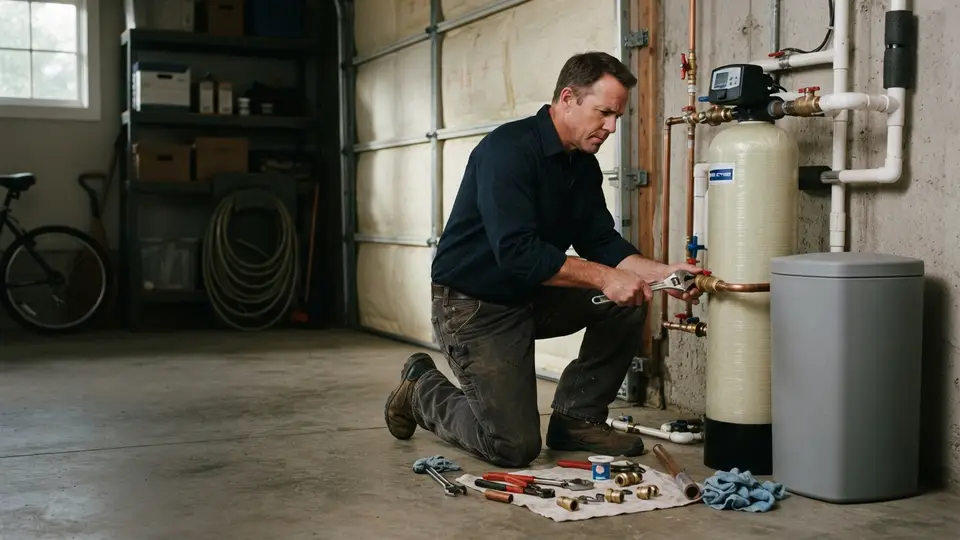
Water softener
What it treats: Hardness minerals that cause scale
Good fit: Homes on harder well or county water
Unsure about your catchment water, or scale on every faucet? We install water softeners and filtration in Hawaii for county water, well and catchment homes. Water varies more from lot to lot here than people expect: some areas get moderately hard groundwater, many rural homes collect rain that needs filtering and disinfection, and older pipes add taste and rust. We test first, then fit the right system, whether that is a sediment and UV setup for a catchment tank, a softener or reverse osmosis.
The service
County water on the islands comes mostly from groundwater in volcanic rock and is treated and tested by the supplier. Hardness and taste vary by source. Rural homes are another story: across the 54 Hawaii County places in our data, and especially in Puna subdivisions such as Hawaiian Paradise Park (5,432 homes), Orchidlands Estates and Mountain View, many homes rely on rain catchment that the owner must treat. We match the system to the water you actually have.
Systems we install
What it treats: Hardness minerals that cause scale
Good fit: Homes on harder well or county water
What it treats: Sediment, chlorine taste, odors
Good fit: County water homes wanting better taste
What it treats: Sediment, bacteria, viruses
Good fit: Rain catchment: filters plus UV disinfection
What it treats: Dissolved solids, many contaminants
Good fit: Drinking and cooking water at the kitchen sink
Why Hawaii
Rain collects debris, bird and rodent droppings and roof residue on its way into the tank, so it needs filtering and disinfection before drinking.
On the Big Island, vog can make rain more acidic, which can leach metals from roofs, gutters and plumbing into catchment water.
Some wells carry more dissolved minerals, leaving scale in heaters and on fixtures.
Old galvanized and copper lines add rust or metallic taste even when the source water is good.
Warning signs
Our process
We test hardness, size the softener to your household, install it with a bypass and drain, and set the regeneration schedule.
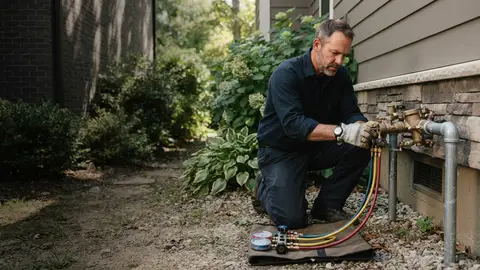
We install sediment and carbon filters at the main line, with valves for easy cartridge changes, and add UV disinfection for catchment and well homes.
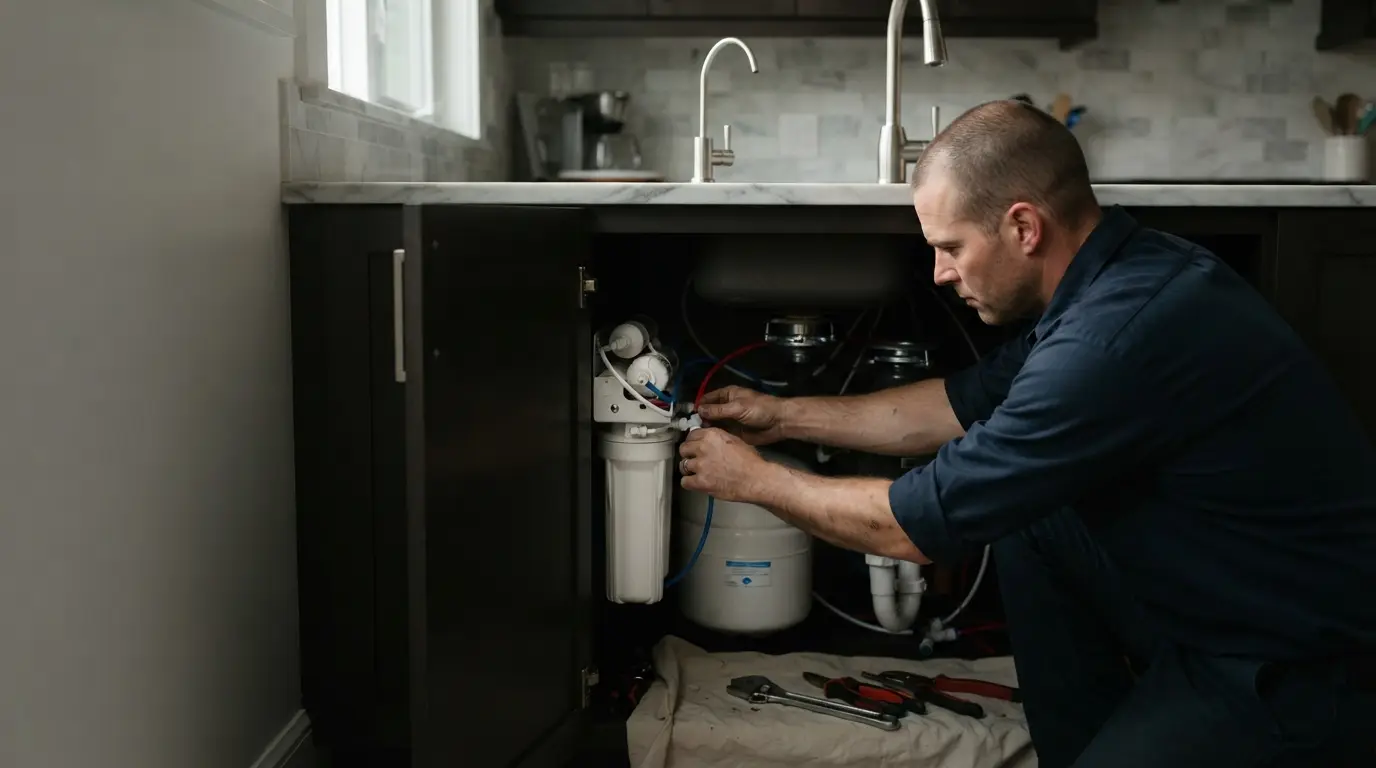
We mount a reverse osmosis system under the kitchen sink with its own faucet, and can feed it to the refrigerator.
Typical cost
You approve a written price before installation.
Get a written price: (833) 733-2357The problem decides the equipment.
UV and multi-stage catchment systems cost more than a basic filter.
Larger homes need larger equipment.
Plumbing changes and drains add labor.
Filters, UV lamps and salt need replacing.
Benefits
UV and filtration protect catchment households.
Water heaters and fixtures last longer.
Carbon and reverse osmosis remove off flavors.
Neutralized water corrodes less.
Catchment homes in places like Volcano (525 homes) and Mountain View need a system designed for rainwater: a sediment filter to catch particles, a finer filter, then UV light to kill bacteria and viruses. A pressure pump and tank feed the house. We install and service the full train, replace UV lamps and filters on schedule, and recommend regular lab testing. The Hawaii Department of Health publishes guidance for catchment owners that is worth reading.
Rainwater is naturally soft and can be slightly acidic, more so downwind of the volcano. Acidic water corrodes copper and fittings and can raise metal levels at the tap. A neutralizing filter raises pH before water reaches your pipes and heater. We test pH and recommend neutralizing where it is low.
Most homes in Urban Honolulu (157,303 homes), Ewa Gentry and Kapaa receive treated county water. Many owners still want better taste, less chlorine or protection for appliances. A whole-house carbon filter or a reverse osmosis drinking water system usually solves that. We check your supplier's water quality report, test at the tap and recommend only what makes a difference.
Dry leeward areas such as Kailua-Kona (9,923 homes) and Kihei (12,155 homes) rely on county water and, in some subdivisions, private systems. Owners there often ask about spotting on glass and scale in water heaters. We test hardness before suggesting a softener, since many homes are better served by a simple filter.
Treatment only works with steady pressure. Catchment homes use a pump and pressure tank to push water through filters and the UV unit. A pump that short-cycles, a waterlogged pressure tank or a failing check valve causes pressure swings, sputtering faucets and early pump failure. We test the pressure switch and tank charge, replace worn pumps and size new equipment so the filters and UV light have the flow they are designed for.
Scale and sediment shorten the life of electric elements, tankless heat exchangers and solar storage tanks. Where water is hard or catchment carries sediment, a softener or sediment filter ahead of the heater pays off in fewer repairs. We recommend checking the heater for buildup when a treatment system goes in, and flushing it once the cleaner water is flowing.
51% of Hawaii homes in our data were built before 1980, and older plumbing can add rust, copper or lead from old solder and fittings, especially with soft or acidic water. A certified lab test shows what is reaching your glass. Point-of-use reverse osmosis reduces many metals at the kitchen tap, and repiping removes the source. We explain the results in plain terms and suggest the simplest fix that works.
If your catchment water looks or smells wrong, or a test shows bacteria, use bottled water for drinking and cooking. If your UV light is out, treat the water as unsafe until it is fixed.
Find any recent water test or county water report, then call us.
Some treatment installations that change plumbing need a county permit, which we pull. Our plumbers hold the licenses Hawaii requires.
Why choose us
What you can count on every time one of our plumbers comes to your door.
Every job is handled by a plumber who holds the license your state or city requires, backed by liability insurance.
Our plumber explains the problem and the options, and you approve a written price before any work begins.
Burst pipes, sewage backups and failed water heaters get priority scheduling, including nights and weekends.
We pull permits when the job needs one and schedule the inspection, so the work holds up when you sell.
Repairs and installations come with a written warranty on labor, on top of the manufacturer's warranty on parts.
Our pages and plumbers account for your area's water, soil, climate and the age of the homes around you.
Service area
We install and service water treatment in 163 Hawaii communities. Choose yours:
It depends on hardness, household size and installation space. We test first and give you a written price.
Filter stages, the UV unit, the pump and plumbing changes set the price. We quote after seeing your tank and house.
Running costs are mainly filter and membrane changes, usually once or twice a year.
Yes. We test hardness, pH and other basics, and recommend a lab test for bacteria on catchment and wells.
Yes. We replace filters, UV lamps, pumps and pressure tanks and fix leaks in the system.
Usually near where water enters the house, in a garage, utility area or covered space protected from sun and rain.
Only with proper filtration and disinfection, and regular testing. Untreated rainwater can carry bacteria.
It can make rain more acidic, which can draw metals from roofs and pipes. Neutralizing and testing help.
Most softeners and filters take a few hours. Full catchment systems can take a day.
After we flush the system and, ideally, a follow-up lab test confirms it is clean.
Every few months for sediment filters, depending on use and how dirty the water is. UV lamps yearly.
Regularly, and after storms, roof work or any change in taste or color. Ask the Department of Health for guidance.
Use bottled water for drinking and call us. Lamp and ballast failures are common, quick repairs.
It varies by island and well. Some areas have moderately hard water and others soft. We test before recommending anything.
Many rely on catchment, so they need filtration, UV disinfection and sometimes pH correction.