Vitrified clay
Era: Older homes, before about 1970
Common trouble: Root intrusion at joints, cracks
Main line clogging every few months, or sewage smell by the cleanout? We handle sewer line repair and replacement in Hawaii for homes on county sewer. Many Oahu laterals were laid in the 1950s through the 1970s in clay or cast iron. Roots from fast-growing tropical trees split their joints, ground settlement sags them and corrosion thins old iron. Lava rock and coral fill make digging hard, so we use a camera to find the exact problem and repair only what needs repair, often without a long trench.
The service
The lateral is the pipe that carries waste from your home to the county main, usually under the yard or driveway. In most of Hawaii the property owner is responsible for it up to the connection at the main or property line. With 51% of Hawaii homes in our data built before 1980, a large share of laterals are past their expected life, and 39% of Kailua homes and 71% of Waipahu homes are that old.
Sewer pipe we find in Hawaii
Era: Older homes, before about 1970
Common trouble: Root intrusion at joints, cracks
Era: 1950s to 1980s, under slabs and buildings
Common trouble: Rust, scale, split bottoms
Era: Some mid-century homes
Common trouble: Collapses and deforms
Era: Newer subdivisions
Common trouble: Settling at joints, poor slope
Why Hawaii
Trees here never go dormant. Roots from monkeypod, mango and banyan find any crack in a clay or cast iron lateral and fill it over a few seasons.
Lots on fill, coral or former wetland settle unevenly, creating belly sags where waste collects and joints that pull apart.
Sewer gases and humidity eat cast iron from the inside. The bottom of the pipe often wears through first, leaking into the soil.
Heavy vehicles and later additions built over old laterals crack pipe that was never meant to carry that weight.
Warning signs
Our process
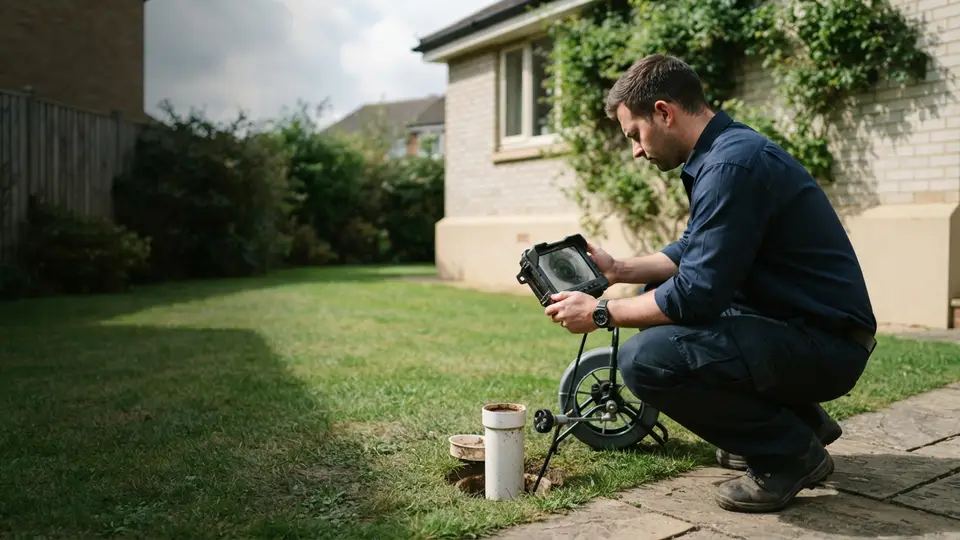
We run a camera from the cleanout to the main, measure the depth and location of each defect, and show you the video before recommending any work.
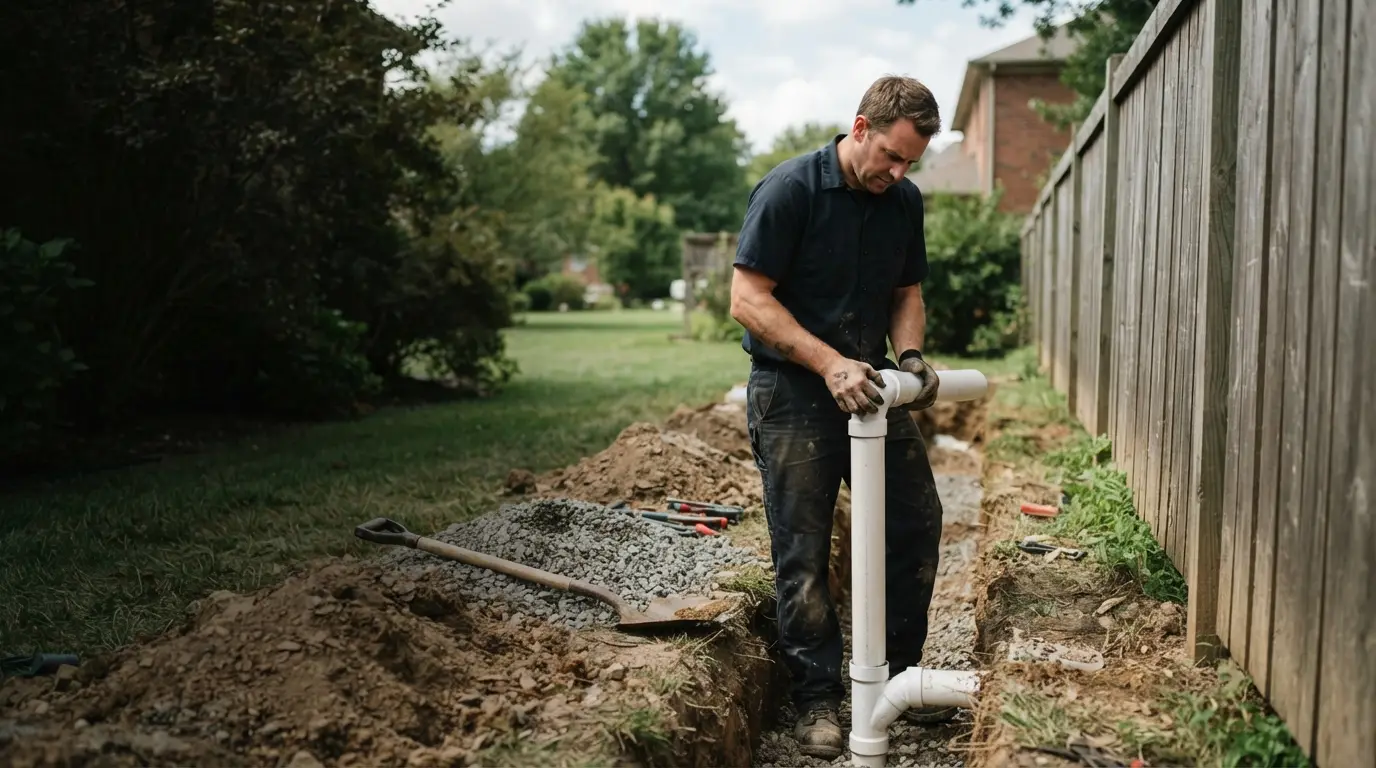
For a single break or root-filled joint, we excavate at that point and replace the damaged section, or install a structural liner patch where digging is difficult.
When the whole lateral has failed, we replace it with new pipe by open trench, or by pipe bursting or lining where rock, landscaping or a driveway make trenching costly.
Typical cost
We show you the camera findings and you approve a written price before we dig.
Get a written price: (833) 733-2357A spot repair costs far less than a new lateral.
Rock, coral and deep lines take heavy equipment.
Lining or bursting avoids restoration costs but needs special equipment.
Driveways, walls and landscaping add cost.
Fees and inspections differ by county.
Benefits
Fixing the defect ends the cycle of cleanings.
Leaking sewage softens soil and draws termites.
Video and permits document the repair.
New pipe resists roots and corrosion for decades.
Lava rock, coral fill, retaining walls and tight lots make open trenching slow and costly on every island. Lining installs a resin pipe inside the old one through the cleanout, and pipe bursting pulls new pipe through the old path. Neither works on every line, since collapsed sections and severe sags still need digging, but where they fit they save the yard, the driveway and days of work. We tell you which methods suit your line after the camera inspection.
Multi-unit buildings hold 60% of homes in Urban Honolulu and 26% in Halawa. Their building sewers carry waste from every unit, and a failure backs up into the lowest floor. We inspect and repair building drains and laterals for associations and owners, plan work to keep units in service where possible and coordinate shutoffs with management.
Ewa Beach, where 88% of homes predate 1980, and Pearl City at 69% have many original laterals. Newer master-planned areas such as Kapolei, with a median build year of 2006, rarely need replacement but do see settling joints. Knowing the age of your neighborhood tells us what to look for before the camera goes in.
Central Maui towns such as Wailuku (7,086 homes) and Kahului connect to county sewer in their older cores, while many outlying homes use cesspools or septic. Neighbor-island repairs need careful planning because some pipe and fittings come by barge. We confirm materials before starting so a lateral is not left open waiting for parts.
A sewer camera inspection before closing shows buyers what they are getting and helps sellers avoid surprises in negotiation. We provide the video and a written summary of the line condition you can share with the other party.
A sewer line that leaks under or beside a house keeps the soil damp. Formosan subterranean termites, common across the islands, are drawn to moisture, and wet ground under a slab or post foundation can shift. If you have had termite treatment and the moisture source was never found, a camera inspection of the sewer line is a sensible next step.
Stop running water and flushing toilets so sewage does not rise further. Keep children and pets away from any backup.
If you can find the outdoor cleanout, do not open it while the line is full, since sewage can spray out under pressure. Then call us.
Sewer lateral repair and replacement generally require a county plumbing permit, and work near the main may involve the county wastewater agency. We pull the permits and schedule inspections. Our plumbers hold the licenses Hawaii requires.
Why choose us
What you can count on every time one of our plumbers comes to your door.
Every job is handled by a plumber who holds the license your state or city requires, backed by liability insurance.
Our plumber explains the problem and the options, and you approve a written price before any work begins.
Burst pipes, sewage backups and failed water heaters get priority scheduling, including nights and weekends.
We pull permits when the job needs one and schedule the inspection, so the work holds up when you sell.
Repairs and installations come with a written warranty on labor, on top of the manufacturer's warranty on parts.
Our pages and plumbers account for your area's water, soil, climate and the age of the homes around you.
Related services
Service area
We inspect and repair sewer lines in 163 Hawaii communities. Choose yours:
It depends on depth, the length of damaged pipe, rock or coral, and what sits above the line. We price it in writing after a camera inspection.
Often, once you count restoring the driveway or landscaping. On short, shallow lines in open yards, a trench can cost less.
It is priced as its own service. Many owners find it saves money by showing exactly where the problem is.
We run a camera through the cleanout, locate each defect from the surface and mark it, then show you the video.
Yes, when the rest of the pipe is sound. If the camera shows widespread damage, replacement usually costs less over time.
Yes. We pull the permit and schedule the inspection with your county before covering the new pipe.
Raw sewage carries bacteria and attracts pests. Keep people and pets away and call us to stop the leak.
Yes, through dry traps or broken pipe. If you smell it, run water in unused drains and call us to find the source.
A spot repair is often done in a day. A full replacement takes one to several days, depending on rock and method.
Usually not while the line is open. We plan the work to keep that time as short as we can.
Keep trees away from the line and replace cracked pipe. Root cutting helps for a while, but roots return.
Every few years for clay and cast iron lines, and before buying or selling a home.
Stop using water, keep away from the sewage and call us. Backups get priority scheduling.
In most cases the property owner is responsible up to the county main or property line. Your county wastewater office can confirm the split.
Many lots sit on lava rock or coral fill. Breaking it takes heavy equipment, which is why we often recommend trenchless methods.