Hard water and scale
Much of Indiana draws water from limestone aquifers, and the result is very hard water. Scale ruins water heaters, fixtures and appliances. We install softeners and repair scaled equipment.
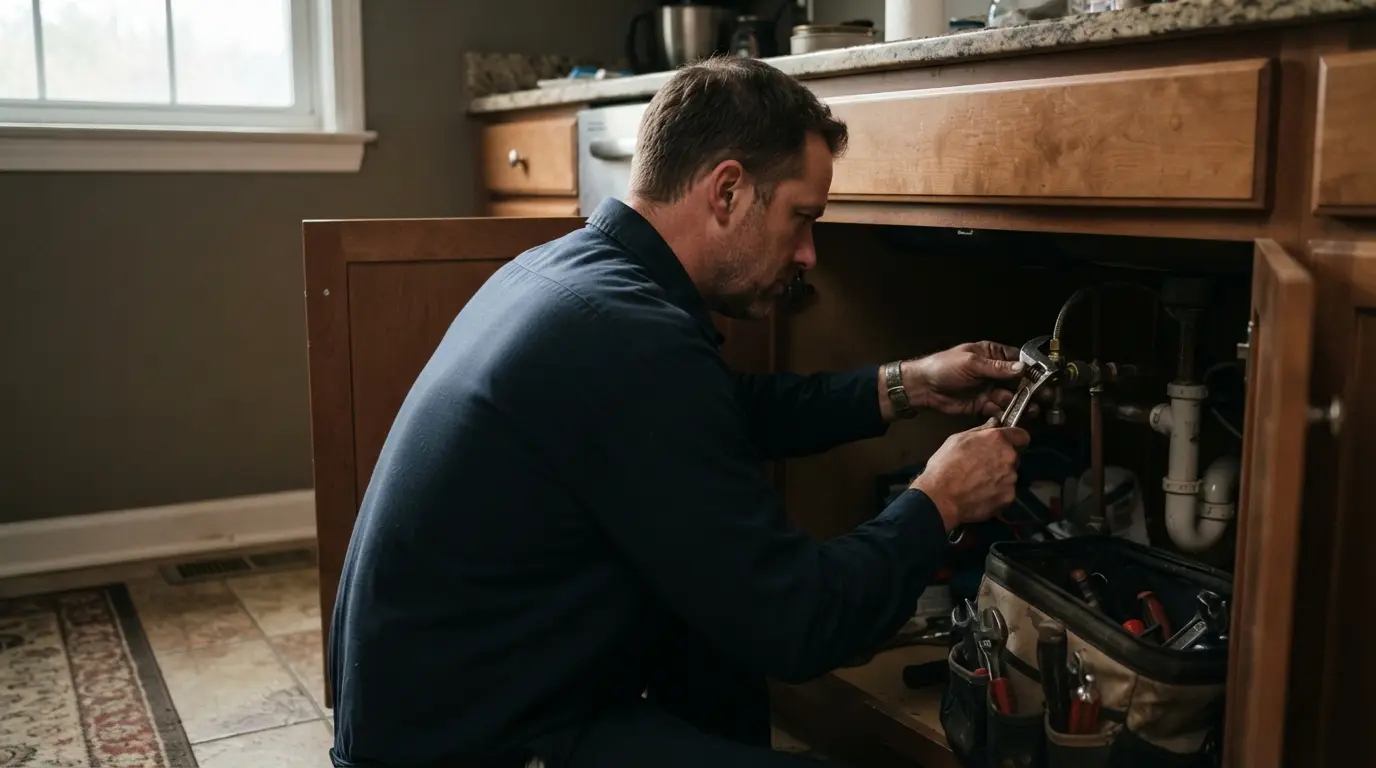
Hard water scaling the heater, or a basement drain backing up? Our plumbers in Indiana find the cause and fix it. We work in Indianapolis neighborhoods and fast-growing Hamilton County suburbs, Region homes near Lake Michigan, college towns like Bloomington and West Lafayette, and river cities from Evansville to Jeffersonville. Indiana plumbing deals with some of the hardest water in the region, older industrial-city housing, cold winters, spring flooding and many homes on septic and private wells. Here is what we fix and where we serve.
Plumbing in Indiana
Our Census data covers 4,865,964 Hoosiers in 2,165,129 homes across 976 places. 58% of homes predate 1980, with far higher shares in older industrial cities: 88% in Gary, 89% in Hammond and 79% in South Bend. Hamilton County tells the opposite story, with median homes built in 2002 in Fishers and 2010 in Westfield.
65% of homes heat with utility gas and 31% with electricity. Renters occupy 36% of homes statewide, 65% in Bloomington and 71% in West Lafayette, and manufactured homes make up 3% of housing, rising to 12% in Goshen.
Counts from the U.S. Census Bureau 2024 Gazetteer.
Explore our servicesWhat our plumbers see
Much of Indiana draws water from limestone aquifers, and the result is very hard water. Scale ruins water heaters, fixtures and appliances. We install softeners and repair scaled equipment.
Spring storms and snowmelt raise groundwater and overload sewers. We repair and add sump pumps, backups and backwater valves.
Cold snaps freeze pipes in crawl spaces, outside walls and garages, especially in the north.
Clay and cast iron laterals in older city neighborhoods fill with roots and crack. We camera, clean and replace them.
Rural homes and many subdivisions rely on septic and private wells. We pump, inspect and repair systems and service well plumbing.
Gas and electric heaters fail early in hard water. We repair, flush and replace them.
Our services
Each service page explains how we handle that work in Indiana homes and businesses.
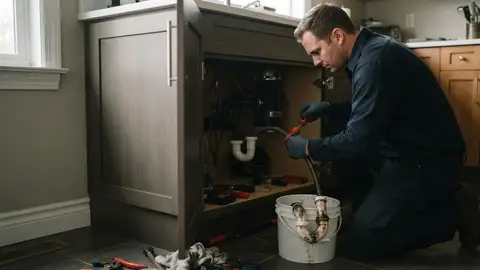
Sewer Line Repair & Replacement

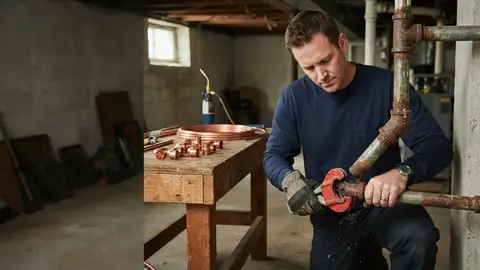
Repiping & Water Line Replacement
Gas Line Repair & Installation
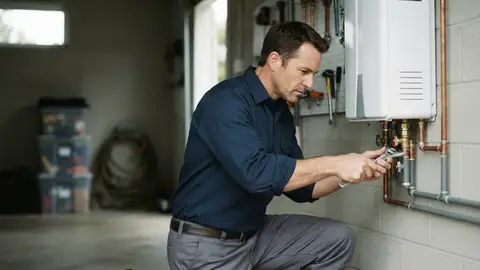
Water Heater Repair & Replacement

Toilet, Faucet & Fixture Repair
Sump Pump Repair & Installation
Across the state
Homes and main places: Indianapolis (401,428 homes), Carmel, Fishers, Greenwood
What our plumbers see: Hard water, new suburbs, older city laterals
Homes and main places: Hammond, Gary, East Chicago, Michigan City
What our plumbers see: Prewar homes, Lake Michigan water, basement flooding
Homes and main places: Fort Wayne (118,657 homes), South Bend, Elkhart, Goshen
What our plumbers see: Freezes, manufactured homes, hard well water
Homes and main places: Lafayette, West Lafayette, Terre Haute
What our plumbers see: Campus rentals, older homes, river flooding
Homes and main places: Evansville (59,180 homes), Bloomington, Columbus, Jeffersonville
What our plumbers see: Karst limestone, septic, Ohio River flooding
Indiana licenses plumbers and plumbing contractors through the Indiana Plumbing Commission, administered by the Professional Licensing Agency. Our Indiana work is done by plumbers holding the licenses the state requires.
Permits come from city or county building departments. Water heater replacement, repiping, sewer and water line work, gas piping and remodels generally need a permit. We pull it and schedule the inspection.
Northwest Indiana draws treated Lake Michigan water, while most of the state relies on groundwater and some rivers and reservoirs. Groundwater is generally hard, often very hard, and private wells may carry iron or sulfur. Testing a well every year is wise.
Homes beyond sewer use onsite systems permitted by local health departments under Indiana Department of Health rules. Southern Indiana's karst limestone, with sinkholes and fast-moving groundwater, makes careful system siting important. Confirm requirements with your county; we handle permits on repairs we perform.
Gary, Hammond and East Chicago, where 91% of homes predate 1980, grew with the steel mills. Their bungalows and two-flats have galvanized supply, cast iron drains and clay laterals that are now very old, and many basements flood in heavy rain. We repipe, replace laterals, install backwater valves and maintain sump pumps across the Region.
Buildings with five or more units hold 59% of homes in West Lafayette and 44% in Bloomington. Student housing sees heavy use and empty breaks. We handle repairs and turnovers for owners and managers. Tenants should report problems to the owner or manager, who arranges our visit.
Northern Indiana builds many of the country's RVs and manufactured homes, and manufactured homes are common here: 12% of Goshen homes, 10% of Seymour homes and 9% of Elkhart homes. Their supply lines run under the floor behind skirting and freeze when heat tape fails. We repair lines, replace heat tape and connect homes to wells and septic.
Around Bloomington and Bedford, where 80% of homes predate 1980, the ground is limestone with sinkholes and caves. Sewer and water lines can be stressed by settling, and septic systems need careful siting. We plan excavation around rock and help owners protect wells and septic in karst areas.
Carmel (40,859 homes), Fishers, Westfield and Noblesville have grown quickly since the 1990s. Their newer homes rarely need repiping, but they do need water softeners, water heater service, sump pump backups and repairs to builder-grade fixtures. Some subdivisions sit on septic or have private irrigation wells, and many have lawn sprinklers that need backflow testing and winterizing. We handle all of it, with work scheduled around busy family calendars.
Evansville, Jeffersonville, New Albany and Madison sit on the Ohio River, and Terre Haute and Lafayette on the Wabash. Heavy rain and high water raise groundwater, back up sewers and flood low basements. In Richmond, 83% of homes predate 1980, and in Logansport 83%, so older drainage is common in these river towns too. We service sump pumps, backwater valves and drain lines before and after flood season, and we check septic systems and wells on low ground once the water recedes, since floods can damage both and contaminate well water.
Service area
Our largest service areas by population:
Every Indiana place in our data, grouped by county:
Adams County
Allen County
Bartholomew County
Benton County
Blackford County
Boone County
Brown County
Carroll County
Cass County
Clark County
Clay County
Clinton County
Crawford County
Daviess County
DeKalb County
Dearborn County
Decatur County
Delaware County
Dubois County
Elkhart County
Fayette County
Floyd County
Fountain County
Franklin County
Fulton County
Gibson County
Grant County
Greene County
Hamilton County
Hancock County
Harrison County
Hendricks County
Henry County
Howard County
Huntington County
Jackson County
Jasper County
Jay County
Jefferson County
Jennings County
Johnson County
Knox County
Kosciusko County
LaGrange County
LaPorte County
Lake County
Lawrence County
Madison County
Marion County
Marshall County
Martin County
Miami County
Monroe County
Montgomery County
Morgan County
Newton County
Noble County
Ohio County
Orange County
Owen County
Parke County
Perry County
Pike County
Porter County
Posey County
Pulaski County
Putnam County
Randolph County
Ripley County
Rush County
Scott County
Shelby County
Spencer County
St. Joseph County
Starke County
Steuben County
Sullivan County
Switzerland County
Tippecanoe County
Tipton County
Union County
Vanderburgh County
Vermillion County
Vigo County
Wabash County
Warren County
Warrick County
Washington County
Wayne County
Wells County
White County
Whitley County
How it works
We ask about symptoms, the home's age and whether water or gas should be shut off.
Flooded basements, burst pipes and gas odors get priority scheduling.
Camera inspection, leak detection or water testing comes first.
Options and costs come before work starts.
Work is tested and inspected where required.
Have a plumbing problem in Indiana?
Call Expert Plumber Now and tell us what is happening. We’ll send a licensed plumber.
Pricing
We price each job on what we find. These factors move the price most:
Galvanized, cast iron and clay often need replacement.
Scaled heaters and fixtures may need replacing, not repair.
Limestone and winter digging slow excavation.
Rural systems add tanks, pumps and treatment.
Fees vary between cities and counties.
After-hours calls cost more.
You receive a written price before work begins.
Season by season
Keep heat on, open cabinets on outside walls, disconnect hoses and check heat tape in crawl spaces and manufactured homes.
Test sump pumps and backups before storm season; watch for wet basements and septic odors.
Storms can flood basements; keep sump discharge and gutters clear.
Flush the water heater, shut off outdoor faucets and service septic systems.
Why choose us
What you can count on every time one of our plumbers comes to your door.
Every job is handled by a plumber who holds the license your state or city requires, backed by liability insurance.
Our plumber explains the problem and the options, and you approve a written price before any work begins.
Burst pipes, sewage backups and failed water heaters get priority scheduling, including nights and weekends.
We pull permits when the job needs one and schedule the inspection, so the work holds up when you sell.
Repairs and installations come with a written warranty on labor, on top of the manufacturer's warranty on parts.
Our pages and plumbers account for your area's water, soil, climate and the age of the homes around you.
Each job is priced on what our plumber finds: the problem, pipe material, access, permits and timing. You approve a written price before any work starts.
For most Indiana homes, yes. Hard water shortens the life of heaters and fixtures. We test before recommending one.
We ask what is happening, tell you what to shut off and schedule our plumber, with flooding, burst pipes and gas odors first.
Yes. We pull the permit from your city or county building department and schedule the inspection.
Leave without using switches and call your gas utility or 911 from outside. We repair the piping once it is safe.
Usually a few hours in an existing pit. A new pit or backup takes longer.
Keep heat on, open cabinets on outside walls, disconnect hoses and drip faucets on the coldest nights.
Stay away from water near electrical equipment and call us. Flooding gets priority scheduling.
Yes. Our Indiana work is done by plumbers licensed through the Indiana Plumbing Commission.
Most Indiana groundwater is hard, often very hard. Lake Michigan water in the Region is moderately hard.