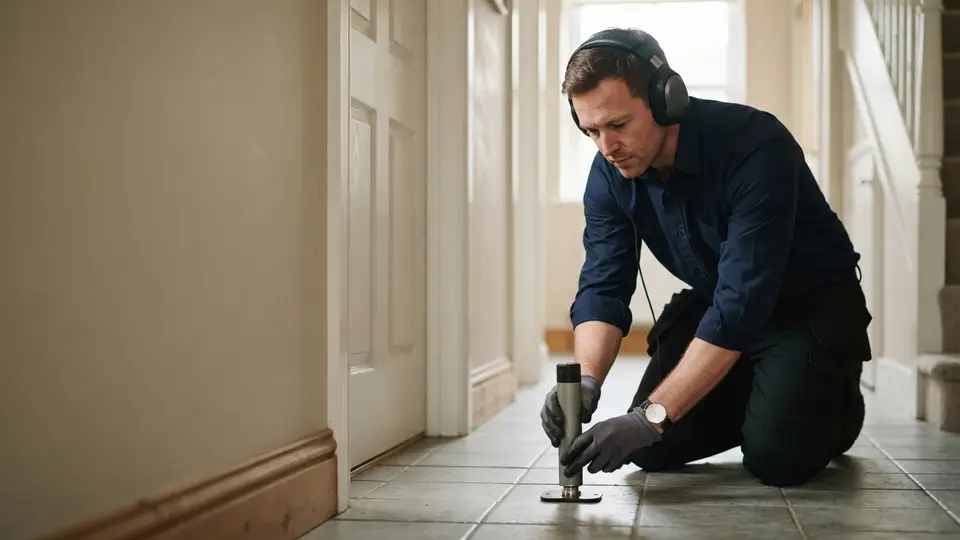
Pressure test
What it finds: Whether a system is losing water
Where it helps: First step on every call

Water bill creeping up, or a stain below the bathroom? We provide leak detection and repair in Indiana for homes and businesses. Indiana leaks often start in winter, when pipes in outside walls, crawl spaces and garages freeze and crack. Others come from galvanized pipe rusting through in older city homes, hard water wearing out valves and fittings, or a service line failing underground. We find the leak with pressure, acoustic and thermal tools, open only where needed and repair it properly.
The service
58% of Indiana homes in our data predate 1980, many with galvanized or early copper supply. Newer homes in Carmel, Fishers and Greenwood have PEX with many fittings. Either way, a leak can hide for months. We use tools that point to it before we cut.
Our leak detection tools
What it finds: Whether a system is losing water
Where it helps: First step on every call
What it finds: Sound of escaping water
Where it helps: Walls, floors, buried lines
What it finds: Temperature changes from leaks
Where it helps: Ceilings and walls
What it finds: Wet drywall and wood
Where it helps: Mapping the damage
What it finds: Path of buried pipe
Where it helps: Service lines
Why Indiana
Pipes in outside walls, crawl spaces and garages split in cold snaps and leak after thawing.
Old galvanized supply rusts from inside and fails at threads.
Scale wears valves, fill valves and supply connections until they drip.
Old galvanized and copper service lines fail underground.
Warning signs
Our process
Our plumber shuts off branches one at a time, watches the gauge and then listens and scans to narrow the spot to a few inches.
A small, square cut gives access; the failed piece comes out, new pipe goes in and the system is tested under pressure before we close up.
A burst line moves to the front of our schedule. We get the water off, swap the split pipe and look along the same run for other weak spots.
Frozen runs are warmed slowly, split sections replaced, and lines that freeze every winter are wrapped, heat-traced or moved indoors.
Typical cost
We explain the findings, and you approve a written price before repairs.
Get a written price: (833) 733-2357Exposed pipe costs less than pipe in walls or underground.
Quiet or multiple leaks take longer.
Tile and finished basements add work.
Widespread corrosion may make repiping better.
After-hours calls cost more.
Benefits
Pinpointing saves walls and floors.
A stopped leak shows on the next bill.
Drying starts sooner.
Written findings help claims.
After a week of subzero nights, check the house as it warms. A crack sealed by ice can start leaking once it thaws, sometimes days later. Look under kitchen sinks on outside walls, near hose bib lines in the basement and in crawl spaces. If pressure drops or the meter spins, call us; we check the most freeze-prone runs first.
Carmel (40,859 homes), Fishers and Greenwood have many homes built since the 1990s. PEX rarely pinholes, but poorly made fittings, nail punctures from remodels and rodent damage in crawl spaces cause leaks. Builder-grade supply hoses on toilets and washers fail too. We find and fix them, and can add leak sensors and automatic shutoffs.
The service line runs from the meter to the house below frost depth. A leak shows as a wet spot in the yard, a damp basement wall or a high bill. In Kokomo (29,814 homes), Columbus and Jeffersonville, we locate and repair or replace these lines.
Farm and country homes on private wells get no water bill to warn them. The tell is usually sound: the well pump clicking on in the night, or the pressure tank cycling every few minutes. We check the foot valve and check valve, isolate the house from the yard line and find where the water is going.
Wet drywall in a warm Indiana July can sprout mold within days, and finished basements hide it behind carpet and paneling. Once the pipe is fixed, our moisture readings show how far the water traveled so you can decide on fans, a restoration crew or simply time.
Some neighborhoods, including parts of Lawrence (20,422 homes) and hilly areas in the south, receive high water pressure that strains fittings and hoses. We test pressure and install or replace a pressure-reducing valve, with an expansion tank where needed.
Ranch homes across Indiana, especially those built from the 1950s through the 1970s, often sit over vented crawl spaces where supply lines hang from the floor joists. Open vents, missing insulation and rodents make these runs the most common source of hidden leaks we find. A slow drip there soaks the vapor barrier and can rot sill plates before anyone notices. We crawl the space, test each run, repair what is leaking and recommend insulation or closing vents in winter.
Outdoor faucets left with a hose attached split inside the wall, and the leak only shows in spring when the faucet is turned on. Sprinkler lines and pool fill lines not drained in fall crack in the first hard freeze. If a spring water bill jumps, these are the first places we check.
Shut the main valve where the line enters the basement or crawl space. For a frozen but unbroken pipe, open the tap it feeds and warm the cold spot with a hair dryer or small heater, never a torch.
Kill power to soaked rooms only if the panel is in a dry place, photograph everything for the adjuster and then phone us.
Small repairs usually need no permit; larger replacements do, and we pull them. Our plumbers hold the licenses Indiana requires.
We find and fix leaks in 976 Indiana communities. Choose yours:
Why choose us
What you can count on every time one of our plumbers comes to your door.
Every job is handled by a plumber who holds the license your state or city requires, backed by liability insurance.
Our plumber explains the problem and the options, and you approve a written price before any work begins.
Burst pipes, sewage backups and failed water heaters get priority scheduling, including nights and weekends.
We pull permits when the job needs one and schedule the inspection, so the work holds up when you sell.
Repairs and installations come with a written warranty on labor, on top of the manufacturer's warranty on parts.
Our pages and plumbers account for your area's water, soil, climate and the age of the homes around you.
Service area
In Indianapolis (401,428 homes in the city), Fort Wayne, South Bend and Hammond, many older homes still have galvanized supply. Leaks start at threads and spread. When we find several, we price a repipe alongside the repair so you can compare.
The price depends on how many branches we test and how hidden the leak is. We quote it in writing before the equipment comes out.
Many Indiana policies cover sudden freeze breaks in a heated house. Our dated report and photos make the claim easier to document.
Once galvanized or old copper has leaked in two or three places, replacing the system often beats paying for repair after repair.
Usually. Pressure tests, listening gear and a thermal camera narrow it down so the opening stays small.
Yes. We map the pipe from the meter or well to the house and pinpoint the leak with acoustic equipment.
We leave a neat, square opening. A drywall finisher can close it, and we can suggest one.
Yes, carefully: open the faucet and use a hair dryer or space heater. An open flame can start a fire inside the wall.
It can be if water reaches outlets or appliances. Stay out until power to that area is off.
Many are located in an hour or two. Leaks in slabs or long yard lines take more time.
In most cases, yes. A buried service line or slab leak may need a second appointment.
Shut off every fixture and read the meter, then read it again in 30 minutes. Any change means water is escaping.
Wrap exposed pipe, drain and disconnect hoses, close off crawl space vents and keep the thermostat up during cold snaps.
Close the main valve and call us. Active leaks go to the top of our schedule.
Open vents and thin insulation let arctic air reach the pipe on the coldest nights.
Over years, scale wears valve seats and fittings until they weep. Softening the water slows that wear.