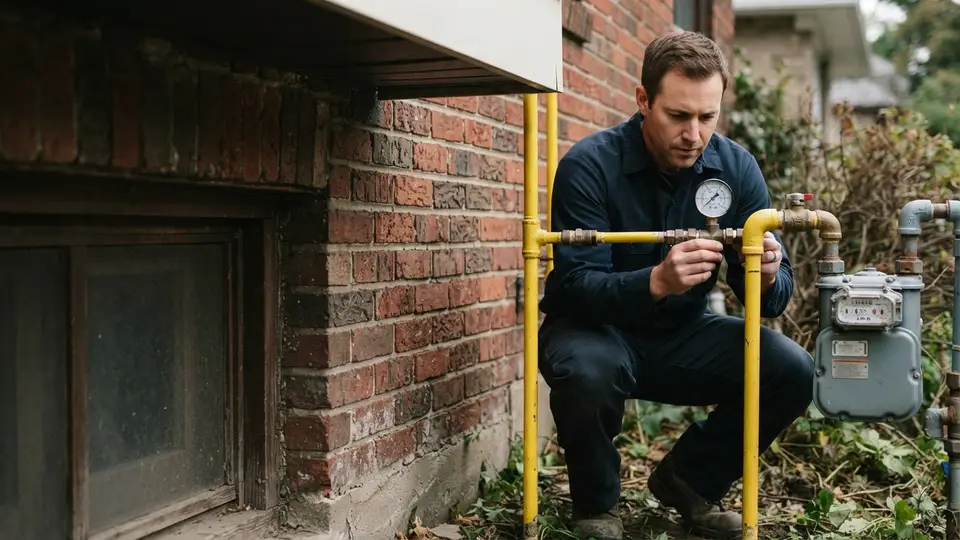
Leak repair
Typical reason: Odor or failed pressure test
What we do: Find, replace, retest
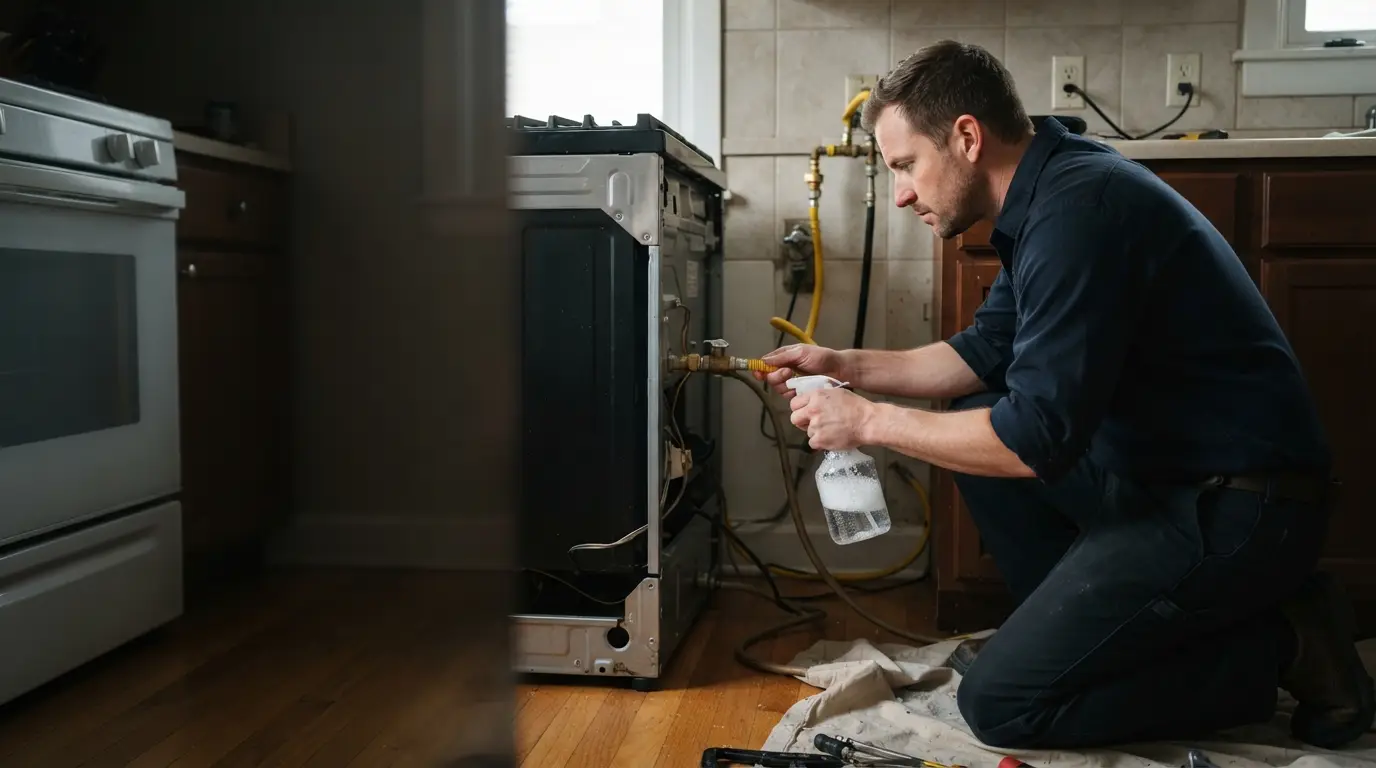
Gas smell by the meter, or adding a generator or range line? We do gas line repair and installation in Indiana for homes and businesses. Natural gas heats most Indiana homes, and much of the piping in older basements is threaded black steel laid down decades ago. Rural homes run on propane. We locate and repair leaks, replace rusted runs, add lines for new appliances and outdoor kitchens and connect everything safely, with pressure testing and permits on every job.
The service
In our Census data, 65% of Indiana homes heat with utility gas. The Region leads, with 86% of Hammond homes and 87% of Michigan City homes, while Seymour is at 38% and Madison 49%. Propane serves farms and rural homes beyond the mains, 2% of homes statewide. Gas is delivered by utilities such as NIPSCO in the north, CenterPoint Energy in much of central and southern Indiana and Citizens Energy Group in Indianapolis.
Gas services
Typical reason: Odor or failed pressure test
What we do: Find, replace, retest
Typical reason: Range, dryer, generator, grill
What we do: Size, run, shutoff, permit
Typical reason: New or replacement appliance
What we do: Connector, valve, leak check
Typical reason: Rusted or undersized pipe
What we do: New pipe, test, inspection
Why Indiana
Moisture and past floods rust steel pipe and fittings.
Uncoated brass flex connectors crack with age and movement.
Generators, tankless heaters and outdoor kitchens added to old, small lines starve everything.
Frost heave stresses outdoor piping, and digging without an 811 call damages buried lines.
Warning signs
Our process
After the utility or fire department makes the house safe, we pressure test, track the leak to a joint or section, replace it and test again.
We add up every appliance load, size the pipe, install it with shutoffs and test it for the inspector.
Ranges, dryers, water heaters, fireplaces and grills are connected with new flex lines and valves, and venting is checked.
Typical cost
We give you the price in writing before work starts.
Get a written price: (833) 733-2357Long runs and finished ceilings add labor.
Generators and tankless heaters need bigger pipe.
Trenching costs more.
Each branch adds a valve and fittings.
Required for new piping.
Benefits
Proper sizing, fittings and testing.
Enough gas for everything at once.
Permits and records on file.
Old branches capped correctly.
Ice storms and summer derechos have made standby generators popular from Westfield (22,030 homes) to Evansville. A whole-house generator needs a large, dedicated gas line, and sometimes a bigger meter. We calculate the load, run the line, coordinate with the utility on the meter and work alongside the electrician who installs the transfer switch.
In Gary (37,816 homes), Hammond, Richmond and older Indianapolis neighborhoods, gas piping may have been extended many times, with abandoned branches and rust along the basement walls. We replace corroded runs, cap old branches properly and support the pipe the way code requires.
Rural homes near Plymouth (4,853 homes), Goshen and across southern Indiana often use propane (3% of Richmond homes). The supplier owns the tank and first regulator; we run and repair house piping and connect appliances, and convert them when a gas main reaches the road.
A permanent line to the grill or fire pit means no more empty propane bottles. We bury or wall-mount the line with an outdoor shutoff, use materials rated for the job and get it inspected.
If floodwater reached a furnace, water heater or dryer, do not relight it until it is inspected. Water damages gas controls. We check and replace what is unsafe.
A gas leak smells of rotten eggs; carbon monoxide has no smell at all. Every home with gas appliances should have carbon monoxide alarms near bedrooms, and we check venting whenever we connect or repair a gas appliance.
Inspectors in older Fort Wayne (118,657 homes) and Indianapolis homes often flag rust, missing shutoffs and old connectors. We inspect, pressure test and correct the items on the report, with a permit where needed, so the closing stays on track.
A gas tankless water heater can draw several times the gas of a tank model while it runs, and in an Indiana January it runs hard because the incoming water is so cold. Many existing lines were sized for a furnace, a tank heater and a range. Undersized pipe makes the tankless unit short-cycle and deliver lukewarm water. We calculate the full load and run a dedicated line of the right size from the meter.
Heated garages and pole-barn shops are common across rural and suburban Indiana. A gas unit heater needs a sized branch line, a shutoff within reach, correct clearances and a vent to the outside. We run these lines, often along the garage ceiling or through the basement, with a permit and inspection.
Gas fireplaces and log sets are a popular backup heat source during winter outages. Each needs its own shutoff and a correctly sized line. We connect the unit, test for leaks and coordinate venting with the fireplace installer, and recommend a yearly check before the first cold snap. If the pilot is hard to light, the glass is cloudy or you smell gas when it runs, shut it off and call us. A properly serviced fireplace can keep a room warm when an ice storm knocks out the furnace blower, but only if its gas connection and venting are sound. We also check that the fireplace has its own accessible shutoff, separate from the main gas valve, so it can be turned off quickly without shutting down the furnace and water heater.
If you smell gas, leave right away. Do not flip switches, use phones or light anything inside. From outside, call your gas utility or 911.
Do not search for the leak. When the utility says it is safe, call us for the repair.
New gas piping needs a permit and inspection, which we arrange after pressure testing the line. Our plumbers hold the licenses Indiana requires.
Why choose us
What you can count on every time one of our plumbers comes to your door.
Every job is handled by a plumber who holds the license your state or city requires, backed by liability insurance.
Our plumber explains the problem and the options, and you approve a written price before any work begins.
Burst pipes, sewage backups and failed water heaters get priority scheduling, including nights and weekends.
We pull permits when the job needs one and schedule the inspection, so the work holds up when you sell.
Repairs and installations come with a written warranty on labor, on top of the manufacturer's warranty on parts.
Our pages and plumbers account for your area's water, soil, climate and the age of the homes around you.
Service area
We repair and install gas lines in 976 Indiana communities, from Indianapolis (401,428 homes in the city) to Michigan City. Choose yours:
It depends on where the leak is, how much pipe is involved and access. You get a written price before we start.
Distance, pipe size and any meter upgrade set the price. We measure first.
It often needs a larger gas line and new venting. We price the whole job upfront.
We pressure test the system and check each joint with detection equipment.
Yes. We replace rusted runs, cap old branches and support the pipe properly.
Yes, with an outdoor shutoff and inspection.
Leave immediately and call the gas utility or 911 from outside.
Yes, near bedrooms and on every level of a home with gas appliances.
Most appliance lines take a day or less, plus inspection.
After a passing pressure test and any required inspection.
Every year, ideally in fall before heating season.
Yes, if it is uncoated brass or older than the range.
Get out and call the utility or 911. Once it is safe, call us; gas repairs get priority scheduling.
NIPSCO, CenterPoint Energy and Citizens Energy Group are among the main providers.
Many can, with the right kit. Some need replacement. We check each one.