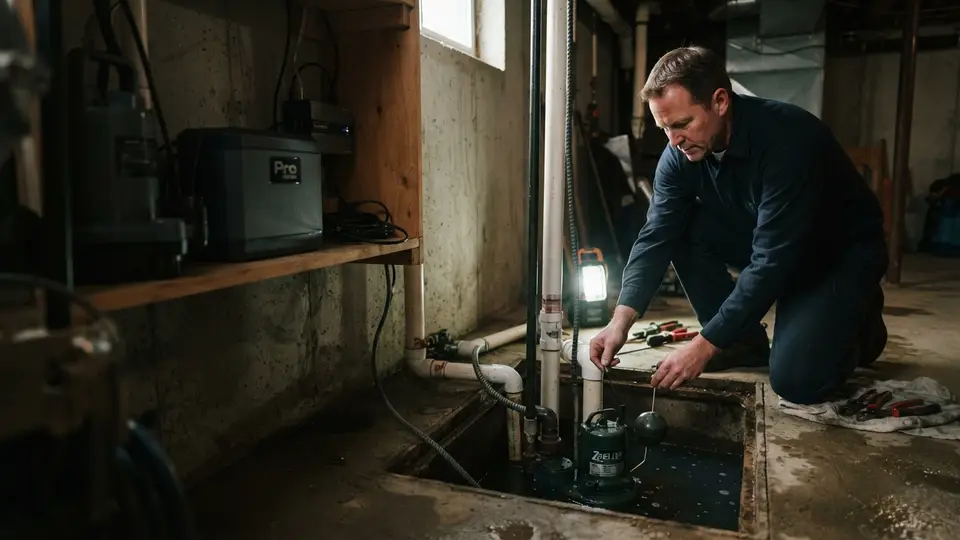
Submersible pump
Purpose: Main pump in most pits
Notes: Quiet, sealed motor
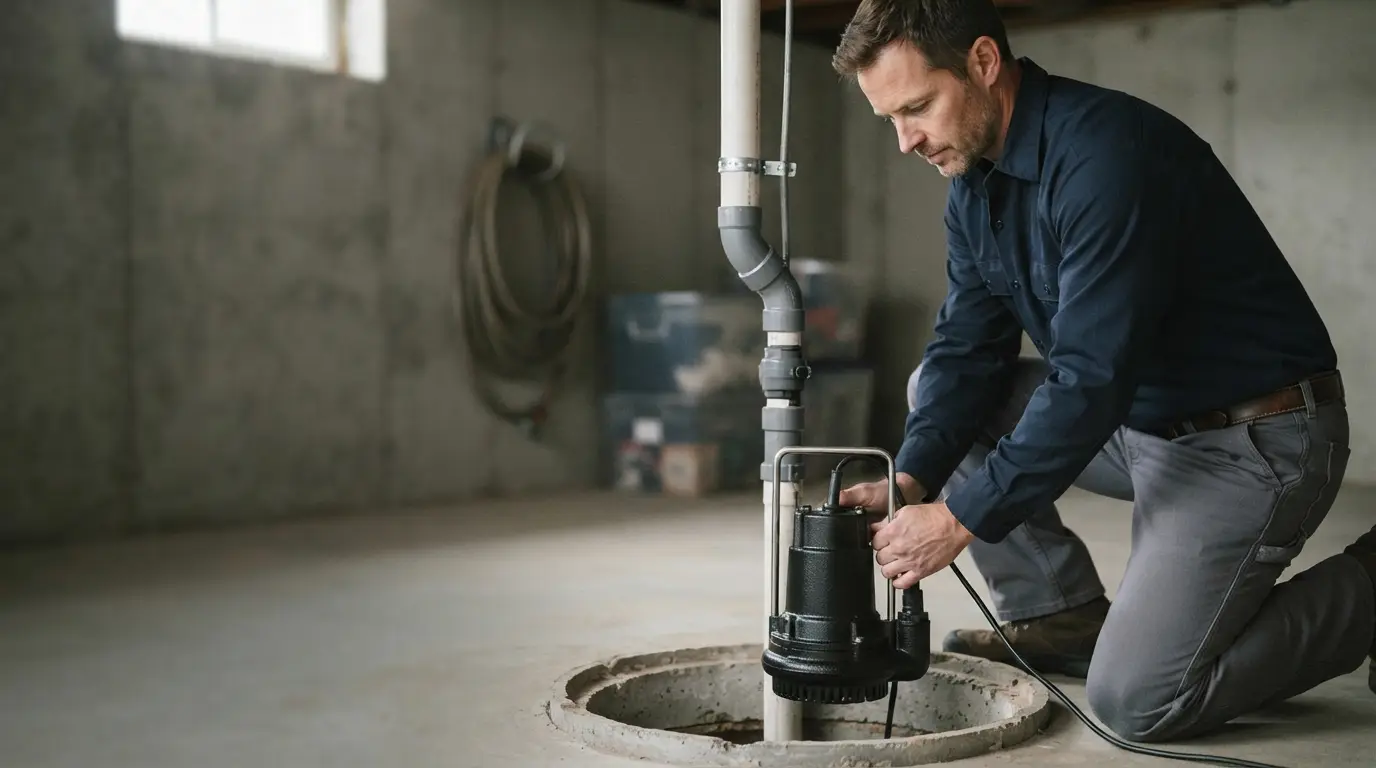
Water creeping across the basement after a storm, or a pump that will not shut off? We do sump pump repair and installation in Indiana for homes and businesses. Northern and central Indiana sit on flat, poorly drained ground where spring rain and snowmelt push the water table up against basement walls. Storms that drop inches of rain often cut the power too. Our plumbers repair and replace pumps, add battery or water-powered backups and build discharge lines that keep draining through winter.
The service
Drain tile around the footing collects groundwater and sends it to a pit, where the pump lifts it outside. Most basement homes built since the 1960s have one, from Fort Wayne (118,657 homes) and South Bend to the Hamilton County suburbs. In older city houses without a pit, water may seep through walls or the floor drain instead.
Pumps and backups
Purpose: Main pump in most pits
Notes: Quiet, sealed motor
Purpose: Narrow pits
Notes: Motor above water; louder
Purpose: Runs during outages
Notes: Battery replaced every few years
Purpose: Runs on city water pressure
Notes: Not for homes on wells
Purpose: Basement bathrooms
Notes: Sealed, vented basin
Why Indiana
Flat land and clay keep the water table high for weeks, so pumps run constantly.
Thunderstorms and ice storms knock out power exactly when the pit fills.
Iron bacteria and silt from drain tile clog floats and impellers.
Flat or buried outlet lines freeze and the pump burns out pushing against ice.
Warning signs
Our process
Motor, float, check valve and outlet are tested, the pit cleaned and the failed part replaced.
The pump is sized to the inflow and lift, set with a check valve, sealed lid and alarm, and piped to a discharge that drains between cycles.
A second pump with its own switch and battery, or a water-powered unit, keeps the pit draining when power fails.
Typical cost
We give you a written price before we start.
Get a written price: (833) 733-2357A float switch is far cheaper than a pump.
Bigger pumps cost more.
Battery and water-powered units differ.
Cutting the floor adds labor.
Long or buried runs take more time.
Benefits
Water leaves before it spreads.
Backups keep pumping.
Outlets that do not freeze.
Alarms before damage.
South Bend, Mishawaka (25,024 homes), Valparaiso and Fort Wayne sit on low, wet ground with heavy lake-effect snow. Spring melt raises groundwater fast. Homes there often need a heavy-duty pump, a backup and a high-water alarm, and some benefit from two primary pumps in the same pit.
Carmel (40,859 homes), Fishers and Noblesville have subdivisions built around retention ponds and creeks. After big storms, groundwater near those areas stays high for days. We check pump capacity, backups and the discharge route, and make sure gutters and grading are not sending roof water straight back into the tile.
In some parts of Indiana, groundwater carries iron bacteria that coat the pit, float and impeller with orange slime. Floats stick and pumps fail early. We clean the pit, choose a pump and float design that resists fouling and suggest a cleaning schedule.
We slope outlet pipes to drain completely between cycles, keep buried sections below frost or bring them above ground, and add a freeze-relief fitting near the wall so water escapes if the outer pipe ices up.
Evansville (59,180 homes), Lafayette and Terre Haute see high river levels that push groundwater up for long stretches. Pumps there need capacity and reliability; we test them before flood season and replace aging units.
A basement bathroom below the sewer line needs an ejector pump in a sealed, vented basin with an alarm. When it fails, the basement fixtures back up. We repair and replace ejectors and their check valves.
Before finishing a basement in Kokomo (29,814 homes) or anywhere else, upgrade the pump, add a backup and alarm and leave the pit reachable behind a removable panel. A flood after finishing is far more costly than the upgrade.
If your pump rarely runs but water still seeps in along the basement walls, the drain tile feeding the pit may be crushed or filled with silt and iron sludge. Older clay tile is especially prone to this. We look at the pit inlets, flush the tile where we can reach it and, if needed, camera it to find the blockage. Restoring the tile sends water back to the pump instead of across your floor.
A surprising share of the water a sump handles comes off the roof. Short downspouts and soil that slopes toward the house send rain straight down to the footing. Extending downspouts several feet and building up soil against the foundation can cut pump cycles sharply. We point these out during every visit, because a pump that runs less lasts longer.
A pump sharing a circuit with a freezer or dehumidifier can lose power when that breaker trips. A dedicated outlet and a high-water alarm that alerts your phone give you warning before water spreads. We check both whenever we service a pump. If a new circuit is needed, we coordinate with an electrician so the pump, the backup charger and the alarm all have reliable power through the storm season. Owners who travel often also add a water sensor that texts them, so a neighbor can be sent over before a small problem turns into a flooded basement and ruined belongings stored on the floor.
Keep out of standing water near outlets or appliances, and shut off power to that area only from a dry spot. Move belongings up off the floor.
Check the plug and breaker, but never reach into a live pit. Then call us.
New pits, ejector basins and outlet changes may need a permit, which we pull. Many cities limit where sump water can drain. Our plumbers hold the licenses Indiana requires.
Why choose us
What you can count on every time one of our plumbers comes to your door.
Every job is handled by a plumber who holds the license your state or city requires, backed by liability insurance.
Our plumber explains the problem and the options, and you approve a written price before any work begins.
Burst pipes, sewage backups and failed water heaters get priority scheduling, including nights and weekends.
We pull permits when the job needs one and schedule the inspection, so the work holds up when you sell.
Repairs and installations come with a written warranty on labor, on top of the manufacturer's warranty on parts.
Our pages and plumbers account for your area's water, soil, climate and the age of the homes around you.
Service area
We repair and install sump pumps in 976 Indiana communities. Choose yours:
The failed part, pump type and access decide it. A float is much cheaper than a pump. We quote it in writing first.
If your pump runs often in spring, yes. Storms cut power when the pit is filling fastest.
On city water it runs without a battery. It is not an option on a private well.
We look at how fast the pit fills, the lift height and the length of the outlet.
Usually not. Most cities require it to drain outdoors away from the house.
Yes, by regrading or rerouting it and adding a freeze-relief fitting.
It can be if outlets or appliances are underwater. Cut power from a dry spot first.
Yes. Raw sewage may back up. Stay away and call us.
A few hours in an existing pit.
Before spring if it is near ten years old or fails a test.
Every few months, and always before the spring melt.
Unplug the pump first, then scrub the float and pit. We can do it during service.
Stay safe, cut power from a dry spot and call us. Flooding gets priority scheduling.
Snowmelt and rain raise the water table on flat, clay-rich ground.
Yes. We cut a pit, tie in drain tile where possible and install a pump.