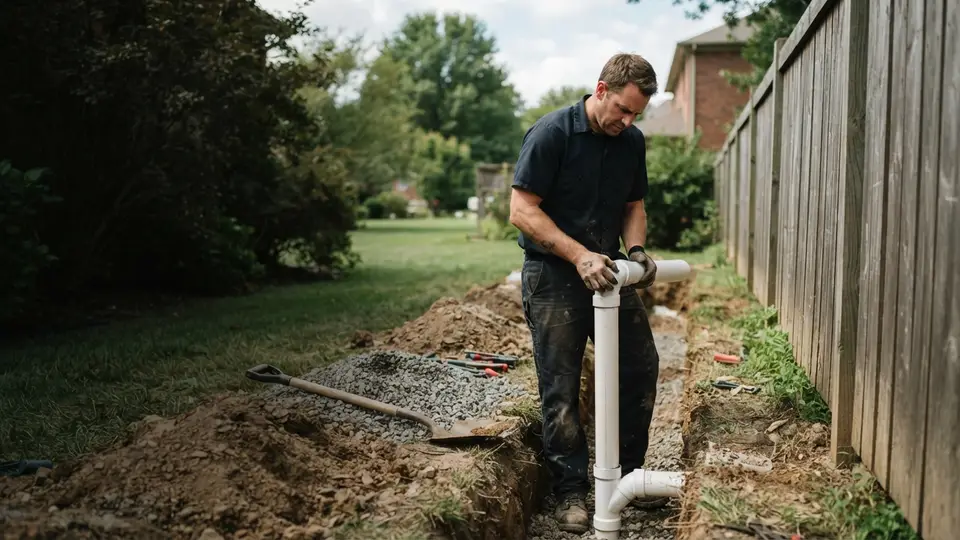
Vitrified clay
Era: Before about 1970
Common trouble: Roots at joints, cracks, offsets
Roots in the clay lateral, or sewage in the basement after rain? We handle sewer line repair and replacement in Indiana for homes and buildings on city sewer. Indiana's older cities run on clay and cast iron laterals laid generations ago. Roots, freeze-thaw cycles, settling and limestone all take a toll. We put a camera in the line first, find the exact problem and repair only what is needed, by trench where it makes sense or by lining and pipe bursting where it saves your yard.
The service
The lateral carries waste from your house to the city main. In many Indiana cities the owner is responsible for it, often to the main. 35% of Indiana homes in our data predate 1960. In East Chicago the median home dates from 1938, in Hammond from 1952 and in South Bend from 1955, so many laterals there are near the end of their life.
Sewer pipe we find in Indiana
Era: Before about 1970
Common trouble: Roots at joints, cracks, offsets
Era: Under basements and houses
Common trouble: Rust, scale, split bottoms
Era: Some postwar homes
Common trouble: Deforms and collapses
Era: Newer homes and repairs
Common trouble: Settling at joints
Why Indiana
Mature maples, sycamores and silver maples send roots into every clay joint.
Ground movement through cold winters opens joints and creates sags.
Cast iron under floors rusts through, helped along by hard water scale.
In southern Indiana, rock and settling over voids stress pipe and make digging slow.
Warning signs
Our process
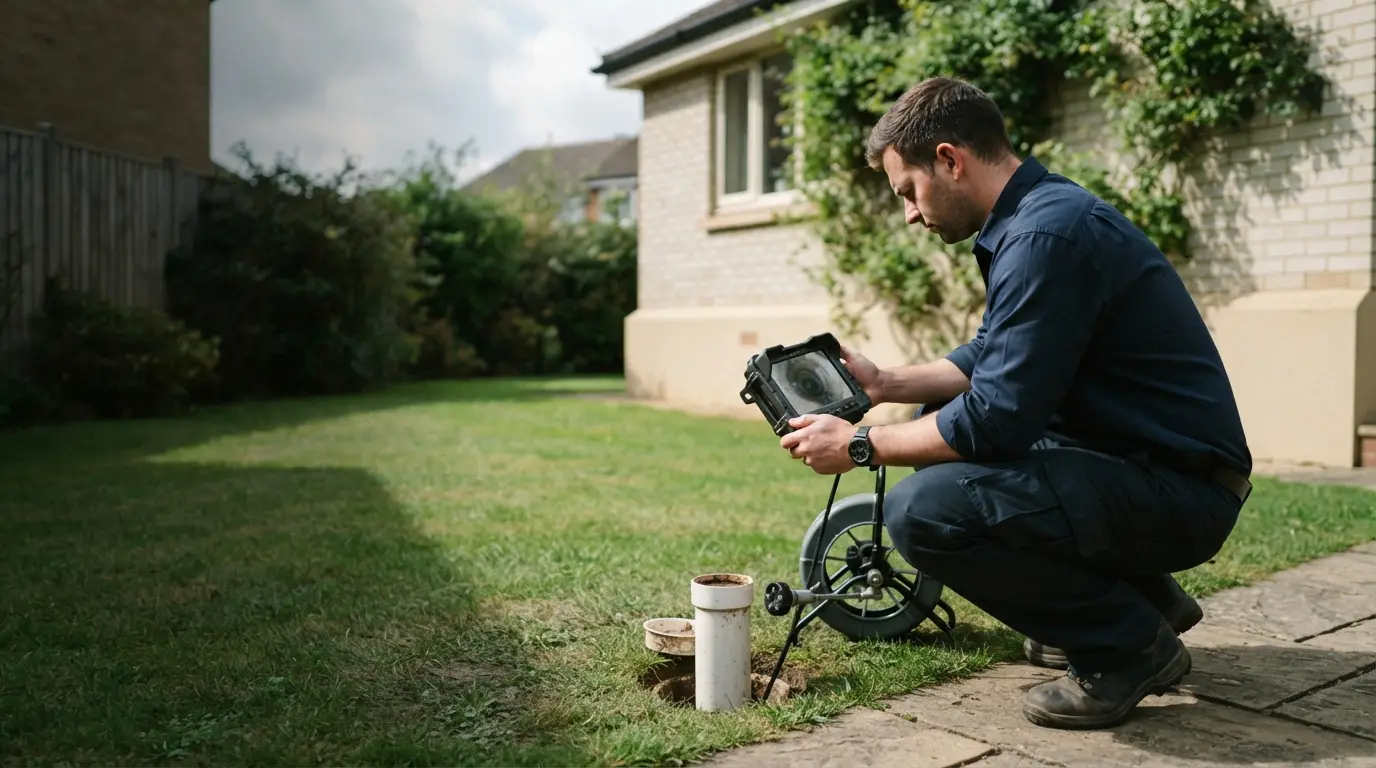
We run a camera to the main, locate defects from the surface and show you the video.
We dig at the damaged point to replace that section, or install a liner patch where digging is costly.
We replace failed laterals by trench, pipe bursting or lining, depending on depth and condition.
Typical cost
We show you the camera findings, and you approve a written price before we dig.
Get a written price: (833) 733-2357A spot repair costs far less than a full lateral.
Deep lines and limestone slow digging.
Trenchless saves restoration but needs special equipment.
Connections at the main may need city permits.
Frozen ground slows winter work.
Benefits
Fixing the defect ends the cycle.
A sound lateral keeps sewage out.
Video and permits help at resale.
Trenchless where it fits.
Lining installs a resin pipe inside the old one, and pipe bursting pulls new pipe through the old path. Both save mature trees, driveways and sidewalks. They do not work on every line; collapsed or badly offset sections still need digging. We recommend a method after the camera shows the line.
Gary (37,816 homes), Hammond and East Chicago, along with South Bend and Fort Wayne, have tens of thousands of homes from the first half of the 1900s. Their laterals are clay, their basements have cast iron under the floor and many sit on narrow lots. We plan excavation carefully and often recommend lining near foundations.
Indianapolis (401,428 homes in the city), Fort Wayne, South Bend and other older Indiana cities have combined sewer systems in their older areas, where storm water and sewage share pipes. Several are building large tunnels and storage under long-term plans to reduce overflows. During heavy rain, street sewers can still surcharge and push water toward basements. A backwater valve on your lateral helps, and we install them where code allows.
Muncie (30,715 homes), Anderson, Richmond and Logansport, where 83% of homes predate 1980, have old laterals under tree-lined streets. Repeat clogs there usually mean roots or breaks, which a camera inspection confirms.
In Bloomington (38,407 homes), New Albany and Evansville, limestone and river bluffs make digging slower and deeper. Trenchless methods often save time and money here. We check for rock and utilities before we dig.
Many older homes have only an indoor cleanout. When we repair a lateral, we can add an outside cleanout where code allows, making future service faster and cleaner, and keeping the cable out of your basement.
A sewer camera inspection is one of the most useful checks before buying an older Indiana home, from Evansville (59,180 homes) to Anderson. We provide video and a written summary you can share.
Frozen ground slows excavation. When a line fails in January, we usually clear it to keep the house usable, then schedule the permanent repair. Lining needs only small access points and works well in winter.
Inside many older Indiana homes, cast iron drains run under the basement slab from the stack to the front wall. Hard water scale and rust eat through the bottom of the pipe, letting sewage seep into the soil and roots and gas back in. Our camera shows the condition. Repair means cutting a trench in the floor, replacing the pipe and patching the concrete, often adding a backwater valve or new floor drain while the floor is open.
Some homes built in the late 1940s and 1950s used Orangeburg pipe, made of wood fiber and tar. It flattens and blisters and can collapse without warning. If the camera shows an oval, wrinkled pipe wall, replacement is the only fix; it cannot be lined or cleaned back into shape.
Indiana hard water leaves a mineral crust inside cast iron building drains, and over decades it can narrow the pipe by a third or more. A camera shows whether the problem is crust, roots or a break. Crust can often be cut out with a descaling head, restoring full flow without digging, while a break or collapse needs a repair or liner.
Stop using water and flushing. Keep people and pets away from sewage in the basement.
Do not open the cleanout while the line is full. Then call us.
Sewer repairs need a plumbing permit, and street work may need a right-of-way permit. We pull both. Our plumbers hold the licenses Indiana requires.
Why choose us
What you can count on every time one of our plumbers comes to your door.
Every job is handled by a plumber who holds the license your state or city requires, backed by liability insurance.
Our plumber explains the problem and the options, and you approve a written price before any work begins.
Burst pipes, sewage backups and failed water heaters get priority scheduling, including nights and weekends.
We pull permits when the job needs one and schedule the inspection, so the work holds up when you sell.
Repairs and installations come with a written warranty on labor, on top of the manufacturer's warranty on parts.
Our pages and plumbers account for your area's water, soil, climate and the age of the homes around you.
Service area
We inspect and repair sewer lines in 976 Indiana communities. Choose yours:
It depends on depth, the break location, rock, season and what sits above. We price it in writing after a camera inspection.
Often, once you count restoring yards and driveways. Short, shallow repairs can be cheaper to dig.
Usually, because of permits and street or sidewalk restoration.
We run a camera to the main, locate defects from the surface and show you the video.
Yes, if the rest is sound. Widespread damage makes replacement better value.
Yes, including right-of-way permits where needed.
Yes. Avoid contact, keep children and pets away and stop using water.
Yes, through dry traps or broken pipe. Run water in unused drains and call us if it stays.
Spot repairs often take a day; full replacements one to several days.
Yes, though frozen ground slows it. Lining helps.
Replace cracked clay with new pipe or a liner. Cutting roots helps only for a while.
Every few years, and before buying a home.
Stop using water and call us. Backups get priority scheduling.
In many cities, the owner is responsible to the main. Your city can confirm.
In southern Indiana, yes. Rock slows digging, so trenchless methods often help.