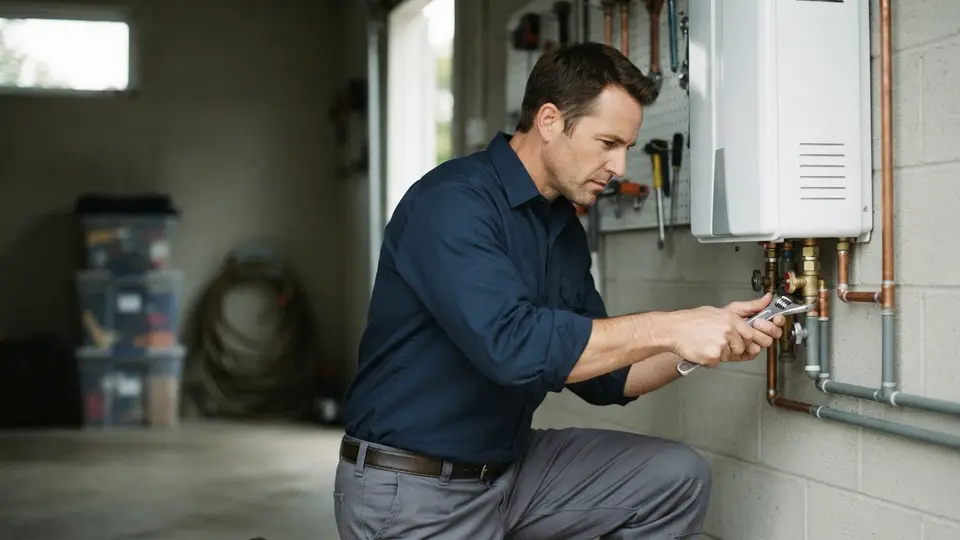
Gas tank, chimney vented
Where it fits: Older basements
Things to know: Draft must be checked every visit
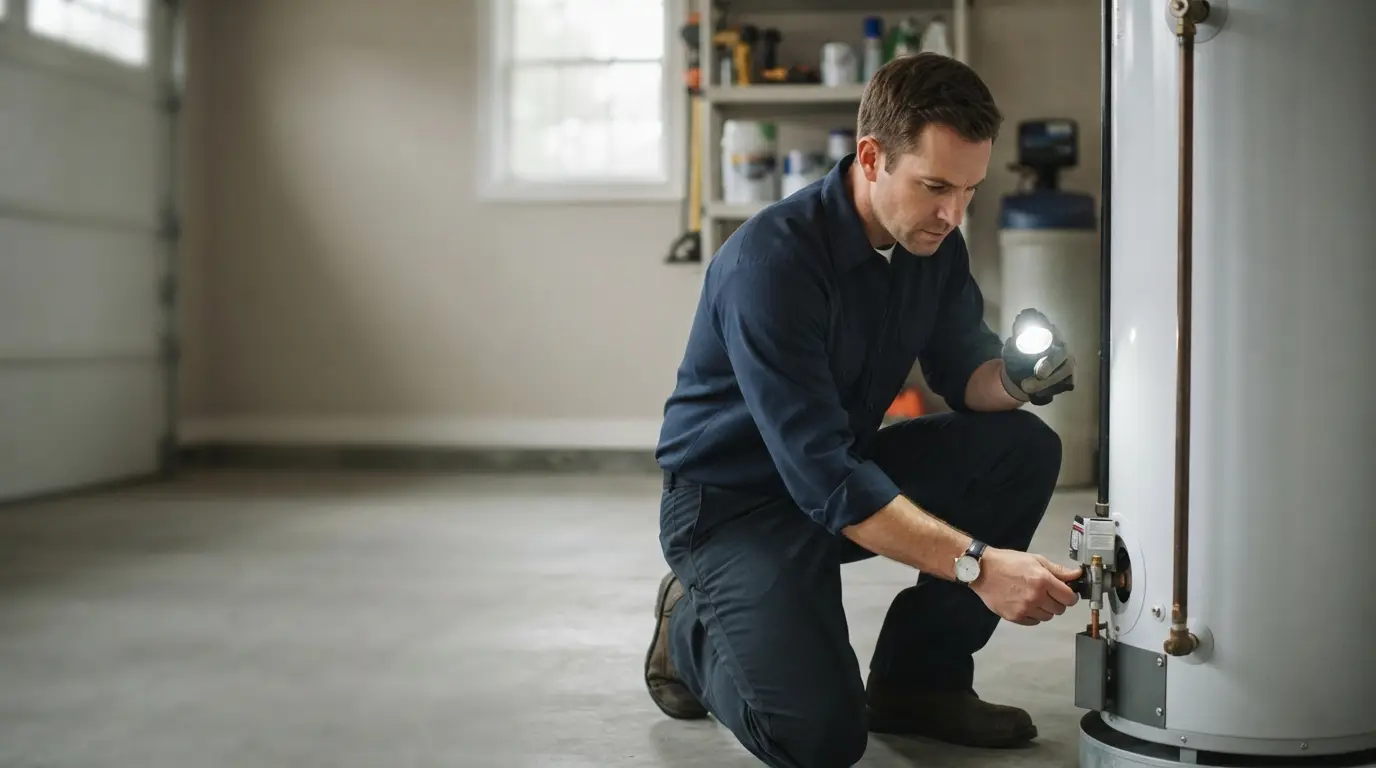
Tank popping, or hot water that quits mid-shower? We do water heater repair and replacement in Indiana for gas, electric, tankless and heat pump models. Indiana water is some of the hardest in the country, and the minerals settle in the bottom of every tank, insulating the burner, wasting fuel and shortening the heater's life. Add icy winter inlet water and old basement chimneys, and heaters here work hard. We fix what is worth fixing and size replacements for the way your household uses water.
The service
Our Indiana Census data shows 65% of homes heating with utility gas and 31% with electricity. Gas leads in the Region, at 86% in Hammond and 87% in Michigan City, while electricity is more common in places like Seymour, where only 38% of homes use gas, and in Bloomington at 46%.
Heater types we work on
Where it fits: Older basements
Things to know: Draft must be checked every visit
Where it fits: Homes with no usable chimney
Things to know: Plastic vent through the wall
Where it fits: Apartments and all-electric homes
Things to know: Elements scale up in hard water
Where it fits: Busy households
Things to know: Needs yearly descaling here
Where it fits: Basements and utility rooms
Things to know: Low electric use; cools the space
Why Indiana
Calcium and magnesium drop out of hot water and pile up in the tank, so the burner overheats the bottom.
Electric elements crust over and burn out years early.
In January, water arrives near freezing and the heater runs far longer.
When a high-efficiency furnace vents out the side wall, the water heater can be left drafting poorly up a big masonry flue.
Warning signs
Our process
Thermocouples, igniters, gas valves, elements and thermostats are tested; we also inspect the anode and drain out sediment.
The new heater is sized for winter, vented correctly, fitted with a relief line and an expansion tank where needed, and the old one hauled off.
We size for cold inlet temperatures, upgrade the gas line if required, vent through the wall and install service valves for descaling.
Typical cost
We give you the price in writing before work begins.
Get a written price: (833) 733-2357A single part costs far less than a new unit.
Liners and power vents add work.
Tankless and larger tanks cost more up front.
Expansion tanks, gas shutoffs and sediment traps.
Replacements generally need one.
Benefits
Sized for winter demand.
Draft tested every time.
Less sediment, better efficiency.
Softened water and yearly care.
With Indiana water, a yearly flush is the single most useful thing you can do for a tank. If a heater has gone years without one, the sediment may be packed too hard to drain, and flushing an old tank can sometimes start a leak at the drain valve. We judge whether a flush is safe and worth it. Tankless units need descaling with a pump and solution on a schedule, or they shut down with scale errors.
A softener ahead of the water heater stops most new scale and lets tank and tankless units run as designed. Many owners replace a failed heater and add a softener the same day. If you already have one, we check it is set for your water's hardness.
Older homes in Gary (37,816 homes), Hammond and Michigan City often have tight basements, aging gas piping and chimneys that need a liner once the furnace is upgraded. We check draft, gas supply and the drain path whenever we replace a heater there.
Renters occupy 71% of West Lafayette homes and 65% of Bloomington homes, and many apartments use small electric tanks that struggle with back-to-back showers. We help owners choose sizes that keep up and schedule replacements between leases.
Indiana basements stay cool but above freezing, which suits heat pump water heaters. They draw heat from the room air, use a fraction of the electricity of a standard electric tank and dehumidify the basement as a bonus. They need floor space, a condensate drain and a suitable circuit. For all-electric homes, the savings add up; check whether your utility offers rebates.
If water reached the burner or controls of a gas heater, do not relight it. Floodwater damages gas valves, and many manufacturers advise replacing the control or the heater. We inspect and replace what is unsafe.
A family of five in a Fishers (38,859 homes) two-story needs a very different heater than a couple in a Kokomo ranch. We count bathrooms, people and big fixtures like soaking tubs, then size for January inlet temperatures, when demand is hardest to meet.
Older basements may feed the water heater through undersized or rusted gas pipe, an old flexible connector or a line with no shutoff within reach. Each replacement is a chance to correct that. We fit a new shutoff, a sediment trap and a code-approved connector, then leak-test every joint before lighting the burner.
In two-story homes and long ranches, the far bathroom can take a minute or more to get hot water, running gallons down the drain. A recirculation pump keeps hot water close to the fixtures, and insulating the hot line in the basement ceiling cuts heat loss along the way. A timer or demand button keeps the pump from running all day, so the savings in water are not lost to extra energy use.
For a leaking tank, close the cold inlet valve and set the gas control to off or flip the breaker. If you smell gas, get out and call the utility from outside.
Leave the relief valve alone and do not drain a hot tank. Then call us.
Heater replacements generally need a permit and inspection, which we arrange. Our plumbers hold the licenses Indiana requires.
Why choose us
What you can count on every time one of our plumbers comes to your door.
Every job is handled by a plumber who holds the license your state or city requires, backed by liability insurance.
Our plumber explains the problem and the options, and you approve a written price before any work begins.
Burst pipes, sewage backups and failed water heaters get priority scheduling, including nights and weekends.
We pull permits when the job needs one and schedule the inspection, so the work holds up when you sell.
Repairs and installations come with a written warranty on labor, on top of the manufacturer's warranty on parts.
Our pages and plumbers account for your area's water, soil, climate and the age of the homes around you.
Service area
We repair and replace water heaters in 976 Indiana communities, from Fort Wayne (118,657 homes) to Evansville. Choose yours:
Most fixes involve one part, such as a thermocouple, igniter or element. The part and access decide the price, which you approve first.
A tank under about ten years with no leak is usually worth repairing. A leaking tank needs replacing.
It may be required for the heater to vent safely once the furnace no longer shares the chimney.
We count people, bathrooms and large fixtures and allow for cold winter inlet water.
Yes, removal and disposal come with every installation.
Usually, if the gas line can be sized up and a wall vent route exists.
Leave the house and call the gas utility from outside. We repair it once it is safe.
Not until it has been inspected. Water damages the gas controls.
A standard tank takes a few hours. Tankless conversions often take most of a day.
Most repairs finish on the first visit, and we give you a timeline for replacements.
Every year at a minimum, and twice a year if you have no softener.
Yes. It prevents most scale from forming in the tank or heat exchanger.
Close the cold inlet, turn off gas or power and call us. Leaking heaters get priority scheduling.
Hard water sediment traps water under it, which boils and pops as the burner fires.
In a basement or utility room, yes. They cut electric use sharply compared with a standard electric tank.