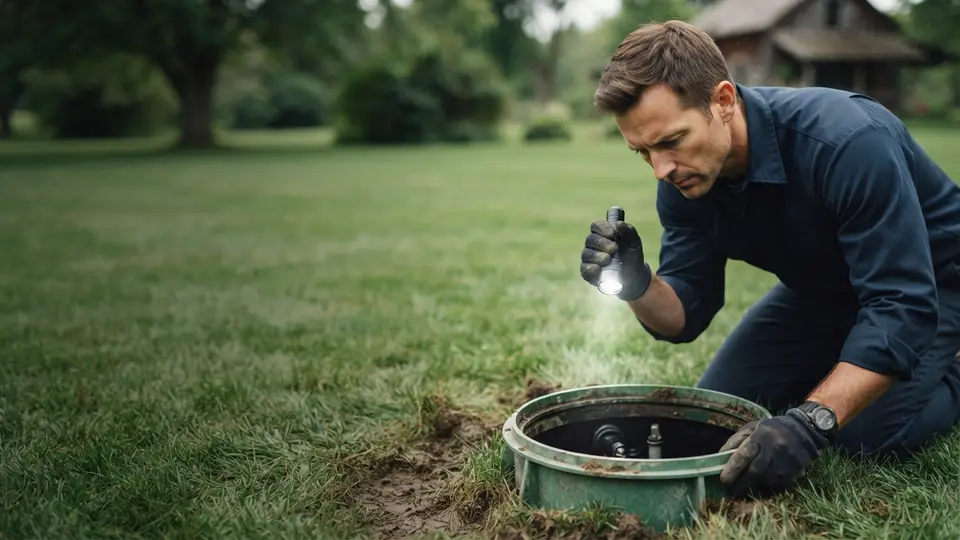
Septic pumping
When: Every few years or when sludge is high
What it includes: Pump all compartments, check baffles and filter
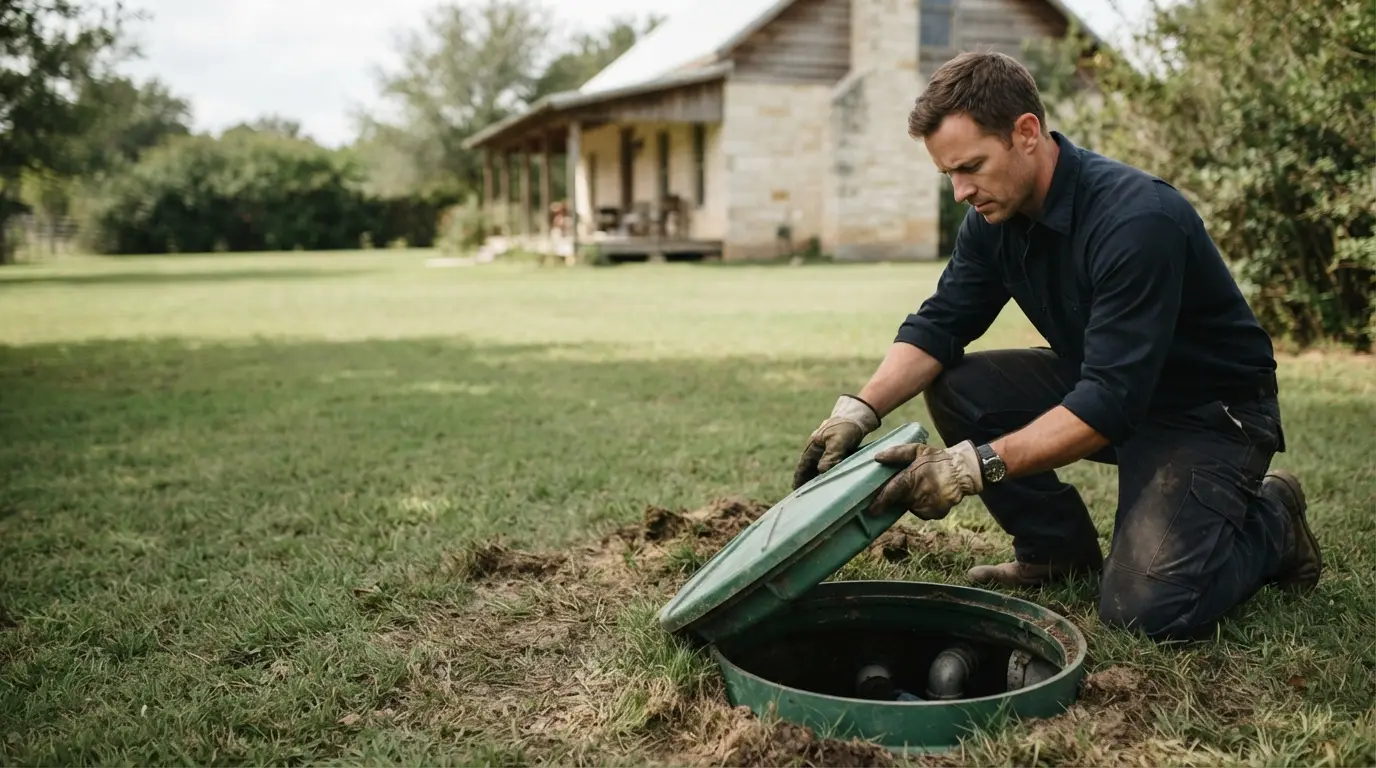
Drains slow after spring rain, or a soggy strip over the drain field? We provide septic tank services in Indiana for homes beyond city sewer. Septic is common across rural Indiana, around the northern lakes, in southern Indiana hill country and in subdivisions at the edges of growing cities. Heavy clay in the north and central counties drains slowly, and karst limestone in the south moves water fast. We pump and inspect tanks, repair fields and work with the county health department when a permit is needed.
The service
A septic system settles solids in a tank and sends clarified effluent to a drain field, where soil treats it. Indiana has 976 places in our data, 778 of them with fewer than 2,500 residents, and many homes around them use onsite systems. Soil varies from dense clay to sandy outwash to thin soil over limestone, so systems range from simple trenches to mound systems with pumps.
Our septic services
When: Every few years or when sludge is high
What it includes: Pump all compartments, check baffles and filter
When: Buying, selling or problems
What it includes: Levels, structure, field check, written report
When: Wet spots, odors, backups
What it includes: Locate failure, repair lines or distribution box
When: Systems with dosing pumps
What it includes: Pump, float and alarm checks
Why Indiana
Much of northern and central Indiana has slow-draining soil that fills up after rain.
In southern Indiana, thin soil over cracked limestone lets effluent reach groundwater quickly.
Spring rain and snowmelt saturate fields for weeks.
Solids that are never pumped flow into the field and clog it.
Warning signs
Our process
Our truck empties both chambers, we rinse the outlet filter and look over the inlet and outlet tees and the tank walls while they are exposed.
We gauge how much sludge and scum has built up, look for cracks and root entry, run water through to the field and put our findings on paper.
We probe and dig to find the saturated or crushed trench, fix broken lines or a tilted distribution box, and tell you plainly if the field needs replacing under a new permit.
Typical cost
You get a written price before any work begins.
Get a written price: (833) 733-2357Larger tanks take longer to pump.
Buried lids add time; risers save it.
Remote homes add travel.
A baffle costs far less than a field.
Field replacements need county approval.
Benefits
Pumping keeps solids out of the field.
Clean effluent keeps soil working.
Working systems keep water cleaner.
Records reassure buyers.
Homes around the lakes near Warsaw (7,633 homes), Angola and Plymouth sit close to water people swim in and fish. Many were cottages turned into year-round homes on systems sized for summer use. We pump and inspect lake systems, check they suit current use and help owners plan upgrades when the system is undersized.
Around Bloomington, Bedford, Nashville and Madison, hills, shallow rock and sinkholes make septic siting tricky. 80% of Bedford homes and 76% of Madison homes predate 1980, so many systems are old too. We service systems across the region, note sinkholes and wells near them and recommend upgrades where effluent may reach groundwater too quickly.
Where soil is too wet, shallow or tight, many Indiana systems use a mound: a raised bed of sand fed by a dosing pump. These need pump, float and alarm checks. If the alarm sounds, cut water use and call us; the pump tank holds only a limited reserve.
Growth around Westfield (22,030 homes), Seymour and other cities brought subdivisions on septic just outside sewer service. When sewer arrives, owners may be required or offered the chance to connect. We connect homes and properly abandon old tanks.
Farm homes across northern Indiana near Goshen (13,693 homes) and in the south near Jasper rely on septic and wells on the same lot. Keeping the system healthy protects the well. We note well locations when we work.
Basement homes on septic often have a sump pump, and sometimes its discharge or the gutters drain onto the field. That extra water floods the soil. We reroute it, one of the cheapest ways to extend a field's life.
Systems are sized by bedrooms. Before adding bedrooms or a guest space, ask your county health department what is required and have us inspect the system.
Lake cottages around Warsaw and Angola that sit empty in January are the systems most likely to freeze, along with any field where a truck or snowplow packed the snow down. A steady trickle from a leaking toilet can ice up the inlet pipe too. When drains stop during a deep freeze, skip the antifreeze; our crew locates the ice, thaws it and suggests foam riser lids or straw over the tank for next winter.
On a typical Indiana farm lot the drinking well and the septic field share the same few acres. Required distances help, yet a field that is breaking out, or one sitting over sand or fractured limestone, can still reach the well. Whenever we find a failing field, we suggest a lab test of the well water for coliform bacteria and nitrate.
If your pumping bill always includes digging, your lids are buried. Plastic or concrete risers bring the access up to grade, so future service is quicker and the tank is easy to find under snow.
Mortgage lenders on country properties frequently ask for a septic report. Pumping records plus our inspection notes give the buyer, seller and lender the same facts before closing.
Use as little water as possible: hold the laundry, skip the dishwasher and keep showers short. Stay off the soggy area and keep cars away from it.
Do not open or climb into the tank for any reason, because the gases inside are deadly. Call us and we will handle it.
Onsite systems are permitted by local health departments under Indiana Department of Health rules. We handle permits for the repairs we perform, and our plumbers hold the licenses Indiana requires.
Why choose us
What you can count on every time one of our plumbers comes to your door.
Every job is handled by a plumber who holds the license your state or city requires, backed by liability insurance.
Our plumber explains the problem and the options, and you approve a written price before any work begins.
Burst pipes, sewage backups and failed water heaters get priority scheduling, including nights and weekends.
We pull permits when the job needs one and schedule the inspection, so the work holds up when you sell.
Repairs and installations come with a written warranty on labor, on top of the manufacturer's warranty on parts.
Our pages and plumbers account for your area's water, soil, climate and the age of the homes around you.
Service area
We serve septic homes in and around 976 Indiana communities. Choose yours:
The tank size, how deep the lids are and the drive to your property set the price. We give it to you in writing first.
A cracked pipe or tilted box is a modest repair. A full replacement field costs far more and needs a county permit.
Yes. A report on the tank and field tells you whether you are buying a working system or a project.
We open and measure the tank, look for cracks and roots, flow-test the field and note the well location.
Yes. We test the dosing pump, floats and alarm and look for wet spots on the mound itself.
We run the new connection to the sewer and crush, fill or remove the old tank as the county requires.
Hydrogen sulfide and methane collect inside and can knock a person unconscious within moments.
Yes. It carries bacteria. Keep kids and pets off it and call us to find the cause.
An hour or two in most yards, longer if we have to dig for the lids.
Once the permit and design are approved, installation is often a few days of work.
Every three to five years for a typical family, sooner for a small tank or a full house.
Grease, flushable wipes, paint, harsh cleaners and leftover medicines.
Stop running water and call us. Septic backups get priority scheduling.
Your county or local health department, following Indiana Department of Health rules.
Cracks in the rock can carry effluent to groundwater before the soil has a chance to treat it.