Restaurants and food service
Common work: Interceptors, kitchen lines, water heaters
Priority: Staying open and passing inspection
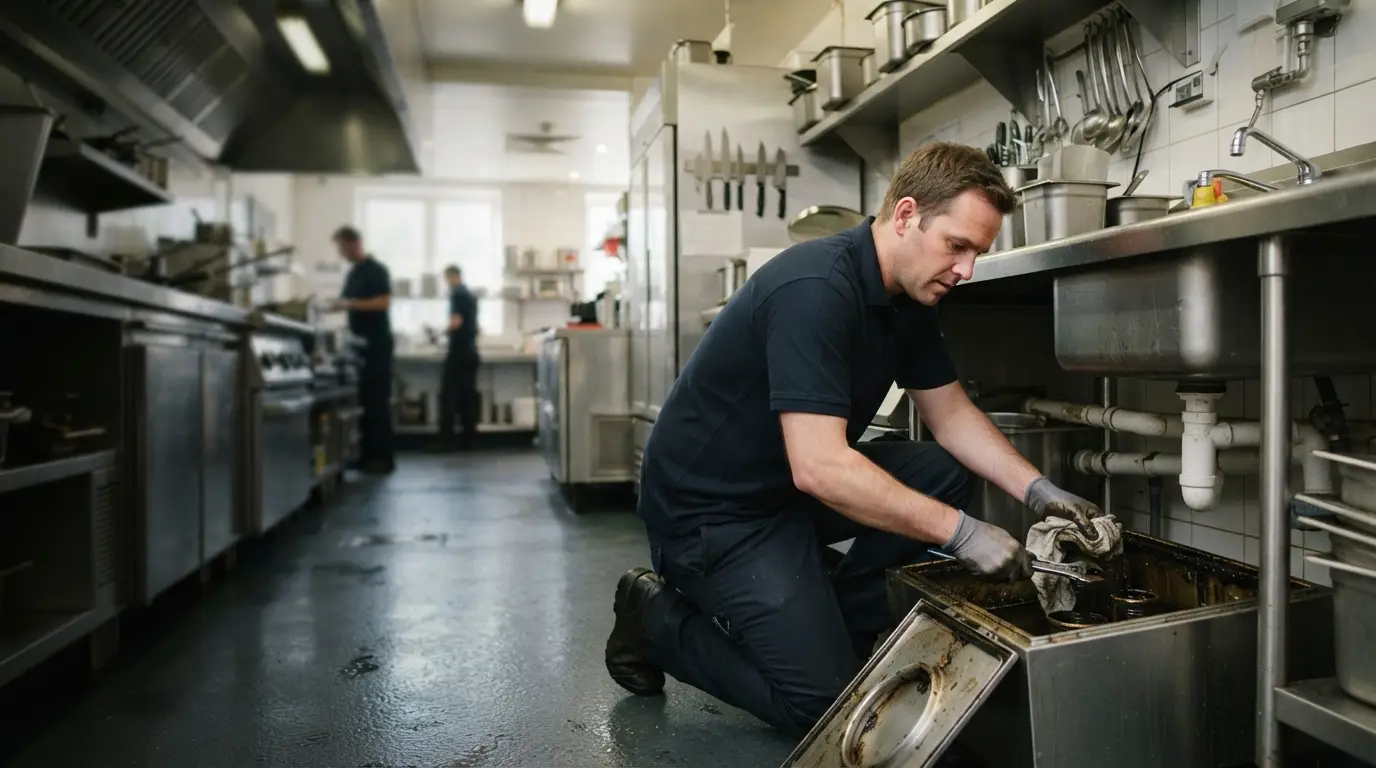
Grease trap backing up, or an apartment riser leaking? We provide commercial plumbing in Indiana for restaurants, offices, plants and apartment buildings. Indiana businesses range from downtown Indianapolis kitchens and Hamilton County office parks to Elkhart manufacturers, campus housing in Bloomington and West Lafayette, and river-city warehouses. Very hard water, cold winters and aging buildings all strain commercial systems. We repair, maintain and install them, plan work around your hours and handle permits and inspections.
The service
Indianapolis (401,428 homes in the city), Fort Wayne, Evansville and South Bend hold most of the state's older commercial buildings, while Carmel and Fishers have grown newer office and retail districts. Apartments are a big share of the work: 59% of West Lafayette homes and 44% of Bloomington homes are in buildings with five or more units.
Who we serve
Common work: Interceptors, kitchen lines, water heaters
Priority: Staying open and passing inspection
Common work: Restrooms, heaters, backflow, leaks
Priority: Off-hours scheduling
Common work: Risers, stacks, unit repairs
Priority: Tenant notice and short shutoffs
Common work: Floor drains, process water, backflow
Priority: Work between shifts
Why Indiana
Very hard water clogs commercial water heaters, dishwashers, ice machines and flush valves.
Busy kitchens fill interceptors fast, and grease congeals in cold lines.
Downtown buildings carry decades-old cast iron and galvanized piping.
Pipes in vestibules, docks and unheated corridors freeze in deep cold.
Warning signs
Our process
Kitchen lines are jetted, interceptors repaired or installed, and commercial heaters and dish machines serviced.
Restrooms, heaters and leaks are repaired and tenant build-out plumbing installed, often after closing.
Risers and stacks are repaired or replaced in phases, booster pumps serviced and freeze-prone lines protected.
Typical cost
You get a written price before work begins.
Get a written price: (833) 733-2357Bigger buildings take more time.
After-hours work costs more.
Interceptors, heaters and pumps vary widely.
Many commercial jobs need one.
Softening may be part of the fix.
Benefits
Work planned around your hours.
Grease, backflow and permits in order.
Scale under control.
Reports for owners and managers.
Prevention
Planned service costs less than emergencies. We schedule drain jetting, heater flushing and descaling, backflow tests, pump checks and winter inspections, with records for each visit.
Call (833) 733-2357Indiana cities with sewer pretreatment programs require restaurants to control grease, usually with a properly sized interceptor pumped on schedule and records kept for inspectors. We install and repair interceptors, jet the lines that feed them and help set a routine; licensed haulers pump and dispose of the grease.
Scale is the quiet expense in Indiana kitchens, laundries and hotels. Tankless banks lose capacity, dish machines miss sanitizing temperatures and flushometers stick. Commercial softening ahead of hot water equipment, plus scheduled descaling, keeps it running. We size softeners to your flow and set service intervals.
Renters occupy 71% of West Lafayette homes and 65% of Bloomington homes, and apartment buildings near Purdue and Indiana University see heavy use and empty winter breaks. We handle move-out turnovers, break-time checks and urgent repairs for owners and managers.
Elkhart (25,223 homes), Columbus, Lafayette and Fort Wayne host manufacturers with wash stations, floor drains, process water and chemical connections that need backflow protection. We repair and install this piping between shifts and keep records for safety and environmental audits.
Office parks and shopping centers in Carmel (40,859 homes) and Fishers change tenants often. We handle build-out plumbing, restroom upgrades, water heaters and backflow assemblies for property managers.
Before winter we check heat tape, insulation and thermostats on vulnerable runs and move lines out of cold spaces where we can. After a freeze, we repair the damage and find the cold spot that caused it.
Evansville (59,180 homes) and Jeffersonville sit on the Ohio River, where high water and heavy rain stress basement pumps, ejectors and drains. We maintain these systems before flood season and respond quickly when they fail.
Restrooms in shopping centers, offices, gyms, schools and restaurants run all day. Hard water scales sensor faucets, flushometer valves and urinals until they stick or run on. We rebuild and replace these fixtures with commercial models that have serviceable parts, clear lines clogged with paper and set a cleaning and descaling schedule so restrooms stay open. Where vandal resistance or water savings matter, we suggest fixtures built for that.
Healthcare and personal service businesses need dedicated sinks, eyewash stations, equipment drains and backflow protection on connected equipment. We install and repair these systems outside patient or client hours and keep backflow test records ready for inspections and accreditation visits.
Hotels need hot water at every shower during the morning rush and drains that keep up at full occupancy, especially on race weekends and convention dates in Indianapolis. Churches and event halls have kitchens busy on weekends and restrooms idle during the week. We service central water heating, recirculation pumps and guest fixtures room by room, and schedule work between events.
Downtown Indianapolis, Fort Wayne (118,657 homes) and Lafayette have brick commercial buildings remodeled many times, with cast iron stacks, galvanized supply and abandoned lines behind walls. We camera drains, map supply piping and plan repairs that keep tenants operating, with shutoffs scheduled outside business hours.
When a retail bay becomes a restaurant, salon or clinic, the plumbing often needs a grease interceptor, a larger water heater, more restrooms or a new backflow assembly. We review drawings early, coordinate with the general contractor and handle rough-in and final inspections so the plumbing never holds up an opening date. We also leave the landlord a record of what was installed and where every shutoff is, which saves time on the next service call and helps the next tenant move in faster. For multi-tenant centers, we label shutoffs by unit so building staff can isolate one space without closing the whole row of shops, restaurants and offices that share the same main line, keeping the rest of the center open for business.
For a leak, close the nearest shutoff or the building main if staff can do it safely. For a kitchen backup, stop running water down that line.
Let affected tenants know, then call us.
Commercial plumbing usually needs permits and inspections from your city or county, which we arrange. Our plumbers hold the licenses Indiana requires.
Why choose us
What you can count on every time one of our plumbers comes to your door.
Every job is handled by a plumber who holds the license your state or city requires, backed by liability insurance.
Our plumber explains the problem and the options, and you approve a written price before any work begins.
Burst pipes, sewage backups and failed water heaters get priority scheduling, including nights and weekends.
We pull permits when the job needs one and schedule the inspection, so the work holds up when you sell.
Repairs and installations come with a written warranty on labor, on top of the manufacturer's warranty on parts.
Our pages and plumbers account for your area's water, soil, climate and the age of the homes around you.
Service area
We serve businesses and buildings in 976 Indiana communities, from South Bend (47,775 homes) to Jeffersonville. Choose yours:
By the system, access, schedule and permits. You approve a written price before work starts.
Yes. We price nights and weekends upfront so there are no surprises.
For kitchens and larger buildings, usually. It cuts emergencies and keeps inspections on track.
Yes. Early mornings, evenings and weekends are common for us.
Yes. We coordinate notices, shutoffs and phased work.
Yes. We work from plans, coordinate with contractors and handle inspections.
Evacuate and call the gas utility or 911 from outside. We repair the piping once it is safe.
Yes. Stop food prep in the area and call us; health rules may apply until it is cleaned.
Often several days, including excavation and inspection.
Usually done in phases over days or weeks.
As often as your city requires and your volume demands, often monthly or quarterly.
With Indiana's hard water, softening ahead of heaters and dish machines usually pays off.
Call us. These calls get priority scheduling.
Cities with pretreatment programs set grease rules for food service businesses.
Yes. We schedule around production to keep lines running.