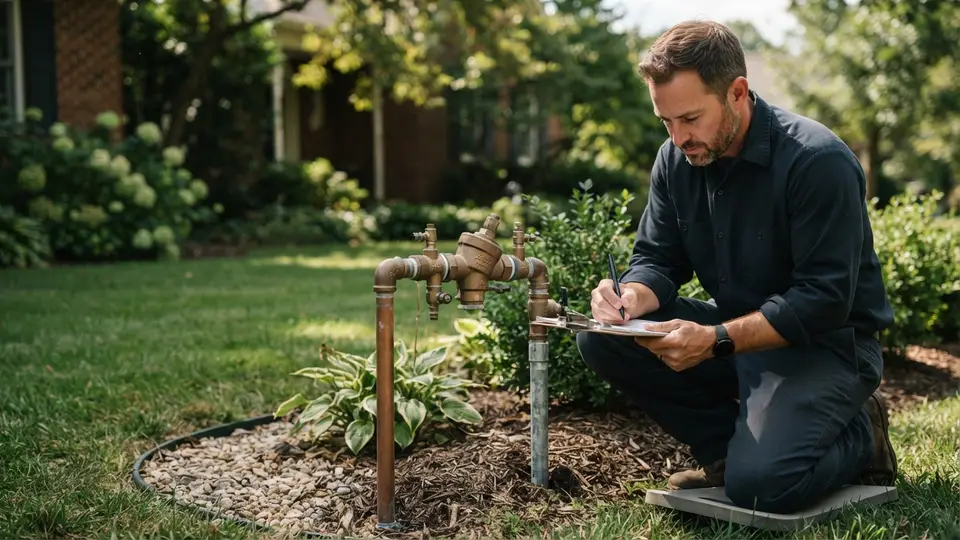
Pressure vacuum breaker (PVB)
Typical use: Lawn irrigation
Protection level: Back-siphonage
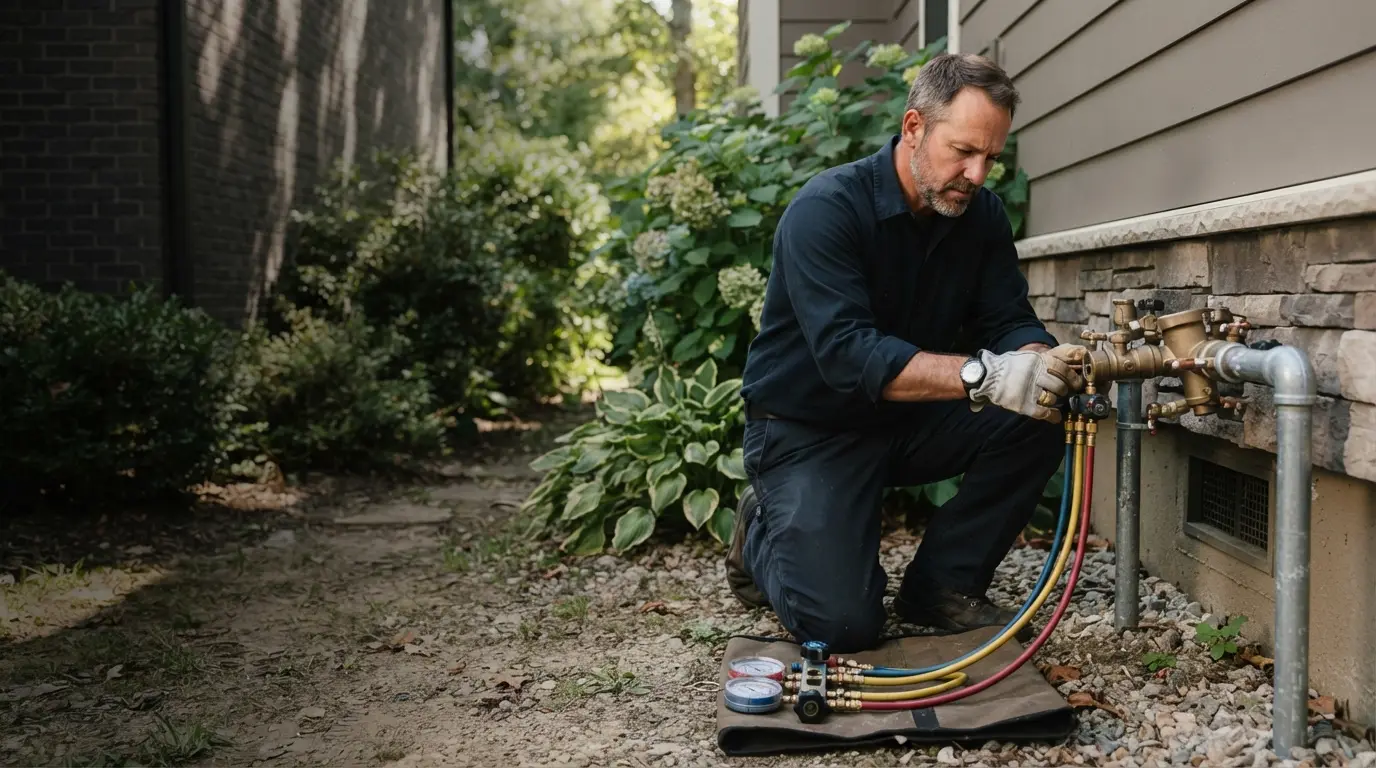
Backflow test due, or a sprinkler preventer cracked by an early freeze? We handle backflow testing and prevention in Montana. Our plumbers test backflow assemblies, install new preventers and repair valves that fail their test. Montana city water suppliers run cross-connection programs, and lawn irrigation, fire sprinkler lines, boilers, livestock watering and commercial equipment usually need a testable device. Montana's short irrigation season and early freezes are hard on these valves. We test, file the report where your supplier requires it and give you a written price for any repair.
The service
Backflow is water flowing the wrong way, from a property back into the public water supply. It happens when pressure in the main drops, such as during a main break or heavy firefighting, or when pressure on the property side rises above the supply. Without a preventer, water from a sprinkler system, boiler, stock tank or chemical feeder could be drawn back into drinking water.
City water suppliers in Billings (54,346 homes), Missoula, Bozeman, Great Falls, Helena and other Montana towns require backflow protection where a connection could contaminate the supply. Most require testable assemblies to be tested regularly, usually once a year, by a certified tester. Rules differ by supplier, so we check yours.
Common backflow preventers
Typical use: Lawn irrigation
Protection level: Back-siphonage
Typical use: Fire sprinklers, low-hazard lines
Protection level: Low hazard
Typical use: Boilers, chemicals, medical, restaurants
Protection level: High hazard
Typical use: Outdoor spigots, stock tank hoses
Protection level: Back-siphonage
Why Montana
Hard freezes in September or May catch irrigation devices full of water and crack them.
Grit and hard water minerals keep check valves from sealing.
Seats, discs and springs wear with age.
Water hammer from fast-closing valves damages internal parts.
Warning signs
Our process
Our certified testers use calibrated gauges to check each check valve and relief valve, record the results and send the report to your supplier where required.
We install the device your supplier requires for the hazard, place it where it can be tested and drained before winter and pull any permit.
When a device fails, we rebuild it with new seats, discs and springs or replace a cracked body, then retest it.
Typical cost
Figures before we see the device are estimates only. These factors set the price:
We give you a written price before any repair.
Get a written price: (833) 733-2357Large RPZ valves cost more to test and repair.
Several on one site can be tested in one visit.
A rebuild kit costs less than a new body.
Devices in pits or vaults take longer.
Rural properties take more time to reach.
Benefits
Yours and your neighbours' stays clean.
Reports reach the supplier on time.
Proper winterizing saves the device.
Regular service keeps valves working.
Irrigation is common in Bozeman, Belgrade (median build year 2002), Billings and Missoula, where summers are dry. Montana's irrigation season is short, and a hard freeze can come in September or May. A pressure vacuum breaker left full of water cracks overnight. We test devices when you start sprinklers in spring, blow out and winterize them in fall and replace cracked bodies.
On properties connected to a public water system, a hose running into a stock tank, a sprayer filling from a hydrant or a chemical injector on an irrigation line all create backflow risks. A hose bibb vacuum breaker or a properly sized assembly prevents stock tank water or chemicals being drawn back. Where a property has both a well and a public connection, the two must never be cross-connected. We set up the right protection and test it.
Restaurants, hotels and condo buildings in Whitefish, Big Sky and Missoula, where buildings with five or more units hold 27% of homes, often have several devices: RPZ valves on boilers and soda systems, double checks on fire lines and vacuum breakers on mop sinks. We keep a schedule for each property and test all devices in one visit.
Apartments, offices, schools and many larger new homes have fire sprinkler systems tied to the city water supply. The water in those pipes is not drinkable, so a double check assembly or RPZ separates it from the public main. Fire line devices are usually in a heated riser room, but in Montana they must be protected from freezing wherever they are. We test them on schedule and file the report.
Many Montana homes and businesses heat with hot water boilers, and the boiler fill line connects the heating loop to the drinking water. Heating water often contains treatment chemicals and is never safe to drink. Codes require a backflow preventer on that fill line, usually a dual check or, for treated systems, an RPZ. We check and replace these devices when we service boilers.
Find the device and clear snow, plants or storage away from it. If it is leaking heavily, close the shutoff valve upstream.
Do not adjust or take apart a backflow device; only certified testers may test it. Keep your test notice handy and call us.
Backflow testers must be certified, and water suppliers keep lists of approved testers. Installing a new device may need a plumbing permit. We pull permits where required, and our plumbers hold the Montana licenses each job requires.
Why choose us
What you can count on every time one of our plumbers comes to your door.
Every job is handled by a plumber who holds the license your state or city requires, backed by liability insurance.
Our plumber explains the problem and the options, and you approve a written price before any work begins.
Burst pipes, sewage backups and failed water heaters get priority scheduling, including nights and weekends.
We pull permits when the job needs one and schedule the inspection, so the work holds up when you sell.
Repairs and installations come with a written warranty on labor, on top of the manufacturer's warranty on parts.
Our pages and plumbers account for your area's water, soil, climate and the age of the homes around you.
Service area
We test and repair backflow devices in 497 Montana communities, including Kalispell (12,267 homes) and Livingston (4,413 homes). Find yours:
It depends on the type and size of the device, how many are on the property and travel. We give you a written price before testing.
Not always. Many devices pass after a rebuild with new seats, discs and springs, which costs much less than a new assembly.
Filing is part of our service. Some water suppliers charge their own fees, which we explain before we start the test.
We attach calibrated gauges to the test ports and check that each valve opens and closes at the right pressures for that device.
We do, where your supplier requires it, and we give you a copy for your records so you can show it later if asked.
Yes. We install the type your supplier requires and set it where it can be tested in spring and drained before winter.
Yes. It can draw fertilizer, chemicals, stock tank water or bacteria into drinking water. Preventers are there to stop that.
It likely cracked in a freeze or has a failed part. Close the shutoff upstream and call us to repair or replace it.
Most residential tests take under an hour. Several commercial devices on one site take longer.
Most suppliers require annual tests. Your notice gives the due date, and we can remind you each year before it comes up.
Shut off the supply, blow out the lines and open the test cocks to drain the device. We can winterize it for you each fall.
With regular testing and repairs, many last 15 years or more. Freeze damage is the most common reason they fail early.
Call us. We prioritize repairs needed to meet a supplier deadline and retest the device after the repair.
The irrigation season is short, and hard freezes come early and late. A device left full of water cracks overnight.
If the hose is connected to a public water supply, yes. A vacuum breaker stops tank water being drawn back into the line.