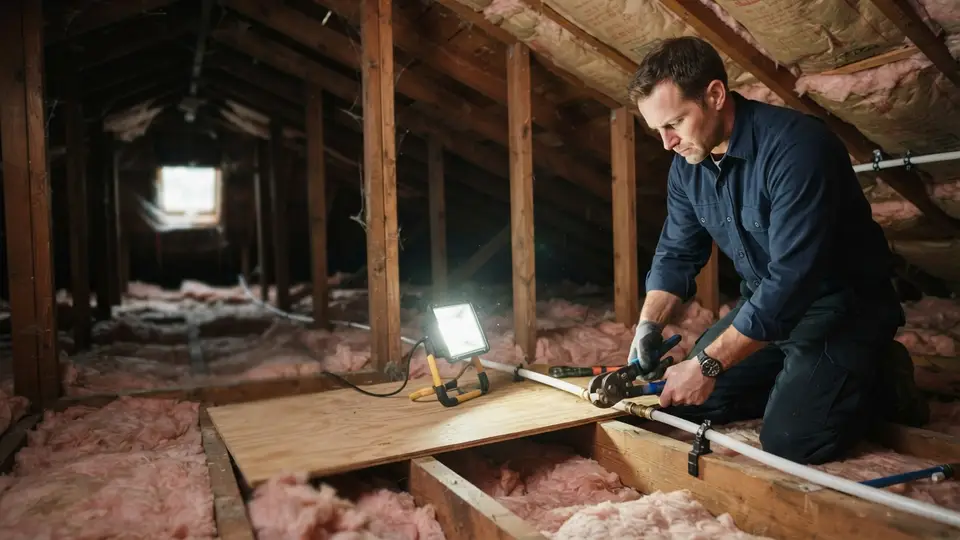
Spot repair
How it works: Open the floor at the leak and replace the section
When it fits: One leak in sound pipe
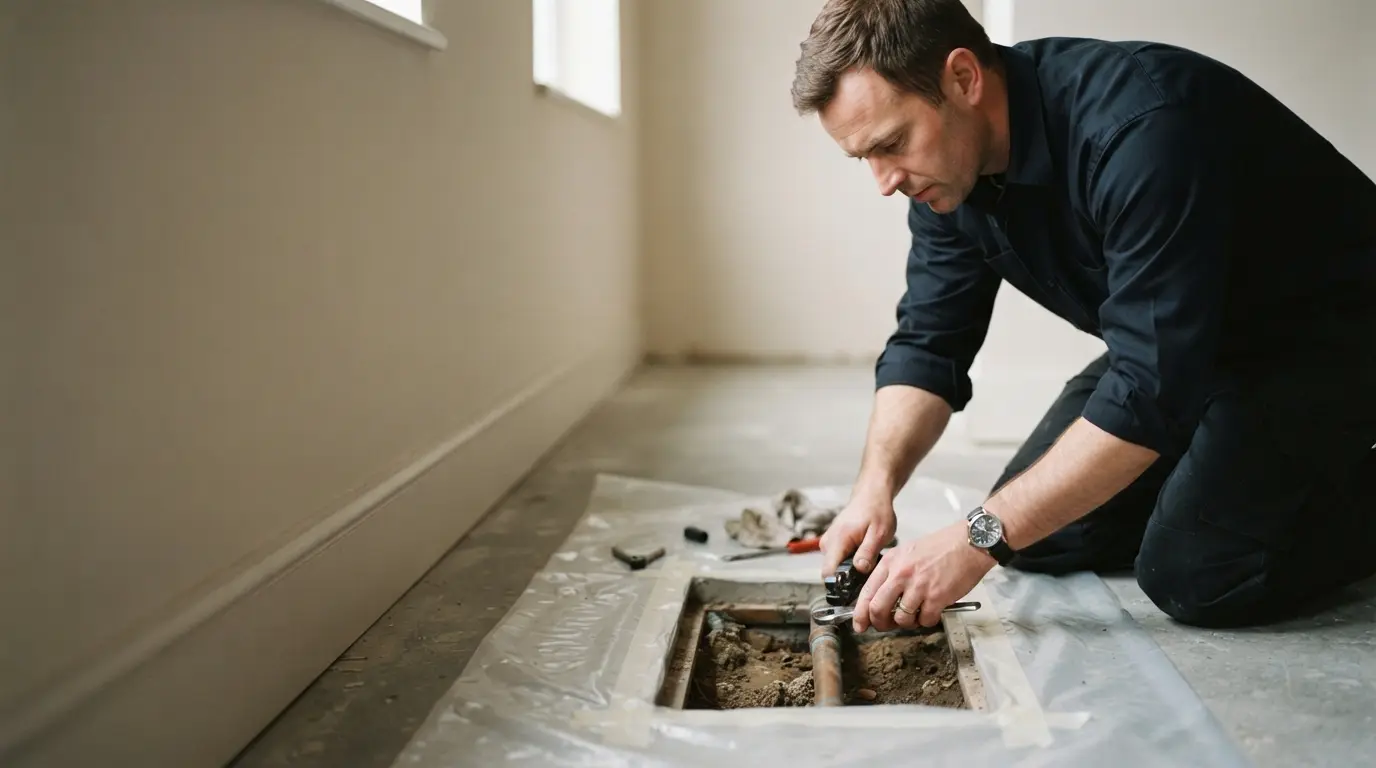
Warm patch on the floor, or water seeping through the basement slab? We handle slab leak repair in Montana. Our plumbers find leaks in water lines and drains beneath concrete, repair them through a small opening or reroute the line above the floor. In Montana we see slab leaks in newer homes and shops built on slabs, in basement floors where lines run under the concrete and in radiant heated floors with tubing cast into the slab. We locate the leak first and give you a written price for each repair option.
The service
A slab leak is a leak in a pipe in or under a concrete floor. In Montana that covers three situations: homes, garages and shops built slab-on-grade, basement floors with supply or drain lines beneath them and concrete floors with radiant heat tubing. Newer homes in Belgrade (median build year 2002), Four Corners and the Helena Valley often have at least one of these. Older homes mostly have drains, not supply lines, under the basement floor.
Slab leak repair options
How it works: Open the floor at the leak and replace the section
When it fits: One leak in sound pipe
How it works: Run new pipe through walls or ceilings and abandon the old line
When it fits: Older copper, repeat leaks
How it works: Splice the damaged tubing or isolate the loop
When it fits: Leaks in heated floors
How it works: Line a cracked drain from inside
When it fits: Cast iron under basement floors
Why Montana
Ground that freezes and thaws around a shallow slab moves the concrete and stresses pipes beneath it.
Copper laid on gravel and rock wears through as it expands and contracts with hot water.
Fasteners, saw cuts or drill holes can nick radiant tubing and water lines.
Minerals in some Montana water can pit copper over time.
Warning signs
Our process
We isolate hot, cold and heating lines, pressure test each one and use acoustic and thermal tools to mark the leak to a small area.
We cut a neat opening, replace the damaged section, pressure test it and patch the concrete. Floor coverings are restored by a finish contractor.
We can run new PEX or copper through walls, ceilings or the basement and disconnect the leaking line under the slab for good.
Typical cost
Figures before we find the leak are estimates only. These factors decide the price:
We give you a written price for each option before any work begins.
Get a written price: (833) 733-2357Under cabinets or appliances costs more to reach.
Spot repair, reroute and radiant repair differ.
Tile and wood take more care to open.
Copper, PEX and radiant tubing need different fittings.
Remote locations and after-hours calls cost more.
Benefits
Water under concrete softens the ground and adds frost heave.
A hot water or heating leak wastes energy.
Carpet, wood and cabinets stop soaking up water.
A reroute removes the old line.
Radiant floor heat is popular in Montana homes, garages and shops because it keeps floors warm through long winters. The tubing is cast into the concrete and carries heated water from a boiler. If a loop is damaged, the boiler loses pressure and the floor may show a wet or unusually warm spot. Thermal imaging shows the tubing pattern and the leak clearly. We repair the tubing through a small opening, or isolate a damaged loop when a repair is not practical.
Bozeman (25,908 homes), Belgrade, Kalispell and Columbia Falls have grown fast, with many homes built on slabs or with slab garages and shops. Some sit on valley gravel, where pipes rubbing on stone wear through. Others sit on clay that moves as frost comes and goes. When a newer home has a slab leak, we often recommend a reroute so the next leak in the same line does not need another floor opening.
In Billings (54,346 homes), Missoula and Helena, many homes have basements with the main water line or drains under the floor. Water seeping from floor cracks is often blamed on spring groundwater, but a pressure test shows whether it is a supply leak. If the sump pit fills in dry weather, that is another clue. We tell you whether the water comes from the plumbing or the ground.
Across rural Montana and the valley suburbs such as Helena Valley Northwest (median build year 2001), detached shops and garages often have a water line, floor drain or radiant heat in the slab. They are heated less than the house, or not at all when empty, so pipes there are more likely to freeze and split under the concrete. We find the leak, repair it or run a new insulated line above the floor and add heat cable where the building is not kept warm.
If the leak is on a hot water line, turn off the water heater. If water is coming up or the meter spins, close the main shutoff or switch off the well pump. For a radiant floor, turn off the boiler.
Pull back wet rugs, move furniture and take photos for insurance. Do not break concrete yourself; you can hit pipe, tubing or wiring. Then call us.
Rerouting or repiping often needs a permit from the city, county or state Building Codes Bureau, and we pull it. Our plumbers hold the Montana licenses each job requires. Many insurance policies cover access and resulting damage but not the pipe; we document the leak for your claim.
Why choose us
What you can count on every time one of our plumbers comes to your door.
Every job is handled by a plumber who holds the license your state or city requires, backed by liability insurance.
Our plumber explains the problem and the options, and you approve a written price before any work begins.
Burst pipes, sewage backups and failed water heaters get priority scheduling, including nights and weekends.
We pull permits when the job needs one and schedule the inspection, so the work holds up when you sell.
Repairs and installations come with a written warranty on labor, on top of the manufacturer's warranty on parts.
Our pages and plumbers account for your area's water, soil, climate and the age of the homes around you.
Service area
We repair slab leaks in 497 Montana communities, including Missoula (37,317 homes) and Laurel (3,280 homes). Find yours:
It depends on where the leak is, the repair method and the flooring above. We locate the leak first, then give you a written price for each option.
Often it is similar, and it avoids damage to floors. It also removes the old line, so another leak in it no longer matters.
Many policies cover access and resulting damage but not the pipe. Coverage varies, so check your policy. We document the leak for you.
We pressure test each line, then use acoustic sensors and thermal imaging to narrow the leak to a small area before cutting.
Yes. We locate the leak with thermal imaging, open a small area and splice the tubing, or isolate the loop if needed.
We run new pipe through walls, ceilings or the basement, connect it to fixtures and cap the old line under the slab.
It can be. Water under a foundation weakens soil and adds frost heave, and wet floors near outlets are an electrical risk.
Yes. Damp carpet, padding and drywall grow mould quickly. Dry the area fully once the leak is stopped.
A spot repair often takes most of a day. A reroute usually takes one to two days.
We shut it off only while connecting new pipe and restore it as soon as possible, usually the same day.
Keep pressure moderate, treat very hard water and consider rerouting old copper after the first leak.
Locate and mark tubing with thermal imaging before drilling or anchoring into the slab.
Close the main shutoff or switch off the well pump, turn off the water heater and keep away from outlets. Then call us.
Many newer homes, garages and shops do. A leak shows up as boiler pressure loss or a warm, wet spot.
Pipes laid on valley gravel wear where they rub on stone, and frost moves shallow slabs.