Restaurants and bars
Common work: Grease traps, kitchen drains, gas lines
Notes: Scheduled around service
Grease trap overflowing on a busy weekend, or a frozen line shutting down the shop? We handle commercial plumbing in Montana. Our plumbers serve restaurants, offices, retail stores, apartment buildings, hotels and ski-area lodges, from Billings and Missoula to Big Sky and Whitefish. We maintain grease traps, repair restroom fixtures, clear building mains, replace commercial water heaters and protect buildings from Montana freezes. We schedule around your business, keep you informed and give you a written price before any job starts.
The service
Commercial plumbing means larger pipes, more fixtures, more users and stricter rules than a house. Montana's commercial buildings range from historic brick blocks in Butte, Helena and Livingston to new retail in Billings (54,346 homes) and Bozeman, apartments in Missoula, where buildings with five or more units hold 27% of homes, and lodges and condos in Big Sky and Whitefish. Each needs a plumber who knows the code and keeps disruption low.
Commercial work we do
Common work: Grease traps, kitchen drains, gas lines
Notes: Scheduled around service
Common work: Restrooms, water heaters, backflow
Notes: After-hours work available
Common work: Shared mains, risers, water heaters
Notes: Coordinated with tenants
Common work: Guest rooms, laundry, boilers
Notes: Planned around ski and summer seasons
Why Montana
Fire lines, entries, loading docks and empty suites freeze in deep cold.
Busy restaurant and lodge kitchens send heavy grease loads into drains.
Resort businesses go from empty to full, stressing water heaters and drains.
Historic downtown blocks have cast iron drains and galvanized supply lines.
Warning signs
Our process
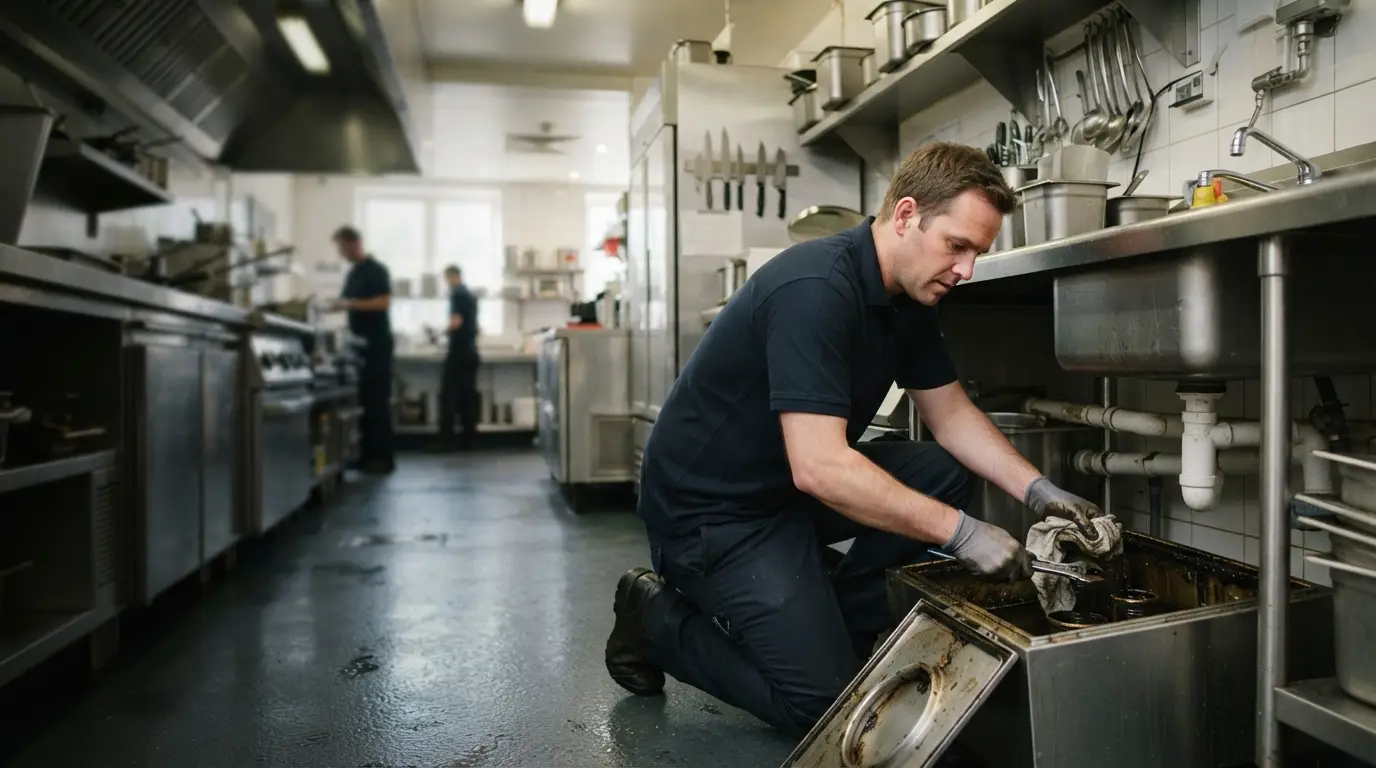
We clean and repair grease traps and interceptors, jet kitchen lines, install hand sinks and connect gas equipment, working before opening or after close.
We repair restroom fixtures and flush valves, replace water heaters, test backflow devices and handle tenant fit-outs.
We clear shared mains, replace risers and shutoffs, service central water heaters and boilers and coordinate access with managers and tenants.
Typical cost
Figures before we see the property are estimates only. These factors set the price:
We give you a written price before work starts.
Get a written price: (833) 733-2357Larger and older systems take longer.
After-hours work to avoid closures costs more.
Commercial heaters, traps and valves cost more than residential.
Remote locations take more time.
Commercial permits often involve more steps.
Benefits
Scheduled maintenance prevents surprise backups.
Weak spots found before winter.
Grease trap and backflow records ready for inspectors.
Larger work scheduled for the off season.
66% of homes in Big Sky and 22% in Whitefish are vacant on a typical day, but lodges, restaurants and rental managers there run flat out in ski and summer seasons. Water heaters must cover dozens of showers at once, and kitchens produce a lot of grease. We size water heating for peak demand, service it before the season and plan larger projects for the shoulder seasons in spring and fall.
Butte (17,158 homes), Helena, Great Falls, Livingston and Red Lodge have downtown blocks from the late 1800s and early 1900s, now used as restaurants, shops, offices and upstairs apartments. Their plumbing mixes original cast iron and galvanized with later additions. We plan replacements floor by floor, keep tenants in water while we work and protect historic finishes as much as possible.
In a Montana winter, the most common commercial plumbing failures happen where cold air gets in: entry vestibules, loading docks, mechanical rooms on outside walls, fire sprinkler lines and vacant suites with the heat turned down. One frozen sprinkler pipe can flood several floors. We insulate and heat-trace exposed lines, check that vacant spaces are kept warm or properly drained and fit temperature alarms that warn managers before pipes freeze.
Sidney (3,198 homes) and other towns in the northeast have seen work tied to the oil fields in western North Dakota and eastern Montana. Motels, restaurants, shops and crew housing there handle heavy, uneven demand. We service water heaters, clear drains and repair plumbing in these buildings, and we plan work around shift changes and busy periods.
Renters occupy 53% of homes in Missoula and 55% in Bozeman, and both cities have added many apartment buildings in recent years. Older walk-ups near the universities have shared drains and small water heaters, while newer complexes have central boilers and long recirculation loops. We clear shared lines, service central water heating, replace failing shutoffs so single units can be isolated and handle turnover repairs. We give tenants notice before shutoffs and keep records for each unit.
Commercial water heaters in Montana must raise near-freezing winter water to dishwasher and laundry temperatures, often for many users at once. We size tanks, high-input tankless banks and boiler-fed indirect heaters for winter demand, add mixing valves so hand sinks stay safe and set up recirculation so guests do not wait for hot water.
Close the shutoff for the affected area, or the building main if needed. Stop water use where drains are backing up and block off wet floors.
Tell staff and tenants. Have keys to mechanical rooms, cleanouts and grease traps ready, then call us.
Commercial plumbing work in Montana needs permits and inspections from the city, county or state Building Codes Bureau. We pull them and coordinate inspections. Our plumbers hold the Montana licenses each job requires.
Why choose us
What you can count on every time one of our plumbers comes to your door.
Every job is handled by a plumber who holds the license your state or city requires, backed by liability insurance.
Our plumber explains the problem and the options, and you approve a written price before any work begins.
Burst pipes, sewage backups and failed water heaters get priority scheduling, including nights and weekends.
We pull permits when the job needs one and schedule the inspection, so the work holds up when you sell.
Repairs and installations come with a written warranty on labor, on top of the manufacturer's warranty on parts.
Our pages and plumbers account for your area's water, soil, climate and the age of the homes around you.
Service area
We serve businesses in 497 Montana communities, including Great Falls (28,418 homes) and Kalispell (12,267 homes). Find yours:
We look at the building, the work, travel and timing, then give you a written price. After-hours work to avoid a closure is priced separately.
Yes. Grease trap cleaning, line jetting, backflow testing and pre-winter checks can be set up on a regular plan with a fixed scope.
Yes, nights and weekends cost more, but they can save a closure. We show you both options so you can choose.
We schedule before opening, after close or in stages, and tell you exactly when water will be off and for how long.
Yes. We clean and repair traps and interceptors and keep service records you can show an inspector.
Yes. We install restrooms, kitchens and fixtures for new tenants and pull the permits the work requires.
Stop water use, close off the area and call us. We clear the line and find out what caused the backup.
Yes. Our certified testers test and repair them and file reports with your water supplier where required.
Most kitchen lines take a few hours. Building mains and several lines take longer, which we plan with you.
Usually a day, depending on size, venting and access. We can plan it for a slow day or the shoulder season.
Often every one to three months, depending on size and volume. Local rules may set a minimum schedule.
Insulate and heat-trace exposed lines, keep vacant suites warm and fit temperature alarms. We check these before winter.
Close the fire line valve only as your fire system rules allow, call the fire sprinkler contractor and us, and protect equipment.
Yes. We serve lodges, restaurants and condo managers and plan larger work for the spring and fall shoulder seasons.
Many do through their sewer use rules. We keep records so you can show inspectors your trap is maintained.