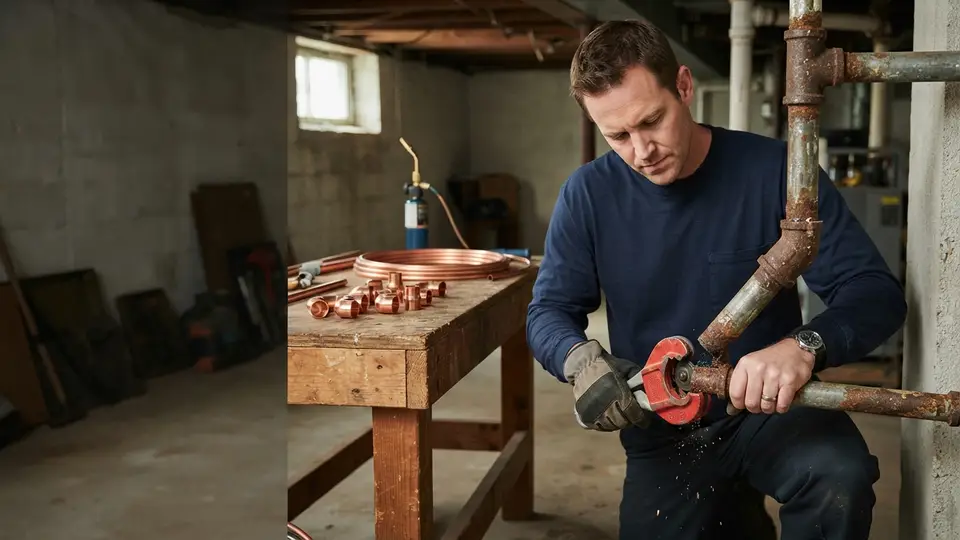
Galvanized steel
Found in: Homes before about 1960
What we do: Replace with PEX or copper
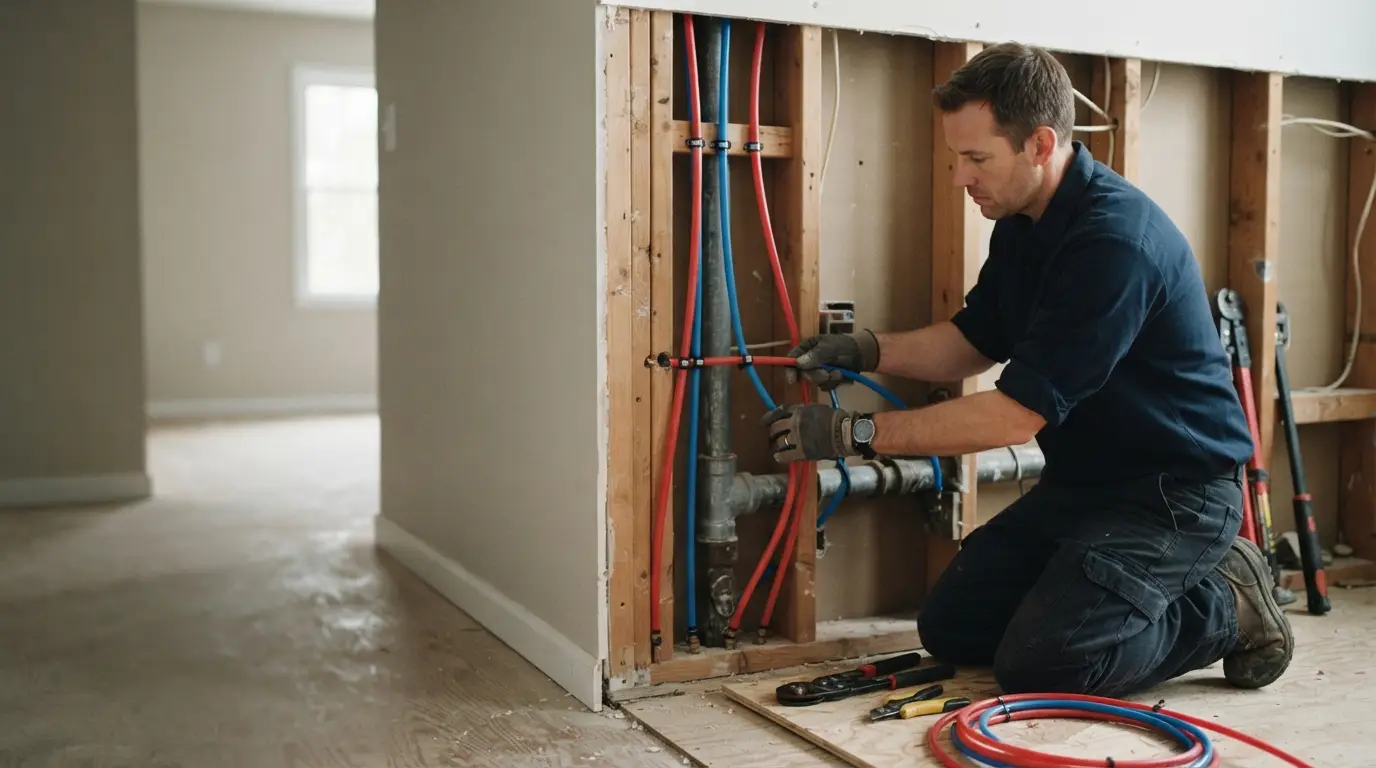
Rusty water from the tap, or a service line that freezes every winter? We handle repiping and water line replacement in Montana. Our plumbers repair failing pipe sections, replace all the supply piping in a house and repair or replace the service line from the curb stop or well to your home. Many Montana homes in mining, railroad and farm towns still have galvanized steel from the early 1900s, and some service lines were laid too shallow for Montana frost. We plan the work around your home and give you a written price first.
The service
30% of the 373,759 homes in our Montana data were built before 1960. The median home in Cut Bank dates from 1952, in Livingston and Lewistown from 1954 and in Deer Lodge from 1956. Homes from those decades were plumbed with galvanized steel, sometimes with lead service connections, and many have had copper added in patches. Galvanized rusts inside until a full flow becomes a trickle.
Pipe we replace and install
Found in: Homes before about 1960
What we do: Replace with PEX or copper
Found in: Some older city homes
What we do: Replace with copper or approved plastic
Found in: 1950s to 1980s homes
What we do: Repair or replace thin sections
Found in: Some 1978 to 1995 homes and mobiles
What we do: Replace before fittings fail
Found in: Our usual choice in cold climates
What we do: Flexes rather than splitting if it freezes
Why Montana
Galvanized steel installed a century ago has rusted from inside.
Pipe that has frozen and thawed many times develops weak spots and cracks.
Copper joined straight to steel corrodes at the joint.
Lines without enough cover freeze and split.
Warning signs
Our process
For one bad section, we cut out the damage, replace it and add a dielectric union where copper meets steel.
We run new supply lines to every fixture, mostly through the basement or crawl space, keep pipes away from cold outside walls and open walls only where needed.
We locate and repair leaks or frozen sections in the service line between the curb stop or well and the house.
We replace old or shallow service lines below frost depth, by trench or by boring, and insulate where depth is limited.
Typical cost
Figures before we inspect the house are estimates only. These factors set the final price:
You get a written price before work begins.
Get a written price: (833) 733-2357More fixtures and floors mean more pipe and labour.
PEX usually costs less than copper.
Basements are easier than crawl spaces or plaster walls.
Deep Montana lines mean more digging.
Frozen ground and remote sites add time.
Benefits
Full-size pipe delivers water to every fixture.
No more rust from corroded steel.
Better routing and insulation keep water flowing.
No galvanized or polybutylene to explain.
Butte (17,158 homes) has many Victorian houses and miners' cottages from the copper boom, and Anaconda and Helena are similar. 12% of Butte homes are vacant, and buyers rehabbing them often find old galvanized and lead connections. Thick foundations and steep lots make some runs harder, but basements and crawl spaces give us room. We replace old lines with PEX routed inside the heated envelope so they are less likely to freeze.
In a Montana repipe, where the pipe goes matters as much as what it is made of. Original plumbers often ran lines up exterior walls or through unheated crawl spaces. When we repipe, we route supply lines through interior walls and floors where possible, insulate any that must stay near outside walls and leave access so a frozen line can be thawed. PEX handles a freeze better than copper, but it is still best never to let it freeze.
Manufactured homes make up 36% of homes in Evergreen and a large share in many small towns. Older units may have polybutylene supply pipe, which fails at fittings, often after a freeze. We repipe these homes with PEX, replace the heat tape on the supply line from the ground and seal the belly insulation so the new pipe stays warm.
Havre (80% of homes built before 1980), Cut Bank, Glasgow and other Hi-Line towns have older homes on long, cold lots exposed to wind. Service lines sometimes run under driveways cleared of snow, where frost goes deepest. We replace or lower these lines and repipe homes that have lost pressure to rusted galvanized.
On acreage around Helena, Bozeman, Missoula and the Flathead, the water line runs from a well rather than a city main. That line carries water from the pump to a pressure tank inside the house, and it must stay below frost all the way, including where it rises into the basement or crawl space. Old galvanized drop pipe and shallow lines freeze or rust out. When we repipe a well home, we check the line from the well head, the pitless adapter and the pressure tank too, so the new supply piping is not let down by an old link outside.
If a pipe is leaking, close the main shutoff or switch off the well pump and turn off the water heater. Collect water in buckets and move belongings away.
If you suspect a lead service connection, run cold water for a few minutes before drinking and use a certified filter until it is replaced. Then call us.
Repiping and service line replacement usually need a permit from the city, county or state Building Codes Bureau, and some need a utility inspection at the curb stop. We pull the permits and schedule inspections. Our plumbers hold the Montana licenses each job requires.
Why choose us
What you can count on every time one of our plumbers comes to your door.
Every job is handled by a plumber who holds the license your state or city requires, backed by liability insurance.
Our plumber explains the problem and the options, and you approve a written price before any work begins.
Burst pipes, sewage backups and failed water heaters get priority scheduling, including nights and weekends.
We pull permits when the job needs one and schedule the inspection, so the work holds up when you sell.
Repairs and installations come with a written warranty on labor, on top of the manufacturer's warranty on parts.
Our pages and plumbers account for your area's water, soil, climate and the age of the homes around you.
Service area
We repipe homes in 497 Montana communities, including Great Falls (28,418 homes) and Missoula (37,317 homes). Find yours:
It depends on the size of the house, fixtures, pipe material and access. We inspect first and give you a written price.
PEX usually costs less and installs faster, and it tolerates freezing better. Copper costs more but some owners prefer it.
Yes. It is priced separately because it involves digging or boring below Montana frost depth.
We route pipe through basements, crawl spaces, closets and interior walls, opening walls only where needed.
Usually, yes. We restore water at the end of most days and tell you in advance when it will be off.
We test pressure, check every visible pipe and the service line and plan routes before giving a written price.
Rust is not usually a health risk, but old galvanized can hold lead from past connections. A water test tells you.
Lead is dull grey, soft and scratches to shiny silver. We can check where the line enters your home.
A typical house takes two to five days, depending on size and access, plus inspection.
Sometimes, but frozen ground slows the work. We may thaw and protect the line and plan replacement for spring.
PEX and copper installed today should last decades with moderate pressure and reasonable water quality.
Keep heat on, insulate pipe near outside walls and close crawl space vents in winter.
Close the main shutoff, turn off the water heater and call us. We repair the break first.
Lines without enough cover, or under cleared driveways, let frost reach them. We lower or insulate them.
Yes. It flexes rather than splitting when it freezes and needs fewer joints, which suits cold climates.