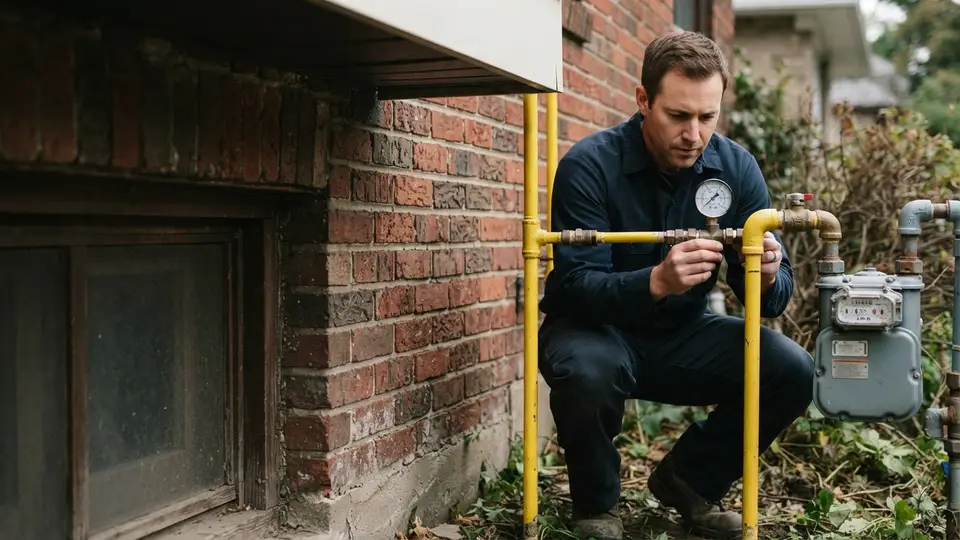
Black iron
Where it is: Most basements and older homes
What to watch: Loose or corroded threaded joints
Gas smell near the furnace, or a new range, shop heater or generator to hook up? We handle gas line repair and installation in Montana. Our plumbers repair leaking gas piping, run new lines and connect appliances safely, on natural gas in the cities and propane in rural and mountain areas. Montana homes depend on gas or propane for heat through long winters, so a leak or a failed line is serious. Old threaded piping, outdated connectors and buried lines moved by frost all cause trouble. We find the problem, repair it, pressure test the system and give you a written price first.
The service
Utility gas heats 59% of Montana homes, including 78% in Great Falls, 79% in Havre and 79% in Glasgow. Propane heats 7% statewide and much more in some places: 52% of homes in Roundup, 48% in Colstrip, 37% in Helena Valley Northeast and 31% in Big Sky. Most homes have black iron piping with flexible connectors to appliances; newer homes may use corrugated stainless tubing.
Gas piping we work with
Where it is: Most basements and older homes
What to watch: Loose or corroded threaded joints
Where it is: Many newer homes
What to watch: Proper bonding and protection
Where it is: Behind appliances
What to watch: Old uncoated brass types
Where it is: Buried lines to shops and tanks
What to watch: Frost movement and digging damage
Why Montana
Deep frost heaves buried lines to shops, garages and propane tanks.
Threaded joints in older basement piping loosen over decades.
Sliding roof snow and ice can damage meters, regulators and riser pipes.
Old uncoated brass appliance connectors crack with age.
Warning signs
Our process
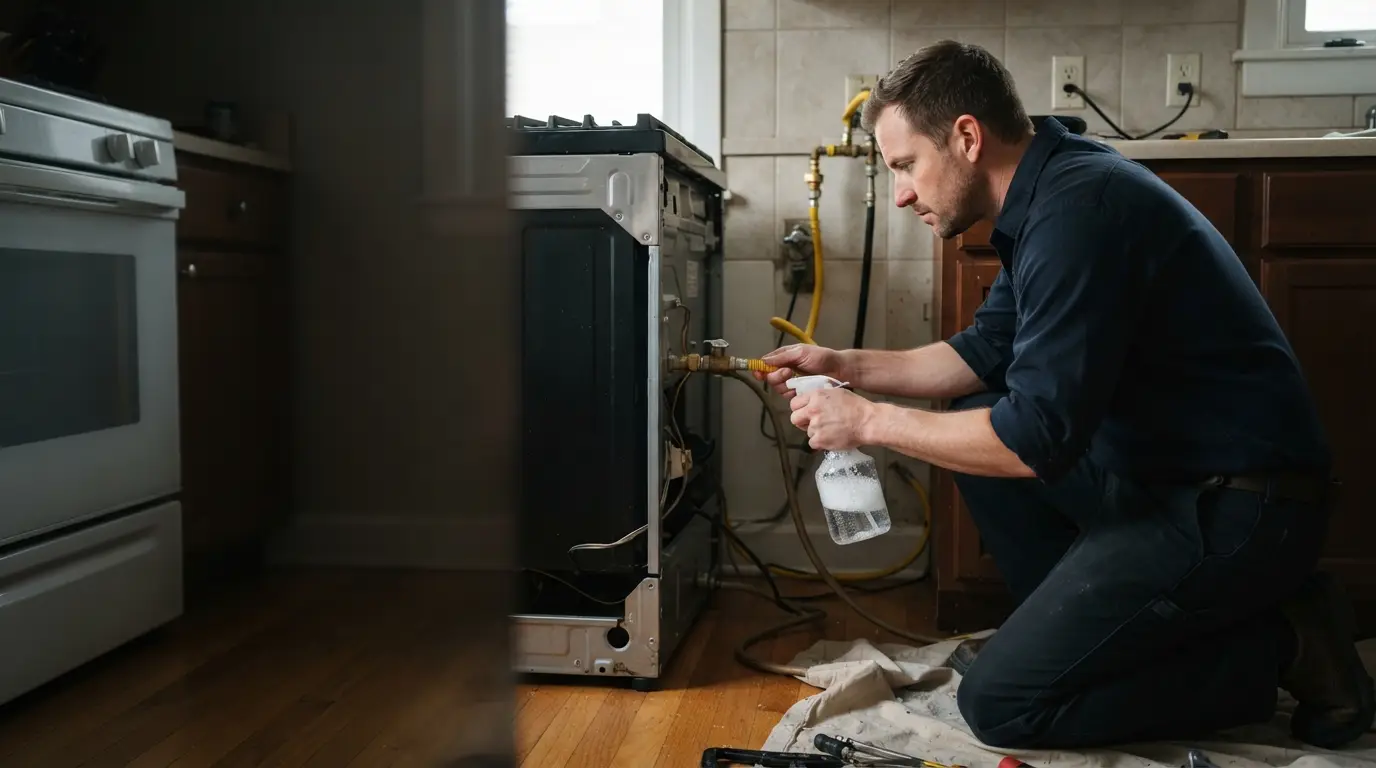
We find the leak with a detector and soap test, repair or replace the failed section and pressure test the system before gas is restored.
We size new lines for every appliance on the system, run them in black iron, CSST or buried polyethylene and add a shutoff at each appliance.
We connect ranges, dryers, water heaters, fireplaces, shop heaters and standby generators with new connectors and check for leaks and venting.
Typical cost
Figures before we see the system are estimates only. These factors set the price:
We give you a written price before we start.
Get a written price: (833) 733-2357A connector leak costs less than one in a wall.
Large loads need larger pipe.
Trenching below frost to a shop or tank adds work.
Frozen ground slows buried work.
Required for most gas work.
Benefits
Every repair and new line is pressure tested.
All appliances get enough gas on the coldest day.
Outdated connectors and valves replaced.
Permits and inspections documented.
Propane is heavier than air and settles in low places such as basements and crawl spaces, which makes a leak indoors especially dangerous. In Montana, the line from the tank to the house is buried and must handle frost. Your propane supplier usually owns and services the tank and first regulator. We repair and install the piping inside the home and to outbuildings, connect appliances and coordinate with the supplier when lines need testing or the tank must be shut off.
Many Montana properties have a heated shop or garage, and more homes are adding standby generators for winter outages. Each needs a line sized for its load. A shop heater or generator added to a system sized for a furnace and water heater can starve everything on the coldest morning. We check meter or tank capacity, size the line and install it with permits, from Montana City (1,112 homes) to the Gallatin Valley.
Gas meters and regulators are built to work outdoors, but snow sliding from a metal roof or ice building up on a regulator vent can damage them or block them. A blocked regulator vent can change the gas pressure inside the house. Keep snow and ice clear of meters and regulators, using a broom rather than a shovel. If a meter or riser is damaged, call the utility first; we repair the house piping after.
Homes in Montana are closed up for months, so carbon monoxide from a poorly venting appliance can build up. Older homes in Butte (17,158 homes) and other historic towns may have water heaters and boilers venting into old chimneys. Snow can block vents on high-efficiency furnaces and water heaters. Every home with gas or propane should have CO alarms on each level, and when we work on gas piping, we check venting too.
If you smell gas or propane, leave immediately and call the utility, your propane supplier or 911 from outside. Do not look for the leak yourself.
Once the utility or supplier has made it safe, call us to repair the piping. For a new line, clear access to the meter or tank, appliance and basement piping.
Gas piping work in Montana generally needs a permit and inspection, from the city or county building office or the state Building Codes Bureau. We pull permits and schedule inspections, and the utility or propane supplier may need to verify before service is restored. Our plumbers hold the Montana licenses each job requires.
Why choose us
What you can count on every time one of our plumbers comes to your door.
Every job is handled by a plumber who holds the license your state or city requires, backed by liability insurance.
Our plumber explains the problem and the options, and you approve a written price before any work begins.
Burst pipes, sewage backups and failed water heaters get priority scheduling, including nights and weekends.
We pull permits when the job needs one and schedule the inspection, so the work holds up when you sell.
Repairs and installations come with a written warranty on labor, on top of the manufacturer's warranty on parts.
Our pages and plumbers account for your area's water, soil, climate and the age of the homes around you.
Service area
We repair and install gas and propane lines in 497 Montana communities, including Billings (54,346 homes) and Bozeman (25,908 homes). Find yours:
It depends on where the leak is, the pipe type, access and travel. We find the leak first and give you a written price for the repair.
Distance, line size, trenching below frost and whether the meter or tank can carry the load all matter. We give you a written price.
We list permit and inspection fees in the written price, so you see the full cost before any work begins.
We use an electronic detector, soap solution on fittings and a pressure test to find leaks in piping, joints and connections.
We size the line, run pipe to the appliance, install a shutoff, pressure test the system and arrange the required inspection.
Yes. We repair and install propane piping inside homes and to outbuildings, working with your supplier on the tank and regulator.
Leave right away, avoid switches and phones inside and call your propane supplier or 911 from outside. Propane settles in low areas.
Yes. Any home with gas or propane appliances should have CO alarms on every level, tested monthly, especially in closed-up winter homes.
Many repairs take one to three hours, plus testing. Hidden leaks or buried lines take longer, especially in frozen ground.
Short indoor runs often take a few hours. Buried lines to shops or generators can take a day or more, plus inspection.
Have connections checked whenever you replace an appliance and have an older system looked at every few years.
Yes. Old uncoated brass connectors can crack. We replace them with modern coated connectors and add shutoff valves.
Call us right away. We repair and test the piping so the utility or supplier can restore service and heat as soon as possible.
Sliding snow can damage meters and risers, and ice can block regulator vents and appliance vents. Keep them clear.
Yes. It heats many rural homes and resort areas such as Big Sky, Roundup and Colstrip, away from utility gas lines.