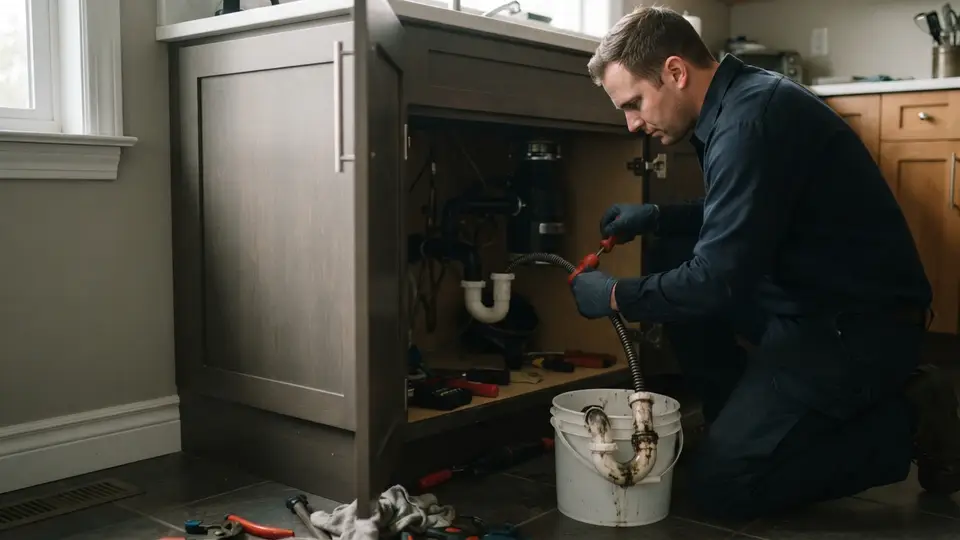
Hand auger
Where it works: Sinks, tubs, toilets
What it does: Clears clogs near the fixture
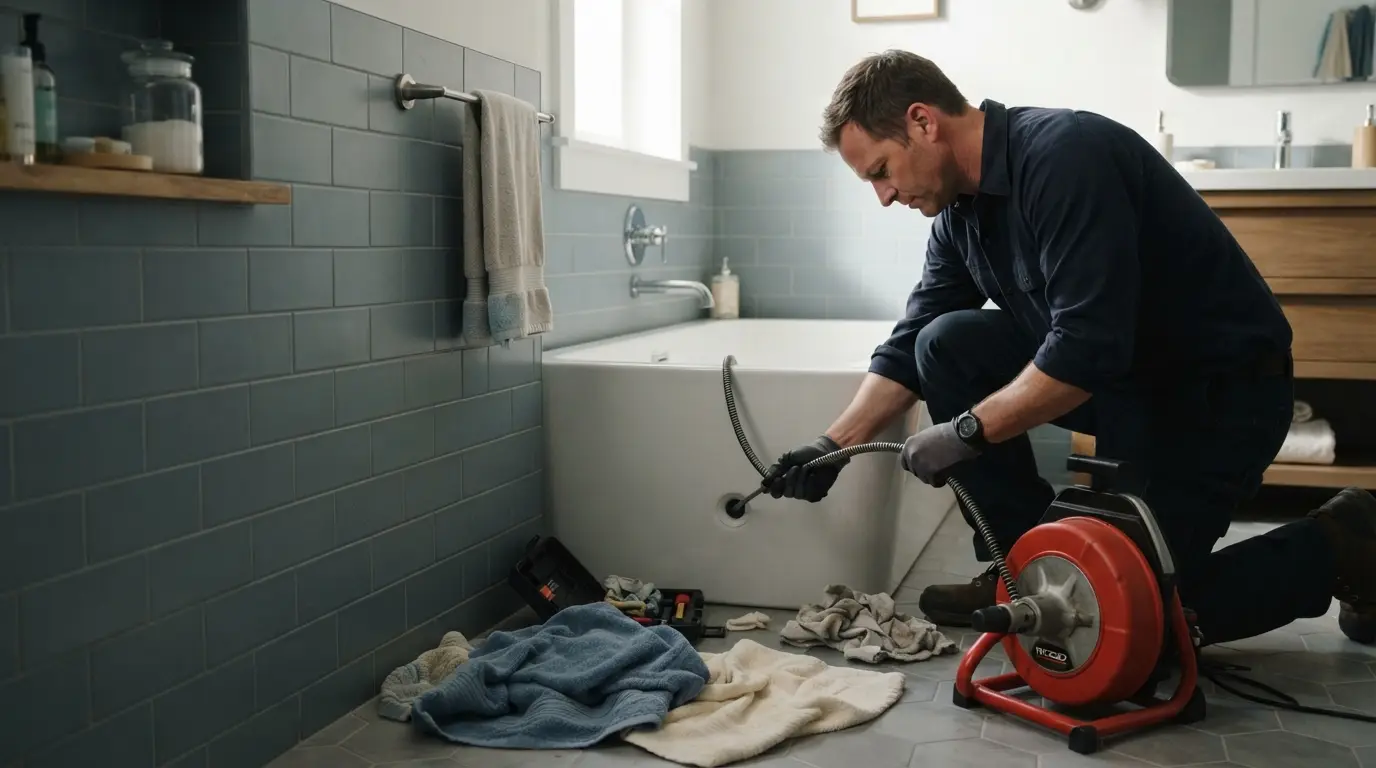
Floor drain backing up, or a kitchen sink that clogs every week? We handle drain cleaning and clog removal in Montana. Our plumbers clear sinks, tubs, toilets, laundry lines, floor drains and main sewer lines in homes, rentals, restaurants and lodges. Montana drains fight roots from cottonwoods and old elms, century-old cast iron and clay pipe in mining and railroad towns, grease in cold basement lines and sewer pipes that freeze where cover is shallow. We clear the line, run a camera through it and show you what caused the clog.
The service
Our Montana data counts 373,759 homes, and 30% were built before 1960. In Butte the median home dates from 1957, in Livingston from 1954 and in Great Falls from 1965. Homes from those decades drain through cast iron stacks into clay or cast iron sewers, usually with a basement floor drain at the low point. Newer homes in Bozeman, median 2000, have PVC drains that clog from grease, wipes and hair instead.
In a home with a basement, a blocked main usually announces itself at the floor drain. Water from the washer or an upstairs shower comes up there first, because it is the lowest opening before the street.
Equipment we use on Montana drains
Where it works: Sinks, tubs, toilets
What it does: Clears clogs near the fixture
Where it works: Mains and floor drains
What it does: Cuts roots and packed waste
Where it works: Grease, scale and ice
What it does: Scours the pipe wall and melts ice plugs
Where it works: Repeat clogs
What it does: Shows roots, breaks, sags and frost damage
Why Montana
Cottonwoods, elms and willows planted along old streets push roots into clay sewer joints.
Rust and scale inside century-old stacks and floor drains catch paper and grease.
Where a sewer runs shallow or under a driveway cleared of snow, frost can reach the pipe and form ice plugs.
Fat hardens fast in basement and crawl space pipes during long winters.
Warning signs
Our process
We pick the best access, usually a basement cleanout, run a cable sized to the pipe and flush the line with a full load of water to prove it is clear.
When a line clogs repeatedly, we camera it, locate the root entry, break or sag and repair that section so the clog stops coming back.
High-pressure water clears grease and scale a cable leaves behind, and warm water can open an ice plug. We check old cast iron and clay on camera before jetting.
Typical cost
Drain cleaning prices are estimates only until we see the line. These factors decide it:
We explain the choices and you approve a written price before we start.
Get a written price: (833) 733-2357A sink costs less than a main sewer.
No cleanout means working through a toilet or roof vent.
Jetting, thawing and camera work add to a cable cleaning.
Broken or collapsed pipe needs repair.
Remote locations and after-hours calls cost more.
Benefits
The floor drain stops overflowing.
Roots and scale are cut back to the pipe wall.
You see what caused the clog.
You know whether cleaning is enough or a repair is needed.
Butte (17,158 homes), Great Falls, Havre (80% of homes built before 1980) and Lewistown have neighborhoods built from the 1890s through the 1950s. Clay laterals run under big trees, and some houses still drain through original cast iron under the basement floor. Uptown Butte homes often sit on steep lots, and sags develop where fill settled. We clear the line, camera it to the city main and show you whether the trouble is under the house, in the yard or at the connection.
A frozen sewer is a uniquely northern problem. It happens when a lateral runs shallow, when snow is cleared off the ground above it so frost drives deeper, or when a slow trickle from a running toilet freezes in layers. The house drains normally until it suddenly does not. We open the line with warm water jetting or a steam thawer, then camera it to find the shallow or sagging section. A permanent fix may mean insulating the line or lowering it when the ground thaws.
Renters occupy 53% of homes in Missoula and 55% in Bozeman, and buildings with five or more units hold 27% of Missoula homes. Student houses and apartments clog more often from hair, food and wipes, and one blocked shared line can affect several units. We clear lines for landlords and property managers and can jet mains between semesters.
Restaurants in Billings (54,346 homes), Missoula and Kalispell, and lodges and condo kitchens in Big Sky and Whitefish, run grills and fryers that send fat into drains. Resort towns also see sudden swings in use: 66% of Big Sky homes are vacant on a typical day, then fill during ski season. We jet kitchen lines and floor drains, clear the run to the grease interceptor and work outside service hours.
Many Montana homes on acreage drain to a septic tank. When every fixture slows at once, the tank may be full or the drain field may be failing. Cleaning the house line will not fix that. We check the tank level and outlet first, so you pay for the right repair. In winter we also check whether the line between the house and tank has frozen.
Stop running water, including the washer and dishwasher. If a toilet is rising, close the valve behind it.
Skip chemical drain openers, which can damage old pipes and splash whoever opens the line. Do not pour boiling water into a frozen sewer. Keep people and pets away from dirty water and call us.
Drain cleaning does not need a permit. Replacing or rerouting pipe usually does, from your city, county or the state Building Codes Bureau, and we file it. Our plumbers hold the Montana licenses each job requires.
Why choose us
What you can count on every time one of our plumbers comes to your door.
Every job is handled by a plumber who holds the license your state or city requires, backed by liability insurance.
Our plumber explains the problem and the options, and you approve a written price before any work begins.
Burst pipes, sewage backups and failed water heaters get priority scheduling, including nights and weekends.
We pull permits when the job needs one and schedule the inspection, so the work holds up when you sell.
Repairs and installations come with a written warranty on labor, on top of the manufacturer's warranty on parts.
Our pages and plumbers account for your area's water, soil, climate and the age of the homes around you.
Service area
We clear drains in 497 Montana communities, including Helena (16,591 homes) and Kalispell (12,267 homes). Find yours:
It depends on where the clog is, how we reach it, the method needed and travel. A sink costs much less than a main sewer, and you approve a written price first.
When grease, scale or ice keeps closing a line, yes. Jetting cleans the whole pipe wall, so the drain stays clear far longer than after cabling.
Yes. Thawing takes special equipment and more time than a standard cleaning. We explain the price before we start.
We open the cleanout, run a cutting head toward the street, flush the line and camera it if the clog keeps returning.
Yes. After cleaning, we run a camera through the line and show you the roots, breaks, sags or ice we find.
We can work through a toilet or roof vent. Adding a cleanout makes future cleanings faster, cleaner and usually less expensive.
We advise against them. They can damage old cast iron and leave caustic water in the pipe that can burn whoever opens it.
Yes. It carries bacteria. Keep people and pets out of it, wear gloves if you must move things and stop using water until we clear the line.
Most fixture drains take under an hour. A main line with jetting, thawing or a camera inspection can take a few hours.
We schedule as quickly as we can and put sewage backups and frozen sewers ahead of slow drains. We keep you updated on timing.
Often once every year or two. If roots return faster than that, a repair or liner usually costs less over time.
Fix running toilets, leave snow cover over the sewer route and avoid long trickles of water into the drain during deep cold.
Stop using water and call us. A frozen sewer needs thawing equipment, and pouring hot water down the drain rarely reaches the ice.
Frost reaches deep in Montana winters. Shallow lines, cleared snow and slow trickles of water all let ice form inside the pipe.
Many homes built before the 1960s do. Clay joints let roots in, and settling on hillsides can create sags that hold waste.