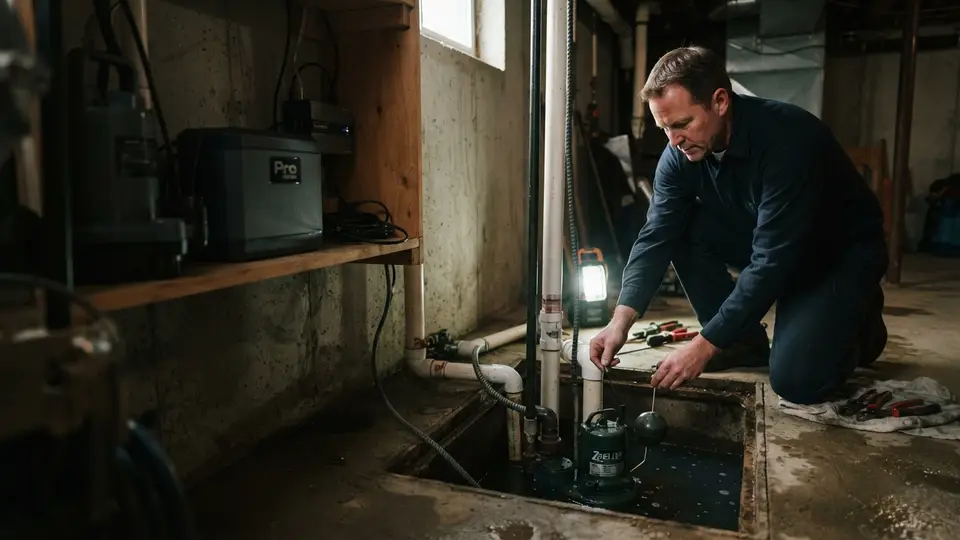
Submersible
Best for: Most finished basements
Notes: Quiet, sits in the pit
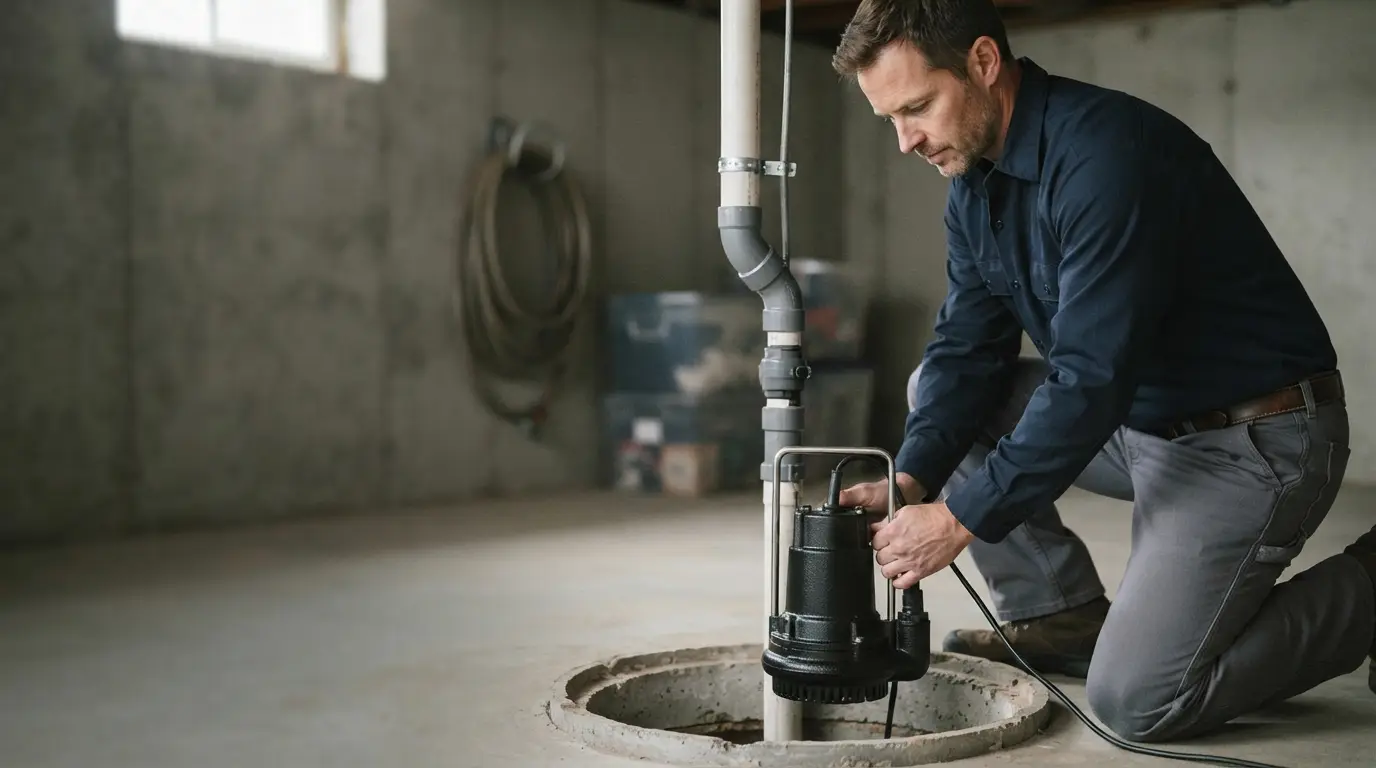
Basement taking water during spring runoff, or a pump that hums but will not empty the pit? We handle sump pump repair and installation in Montana. Our plumbers repair failed pumps, install new primary pumps and add battery backup pumps for power outages. In Montana, basements flood when snowmelt and river runoff raise groundwater in the valleys around Missoula, Kalispell, Bozeman and Billings, and discharge lines freeze in winter. We test the whole system, find the weak point and give you a written price before replacing anything.
The service
Basements are common in Montana, and many homes in river valleys have a perimeter drain that empties into a sump pit. The pump lifts that water outside. In Missoula (37,317 homes), Orchard Homes and Lolo along the Clark Fork and Bitterroot, and in Kalispell and Columbia Falls near the Flathead, groundwater can rise close to basement floors in late spring. Newer homes in Belgrade (median build year 2002) and Bozeman often have sump pits built in from the start.
Sump pump options we install
Best for: Most finished basements
Notes: Quiet, sits in the pit
Best for: Small or shallow pits
Notes: Motor above water, easy to reach
Best for: Power outages
Notes: Runs when the main pump loses power
Best for: Homes on city water
Notes: Uses water pressure, no battery
Why Montana
Snowmelt and rising rivers push groundwater up for weeks, and pumps run constantly.
Water left in outdoor discharge pipe freezes and blocks the pump.
Wind and snowstorms cut power when the pump is needed.
Floats catch on the pit wall or cord and never start the pump.
Warning signs
Our process
We test the float, switch, check valve and motor, clean the pit and replace the failed part when the pump itself is sound.
We size the pump to the inflow, install a new check valve and discharge line and route water away from the foundation with a freeze-resistant outlet.
We add a second, battery-powered pump with an alarm, so the basement stays dry during outages or if the main pump fails.
Typical cost
Figures before we check the system are estimates only. These factors decide the price:
You get a written price before work starts.
Get a written price: (833) 733-2357A float switch costs less than a new pump.
Higher-capacity pumps cost more.
Battery and water-powered backups add cost.
Rerouting or freeze protection adds work.
Cutting a pit into an existing floor is a bigger job.
Benefits
Water leaves before it reaches the floor.
A backup pump keeps working.
Lower humidity in finished spaces.
Alarms tell you when water rises.
Western Montana rivers peak with snowmelt from May into June. Homes near the Clark Fork in Missoula, the Bitterroot around Hamilton (3,101 homes), the Flathead around Kalispell and the Gallatin around Bozeman see groundwater rise for weeks. A pump that is fine for a summer storm can run nonstop during runoff and burn out. We size pumps for that sustained load, check that the discharge carries water well away and add a backup with an alarm.
In Montana, a sump pump may run in winter too, during a thaw or from a high water table. If the discharge line outside is flat or has a low spot, water sits in it and freezes. The pump then pushes against ice and fails. We slope discharge lines so they drain completely, add a freeze-protection fitting that lets water escape near the house if the line is blocked and keep the outlet clear of snowbanks.
Billings (54,346 homes) and Laurel sit along the Yellowstone, and heavy spring rain or rapid snowmelt can raise groundwater in low neighborhoods. Clay soils east of the mountains hold water against foundation walls. We repair and replace pumps in these basements and check that downspouts and grading are not sending more water to the pit than needed.
Late spring storms in Montana can bring heavy wet snow or wind that knocks out power, often at the same time groundwater is highest. A basement can flood within hours if the pump stops. A battery backup pump, or a standby generator wired to run the sump, keeps water out until power returns.
Check that the pump is plugged in and the breaker or GFCI has not tripped. Lift the float gently with a stick to see if the pump starts. In winter, check whether the outside discharge is frozen.
Never stand in water near cords or outlets. If water is rising, move belongings up and call us.
Replacing a pump in an existing pit usually needs no permit. New pits, discharge changes and some electrical work may, and most cities do not allow sump water into the sanitary sewer. We follow local rules, pull permits and our plumbers hold the Montana licenses each job requires.
Why choose us
What you can count on every time one of our plumbers comes to your door.
Every job is handled by a plumber who holds the license your state or city requires, backed by liability insurance.
Our plumber explains the problem and the options, and you approve a written price before any work begins.
Burst pipes, sewage backups and failed water heaters get priority scheduling, including nights and weekends.
We pull permits when the job needs one and schedule the inspection, so the work holds up when you sell.
Repairs and installations come with a written warranty on labor, on top of the manufacturer's warranty on parts.
Our pages and plumbers account for your area's water, soil, climate and the age of the homes around you.
Service area
We repair and install sump pumps in 497 Montana communities, including Great Falls (28,418 homes) and Helena (16,591 homes). Find yours:
It depends on pump type, capacity and any changes to the discharge line. We test the system first and give you a written price before work starts.
For finished basements, usually yes. Storms can cut power when runoff is highest, and a backup keeps water out while the power is down.
Often, if the motor is sound. Floats, switches and check valves can be replaced for much less than the price of a new pump.
We look at how fast water enters the pit during runoff, the depth of the pit and how high and far the water must be pumped.
We set a second pump in the pit, connect it to the discharge with its own check valve and install the battery, charger and alarm.
Yes. We cut the floor, set a liner and pump and route the discharge outside, with permits where the city requires them.
Not if water may touch outlets, cords or appliances. Shut off power safely at the panel first, or wait for help to arrive.
Most Montana cities do not allow it. We route the discharge outside, away from the foundation and neighbouring property.
Most replacements take a few hours. Adding a new pit or rerouting the discharge line takes longer, which we explain first.
Most last about 7 to 10 years. Pumps that run for weeks during runoff every spring may wear out sooner than that.
Before spring runoff each year and every few months after. Pour water into the pit and make sure the pump starts and stops.
Give it a steady slope so it drains, add a freeze-protection fitting near the house and keep the outlet clear of snowbanks.
Move belongings up, stay away from electrical hazards and call us. A failed pump with rising groundwater is an urgent call.
Snowmelt and rising rivers raise groundwater for weeks in those valleys. The perimeter drain carries it to the pit for the pump.
It can, during thaws or where groundwater stays high. That is why the discharge line must drain fully and be protected from ice.