Conventional tank and field
Where it fits: Deep, well-drained soil
What it needs: Pumping and field checks
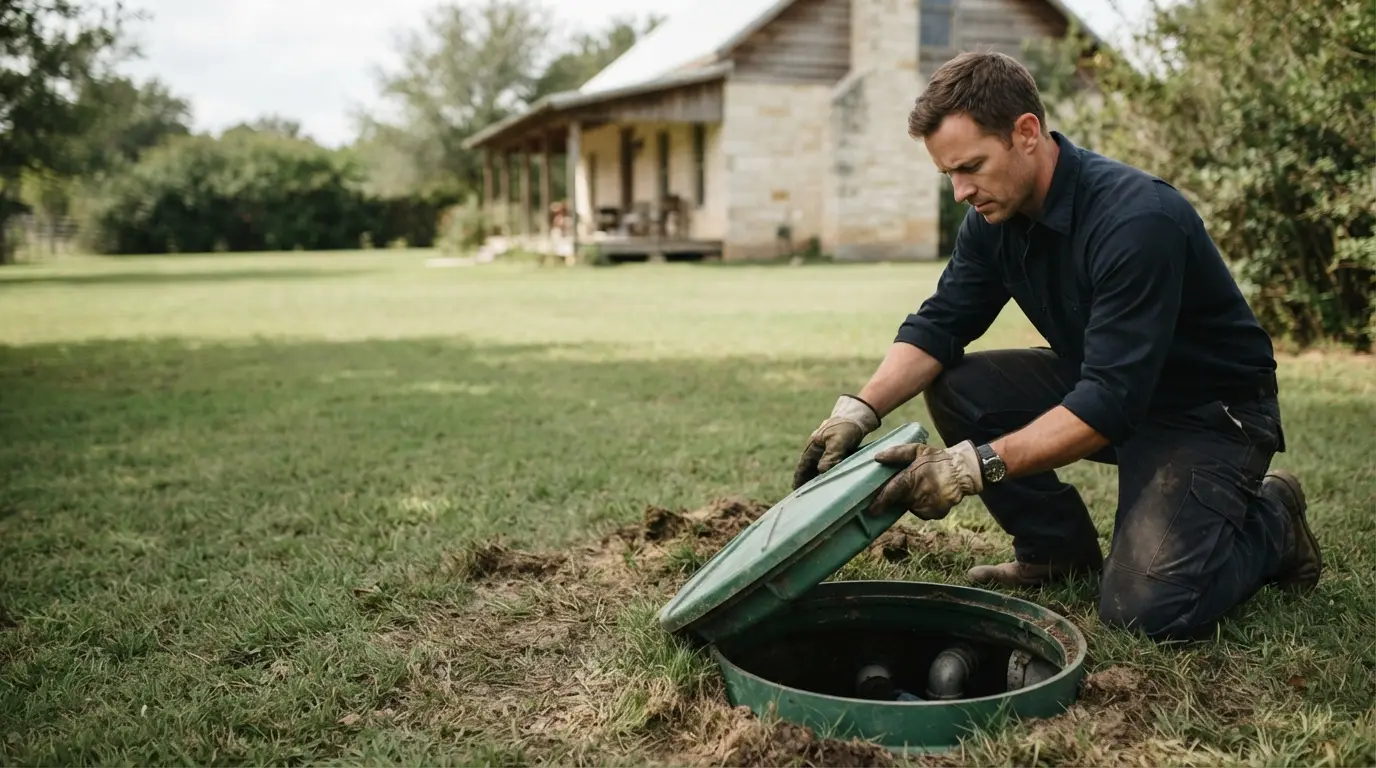
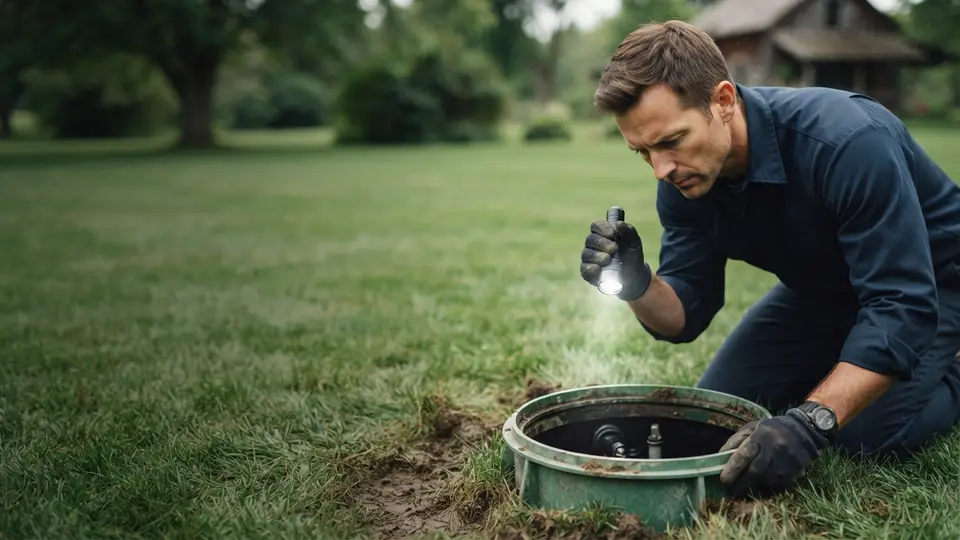
Drains slowing all at once, or a soggy patch over the drain field? We handle septic tank services in Montana. Our plumbers pump tanks, inspect systems for home sales and repair or replace drain fields on acreage, ranches, lake homes and mountain cabins. Montana septic systems deal with frost that reaches several feet down, high groundwater near rivers and lakes, shallow rocky soil in the mountains and fast growth on former ranch land. We find out why a system is failing and give you a written price for the fix.
The service
A septic system holds household waste in a buried tank, where solids settle and scum floats. Clearer effluent flows to a drain field, where the soil filters it. Where soil is shallow, very gravelly or close to groundwater, Montana systems may use pressure dosing, sand filters, elevated sand mounds or advanced treatment units.
Much of Montana's growth happens just outside city sewer service. In Helena Valley Southeast (median build year 1990), Four Corners near Bozeman (median 2010) and Montana City, most homes sit on acreage with their own wells and septic systems.
Septic systems we service
Where it fits: Deep, well-drained soil
What it needs: Pumping and field checks
Where it fits: Shallow or uneven ground
What it needs: Pump, floats and alarm checks
Where it fits: High groundwater, thin soil
What it needs: Pump service, surface checks
Where it fits: Sensitive lakes and rivers
What it needs: Regular maintenance contract
Why Montana
Lines and tanks without enough cover freeze in long cold spells, especially when snow is thin.
River valleys and lakeshores saturate drain fields during spring runoff.
Mountain soil can be too shallow, or gravel too coarse, to treat effluent well.
Solids carried out of a full tank clog the drain field.
Warning signs
Our process
We uncover the lids, pump both compartments, check baffles and effluent filter and note sludge and scum levels so you know when to pump again.
For a sale or a problem system, we check the tank, pump and alarm if present, distribution and field, and write up the findings.
We repair broken or frozen lines and replace distribution boxes. When a field has failed, we design a replacement with the county environmental health office.
Typical cost
Any price discussed before we see the system is an estimate only. The real figure depends on:
You get a written price, and nothing starts until you approve it.
Get a written price: (833) 733-2357Deep or snow-covered lids take time.
Pressure, mound and treatment units have more parts.
Frozen ground and snow add work.
Repairing lines costs far less than a new field.
Remote properties take longer to reach.
Benefits
Pumping keeps solids out of the field.
A working system protects groundwater.
Inspections find weak spots before the cold.
Records and an inspection report reassure buyers.
A frozen septic system is a Montana winter call we know well. It happens when snow cover is thin, when vehicles compact the ground over the field, when a home sits empty so no warm water flows, or when a running toilet sends a slow trickle that freezes in the line. We find where the freeze is, thaw the line or tank with steam or jetting and recommend fixes such as insulation, more cover or a change in how the house is used in winter.
Around Flathead Lake, 28% of homes in Bigfork and 28% in Lakeside are vacant on a typical day, many of them seasonal. Big Sky, where propane heats 31% of homes, has many condos and cabins on small systems or shared community systems. Lakeshore systems sit close to water and groundwater, and the county may require advanced treatment. We pump before and after the busy season and check systems that sat frozen all winter.
Manufactured homes make up 36% of homes in Helena Valley Southeast and 36% in Evergreen. Many sit on septic tanks installed years ago, sometimes for an earlier home on the same lot. The tank may be small or its location unknown. We locate it, pump and inspect it and tell you whether it can keep serving the home.
Growth around Bozeman, Belgrade, Kalispell (12,267 homes) and the Helena Valley has turned ranch and farm land into subdivisions of one- to five-acre lots, each with a well and a septic system. Newer systems are designed to current rules, but owners are often new to septic and do not know where the tank is or when it was last pumped. We locate and map the system, pump it on schedule and show you what to keep off the drain field so it lasts.
Cut water use: delay laundry, run the dishwasher later and keep showers short. If a pump alarm is sounding, silence it but leave the pump circuit on.
Keep vehicles off the tank and field, especially in winter, and keep people and pets away from wet or sewage-covered ground. Never open or enter a septic tank yourself. Then call us.
Septic systems in Montana are permitted by county or local environmental health offices under state Department of Environmental Quality rules. New systems and major repairs need a permit first. We handle the paperwork and inspections. Our plumbers hold the Montana licenses each job requires.
Why choose us
What you can count on every time one of our plumbers comes to your door.
Every job is handled by a plumber who holds the license your state or city requires, backed by liability insurance.
Our plumber explains the problem and the options, and you approve a written price before any work begins.
Burst pipes, sewage backups and failed water heaters get priority scheduling, including nights and weekends.
We pull permits when the job needs one and schedule the inspection, so the work holds up when you sell.
Repairs and installations come with a written warranty on labor, on top of the manufacturer's warranty on parts.
Our pages and plumbers account for your area's water, soil, climate and the age of the homes around you.
Service area
We service septic systems around 497 Montana communities, including Belgrade (4,994 homes) and Hamilton (3,101 homes). Find yours:
It depends on tank size, how deep the lids are, snow and travel distance. We give you a written price before we start pumping.
Usually, yes. If only a few lines are broken or frozen, repair costs much less. A field saturated throughout often needs replacing.
Yes. An inspection is priced on its own, and a full report for a home sale covers the tank, pump, distribution and field.
We uncover and pump the tank, check baffles, filter, pump and alarm, look at the distribution and walk the field for wet spots.
Yes. We trace the line from the house with a locator and probe the ground until we find the tank lids.
We find where the freeze is, then use steam or a jetter to open the line or tank, and recommend changes to stop it refreezing.
No. Septic gases can overcome a person quickly, and old lids can collapse. Leave opening the tank to us.
Yes, especially where groundwater is shallow. Fix a failing system quickly and test the well afterward.
Pumping a typical tank takes about an hour once the lids are uncovered. Snow and buried lids add time.
Design and permitting can take a few weeks. Installation often takes a few days, and frozen ground may push it to spring.
Every three to five years for most homes. Larger households or a garbage disposal may need more frequent pumping.
Leave snow cover in place, keep vehicles off the field, fix running fixtures and keep some warm water flowing if the home is in use.
Keep people and pets away, cut water use and call us. Surfacing sewage is a health hazard and needs prompt work.
County or local environmental health offices, following state DEQ rules. We handle the permit for new systems and major repairs.
Often. Systems near lakes and rivers may need advanced treatment to protect water quality, as required by the county.