Water softener
What it fixes: Hardness, scale, spotting
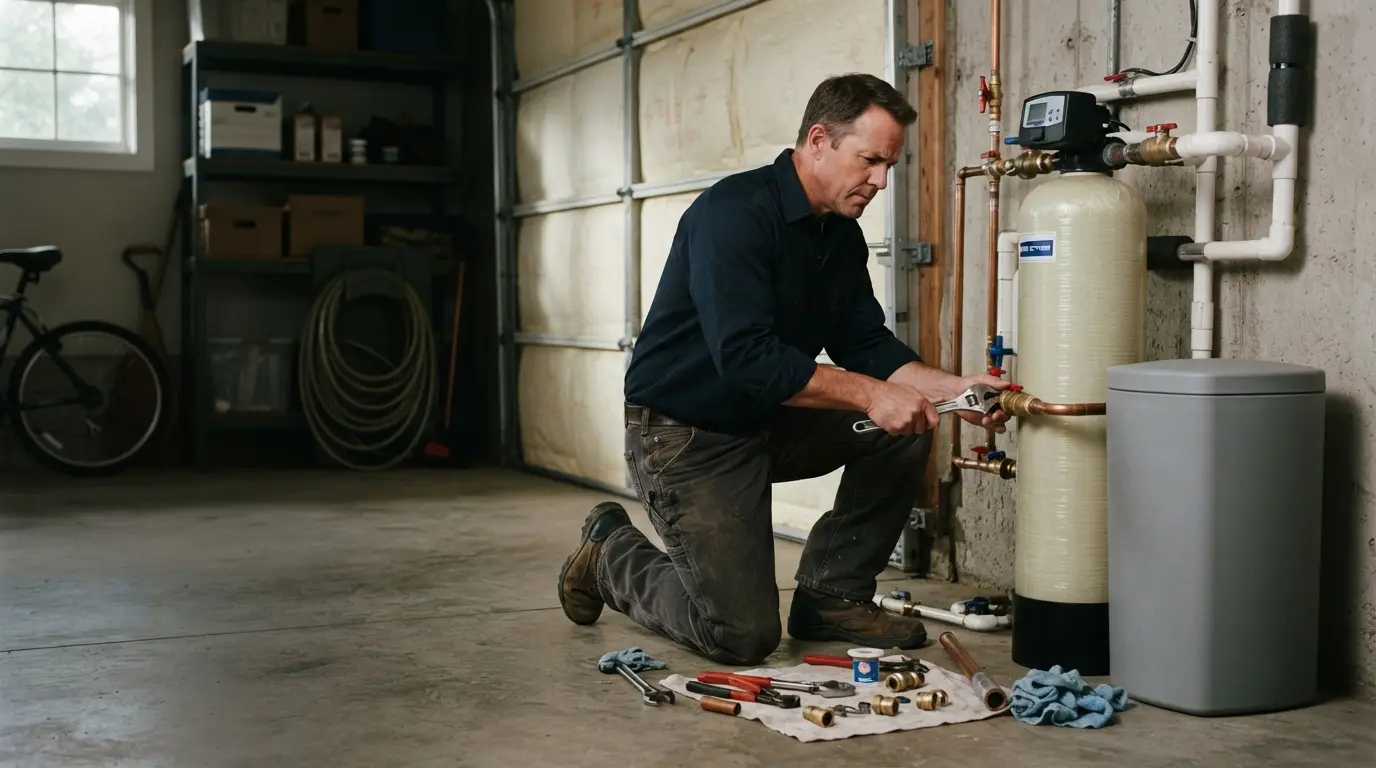
Where it goes: Where the main line enters
Scale on every faucet, or well water that stains the sink orange? We handle water softeners and filtration in Montana. Our plumbers install water softeners, whole-house filters and reverse osmosis drinking water systems. Montana water varies widely: river water treated by cities, a valley aquifer under Missoula, and private wells that may be hard or carry iron, manganese, sulphur or, in some areas, naturally occurring arsenic. We test your water first, explain the results and recommend equipment that fixes your actual problem, with a written price before installation.
The service
Billings treats water from the Yellowstone River and Great Falls from the Missouri River. Missoula pumps from the aquifer beneath the valley, and Bozeman uses mountain streams and reservoirs. City systems meet drinking water standards, but hardness and taste vary. Many Montanans, especially on acreage around Helena, Bozeman and the Flathead and in the eastern farm country, have private wells, and the owner is responsible for that water.
Well water in eastern Montana, around Miles City, Glendive and Sidney (3,198 homes), is often hard and mineral-rich. Wells in the Helena Valley and other areas may also show iron, manganese or arsenic, so testing is the first step.
Water treatment we install
What it fixes: Hardness, scale, spotting
Where it goes: Where the main line enters
What it fixes: Orange and black stains
Where it goes: Well systems
What it fixes: Rotten egg smell
Where it goes: Well systems
What it fixes: Chlorine taste and odor
Where it goes: City water
What it fixes: Dissolved solids, arsenic and many contaminants
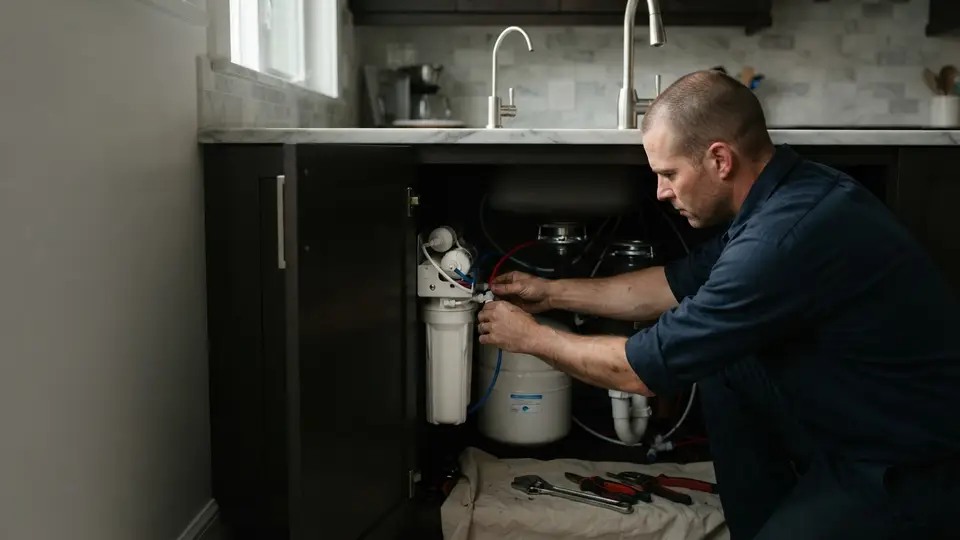
Where it goes: Under the kitchen sink
Why Montana
Groundwater on the plains dissolves calcium, magnesium and sulphate from the rock.
Many wells carry dissolved metals that stain fixtures and laundry.
Some areas, including parts of western Montana valleys, have groundwater with naturally occurring arsenic.
City systems add chlorine to keep water safe in the pipes.
Warning signs
Our process
We test hardness and iron, size the softener for your household, install it with a bypass and drain and set it to regenerate by actual water use.
We install sediment, carbon, iron, manganese or sulphur filters on the main line, chosen from your test results.
We install an under-sink RO system for drinking and cooking water, which can reduce arsenic and other dissolved contaminants when sized and maintained correctly.
Typical cost
Figures before we test your water are estimates only. These factors set the price:
You get a written price before installation.
Get a written price: (833) 733-2357Hardness, iron, sulphur and arsenic decide the equipment.
Larger homes need larger systems.
Softener, filter and RO can be combined.
Basements are easier than tight closets.
Softeners and some filters need a drain.
Benefits
Fixtures and glass stay cleaner.
Water heaters and boilers last longer.
Iron and manganese removed before they reach fixtures.
RO reduces arsenic and many dissolved contaminants.
Homes in Helena Valley Southeast (median build year 1990), Four Corners and many other subdivisions near Montana cities rely on private wells. No utility tests that water for you. We recommend testing for bacteria and nitrates every year, and a full test, including arsenic, when you buy a home or set up treatment. Then we install the equipment the results call for, often an iron filter ahead of a softener, plus RO for drinking water.
Miles City (4,015 homes), Glendive, Sidney and Havre sit on the plains, where both city and well water can be hard and high in sulphate. Scale builds fast in water heaters, dishwashers and boilers. A properly sized softener protects that equipment and makes cleaning easier. High sulphate can also give water a bitter taste, which reverse osmosis reduces at the kitchen tap.
Billings (54,346 homes), Missoula (37,317 homes) and Bozeman deliver water that meets standards, and many households need no treatment. Others notice scale or chlorine taste. We test hardness before recommending a softener, so you do not buy equipment you do not need, and suggest a carbon filter or RO for taste where that is the real concern.
Hard water leaves scale on the inside of tank water heaters, tankless heat exchangers, boilers, dishwashers and washing machines. Montana heaters already work hard raising cold winter water, and a layer of scale makes them work harder still. A softener reduces the buildup, and regular flushing keeps tankless units efficient. Where a home has hydronic heat, we also check that the boiler is filled with suitably treated water.
We size a softener from your hardness, iron content and household size. Too small, and it regenerates constantly and lets hard water through; too large, and the resin is not cleaned often enough. Where a well carries iron, we usually put an iron filter first so the softener resin is not fouled.
If your well water has changed suddenly, stop drinking it and use bottled water until it is tested.
Gather any past water test results or your city water quality report. Clear access to where the main line or well line enters the house, then call us.
Softener and filter installations may need a plumbing permit, especially where we add a drain or bypass. We pull permits from the city, county or state Building Codes Bureau where required, and our plumbers hold the Montana licenses each job requires.
Why choose us
What you can count on every time one of our plumbers comes to your door.
Every job is handled by a plumber who holds the license your state or city requires, backed by liability insurance.
Our plumber explains the problem and the options, and you approve a written price before any work begins.
Burst pipes, sewage backups and failed water heaters get priority scheduling, including nights and weekends.
We pull permits when the job needs one and schedule the inspection, so the work holds up when you sell.
Repairs and installations come with a written warranty on labor, on top of the manufacturer's warranty on parts.
Our pages and plumbers account for your area's water, soil, climate and the age of the homes around you.
Service area
We install water softeners and filtration in 497 Montana communities, including Helena (16,591 homes) and Kalispell (12,267 homes). Find yours:
It depends on your hardness, iron content, household size and the system you choose. We test your water and give you a written price.
RO uses little energy. The main ongoing costs are filters and membranes replaced on a schedule, which we explain before you decide.
We test hardness and basic quality when recommending equipment. Certified lab tests for wells, such as for arsenic, are priced separately.
We install it where the main line enters, add a bypass valve and drain connection and set it up for your water and household.
Yes. An iron and manganese filter, often ahead of a softener, removes the metals that cause orange and black stains.
We test your water, look at where the line enters the house and recommend equipment based on what the results show.
Yes for most people. Softening adds a small amount of sodium. If you limit sodium, use RO water for drinking and cooking.
In some Montana areas, yes. Have a certified lab test your well. If arsenic is present, a properly sized RO system can reduce it.
Most installations take a few hours, depending on the plumbing layout and where the drain connection can go.
Usually one to two hours under the kitchen sink, a little longer if we connect it to a refrigerator or ice maker.
Check monthly and keep the tank about half full. How fast it is used depends on your hardness and water use.
Test for bacteria and nitrates every year, and after flooding or any change in taste, smell or colour.
Put the softener in bypass, close the main or switch off the well pump if needed and call us to repair it.
Often, yes. Wells and some city supplies on the plains carry high hardness and sulphate. A softener and RO help.
Not always. We test hardness first; some households only want a carbon filter or RO for taste.