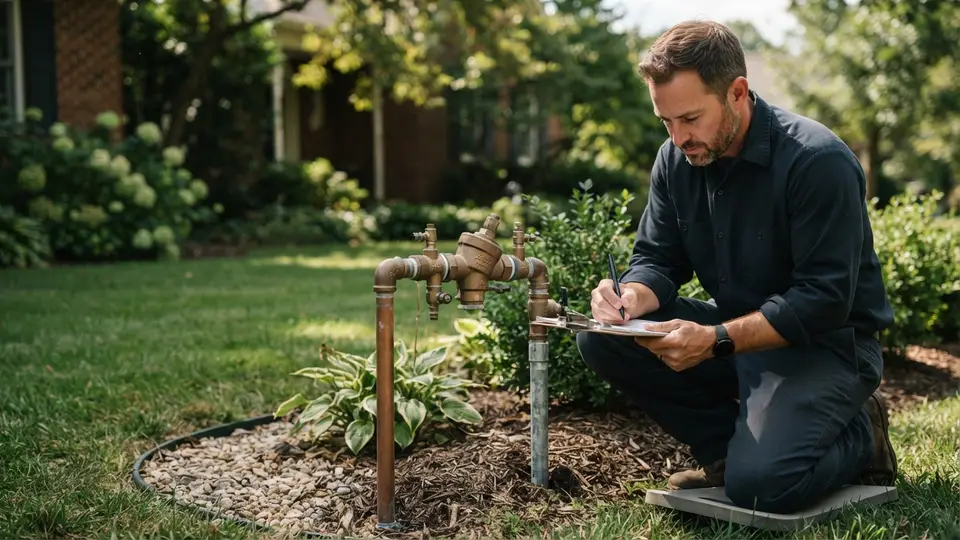
Pressure vacuum breaker (PVB)
Typical use: Lawn irrigation
Hazard: Back-siphonage
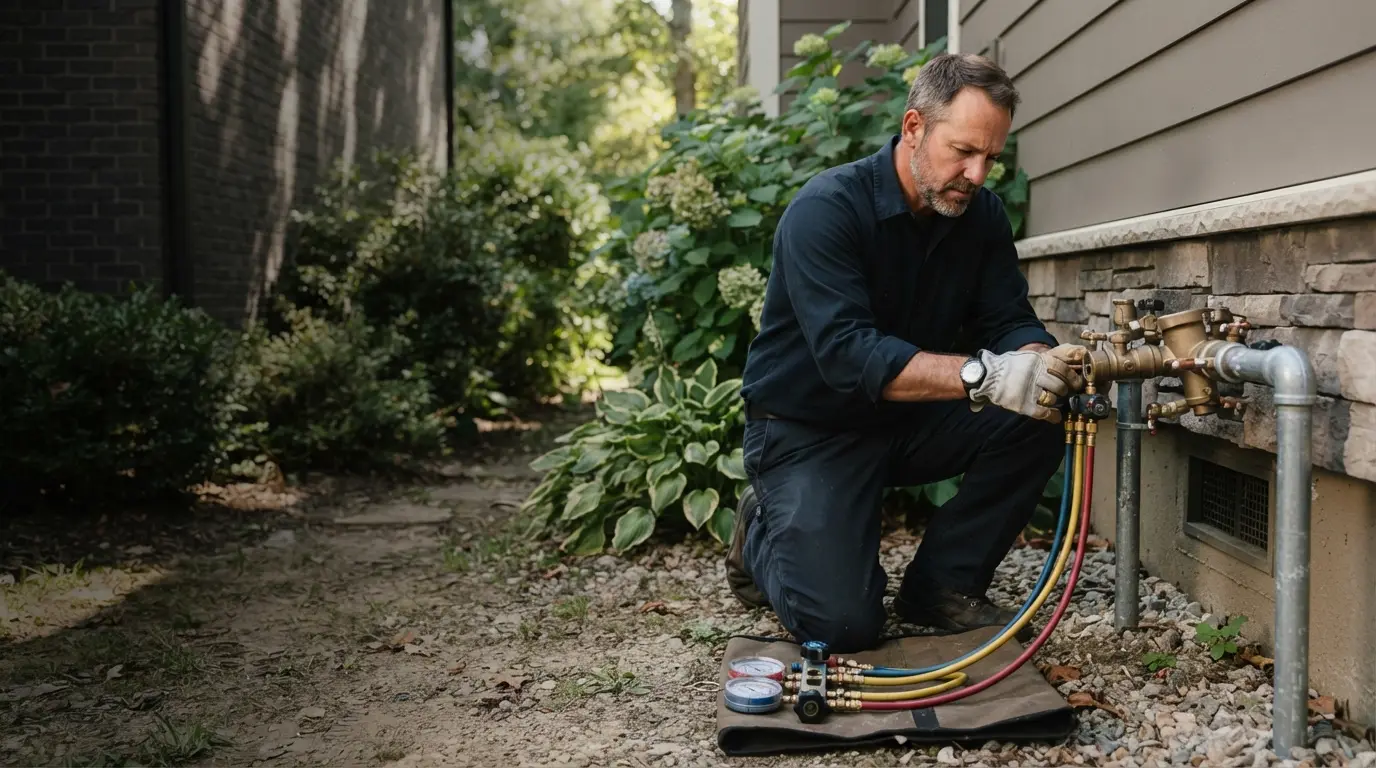
Backflow test letter from the water department, or an irrigation valve split by an early frost? We handle backflow testing and prevention in New Hampshire. Our plumbers test backflow assemblies, install new preventers and rebuild those that fail. Public water systems in New Hampshire run cross-connection control programs, so lawn irrigation, fire sprinkler lines, boilers with chemical treatment, restaurants, medical offices and many businesses need testable devices checked on schedule. We test, report results where your water system asks for them and quote any repair in writing.
The service
Backflow is water flowing backward from a property into the public supply. A water main break or firefighting can drop pressure and siphon water back; a boiler or pump can push it back under pressure. A preventer stops lawn chemicals, boiler additives, fire sprinkler water and other contaminants from entering drinking water.
Water systems in Manchester (52,108 homes), Nashua, Concord, Portsmouth, Dover and other New Hampshire cities and towns require backflow protection on connections that pose a risk. Testable assemblies must be tested by a certified tester at least once a year, and some higher-hazard devices more often. Your water system's notice tells you what applies.
Backflow devices we service
Typical use: Lawn irrigation
Hazard: Back-siphonage
Typical use: Fire sprinkler lines
Hazard: Low hazard
Typical use: Boilers, chemicals, medical, restaurants
Hazard: High hazard
Typical use: Outdoor faucets, utility sinks
Hazard: Back-siphonage
Why New Hampshire
Irrigation devices left full of water crack in early frosts and long winters.
Sediment and minerals stop check valves from sealing.
Discs, seats and diaphragms harden with age.
Fast-closing valves send shocks that damage internal parts.
Warning signs
Our process
Our certified testers attach a calibrated test kit, check each valve and relief point and submit results to your water system where it requires.
We install the assembly your water system requires for the hazard, place it where it can be tested and protected from frost and pull any permit.
Failed assemblies are rebuilt with new parts, or replaced if the body is cracked, then retested.
Typical cost
Before we see the device, any figure is an estimate only. Price depends on:
Repairs are quoted in writing before we start.
Get a written price: (833) 733-2357Large RPZs take longer.
Several on one site share one visit.
Kits cost less than new bodies.
Devices in pits or tight rooms take longer.
Some water systems charge filing fees.
Benefits
The shared supply stays clean.
Results reach your water system on time.
Fall draining prevents freeze damage.
Small rebuilds prevent replacements.
Lawn irrigation is common in Londonderry (4,678 homes), Hooksett, Bedford and the Seacoast towns. Each system on public water needs a backflow device, usually a PVB outside the house. New Hampshire can see a hard frost in September or May, and devices left full of water split overnight. We test in spring, blow out and drain systems in fall and replace cracked bodies.
Many New Hampshire homes and buildings heat with hot water boilers, and the fill line connects the heating loop to the drinking water. Boiler water is not drinkable, and treated systems contain chemicals. Codes require backflow protection on boiler fill lines, often a dual check for homes and an RPZ for treated or commercial systems. We check and replace these devices when we service heating systems.
Restaurants in Portsmouth (11,370 homes), Concord and Keene, schools, medical offices and apartment buildings in Manchester, where 33% of homes are in buildings with five or more units, often have several devices on fire lines, boilers, soda systems and dish machines. We keep a test calendar for each property and test every device in one visit.
Fire sprinkler water sits in pipes for years and is not safe to drink, so a double check or RPZ separates it from the public main. In New Hampshire, those assemblies must be kept in heated space or protected from freezing. We test fire line devices on schedule, coordinate with sprinkler contractors when the system must be shut down and file the results.
Restaurants, marinas, ice cream stands and inns around Hampton (4,674 homes), Portsmouth and the lakes open for the season with irrigation, soda systems, ice machines and dish machines that all connect to public water. Many of their backflow devices sit idle over winter and need testing when the business reopens. We test before opening day, rebuild what fails and drain and protect devices when the season ends.
Even homes without a testable assembly have cross-connection risks: a hose left in a bucket of fertilizer, a sprayer on a weed killer bottle or a utility sink hose sitting in dirty water. Hose bibb vacuum breakers are inexpensive and screw onto outdoor faucets, and most new frost-free sillcocks include one. We fit them when we replace outdoor faucets and check boiler fill lines when we service heating systems.
Find the device and clear snow, plants or storage around it. If it is spraying, close the shutoff valve just upstream.
Do not adjust or take apart the device; only a certified tester should test it. Keep the notice handy and call us.
Backflow testers in New Hampshire must hold certification, and water systems keep lists of testers they accept. New assemblies may need a town plumbing permit. We pull permits where required, and our plumbers hold the New Hampshire licenses each job requires.
Why choose us
What you can count on every time one of our plumbers comes to your door.
Every job is handled by a plumber who holds the license your state or city requires, backed by liability insurance.
Our plumber explains the problem and the options, and you approve a written price before any work begins.
Burst pipes, sewage backups and failed water heaters get priority scheduling, including nights and weekends.
We pull permits when the job needs one and schedule the inspection, so the work holds up when you sell.
Repairs and installations come with a written warranty on labor, on top of the manufacturer's warranty on parts.
Our pages and plumbers account for your area's water, soil, climate and the age of the homes around you.
Service area
We test and repair backflow devices in 100 New Hampshire communities, including Nashua (38,760 homes) and Dover (15,433 homes). Find yours:
It depends on the type and size of the device and how many are on the property. We give you a written price before testing.
Often not. A rebuild with new discs, seats and springs usually gets it to pass for much less than a new assembly.
Filing is part of our service. Some water systems charge their own fees, which we explain up front.
We attach a calibrated test kit to the test cocks and check that each check valve and relief valve works at the required pressures.
We do, where the system requires it, and you get a copy for your records.
Yes. We install the type your water system requires, placed so it can be tested and drained before winter.
Yes. It can draw lawn chemicals, boiler water or bacteria into drinking water. Preventers stop that.
It is protecting the supply, but a part inside needs attention. Call us to test and repair it.
Most residential tests take under an hour. Commercial sites with several devices take longer.
At least once a year for most testable devices, and some high-hazard devices more often. Your notice tells you.
Shut off the supply, blow out the lines and open the test cocks to drain it. We can do it each fall.
Yes. Codes require protection on boiler fill lines. We check it when we service the system.
Yes. We prioritize deadline repairs and retest so you can submit a passing result on time.
Early fall and late spring frosts catch devices full of water. Draining them in time prevents most cracks.
Yes. Fire line assemblies are tested on schedule, and we coordinate with your sprinkler contractor.