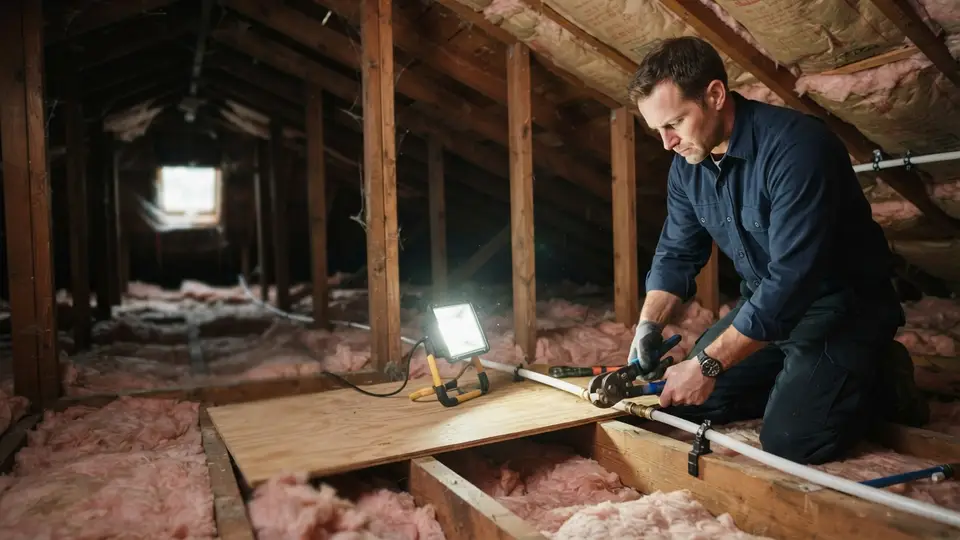
Spot repair
Method: Cut the floor at the leak and replace the section
When it fits: One leak, sound pipe
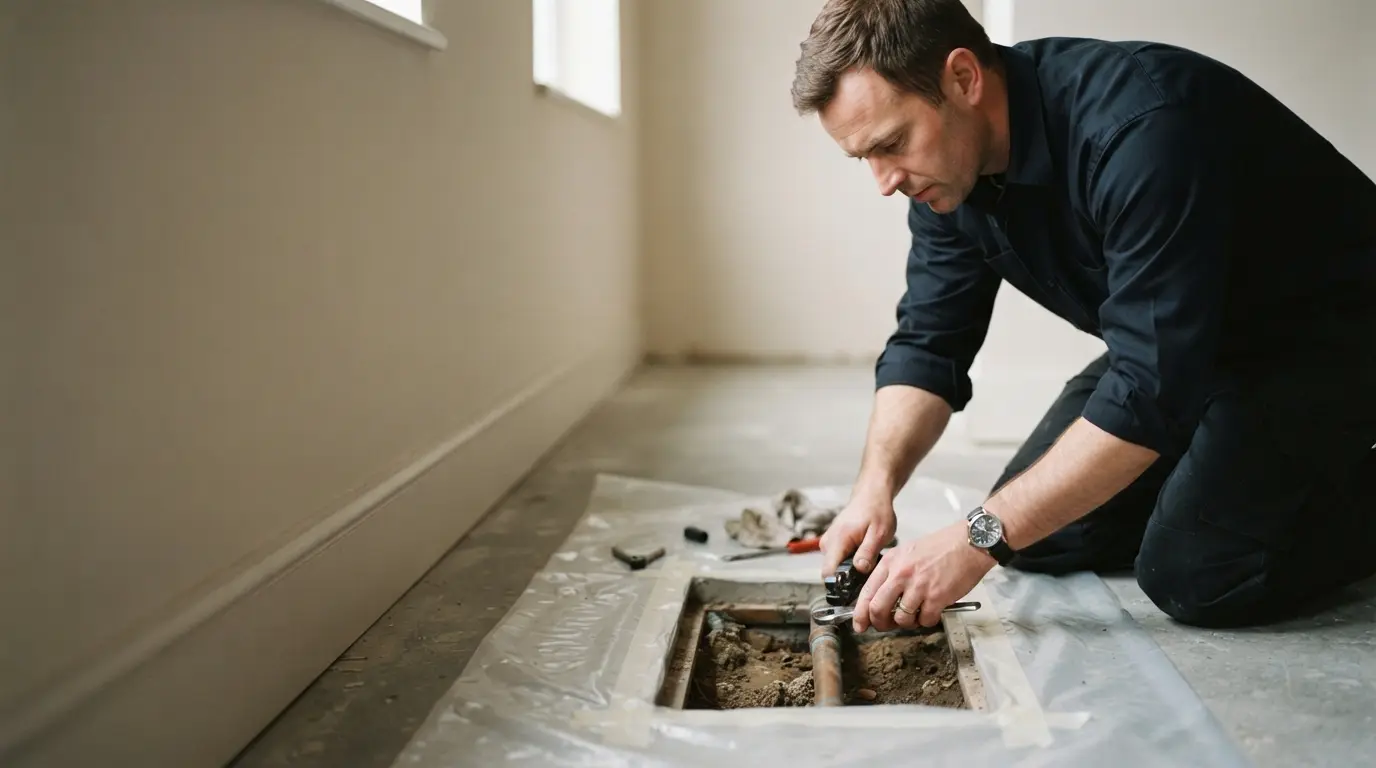
Water seeping up through the basement floor, or a warm, damp spot over radiant heat? We handle slab leak repair in New Hampshire. Our plumbers find leaks in water lines, drains and heating tubing beneath concrete, repair them through a small opening or reroute the line overhead. In New Hampshire most slab leaks are in basement floors, where the water line from the well or street and older drains run under the concrete, or in radiant-heated slabs in newer homes, additions and garages. We locate the leak and give you a written price for each repair option.
The service
New Hampshire homes almost all have basements, so a slab leak here usually means a pipe under the basement floor. The water service from a well or the street often enters below the slab and rises to the pressure tank or meter. Older homes have cast iron drains under the floor. Newer houses in Londonderry (median build year 1983), Hooksett and Epping, along with many additions, garages and in-law apartments, use radiant floor heat cast into concrete.
Slab leak repair options
Method: Cut the floor at the leak and replace the section
When it fits: One leak, sound pipe
Method: Run new pipe along basement walls or ceiling
When it fits: Aging line, repeat leaks
Method: Splice tubing or isolate the loop
When it fits: Leaks in heated floors
Method: Replace or line cracked cast iron
When it fits: Old drains under the floor
Why New Hampshire
Garage and addition slabs move with frost, stressing pipes and tubing.
Pipe laid over stone wears through where it rubs.
Low pH well water pits copper lines under floors.
Drains under century-old basement floors rot along the bottom.
Warning signs
Our process
We isolate the supply, drain and heating systems, pressure test each and use acoustic and thermal tools to mark the leak on the floor.
We cut a neat opening, repair or replace the failed section, pressure test it and patch the concrete.
We bring the service line up through the wall and run new pipe overhead along the joists, abandoning the line under the floor.
Typical cost
Before we find the leak, any figure is an estimate only. Price depends on:
We give you a written price for each option before work begins.
Get a written price: (833) 733-2357Under finished floors or fixtures costs more.
Spot repair, reroute and radiant repair differ.
Finished basements take care to open and restore.
Copper, PEX, radiant tubing and cast iron differ.
Fieldstone or thick concrete changes how we reroute.
Benefits
Less dampness, mould and musty smell.
The well pump stops running for a leak.
A radiant leak wastes boiler energy.
A reroute removes the old line.
Wet basement floors are common in New Hampshire during snowmelt and mud season, so a slab leak can hide behind seasonal dampness. The difference is timing: groundwater comes and goes with the weather, while a supply leak continues in dry spells. A pressure test, a check of the well pump cycle or a meter reading tells us which. We fix plumbing leaks and point you toward sump and drainage solutions when the water is coming from outside.
Radiant floor heating is popular in newer homes and additions across southern New Hampshire, such as in Derry (9,904 homes) and Londonderry, and in garages and workshops statewide. Tubing cast into the slab carries heated water from an oil, propane or gas boiler. A nail, anchor or saw cut can puncture it, and old tubing can fail at fittings. Thermal imaging shows the loop pattern and the leak, and we repair it through a small opening or isolate the damaged loop.
In many New Hampshire homes, the water line from the well comes through the foundation below the slab and rises to the pressure tank. If that buried section leaks, water seeps into the basement and the pump runs constantly. We usually reroute the line to enter above the floor where the foundation allows, which also makes any future repair simple.
Many New Hampshire homes have additions built on slabs rather than basements: family rooms, in-law apartments, mudrooms and attached garages in towns such as Epping, Exeter (4,875 homes) and Hampton. Water lines to a bathroom or kitchen in the addition often run through that slab. When one leaks, we locate it and usually reroute the line through the wall or ceiling from the main house basement, so it never runs under the slab again.
If water is coming up, close the main shutoff or switch off the well pump. For a radiant leak, turn off the boiler. Turn off the water heater if the leak may be on a hot line.
Move stored items off the wet floor and take photos. Do not break concrete yourself; you can hit pipe, tubing or wiring. Then call us.
Rerouting or replacing supply lines may need a permit, depending on your town, and we pull it. Our plumbers hold the New Hampshire licenses each job requires. Many insurance policies cover access and resulting damage but not the pipe; we document the leak for your claim.
Why choose us
What you can count on every time one of our plumbers comes to your door.
Every job is handled by a plumber who holds the license your state or city requires, backed by liability insurance.
Our plumber explains the problem and the options, and you approve a written price before any work begins.
Burst pipes, sewage backups and failed water heaters get priority scheduling, including nights and weekends.
We pull permits when the job needs one and schedule the inspection, so the work holds up when you sell.
Repairs and installations come with a written warranty on labor, on top of the manufacturer's warranty on parts.
Our pages and plumbers account for your area's water, soil, climate and the age of the homes around you.
Service area
We repair slab leaks in 100 New Hampshire communities, including Nashua (38,760 homes) and Concord (19,259 homes). Find yours:
It depends on where the leak is, the repair method and the floor above it. We find the leak first and give you a written price for each option.
Often it costs about the same and avoids concrete work. It also moves the line where future repairs are easy to reach.
Many policies cover access and resulting damage but not the pipe itself. Check your policy; we document the leak for you.
We isolate each system, pressure test it and use acoustic and thermal tools to mark the leak before cutting.
Yes. We locate the leak with thermal imaging, open a small area and splice the tubing, or isolate the loop.
If it continues in dry weather or the well pump runs with taps off, it is likely a leak. A pressure test confirms it.
It can be. Constant water under a floor weakens soil, raises humidity and creates electrical risks near wet areas.
Yes. Basements already run damp, and a hidden leak makes mould and musty smells much worse.
A spot repair often takes most of a day. A reroute usually takes a day or two.
We shut it off only while connecting new pipe and usually restore it the same day.
Treat acidic water, keep pressure moderate, mark radiant tubing and reroute old lines after the first leak.
If it has radiant heat, yes. We can locate and mark the tubing first.
Close the main or switch off the well pump, turn off the water heater and keep away from outlets. Then call us.
Lines that enter below the slab can be damaged by settling, rock or corrosion. Rerouting above the floor solves it.
Yes. They rot along the bottom over decades. We camera, repair or line them.