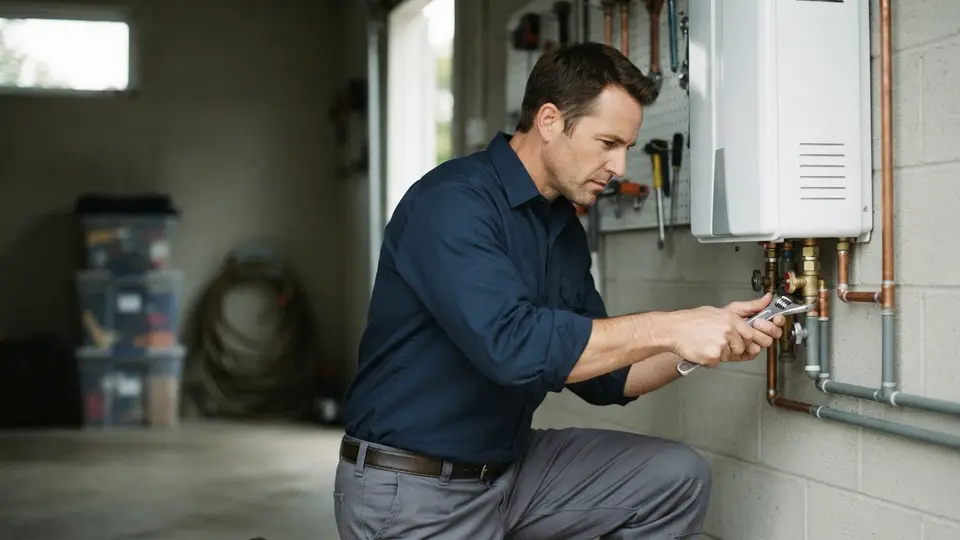
Indirect tank on a boiler
Common in: Oil and propane boiler homes
Things to know: Boiler controls and circulator matter
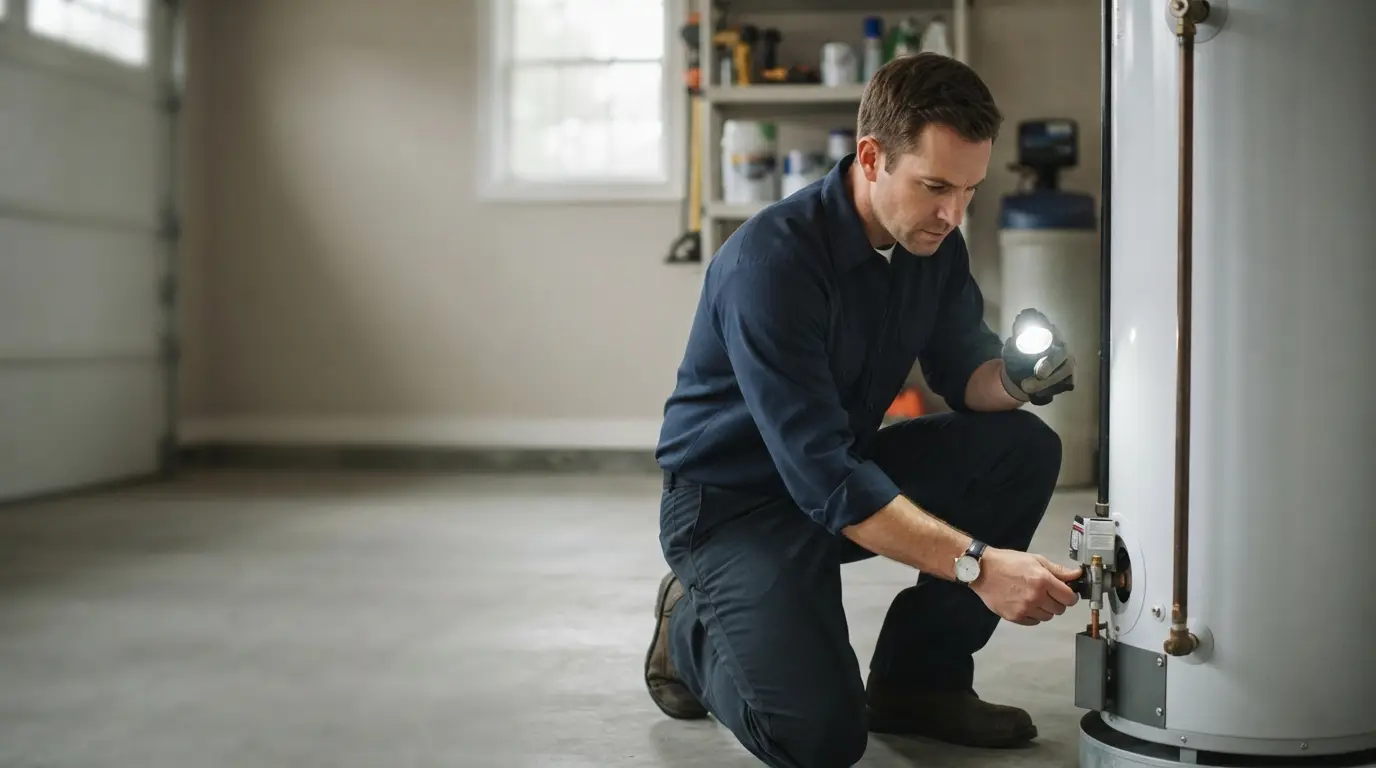
No hot water from the boiler, or a tank leaking in the basement? We handle water heater repair and replacement in New Hampshire. Our plumbers repair and replace gas, propane, oil-fired and electric tank heaters, indirect tanks heated by a boiler and tankless units. New Hampshire is one of the few states where oil and propane heat a large share of homes, so many water heaters are tied to a boiler. Cold winter supply water and, in some areas, acidic or mineral-heavy well water shorten heater life. We diagnose the fault and give you a written price.
The service
Utility gas heats 35% of New Hampshire homes and propane 12%, and fuel oil heats a large share as well: 77% of homes in Berlin, 54% in Keene and 48% in Rochester. Propane heats 42% of homes in Conway and 33% in Lebanon, while Nashua relies mostly on gas. The fuel a house burns for heat usually decides how its water is heated.
Water heater types we work on
Common in: Oil and propane boiler homes
Things to know: Boiler controls and circulator matter
Common in: Older oil boilers
Things to know: Scale clogs the coil
Common in: Homes on gas mains or propane
Things to know: Needs proper venting
Common in: Some oil-heated homes
Things to know: Burner service needed
Common in: Apartments, newer homes
Things to know: Elements wear out; heat pumps need space
Why New Hampshire
Winter well and city water arrives very cold, so heaters work longer.
Hard water clogs tankless coils inside older boilers.
Low pH well water eats anode rods and tank linings faster.
Most tanks last 10 to 12 years before the steel rusts through.
Warning signs
Our process
We test elements, thermostats, gas and propane controls, mixing valves, boiler aquastats and circulators, replace the failed part and check venting.
We size the new heater for winter demand, install it with a relief valve, expansion tank and mixing valve where needed and haul the old one away.
We install wall-hung gas or propane tankless units with proper venting and service valves for descaling, and replace scaled boiler coils.
Typical cost
Before we see the system, any figure is an estimate only. Price depends on:
We give you a written price before we start.
Get a written price: (833) 733-2357A part costs far less than a new heater.
Indirect tanks and boiler work differ from standalone tanks.
Gas, propane, oil and electric each have their own needs.
Tight fieldstone basements take more time.
Town requirements vary.
Benefits
Sized for cold supply water.
An indirect tank lets the boiler rest in summer.
Mixing valves prevent scalding.
Water quality managed and anodes checked.
Many oil and propane homes heat domestic water from the boiler, either with a coil inside the boiler or an indirect storage tank beside it. When hot water runs short, the cause may be a scaled coil, a failed circulator, a mixing valve set wrong or a control problem, not the tank. Old tankless coils also make the boiler run all summer. We find the real fault, and when it makes sense we replace a scaled coil with an indirect tank that holds hot water and lets the boiler rest.
Incoming water in January can be far colder than in July, so a heater that keeps up in summer may fall short in winter. Tankless units are rated by how many degrees they can raise a given flow, and in New Hampshire that limits how many showers can run at once. We size tanks and tankless units for the coldest month so families in Derry, Concord and the North Country are not left with lukewarm showers in February.
Homes on private wells, from Epping to the Upper Valley, may have hard water that fills tanks with sediment or acidic water that eats anode rods and linings. Iron and manganese stain and clog too. We check the water when we replace a heater, flush and inspect the anode on service visits and recommend treatment where it will meaningfully extend heater life.
Renters occupy 51% of homes in Manchester and many apartments in Nashua, Dover and Concord (19,259 homes) have small electric or gas heaters tucked into closets and basements. Several tenants sharing one heater can run it out in the morning. We replace heaters with units sized for the household and the space and work with landlords on access.
Around Laconia (10,322 homes), the Lakes Region and the mountain towns, many water heaters sit in homes used only part of the year. We drain or set heaters to vacation mode when owners close up, and refill, relight and check them when the house reopens.
If the tank is leaking, close the cold water valve above it and turn off its power or fuel. For an indirect tank, switch off the boiler if water is near it.
Keep children away from hot water and the relief valve pipe. If you smell gas, propane or oil fumes, leave and call from outside. Then call us.
Replacing a water heater usually needs a permit in New Hampshire cities and many towns, and gas or propane work may need its own inspection. We pull permits and schedule inspections. Our plumbers hold the New Hampshire licenses each job requires.
Why choose us
What you can count on every time one of our plumbers comes to your door.
Every job is handled by a plumber who holds the license your state or city requires, backed by liability insurance.
Our plumber explains the problem and the options, and you approve a written price before any work begins.
Burst pipes, sewage backups and failed water heaters get priority scheduling, including nights and weekends.
We pull permits when the job needs one and schedule the inspection, so the work holds up when you sell.
Repairs and installations come with a written warranty on labor, on top of the manufacturer's warranty on parts.
Our pages and plumbers account for your area's water, soil, climate and the age of the homes around you.
Service area
We repair and install water heaters in 100 New Hampshire communities, including Manchester (52,108 homes) and Portsmouth (11,370 homes). Find yours:
It depends on the type, fuel, size and whether it connects to a boiler. We look at your system and give you a written price before work starts.
If the tank is under about 10 years old and not leaking, a repair often makes sense. A leaking tank needs replacing.
Often, yes. An indirect tank stores hot water, recovers faster and lets the boiler rest in summer, which can save fuel.
We remove the old heater, set the new one, connect water, fuel or boiler piping and venting, add safety valves, test it and haul the old one away.
With indirect tanks and boiler coils, usually yes. It keeps tap water at a safe temperature while the tank stores hotter water.
Yes. We plan the change, install the new heater and handle fuel piping, venting and permits.
It can flood the basement and create electrical hazards. Shut off water and power or fuel, then call us.
Leave the house, avoid switches and call your utility, propane company or 911 from outside.
A tank swap takes a few hours. Indirect tank installs or fuel changes take longer.
Most tanks last 10 to 12 years. Acidic or hard well water can shorten that.
Flush tanks yearly and have boiler-fed systems serviced each fall with the heating system.
Yes. Softening hard water and neutralizing acidic water both reduce damage to tanks and coils.
Call us. With very cold supply water, losing hot water is a real hardship, and we treat it as a priority.
On a boiler coil, the boiler may not keep up with both heating and hot water. An indirect tank often fixes it.
They can be, in a basement with enough space. They cool the room a little, which we take into account.