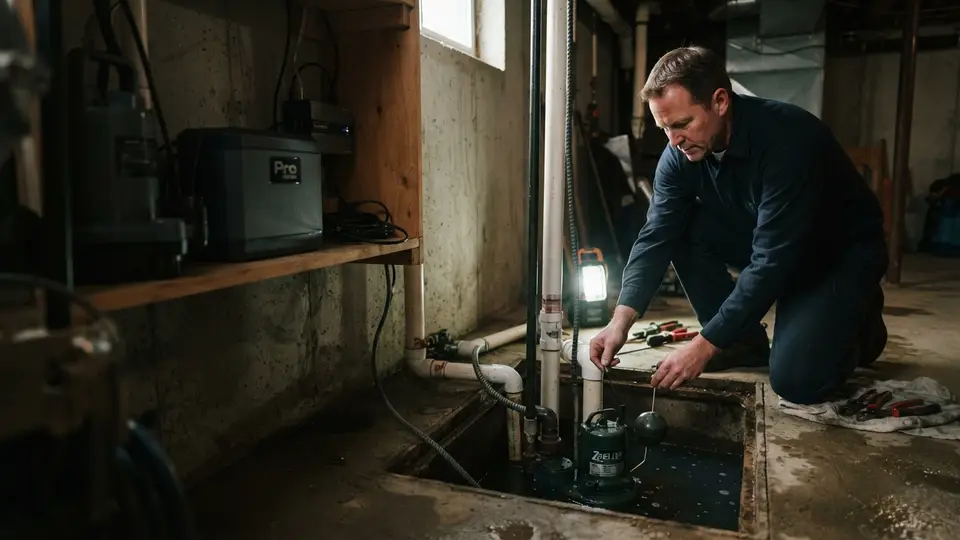
Submersible
Suited to: Most basements
Notes: Quiet, sits in the pit
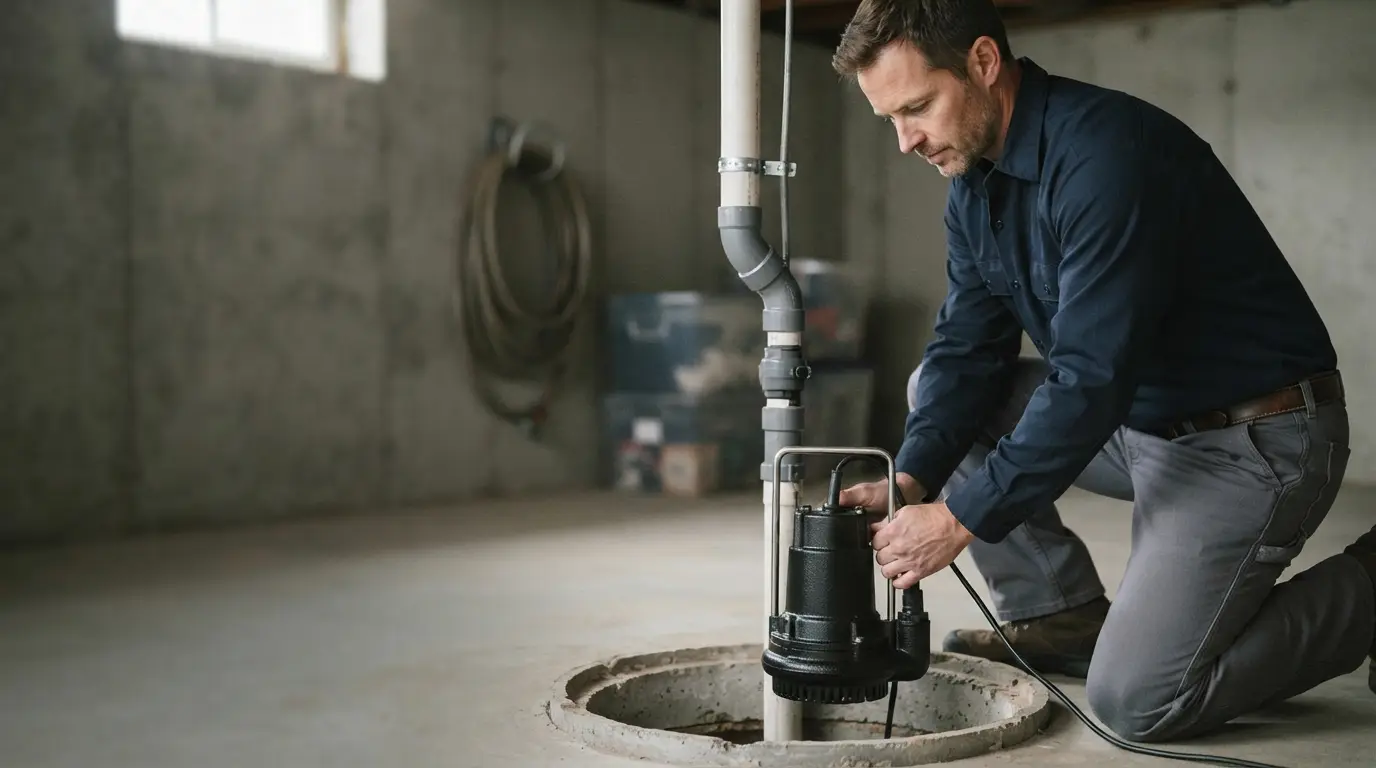
Basement wet every mud season, or a sump pump that hums but will not pump? We handle sump pump repair and installation in New Hampshire. Our plumbers repair failed pumps, install new ones and add battery backups for the power outages that come with ice storms and nor'easters. New Hampshire basements take on water during snowmelt, spring rains and fall storms, when groundwater rises against fieldstone and concrete foundations. We test the whole system, find the weak point and give you a written price before replacing anything.
The service
Nearly every New Hampshire home has a basement, and many sit on ground that stays wet in spring. Newer homes in Londonderry (median build year 1983), Hooksett and Derry usually have perimeter drains feeding a sump pit. Older homes with fieldstone foundations often had pits added after a wet spring. When the pump stops during snowmelt or a storm, water spreads across the floor within hours.
Pump options we install
Suited to: Most basements
Notes: Quiet, sits in the pit
Suited to: Small or shallow pits
Notes: Easy to service
Suited to: Ice storms and outages
Notes: Runs without house power
Suited to: Homes on city water
Notes: No battery, uses water pressure
Why New Hampshire
Snowmelt and spring rain saturate the ground for weeks, so pumps run constantly.
Storms that bring down power lines stop pumps when water is rising.
Water trapped in outdoor discharge pipe freezes and blocks the pump.
Iron bacteria and silt from the soil clog pumps and check valves.
Warning signs
Our process
We test the float, switch, check valve and motor, clean the pit and intake and replace the failed part when the pump is still sound.
We size the pump to the inflow, install a new check valve and discharge line and route water away from the foundation and septic field.
We add a battery-powered pump with an alarm, or connect the pump to a standby generator, so the basement stays dry through outages.
Typical cost
Before we check the system, any figure is an estimate only. Price depends on:
You get a written price before work starts.
Get a written price: (833) 733-2357A float switch costs less than a pump.
Higher capacity costs more.
Battery or generator connections add cost.
Rerouting or freeze protection adds work.
Cutting concrete or digging through ledge is a bigger job.
Benefits
A backup keeps pumping.
Lower humidity protects sills and stored items.
Alarms tell you when water rises.
New Hampshire's heavily wooded towns lose power when ice, wet snow or wind brings down trees, sometimes for days. Those storms often come when the ground is saturated. A battery backup pump keeps water out for a time; for longer outages, a standby generator wired to run the sump pump and well pump is the stronger option. We install backups and alarms and coordinate with electricians on generator connections.
Many older homes in Concord (19,259 homes), Dover, Exeter and the small towns have fieldstone or rubble foundations that let groundwater seep through the joints. A sump pit in the low corner, sometimes with an interior drain along the walls, keeps the floor dry. We install pits and pumps in these basements, working around ledge and boulders under the floor.
In a New Hampshire winter, a sump pump may still run during thaws, and water trapped in a sagging discharge line freezes solid. The pump then pushes against ice until it burns out, or water backs up into the basement. We slope discharge lines to drain completely, fit a freeze-relief outlet near the house and keep the line well away from the septic field and the well.
More New Hampshire families are finishing basements as family rooms, offices or in-law apartments, especially in Nashua (38,760 homes), Londonderry and Derry. A sump pit hidden in a closet still needs a sealed lid, room for the float, a working alarm and a discharge line that has not been buried behind new walls. We check all of these and add a backup pump before carpet and drywall are at risk.
Because granite releases radon, many New Hampshire homes have radon mitigation systems that use the sump pit or sub-slab area. An open sump pit lets radon into the basement. We install sealed, gasketed sump lids and coordinate with radon contractors so the pump and the mitigation system work together without letting radon back into the basement.
Check that the pump is plugged in and its breaker or GFCI has not tripped. Lift the float gently to see if it starts. In winter, check whether the discharge outlet is frozen.
Never stand in water near cords or outlets. Move stored items up off the floor, keep children and pets out of the basement and call us.
Replacing a pump in an existing pit rarely needs a permit. New pits and discharge changes may, and most cities do not allow sump water into the sanitary sewer. We follow local rules and pull permits where required. Our plumbers hold the New Hampshire licenses each job requires.
Why choose us
What you can count on every time one of our plumbers comes to your door.
Every job is handled by a plumber who holds the license your state or city requires, backed by liability insurance.
Our plumber explains the problem and the options, and you approve a written price before any work begins.
Burst pipes, sewage backups and failed water heaters get priority scheduling, including nights and weekends.
We pull permits when the job needs one and schedule the inspection, so the work holds up when you sell.
Repairs and installations come with a written warranty on labor, on top of the manufacturer's warranty on parts.
Our pages and plumbers account for your area's water, soil, climate and the age of the homes around you.
Service area
We repair and install sump pumps in 100 New Hampshire communities, including Manchester (52,108 homes) and Nashua (38,760 homes). Find yours:
It depends on the pump type, capacity and any changes to the discharge. We test the system and give you a written price before work starts.
For finished basements, usually yes. Ice storms and nor'easters cut power when the ground is wettest, and a backup keeps water out.
Often, if the motor is sound. Floats, switches and check valves cost much less than a new pump.
We look at how fast water enters the pit during snowmelt, the pit depth and how high and far the water must go.
Yes. With an electrician, we can connect the sump and well pump to a standby generator for long outages.
Yes. We break the floor at the low point, set a liner and pump and route the discharge outside.
Not if water may reach outlets, cords or the boiler. Shut off power safely first or wait for help.
No. It overloads the field. We route discharge away from the septic system and well.
Most take a few hours. A new pit through ledge or rerouted discharge takes longer.
Most last about 7 to 10 years. Pumps that run for weeks every spring may wear out sooner.
Before mud season each spring and every few months after. Pour water in and check it starts and stops.
Slope it to drain, fit a freeze-relief outlet near the house and keep the end clear of snowbanks.
Move belongings up, stay away from electrical hazards and call us. A failed pump with rising water is urgent.
Snowmelt and rain raise groundwater against the foundation. A properly sized pump and good drainage keep it out.
Usually iron bacteria from the soil. It clogs pumps and valves, so we clean the pit and check parts regularly.