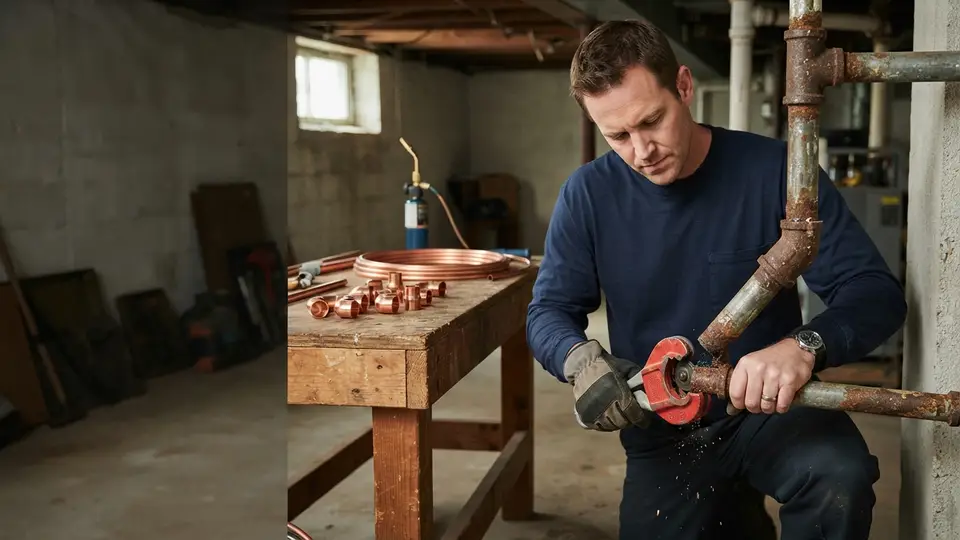
Galvanized steel
Typical in: Homes before about 1960
Our approach: Replace with PEX or copper
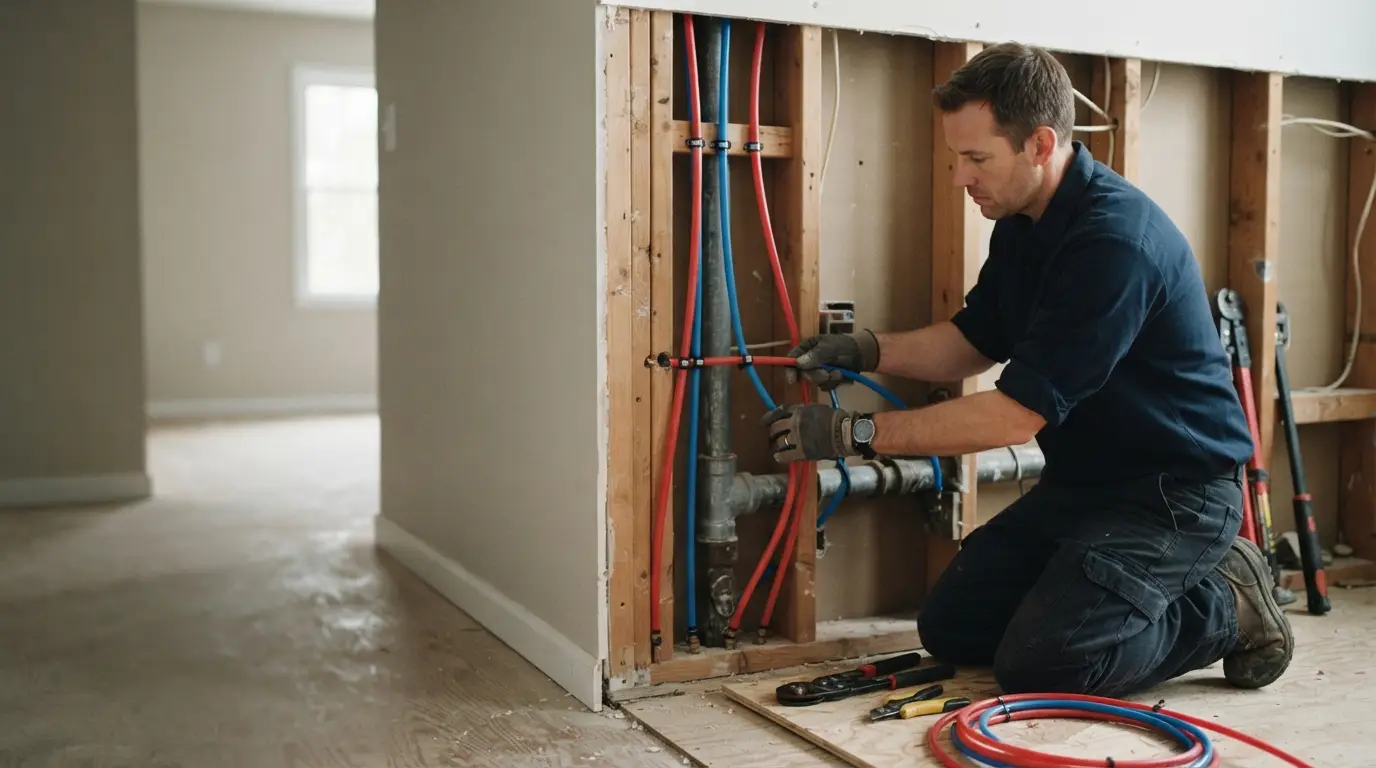
Rusty water from the tap, or pinhole leaks turning up every few months? We handle repiping and water line replacement in New Hampshire. Our plumbers repair failing sections, replace all the supply piping in a house or apartment building and repair or replace the water line from the street or well. New Hampshire housing is among the oldest in the country, with galvanized steel and lead in mill-town buildings, copper pitted by acidic well water and pipes routed through cold farmhouse walls. We plan the job carefully and give you a written price first.
The service
38% of the 304,860 homes in our New Hampshire data were built before 1960. The median home in Berlin dates from 1938, in Claremont from 1957 and in Portsmouth from 1959. In Lancaster and Gorham, 84% and 79% of homes predate 1980. Many still have galvanized steel, early copper or both, sometimes with lead service connections in the older cities.
Pipe we replace and install
Typical in: Homes before about 1960
Our approach: Replace with PEX or copper
Typical in: Older city homes
Our approach: Replace and coordinate with the water utility
Typical in: Homes on acidic well water
Our approach: Repipe in PEX and treat the water
Typical in: Some 1980s and 1990s homes
Our approach: Replace before it fails
Typical in: Our usual repipe material
Our approach: Flexible and tolerant of freezing
Why New Hampshire
Pipes installed a century ago in mill housing have rusted from inside.
Low pH well water dissolves copper and causes pinholes.
Pipes in cold ells and walls that froze more than once develop weak spots.
Copper patched onto galvanized corrodes at the joint.
Warning signs
Our process
For a single bad section we cut it out, replace it and fit a dielectric union where copper meets steel.
We run new supply lines from the basement up through closets and interior walls, keeping them out of cold exterior walls, and open plaster only where we must.
We locate and fix leaks in the line from the curb stop or well.
We replace old or lead service lines below frost depth, working around ledge and boulders.
Typical cost
Before we inspect, any figure is an estimate only. Price depends on:
You get a written price before work begins.
Get a written price: (833) 733-2357More fixtures, floors and units mean more pipe.
PEX usually costs less than copper.
Plaster and lath take more care than drywall.
Ledge and depth add to excavation.
Town requirements vary.
Benefits
Full flow to every floor.
No rust from old steel.
PEX resists acidic water.
Pipes moved out of cold walls.
Manchester (52,108 homes), Nashua, Dover and Somersworth have many two- and three-family houses and brick apartment blocks from the mill era. Buildings with five or more units hold 33% of Manchester homes. Their risers are often original galvanized, and every apartment shares them. We repipe these buildings riser by riser, add shutoffs so each unit can be isolated in future and schedule work so tenants keep water as much as possible.
Many rural and suburban homes, from Peterborough (1,613 homes) to the Lakes Region, draw slightly acidic water from their wells. It slowly dissolves copper, leaving blue-green stains and eventually pinhole leaks throughout the system. When pinholes appear in several places, we recommend repiping in PEX, which acidic water does not corrode, and treating the water with a neutralizing filter so fixtures and the water heater last longer too.
Old farmhouses were plumbed long after they were built, and pipes often run through ells, exterior walls and crawl spaces that get very cold. When we repipe, we move lines into heated space wherever we can, insulate any that must stay near the outside and leave access points so a frozen pipe can be reached and thawed without opening walls.
Some New Hampshire homes and manufactured homes built from the late 1970s to the mid-1990s were plumbed with grey polybutylene. It can split at fittings without warning, and some insurers ask about it. If we find it, we recommend replacing it with PEX, which usually takes a day or two because PEX runs in long lengths with few joints.
Before closing on a house built before 1960 in Concord, Keene, Somersworth (5,646 homes) or the North Country, it pays to know what the pipes are made of. We check the service line, the basement piping and the water quality and tell you whether the home needs a few sections replaced, a full repipe or water treatment. That helps you budget or negotiate.
Some older city homes still have lead service lines or short lead connectors at the main. If yours does, ask your water utility whether it replaces its side or offers help, and we can price the private side so both are done together.
If a pipe is leaking, close the main or switch off the well pump and turn off the water heater. Collect water and move belongings away.
If you suspect a lead service line, run cold water for a few minutes before drinking and use a certified filter until it is replaced. Then call us.
Repiping and service line replacement usually need a permit in cities and towns with building departments, and some water utilities inspect at the curb stop. We pull permits and schedule inspections. Our plumbers hold the New Hampshire licenses each job requires.
Why choose us
What you can count on every time one of our plumbers comes to your door.
Every job is handled by a plumber who holds the license your state or city requires, backed by liability insurance.
Our plumber explains the problem and the options, and you approve a written price before any work begins.
Burst pipes, sewage backups and failed water heaters get priority scheduling, including nights and weekends.
We pull permits when the job needs one and schedule the inspection, so the work holds up when you sell.
Repairs and installations come with a written warranty on labor, on top of the manufacturer's warranty on parts.
Our pages and plumbers account for your area's water, soil, climate and the age of the homes around you.
Service area
We repipe homes and buildings in 100 New Hampshire communities, including Concord (19,259 homes) and Keene (10,540 homes). Find yours:
It depends on the size of the house or building, the number of fixtures, the material and wall type. We inspect first and give you a written price.
PEX usually costs less, resists acidic well water and tolerates freezing better. Copper suits some owners and layouts.
Yes, because it involves digging below frost, often around ledge, from the street or well to the house.
We route pipe through basements, closets and interior cavities and open plaster only where there is no other way.
Usually, yes. We work riser by riser and restore water at the end of most days, with notice to tenants.
We test pressure, check every visible pipe, the service line and the water, then plan routes and give a written price.
Rust is not usually harmful, but old systems can include lead. A water test tells you for certain.
Lead is soft and dull grey and scratches to shiny silver. We can check where the line enters the basement.
A typical house takes two to five days. Multi-family buildings take longer and are done in stages.
Usually a day, more if ledge must be broken or the ground is frozen.
Acidic well water slowly dissolves copper. Repiping in PEX and treating the water stops it.
If your well water is acidic or hard, yes. Treatment protects fixtures, the water heater and any remaining copper.
Close the main or switch off the well pump, turn off the water heater and call us. We fix it first.
Yes. A repipe is the best time to reroute lines into heated space.
Very. Many homes and apartment buildings built before 1960 still have them.