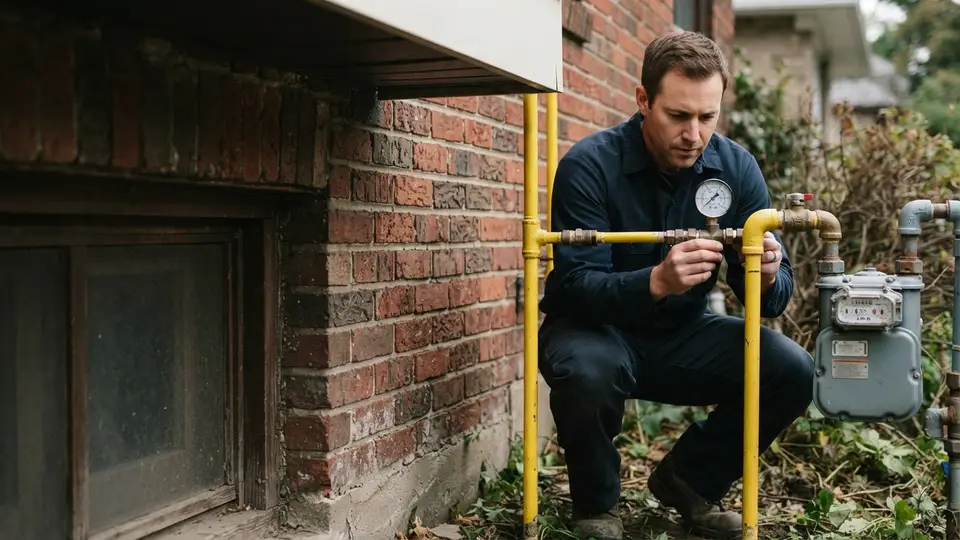
Black iron
Where found: Basements of older homes
What to watch: Rusty or loose threaded joints
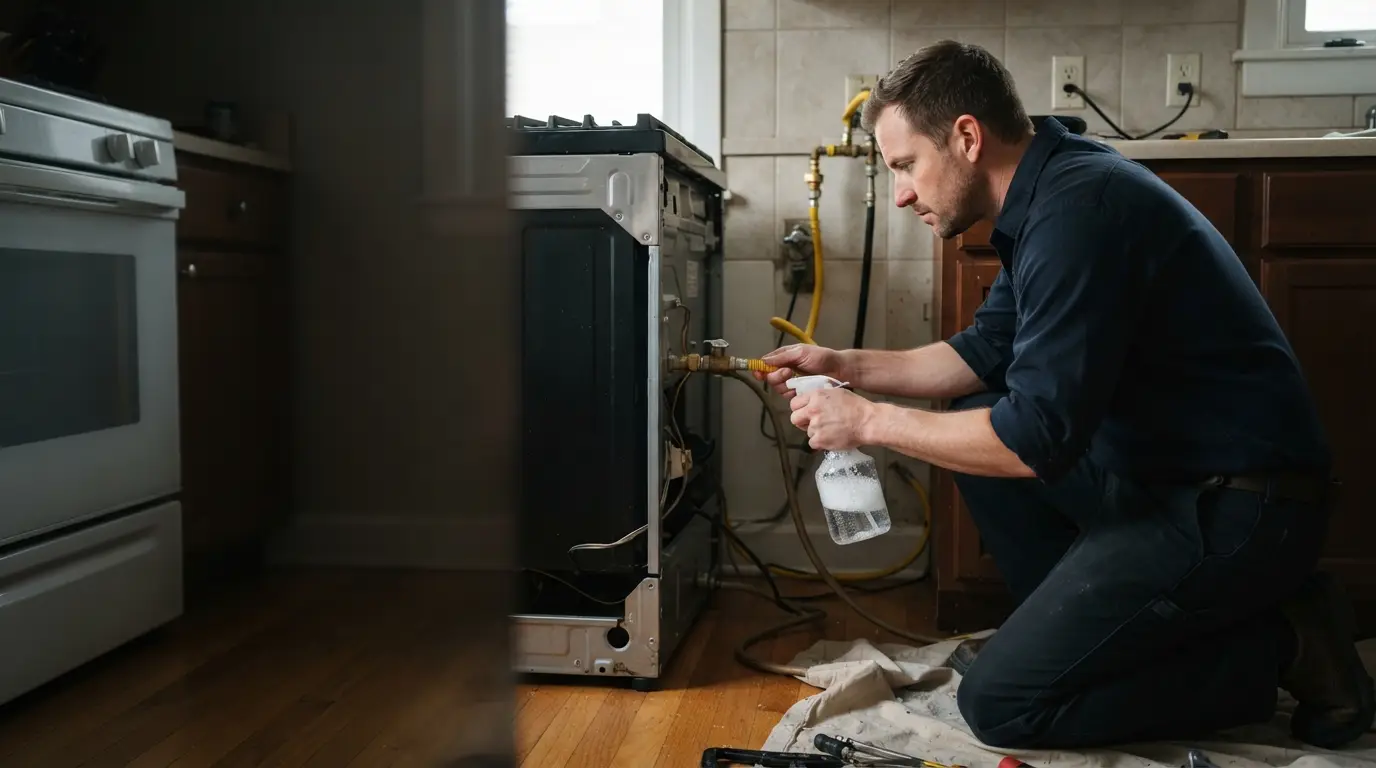
Propane smell in the basement, or a new range or generator waiting for a gas line? We handle gas line repair and installation in New Hampshire. Our plumbers repair leaking gas and propane piping, run new lines for ranges, dryers, water heaters, boilers, fireplaces, space heaters, grills and standby generators, and connect appliances safely. Natural gas serves the larger cities, while propane heats and cooks for a large share of the state, including many homes switching from oil. We find the problem, repair it, pressure test and give you a written price first.
The service
Utility gas heats 35% of New Hampshire homes, mostly in the cities and the southern tier: 70% in Nashua and 57% in Hampton. Propane heats 12% statewide and far more in many towns: 42% in Conway, 41% in Epping, 39% in Meredith and 35% in Plymouth. Many homes that heat with oil also use propane for cooking, water heating or a fireplace.
Gas piping we work with
Where found: Basements of older homes
What to watch: Rusty or loose threaded joints
Where found: Newer homes and conversions
What to watch: Bonding and protection
Where found: Some propane systems
What to watch: Flare fittings and kinks
Where found: Tank to house, house to generator
What to watch: Frost and digging damage
Why New Hampshire
Deep frost moves buried lines from tanks and to outbuildings and generators.
Roof avalanches and ice damage meters, regulators and risers.
Threaded joints in older basements loosen with age and vibration.
Homes switching from oil add appliances to piping not sized for them.
Warning signs
Our process
We locate the leak with a detector and leak solution, repair or replace the failed section and pressure test the system before gas is restored.
We size new lines for every appliance on the meter or tank, run them in approved materials and add a shutoff at each appliance.
We connect ranges, dryers, water heaters, boilers, fireplaces, direct-vent heaters and generators and check venting.
Typical cost
Before we see the system, any figure is an estimate only. Price depends on:
We give you a written price before we start.
Get a written price: (833) 733-2357A connector is quicker than a joint inside a wall.
Boilers and generators may need larger pipe.
Trenching below frost through rock takes longer.
Several appliances mean more piping.
Included where required.
Benefits
Every repair and new line is pressure tested.
Enough gas for every appliance on the coldest day.
Shutoffs and modern connectors throughout.
Permits and inspections documented.
Many New Hampshire homeowners are replacing oil boilers and water heaters with propane or natural gas equipment. A conversion often means new piping from the meter or tank to the boiler, water heater and range, sized for the combined load. We plan the full system, run and test the piping, connect appliances and coordinate with the gas utility or propane company. In Manchester (52,108 homes), where oil still heats 26% of homes, conversions are a frequent job.
Ice storms and nor'easters can leave New Hampshire towns without power for days, which means no heat, no well pump and no sump pump. Standby generators running on propane or natural gas keep homes going. They need a large gas supply, a buried line below frost and a properly sized regulator. We size and install the gas piping, and the electrical connection is completed by an electrician.
Heavy snow sliding from a metal roof can shear a gas meter or propane regulator, and ice can block regulator vents and appliance exhausts. Keep snow and ice brushed off meters, regulators and vents, and mark buried tank lids and lines so plows avoid them. If a meter or riser is damaged, call the utility or propane company first; we repair the house piping after.
New Hampshire homes stay sealed for months, so a poorly burning or badly vented appliance can fill the house with carbon monoxide. Snowdrifts block direct-vent exhausts, and older chimneys may not draft well with newer appliances. CO alarms belong on every level and near bedrooms. When we work on gas piping, we look at venting too.
Propane and gas direct-vent space heaters and fireplaces are popular across New Hampshire for heating ells, camps and rooms the main system does not reach well, and as backup when the power fails. Each needs a properly sized line, a shutoff and a clear vent through the wall. We install the gas piping and connections in towns from Derry (9,904 homes) to the North Country, and remind owners to keep vent caps clear of snowdrifts so exhaust can escape.
In older city homes, gas piping often grew over decades as dryers, ranges and water heaters were added. Branches may be undersized, and old cock valves and brass connectors may still be in place. We trace the system, replace outdated parts and upsize where needed.
If you smell gas or propane, leave and call the utility, propane company or 911 from outside. Do not try to find the leak yourself.
Once it is safe, call us to repair the piping. For new work, clear access to the meter or tank, the basement ceiling and the appliance location.
Gas piping work in New Hampshire is done by licensed fitters and plumbers and usually needs a town permit and inspection, with the utility or propane company verifying before service is restored. We pull permits and schedule inspections. Our plumbers hold the New Hampshire licenses each job requires.
Why choose us
What you can count on every time one of our plumbers comes to your door.
Every job is handled by a plumber who holds the license your state or city requires, backed by liability insurance.
Our plumber explains the problem and the options, and you approve a written price before any work begins.
Burst pipes, sewage backups and failed water heaters get priority scheduling, including nights and weekends.
We pull permits when the job needs one and schedule the inspection, so the work holds up when you sell.
Repairs and installations come with a written warranty on labor, on top of the manufacturer's warranty on parts.
Our pages and plumbers account for your area's water, soil, climate and the age of the homes around you.
Service area
We repair and install gas and propane lines in 100 New Hampshire communities, including Concord (19,259 homes) and Lebanon (7,855 homes). Find yours:
It depends on where the leak is, the pipe type and access. We find the leak first and give you a written price for the repair.
It depends on how many appliances change and how much piping is needed. We plan the system and give you a written price.
Yes. Where your town requires a permit and inspection, those fees are in the written price.
We use a gas detector, leak solution on fittings and a pressure test to find and confirm the leak.
We size the line, run and support it, add a shutoff, pressure test it and arrange the inspection.
Yes. We size and bury the line below frost and connect it, while an electrician completes the wiring.
It is heavier than air and pools in basements. Leave immediately and call from outside if you smell it.
On every level and near bedrooms. Test them monthly, especially in winter when the house is closed up.
Many take one to three hours with testing. Buried or hidden leaks take longer.
Piping for a conversion often takes a day or two, plus appliance installation and inspection.
Whenever an appliance is added or replaced, and every few years in older homes.
Brush it off gently. If the meter or regulator is damaged, call the utility or propane company first.
Call us right away. We repair and test the piping so service and heat can be restored quickly.
Yes. We repair and install piping for both and coordinate with your utility or propane supplier.
Yes. Frost heave stresses joints at risers and tanks. We check those points and repair them.