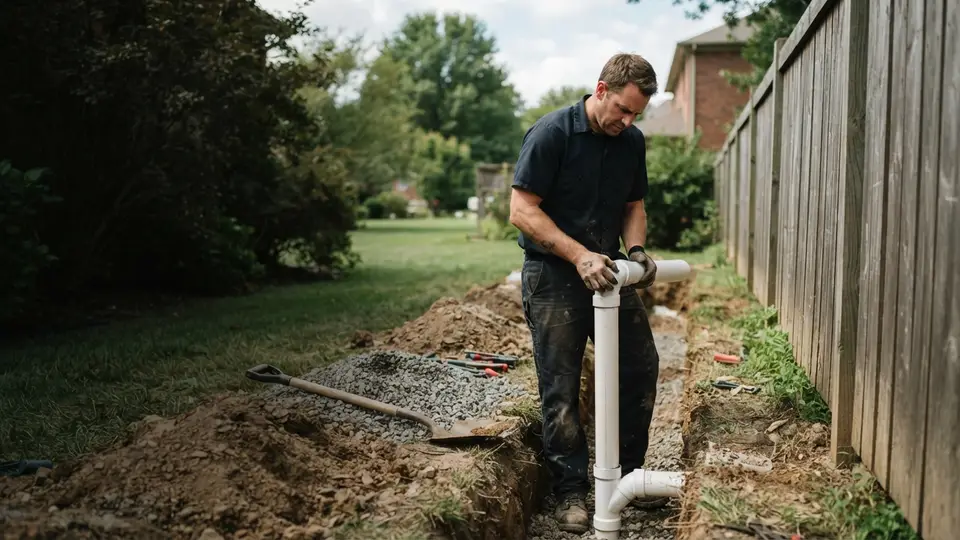
Clay tile
Common in: Homes before 1950
Usual failure: Root intrusion, offset joints
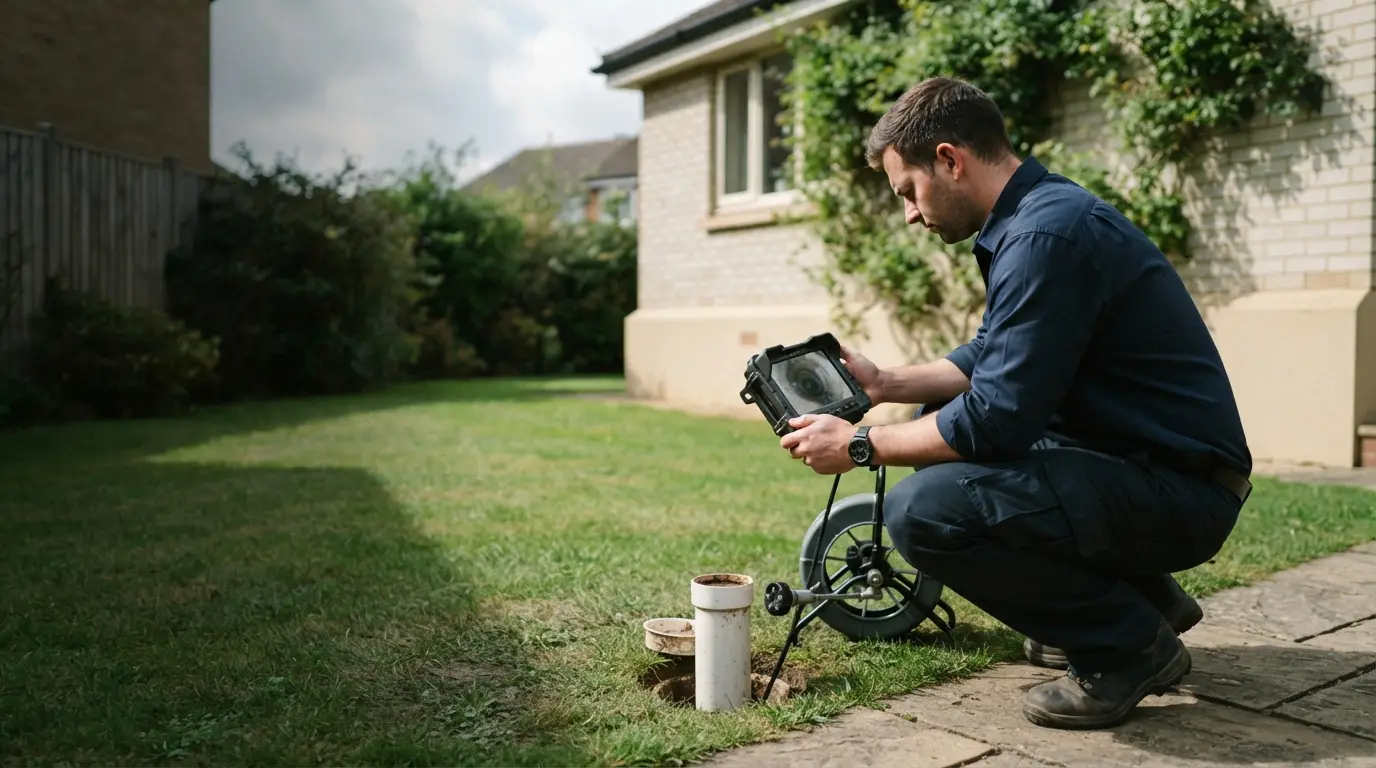
Roots back in the sewer, or sewage in the basement after a spring thaw? We handle sewer line repair and replacement in New Hampshire. Our plumbers inspect, repair, line and replace the private building sewer that runs from your foundation to the city or town main. New Hampshire sewers are old, often clay or cast iron from the early 1900s, laid through rocky ground where frost heaves joints apart and roots find every gap. We show you the camera footage, explain each option and give you a written price before any digging.
The service
The building sewer runs from the cleanout in your basement to the public main in the street, and in most New Hampshire cities the owner maintains it. 38% of the state's 304,860 homes were built before 1960. In Berlin, Claremont and Somersworth, the median home dates from 1938, 1957 and 1967. Sewers from those years are clay tile, cast iron or, in some postwar homes, Orangeburg fibre pipe, and they are buried below frost in ground full of rock.
Sewer pipe we find in New Hampshire
Common in: Homes before 1950
Usual failure: Root intrusion, offset joints
Common in: Basements and older yards
Usual failure: Rusted bottoms, cracked hubs
Common in: Some 1945 to 1970 homes
Usual failure: Flattening and blistering
Common in: Newer homes
Usual failure: Sags, crushing on rock
Why New Hampshire
Deep, repeated freezing lifts and drops short clay sections until joints separate.
Pipe laid against stones or ledge cracks under settling backfill.
Old maples and elms push roots into every leaking joint.
A century of use leaves cast iron thin and clay brittle.
Warning signs
Our process
We run a locating camera from the basement cleanout to the main, note the distance to each defect and mark it on the ground above.
A single cracked section, offset or root entry can be fixed by excavating at that point or installing a short sectional liner.
When the whole line has failed, we replace it by excavation, pipe bursting or a full-length liner, depending on depth, ledge, trees and what lies above.
Typical cost
Before a camera inspection, any figure is an estimate only. Price depends on:
We give you a written price for each option before work starts.
Get a written price: (833) 733-2357Lines buried below frost take more digging.
Rock slows excavation.
Spot repair, lining, bursting and open trench differ.
Driveways, walls, trees and streets add restoration.
Frozen ground slows winter work.
Benefits
Sound pipe keeps roots out.
Fewer backups at the floor drain.
Sealed joints keep groundwater out.
Camera reports and records reassure buyers.
New Hampshire is the Granite State for good reason. Ledge and boulders sit close to the surface in many neighborhoods, and older sewers were laid around them. Excavation can mean breaking rock, which takes time and equipment. Where the old pipe is still round enough, trenchless lining or bursting avoids most of that digging. We look at the route and the ground before recommending a method, and price each that will work.
Manchester (52,108 homes), Nashua, Dover and Rochester have dense older neighborhoods where sewers run under narrow lots, sidewalks and sometimes shared driveways. Some multi-family buildings have one sewer serving several units. We camera these lines, work with the city on the street connection and choose methods that keep digging in tight spaces to a minimum.
During snowmelt and mud season, groundwater rises and seeps into cracked clay sewers, a problem called infiltration. The extra flow overloads weak lines and can push water back to the basement floor drain. Older parts of Concord (19,259 homes), Keene and Laconia see this most. We find and seal cracked joints and replace failing sections so the line carries only what it should.
Older parts of Manchester, Nashua (38,760 homes), Portsmouth and other cities were built with combined sewers that carry storm water and sewage in the same pipe, and these cities have spent years separating and upgrading them. In heavy rain or rapid snowmelt, a combined or overloaded main can surcharge and push water back up private sewers into basements. A sound building sewer helps, and a backwater valve on the line stops most of that reverse flow. We install backwater valves and show you how to check and clean them each year.
Two- and three-family houses and older apartment blocks in Manchester, Dover (15,433 homes) and Somersworth often have one building sewer for every unit. When it fails, the lowest apartment or the shared basement takes the backup, and landlords need the line fixed quickly with as little disruption to tenants as possible. We camera the line, explain the options to owners and schedule work so tenants know when water use must stop.
Stop using water, including the washer and dishwasher. If sewage is on the floor, keep people and pets away and wear gloves if you must move belongings.
Do not rent a cable machine for a line you suspect is broken; the cable can snag and make the damage worse. Call us.
Sewer repair and replacement usually need a permit from the city or town, and street work may need a separate permit. We pull permits and schedule inspections. Our plumbers hold the New Hampshire licenses each job requires.
Why choose us
What you can count on every time one of our plumbers comes to your door.
Every job is handled by a plumber who holds the license your state or city requires, backed by liability insurance.
Our plumber explains the problem and the options, and you approve a written price before any work begins.
Burst pipes, sewage backups and failed water heaters get priority scheduling, including nights and weekends.
We pull permits when the job needs one and schedule the inspection, so the work holds up when you sell.
Repairs and installations come with a written warranty on labor, on top of the manufacturer's warranty on parts.
Our pages and plumbers account for your area's water, soil, climate and the age of the homes around you.
Service area
We repair and replace sewer lines in 100 New Hampshire communities, including Portsmouth (11,370 homes) and Lebanon (7,855 homes). Find yours:
A spot repair costs far less than a full replacement. Depth, ledge, method and what sits above the line decide the price, and you approve a written figure first.
It can. Breaking rock takes time and equipment. Trenchless methods may avoid most of it, and we price both where both fit.
Yes. It shows exactly what is wrong and where, so you pay only for the repair your line actually needs.
We review the whole line on camera. One bad section in sound pipe gets a repair; widespread cracking or roots means replacement.
We clean the old pipe, pull in a resin-soaked liner and cure it in place, creating a new pipe inside the old one with little digging.
Yes. We locate the sewer and have public utilities marked through Dig Safe before any excavation.
Yes. Sewage can soak the soil and basement and attract pests. Stop using water if it backs up and keep people away.
It can. Soil washes into broken pipe and leaves a void. Keep people and vehicles off sunken spots until we inspect.
Many trenchless jobs take a day. Excavation through ledge or frozen ground can take several days.
Usually only while the old pipe is disconnected. We tell you in advance when you must stop using water.
Every few years, or whenever clogs return. A camera check before buying an older home is always worthwhile.
It slows regrowth after cleaning but does not seal cracked joints. Roots return until the section is repaired or lined.
Stop all water use, keep everyone away and call us. We treat active backups as urgent.
Groundwater seeps into cracked joints and overloads the line. Sealing or replacing those joints stops it.
Sometimes, but frozen ground slows it. We may make a temporary repair and replace the line when the ground thaws.