Water softener
Treats: Hardness, scale
Installed at: Main line after the pressure tank
Well test showed arsenic, or blue-green stains spreading in the tub? We handle water softeners and filtration in New Hampshire. Our plumbers install water softeners, acid neutralizers, iron and manganese filters, arsenic treatment, radon-in-water systems and reverse osmosis for drinking water. A large share of New Hampshire homes use private wells, many drilled into granite bedrock where arsenic, radon, hardness and iron are common. City water is treated but can still carry taste or hardness. We test first and recommend only what your water needs, with a written price.
The service
Manchester draws from Lake Massabesic, Concord from Penacook Lake and the Contoocook River, and other cities from lakes, rivers and wells, all treated to drinking water standards. Outside those systems, households rely on private wells. Bedrock wells drilled into New Hampshire's granite and schist commonly carry naturally occurring arsenic and radon, and many also have hardness, iron or manganese. Shallow dug wells are more often acidic. Only testing tells you what is in yours.
Southeastern towns such as Epping (median build year 1990), Raymond, Derry and Londonderry are among the areas where arsenic in bedrock wells is well documented.
Treatment we install
Treats: Hardness, scale
Installed at: Main line after the pressure tank
Treats: Low pH, blue-green stains, pinholes
Installed at: Main line
Treats: Orange and black stains
Installed at: Main line
Treats: Arsenic
Installed at: Whole house or kitchen tap
Treats: Radon in water
Installed at: Main line
Treats: Arsenic, dissolved solids, taste
Installed at: Kitchen sink
Why New Hampshire
Water in fractured rock picks up arsenic, radon and uranium from the minerals around it.
Dug and shallow wells often have low pH that corrodes copper.
Low-oxygen groundwater dissolves metals that stain fixtures.
Some bedrock wells carry calcium and magnesium that leave scale.
Warning signs
Our process
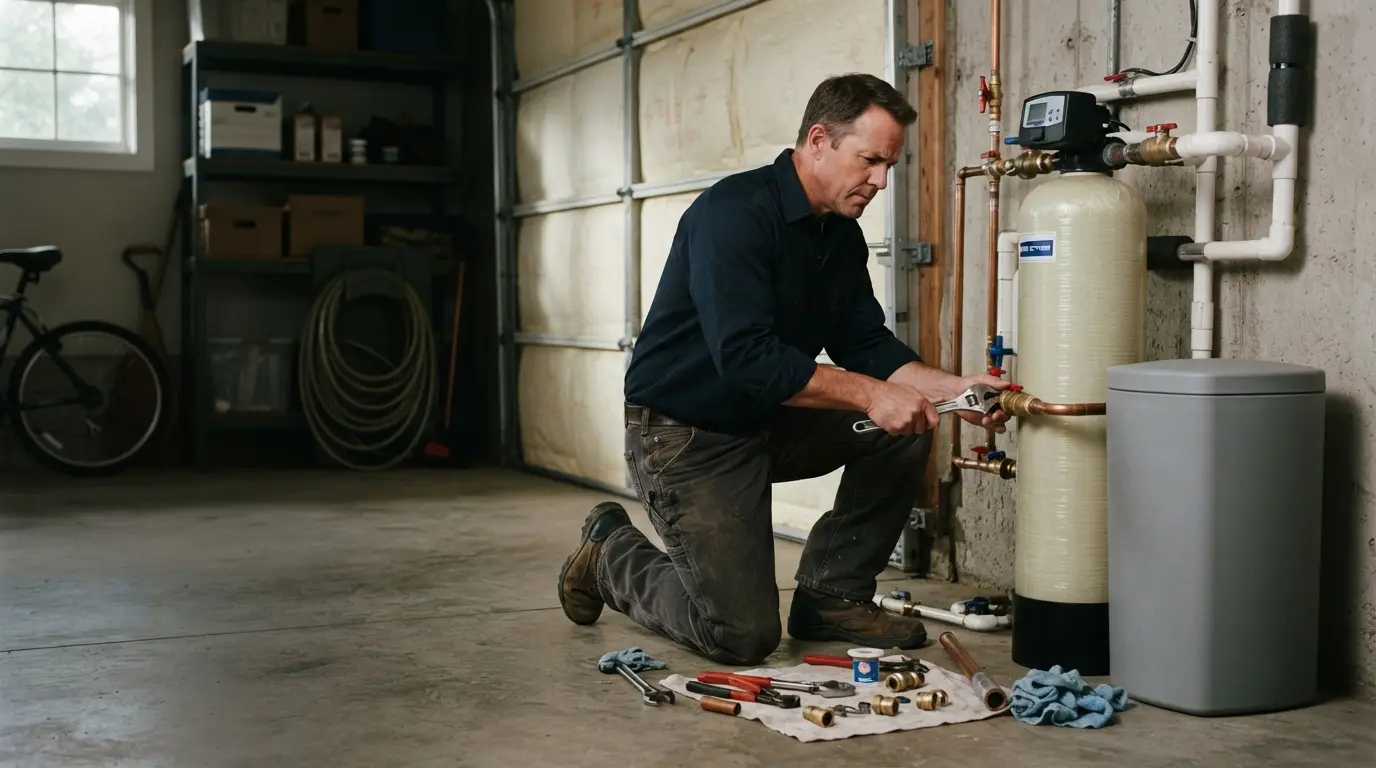
We size the softener to your hardness, iron and household, install it after the pressure tank with a bypass and drain and program it to regenerate by use.
Based on your lab results, we install acid neutralizers, iron and manganese filters, arsenic media or radon aeration, in the right order.
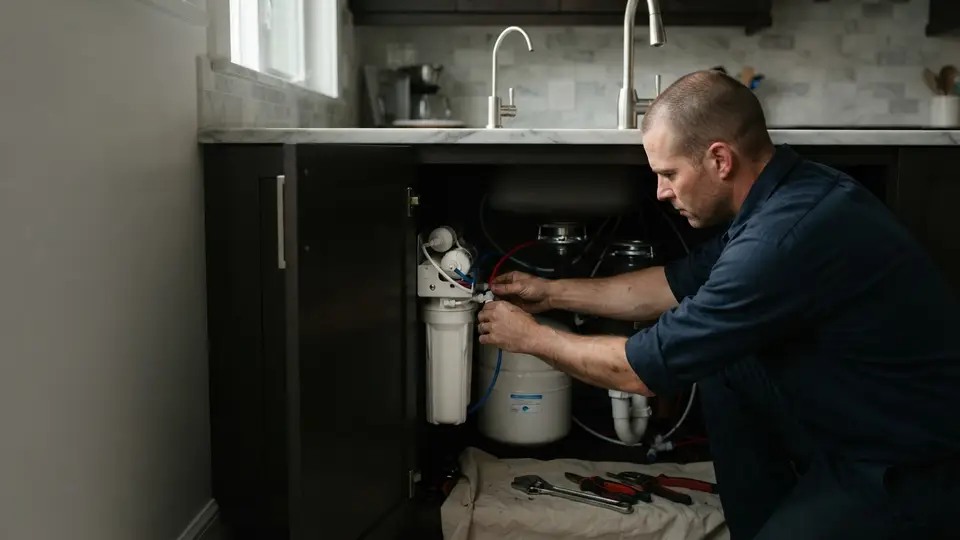
An under-sink RO system provides drinking and cooking water and greatly reduces arsenic and many other contaminants when maintained.
Typical cost
Before testing, any figure is an estimate only. Price depends on:
You approve a written price before installation.
Get a written price: (833) 733-2357Arsenic, radon, pH, hardness and iron each need different equipment.
Several problems mean several stages.
Larger homes need larger systems.
Basements with a floor drain are simplest.
Certified tests are priced separately.
Benefits
Arsenic and radon reduced to safer levels.
Iron, manganese and copper stains stop.
Neutralized water stops pinholes.
Water heaters and fixtures last longer.
Arsenic is the contaminant New Hampshire well owners hear about most. It occurs naturally in the bedrock and has no taste, smell or colour. Long-term exposure is linked to health risks, so state health and environmental agencies recommend testing every well. In Derry (9,904 homes), Londonderry, Epping and many other towns, we install treatment based on the lab result and the form of arsenic present, then recommend retesting to confirm it works.
Radon is a radioactive gas from uranium in granite, and it can dissolve in well water and release into the air when water runs in showers and washers. New Hampshire has some of the higher radon-in-water levels in the country. If a lab test shows high radon in water, an aeration system bubbles it out and vents it outside before water reaches the taps. We install these systems and coordinate with radon specialists where air mitigation is also needed.
Low pH water slowly dissolves copper, which shows up as blue-green stains and eventually pinhole leaks. It can also raise copper and lead levels at the tap in older homes. An acid neutralizer raises the pH before the water reaches the pipes. In older homes around Peterborough (1,613 homes), Plymouth and the North Country, a neutralizer often comes first, followed by a softener if the treated water turns out hard.
Hard well water fills water heater tanks with sediment and clogs the tankless coils inside oil and propane boilers, cutting hot water and wasting fuel. Acidic water eats anode rods and copper. Iron coats everything orange. Treating the water protects the heating equipment that New Hampshire homes depend on through long winters. We often recommend treatment when we replace a water heater or boiler coil.
Manchester (52,108 homes), Nashua and Portsmouth deliver treated water that meets standards, so most households need no treatment for safety. Some prefer a carbon filter for chlorine taste or an RO system for drinking water, and older homes may want a filter certified for lead while service lines are being replaced. We test before recommending anything.
The same granite that releases radon can put uranium into well water, and some wells also show fluoride, manganese or other naturally occurring elements. A standard state-recommended well test covers the common ones. Where results are high, reverse osmosis or specific media usually handles them, and we confirm with a follow-up test.
Find any past well test results. If arsenic or other contaminants were high, use bottled water for drinking and cooking until treatment is installed and retested.
Clear access to the pressure tank and where the water line enters the basement, then call us.
Water treatment installations may need a town plumbing permit, especially where we add drains or bypasses. We pull permits where required, and our plumbers hold the New Hampshire licenses each job requires.
Why choose us
What you can count on every time one of our plumbers comes to your door.
Every job is handled by a plumber who holds the license your state or city requires, backed by liability insurance.
Our plumber explains the problem and the options, and you approve a written price before any work begins.
Burst pipes, sewage backups and failed water heaters get priority scheduling, including nights and weekends.
We pull permits when the job needs one and schedule the inspection, so the work holds up when you sell.
Repairs and installations come with a written warranty on labor, on top of the manufacturer's warranty on parts.
Our pages and plumbers account for your area's water, soil, climate and the age of the homes around you.
Service area
We install water softeners and filtration in 100 New Hampshire communities, including Concord (19,259 homes) and Exeter (4,875 homes). Find yours:
It depends on what your lab results show and how many stages are needed. We review the test and give you a written price.
Whole-house media and RO filters need periodic replacement. We explain the schedule and costs before you decide.
We check pH and hardness on site. Arsenic, radon and other tests go to a certified lab and are priced separately.
After the pressure tank, where the water line enters the house, with a bypass and drain as needed.
No. Arsenic needs specific media or reverse osmosis. A softener only removes hardness.
We review your lab results, test pH and hardness and look at the plumbing before recommending equipment.
Long-term exposure is linked to health risks, which is why New Hampshire agencies recommend testing every well.
A radioactive gas from granite that dissolves in well water and escapes into the air when water runs. Aeration removes it.
A single system takes a few hours. Multi-stage treatment may take most of a day.
Usually one to two hours under the kitchen sink.
Every three to five years for arsenic and radon, and yearly for bacteria, plus after any change in the water.
Acidic water dissolves copper pipes. An acid neutralizer fixes it and protects the plumbing.
Put it in bypass, switch off the well pump if needed and call us to repair it.
Usually not for safety. Some homes add a filter or softener for taste or scale, and we test first.
Yes. A follow-up lab test confirms the system is reducing arsenic, radon or other contaminants as intended.