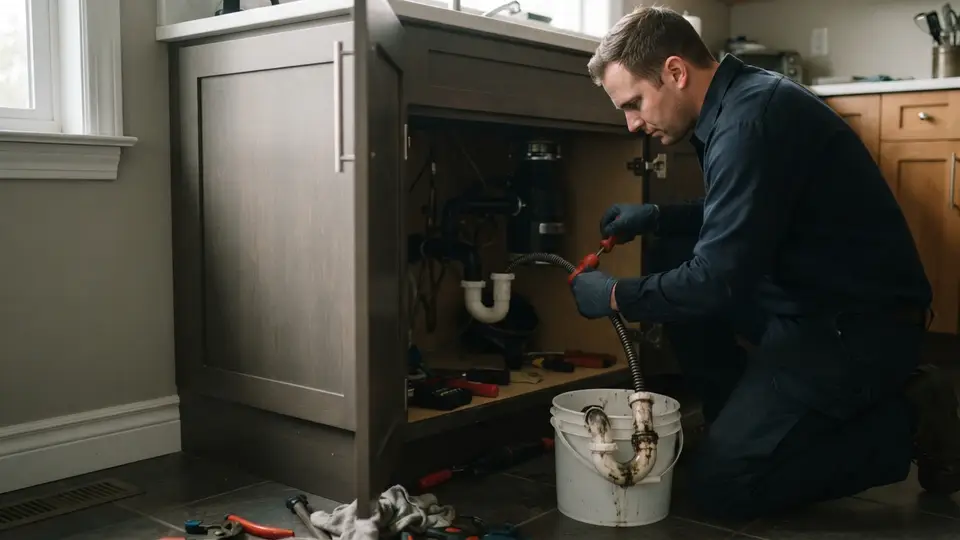
One sink or tub drains slowly
Likely cause: Hair, soap scum or grease near the trap
Our usual method: Hand auger or small drum machine
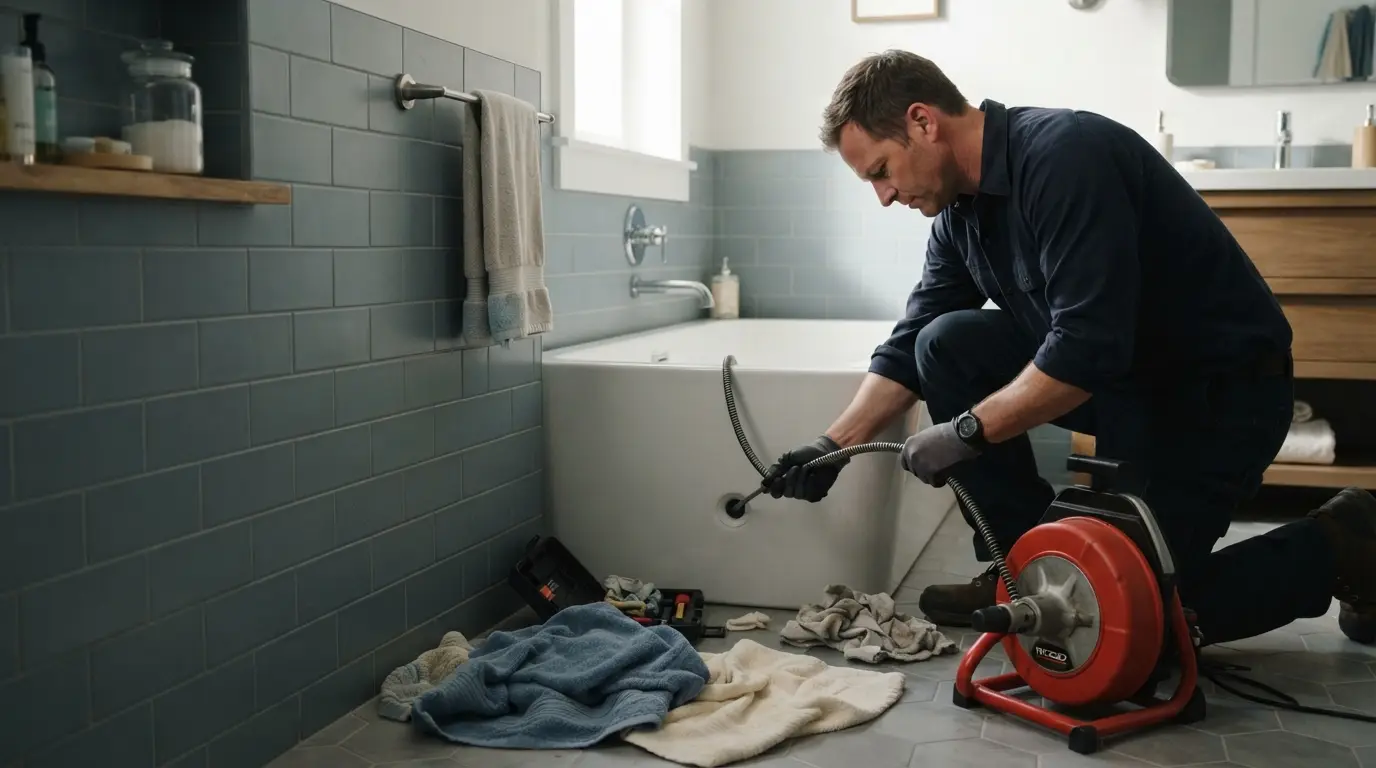
Shower standing in water, or the toilet bubbling when the washer drains? Our plumbers handle drain cleaning and clog removal in Arkansas every day. A lot of the clogs we see here come from tree roots working into old clay and cast iron sewer pipe, grease in kitchen lines and silt washed in by heavy spring rain. We clear the line, find out why it clogged and tell you whether it will happen again. This page explains the causes, our methods, what moves the price and how to keep drains running.
The service
Our drain service runs from a single bathroom sink to the main sewer line at the street or the inlet of your septic tank. We clear sinks, tubs, showers, toilets, laundry standpipes, floor drains and outdoor area drains. For clogs that keep coming back, we scrub the whole pipe wall with a hydro jetter and run a camera to see what is inside.
The goal is a clean, full-diameter pipe. A small hole punched through a blockage drains for a week and then closes up again, so we work the line until water runs freely and the camera shows clean walls.
Matching the symptom to the fix
Likely cause: Hair, soap scum or grease near the trap
Our usual method: Hand auger or small drum machine
Likely cause: Blockage in the main line
Our usual method: Main line cable from a cleanout, then camera
Likely cause: Grease coating the branch line
Our usual method: Hydro jetting
Likely cause: Roots or cracks letting in soil and water
Our usual method: Root cutting, camera inspection, repair advice
Likely cause: Broken lateral or septic trouble
Our usual method: Camera and locate, then repair plan
Why Arkansas
Oaks, maples, sweetgums and willows thrive in Arkansas heat and rain. Their roots follow moisture to the joints of clay and cast iron sewer pipe, slip through tiny gaps and grow into thick mats that catch paper and waste. Root clogs tend to come back every year until the pipe is repaired or lined.
42% of the homes in our Arkansas Census data were built before 1980. The figure is 53% in Little Rock, 67% in Pine Bluff and 61% in West Memphis. Cast iron from that era rusts into a rough, narrow channel inside, and that rough surface grabs grease and paper.
Bacon grease, cooking oil and starchy food scraps cool inside the pipe and stick. Over months they build a waxy layer that narrows the line until one more pan of grease closes it. Garbage disposals help less than people think; they grind food but send it all into the drain.
Spring storms push water into cracked sewer laterals and yard drains, carrying sand and clay in with it. In flat Delta towns and low parts of the river valley, sewer lines have little slope, so silt settles and builds up faster.
Warning signs
Our process
Which drains are slow, since when, and what changed tells us whether it is one fixture or the main line.
We use a cleanout when there is one, or pull a toilet, so we are not forcing a cable through a fixture trap.
Cables with cutting heads handle hair, paper and roots. Hydro jetting at high pressure scours grease and sludge off the pipe wall.
For repeat clogs, root problems or older lines, we run a camera and show you what it finds, including cracks, offsets and sags.
We run water through every line we cleaned, then tell you what caused the clog and whether anything needs repair.
Typical cost
You see a written price before we begin, and we explain each item in plain terms.
Get a written price: (833) 733-2357A bathroom sink is quick; a main sewer line takes larger machines and more time.
A clean, reachable cleanout saves time. Without one, we may pull a toilet or install a cleanout.
Roots and hardened grease take longer than a hair clog.
Hydro jetting costs more than cabling but keeps lines clear longer.
Inspection and locating add to the visit but answer why the line keeps clogging.
Night and weekend calls cost more than scheduled weekday work.
Benefits
Removing all the buildup, instead of only the plug, spaces out the next clog.
Camera footage shows the real condition of a line before you spend money on repairs.
Spotting a cracked joint early costs far less than digging up a collapsed pipe.
Clearing sewer backups quickly keeps contaminated water off floors and out of crawl spaces.
A cable opens a path, while a jetter cleans the whole pipe. We suggest jetting for kitchen lines coated in grease, main lines with heavy sludge, restaurants and apartment buildings, and root clogs after the roots are cut. We check the pipe with a camera first, because a badly broken or very old line may not take the pressure and needs repair instead.
For one slow sink or tub, a plunger and a hair catcher are fine to try. If two or more drains back up together, stop running water, dishwashers and laundry, because the next gallon will come up at the lowest drain in the house.
Skip chemical drain cleaners. They rarely clear roots or main line clogs, they can damage old pipe and they make the water dangerous for anyone who has to work on it. If sewage has come up, keep children and pets away and call us.
Clearing a clog does not need a permit. Replacing or repairing a sewer line, adding a cleanout in the yard or reconnecting to the city main often does. Our plumbers hold the Arkansas license their work requires, and when a repair needs a permit we pull it and arrange the inspection.
Why choose us
What you can count on every time one of our plumbers comes to your door.
Every job is handled by a plumber who holds the license your state or city requires, backed by liability insurance.
Our plumber explains the problem and the options, and you approve a written price before any work begins.
Burst pipes, sewage backups and failed water heaters get priority scheduling, including nights and weekends.
We pull permits when the job needs one and schedule the inspection, so the work holds up when you sell.
Repairs and installations come with a written warranty on labor, on top of the manufacturer's warranty on parts.
Our pages and plumbers account for your area's water, soil, climate and the age of the homes around you.
Related services
Service area
We clear drains across 625 Arkansas places, from Fayetteville's 45,303 homes to small Delta towns. Choose yours:
The price depends on which line is clogged, access to a cleanout, what caused the clog and the method. Our plumber gives you a written price before any work starts.
Yes, jetting usually costs more because it takes more equipment and time. It also cleans the full pipe wall, so grease and sludge take much longer to build up again.
Camera work is priced as its own line on your quote. For repeat clogs and older sewer lines it is usually worth it, because it shows exactly what is wrong.
We check which fixtures are slow, open the nearest cleanout and run a cable or camera. The camera head has a locator, so we can mark the spot from above ground.
Yes. We show you the camera picture as we go and explain what you are seeing, such as roots, cracks, offsets or a sag that holds water.
We explain the options, such as a spot repair, a pipe liner or replacing the line, and give you a written price for each before you decide.
Yes. Sewage carries bacteria and viruses. Stop using water, keep people and pets out of the area and let us clear the line before anyone cleans up.
We advise against them. They can eat at older metal pipe and fittings, rarely reach root or main line clogs and leave caustic water in the line.
A single fixture is often cleared within an hour. A main line with roots, followed by a camera inspection, can take two to three hours.
Yes. We run water through every cleared line before we leave. If the camera found damage, we tell you whether normal use is safe until the repair.
Most homes only need it when trouble starts. Homes with a history of root clogs often do well with a cleaning every year or two.
Plant trees away from the line, and have cracked or separated joints repaired or lined. Cutting roots clears the pipe, but they grow back through the same gaps.
Stop using all water and call us. A main line backup is urgent, and these calls get priority scheduling so sewage does not spread through the house.
Warm, wet weather lets trees grow quickly, and many homes still have clay or cast iron laterals with joints that roots can slip through.
Flat ground in the Delta means sewer lines often have little slope, so silt and solids settle more easily. Regular cleaning and camera checks help there.