PEX
Where it fits: Most whole-house repipes
Notes: Flexible, fewer joints, fast to run through walls and crawl spaces
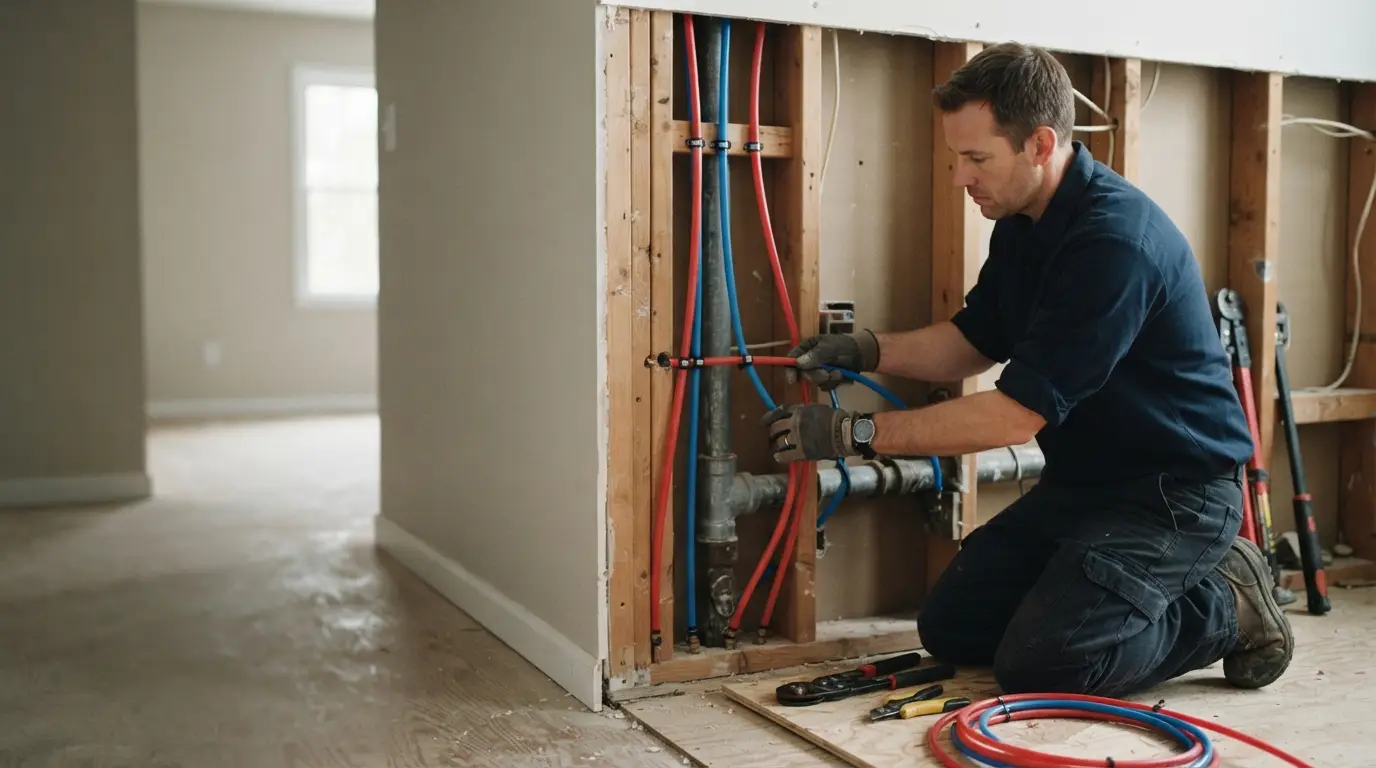
Rusty water, or another pinhole leak? Our plumbers do repiping and water line replacement in Arkansas for homes that have outlived their pipe. A large share of the state's housing dates from before 1980, and much of it still carries the original galvanized steel, which closes up with rust over time. We repair single sections when that makes sense, repipe whole houses when it does not, and replace the buried line from the meter. Here is how we decide, how the work goes and what affects the cost.
The service
Pipe repair fixes a damaged section. Whole-house repiping replaces the supply lines that carry hot and cold water to every fixture. Water line repair and replacement covers the buried service line that runs from the meter at the street to the house. We handle all three and often pair them, since an old house with old interior pipe usually has an old service line too.
Pipe materials we work with
Where it fits: Most whole-house repipes
Notes: Flexible, fewer joints, fast to run through walls and crawl spaces
Where it fits: Exposed runs, owner preference
Notes: Long track record; costs more in material and labor
Where it fits: Matching existing systems
Notes: Rigid plastic; sensitive to sunlight and impact
Where it fits: Buried service lines
Notes: Common choices for the line from the meter
Why Arkansas
Our Arkansas Census data shows 42% of homes built before 1980 and 15% before 1960. In Pine Bluff the share before 1980 is 67%, in West Memphis 61% and in Hot Springs 60%. Galvanized steel was standard for supply lines for much of that time, and it rusts from the inside until the opening is a fraction of its original size.
Older homes often have galvanized, copper and plastic joined together from decades of patches. Where steel meets copper without the right fitting, corrosion speeds up and leaks follow.
Old service lines of galvanized steel or early plastic can crack as clay soil moves, and roots wrap around them. A leak there often shows as a wet strip in the yard or a high bill.
Hard well water in parts of the Ozarks leaves scale inside pipes, and some water can be aggressive enough to pit copper over many years. A water test helps decide which pipe to use.
Warning signs
Our process
We look at the existing pipe, fixtures and access, and plan the new routes through crawl spaces, walls and attics.
You approve the price, material and a timeline before work begins.
We cover floors and furniture and keep openings as few and small as possible.
New lines go in while the old system keeps working, so water is off only for the switch-over.
We connect each fixture, pressure test the system, flush it and schedule the city inspection where one is required.
Typical cost
We give a written price covering each part of the job before any work begins.
Get a written price: (833) 733-2357More bathrooms and longer runs mean more pipe and labor.
Crawl spaces are easier to work from than slabs, which need routing through walls or attics.
PEX usually costs less than copper.
Openings for new pipe need patching; we tell you how many to expect.
Long runs, driveways and rock add to water line replacement.
Most cities require one for repiping and service line replacement.
Benefits
New pipe restores the full flow that rusted steel has choked off.
No more rust stains in tubs, toilets and laundry.
One planned project replaces a string of emergency repairs.
Buyers and insurers ask about galvanized pipe; new pipe answers the question.
For a leak in the buried service line, we trace the line, locate the leak and repair the section when the rest of the pipe is in good shape. When the line is old galvanized or has leaked more than once, we replace it, either by trenching or by pulling new pipe through with minimal digging. Your city owns the meter and the line on its side, so we coordinate with the utility when the work reaches the meter.
If an old pipe is leaking, close the main shutoff. Older gate valves sometimes stick or break when turned; turn gently and stop if it will not move, then call us. Note which fixtures have weak pressure or rusty water, since that helps us plan.
Do not try to tighten or patch corroded galvanized joints; old threads can snap and turn a drip into a flood. Clear access to the crawl space entrance and the water heater before our visit.
Whole-house repiping and service line replacement usually need a permit and inspection in Arkansas cities. Our plumbers are licensed in Arkansas for this work, and we pull the permit, schedule the inspection and coordinate with your water utility when work reaches the meter.
Why choose us
What you can count on every time one of our plumbers comes to your door.
Every job is handled by a plumber who holds the license your state or city requires, backed by liability insurance.
Our plumber explains the problem and the options, and you approve a written price before any work begins.
Burst pipes, sewage backups and failed water heaters get priority scheduling, including nights and weekends.
We pull permits when the job needs one and schedule the inspection, so the work holds up when you sell.
Repairs and installations come with a written warranty on labor, on top of the manufacturer's warranty on parts.
Our pages and plumbers account for your area's water, soil, climate and the age of the homes around you.
Service area
We repipe homes in 625 Arkansas places, including Fort Smith (56% of homes before 1980) and Jacksonville (51%). Choose yours:
It depends on house size, number of fixtures, foundation type, pipe material and wall repair. We give you a written price after inspecting the house.
Usually, yes. PEX costs less as material and takes less time to install. Copper costs more but some owners prefer it for exposed runs.
Length, depth, what lies over the line and the digging method drive the price. We trace the line first, then give you a written price.
Usually not. We keep the old system working while the new pipe goes in, so water is off only for short periods during the switch-over.
As few and as small as the routes allow. Crawl space homes often need very few. We show you the plan before work starts.
Yes. New stops at each fixture and a sound main shutoff are part of our repipe, so you can isolate any fixture later.
Rusty water is mostly a nuisance, but older pipe systems can contain lead in solder or fittings. Repiping removes that question; a water test can check current levels.
Turn it gently. Old gate valves can break if forced. If it will not move, stop and call us; we replace stuck valves as part of the job.
Many homes take two to four days, depending on size, foundation and access, plus time for the inspection. We give a schedule with the price.
Many are done in one day. Long, deep or rocky runs and driveway crossings can take longer.
PEX and copper installed correctly are expected to last for decades, especially with normal pressure and treated hard water.
If your water is very hard, a softener protects the new pipe, the water heater and fixtures from scale. We can test it.
Shut off the main and call us. We repair the break right away so you have water, and the planned repipe goes ahead on schedule.
Many built before the 1970s still do, at least in part. Our Census data shows a large share of Arkansas homes predate 1980.
Most cities require one for whole-house repiping and service line replacement. We pull it and schedule the inspection.