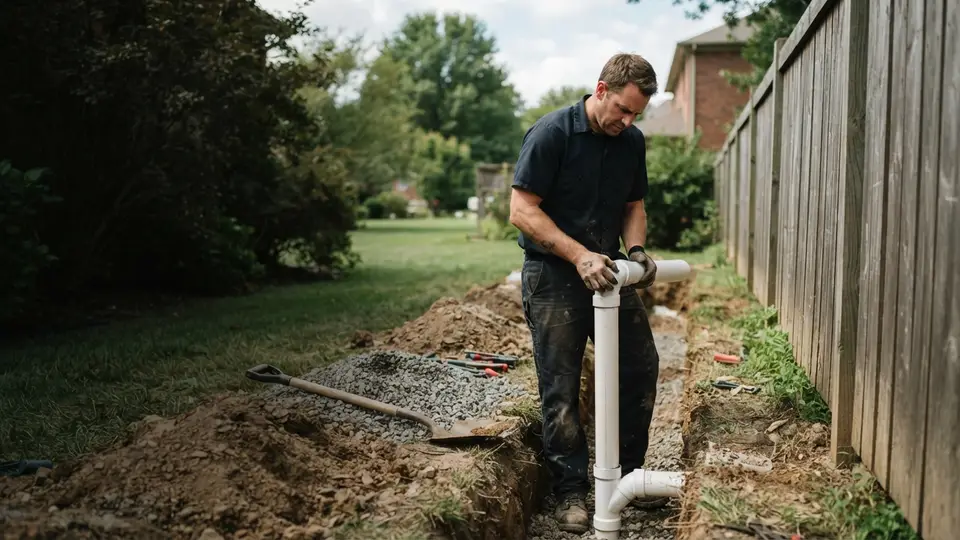
Spot repair
Best for: One broken joint or short cracked section
What it involves: Dig at the marked spot, cut out and replace that piece
Same clog every spring, or a soggy patch over the sewer pipe? Our crews do sewer line repair and replacement in Arkansas, camera first. Most of the broken laterals we dig up here are old clay or cast iron that roots have split, soil movement has pulled apart or decades of use have worn through. We find the damage on camera, show it to you, and then repair the section, line the pipe or replace the run to the street. Here is how we decide, what each option involves and what affects the price.
The service
Your sewer lateral is the pipe that carries everything from the house to the city main or to a septic tank. In most Arkansas cities the homeowner is responsible for it from the house to the property line or the main, so a break under your yard is usually yours to fix. We inspect, locate, repair and replace laterals, add cleanouts, and reconnect lines to the city tap.
Repair options at a glance
Best for: One broken joint or short cracked section
What it involves: Dig at the marked spot, cut out and replace that piece
Best for: Cracked but round pipe with roots at many joints
What it involves: Clean the line, cure a resin liner inside it, little digging
Best for: Long runs under driveways or trees
What it involves: Pull a new pipe through the old one between two pits
Best for: Collapsed, sagging or badly offset pipe
What it involves: Dig the route and lay new PVC at the right slope
Why Arkansas
About 42% of the homes in our Arkansas Census data were built before 1980, 56% in Fort Smith, 57% in North Little Rock and 60% in Hot Springs. Those homes usually went in with vitrified clay or cast iron laterals. Clay joints loosen and let roots in, cast iron rusts through along the bottom, and some homes from the 1950s through 1970s have fiber pipe that flattens with age.
Arkansas yards grow big trees quickly. Roots find the moisture at each joint, push in and expand, cracking the pipe and trapping waste. Cutting them gives relief, but the opening stays until the pipe is repaired or lined.
In central and southern Arkansas and across the Delta, clay soils swell in wet months and shrink in dry spells. That steady movement pulls joints apart, creates offsets and leaves low spots called bellies where waste collects.
In the Ozarks and Ouachitas, laterals are often laid in shallow trenches cut into rock or across slopes. Rock edges can wear through pipe, and soil creep on hillsides can shift a line over time.
Warning signs
Our process
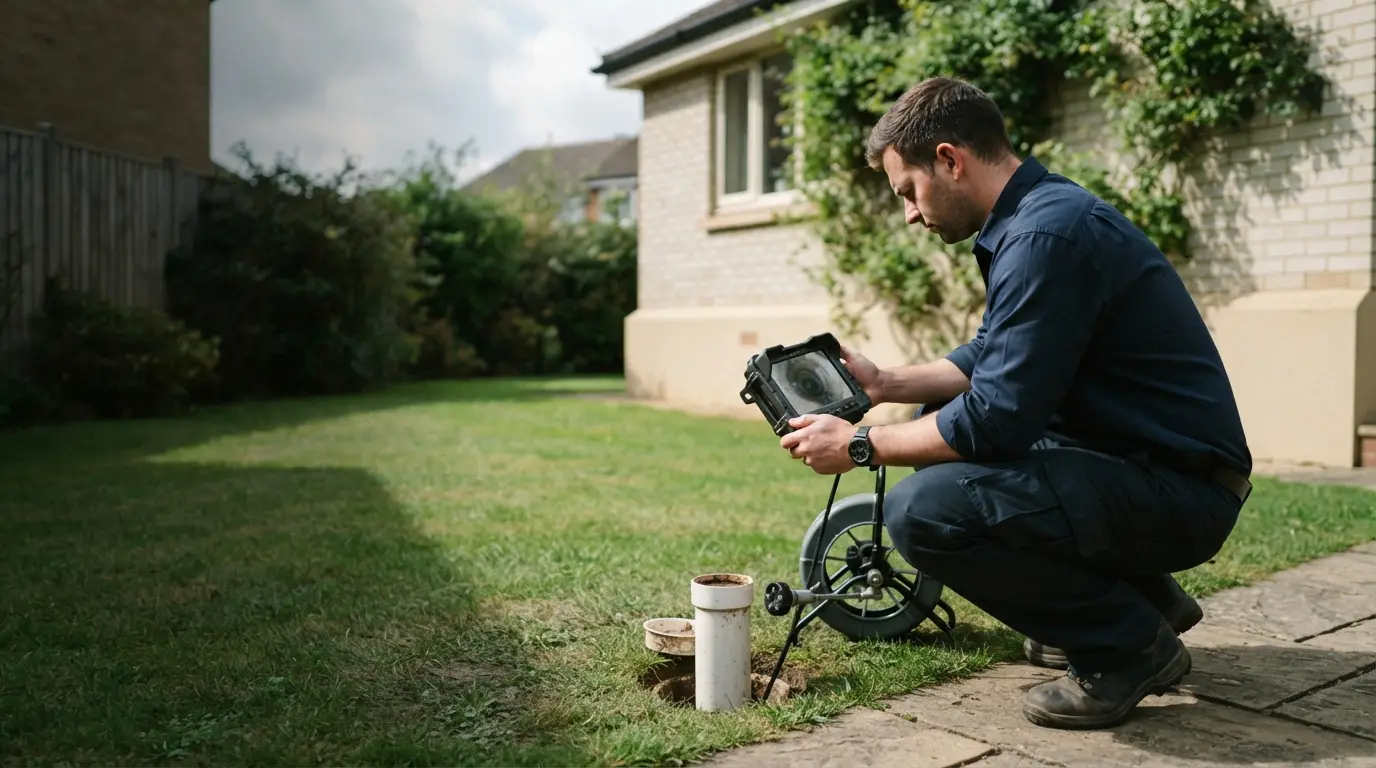
We run a camera through the whole line and record where the damage is and how deep the pipe sits.
A locator in the camera head lets us mark the trouble spots and the route on the ground.
We show you the footage and give a written price for each repair that fits the damage.
We pull the permit where required and call for utility locates before any digging.
We do the agreed work, set the new pipe at proper slope and add a cleanout if the house lacks one.
A final camera run confirms the repair, then we backfill and leave the yard as level as we can.
Typical cost
We give a written price for each option before any work begins, so you can compare them side by side.
Get a written price: (833) 733-2357Longer, deeper runs take more digging and pipe.
A spot repair costs least; full replacement under a driveway costs most.
Concrete, decks, landscaping beds and mature trees add work.
Ozark rock and wet clay both slow excavation.
Work in the street or at the city tap may need extra permits and traffic control.
These vary between Arkansas cities.
Benefits
A lined or replaced pipe has no open joints for roots to enter.
New pipe laid at the right grade carries waste away instead of letting it settle in bellies.
Adding one makes any later service faster and cheaper.
A recorded inspection and repair answers buyers questions about the line.
A camera inspection is how we avoid guessing. It shows roots, cracks, offsets, bellies and collapsed sections, measures how far each one is from the cleanout and gives a depth reading from the surface. We also do inspections for people buying older homes, since a failing lateral is an expensive surprise after closing. You keep the video either way.
If sewage is backing up, stop using water in the house right away, including the dishwasher and washing machine. If you have an outdoor cleanout and can reach it safely, removing the cap slowly can let water spill outside instead of into the house, but stand back, since it may be under pressure.
Do not dig over the line yourself; gas, electric and fiber lines are often buried nearby. Keep children and pets away from any wet or sunken area and call us.
Sewer repair and replacement usually need a permit and inspection from the city or, outside city limits, from the county or the Arkansas Department of Health. Work at the city tap may also need the utility sign-off. Our plumbers are licensed in Arkansas for this work, and we handle the permit, the utility locates and the inspection.
Why choose us
What you can count on every time one of our plumbers comes to your door.
Every job is handled by a plumber who holds the license your state or city requires, backed by liability insurance.
Our plumber explains the problem and the options, and you approve a written price before any work begins.
Burst pipes, sewage backups and failed water heaters get priority scheduling, including nights and weekends.
We pull permits when the job needs one and schedule the inspection, so the work holds up when you sell.
Repairs and installations come with a written warranty on labor, on top of the manufacturer's warranty on parts.
Our pages and plumbers account for your area's water, soil, climate and the age of the homes around you.
Related services
Service area
We repair sewer lines in 625 Arkansas places, including Texarkana, where 52% of homes predate 1980. Choose yours:
It depends on the length and depth of the line, the repair method, what sits on top and permit fees. We give you a written price for each option after the camera inspection.
Often, when the old pipe is still round and the yard, driveway or trees above it would be costly to disturb. A collapsed or badly sagging line usually needs replacement instead.
Yes, the inspection is a line item on the quote. It shows exactly where and how the line is damaged, so you only pay for the repair you need.
The camera footage decides it. One bad joint gets a spot repair; roots at many joints suggest lining; sags, collapses or crushed pipe call for replacement.
Not if we can avoid it. Spot repairs, lining and pipe bursting need only small pits. Open trench work is used when the pipe has to be re-sloped.
Yes. We pull the permit, arrange utility locates and schedule the inspection. If the work reaches the city main, we coordinate with the utility as well.
It can be. Leaking sewage contaminates soil and can back up into the house. Keep people and pets away from wet areas and call us promptly.
We advise against it. Gas, power and communication lines are often buried close by. We call for utility locates before any digging.
Spot repairs and lining are often done in a day. Full replacements can take one to several days, depending on length, depth and inspections.
Not while the line is open. We tell you when water use has to stop and keep that window as short as we can.
Modern PVC and properly cured liners are expected to last for decades when installed at the right slope and kept free of grease and wipes.
Seal the openings they use by repairing or lining the pipe, and keep new trees away from the line. Root cutting alone only buys time.
Stop all water use and call us. Sewage backups get priority scheduling, and we clear the line first, then inspect it to find the cause.
Clay soils across much of the state swell and shrink with rain and drought, and that movement can settle the pipe and leave low spots that collect waste.
In most cities the owner is responsible for the lateral from the house to the main or property line. Your city utility can confirm the exact split for your address.