White crust on faucets, spotty dishes
Probable cause: Hard water (calcium and magnesium)
Usual treatment: Water softener
Rust rings in the toilet, or spots on every glass? We install water softeners and filtration in Arkansas, matched to a test of your own water. Arkansas water varies a great deal. City systems drawing from lakes often deliver fairly soft water, while private wells in the Ozarks can be hard from limestone and wells across the Delta frequently carry iron and manganese. Rural water associations and older city mains add their own quirks. We test first, then recommend only what your water needs. Here is how it works.
The service
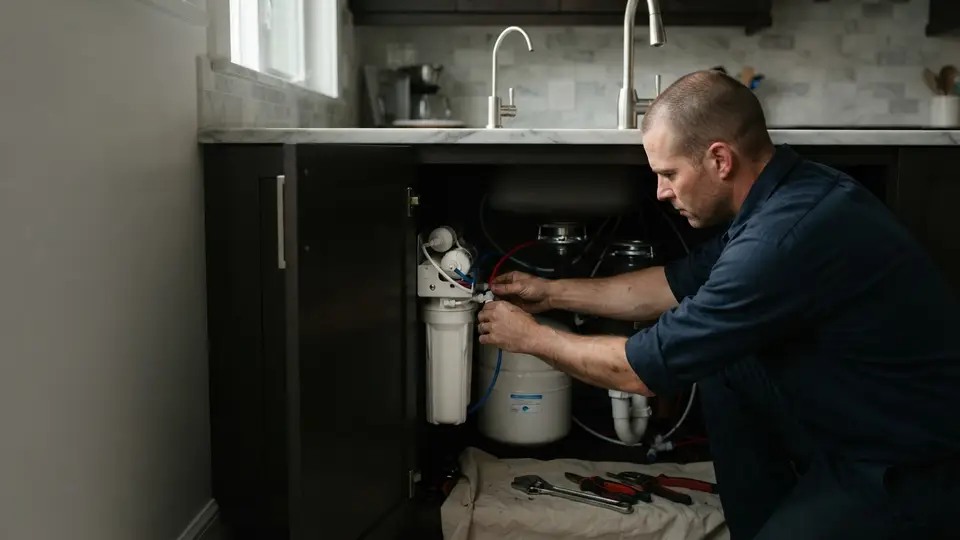
Each kind of equipment solves a different problem, and many homes need only one. A softener removes calcium and magnesium that cause scale. A whole-house filter treats all the water entering the home for things like sediment, chlorine taste or iron. A reverse osmosis system under the kitchen sink makes highly filtered drinking and cooking water.
Matching the problem to the equipment
Probable cause: Hard water (calcium and magnesium)
Usual treatment: Water softener
Probable cause: Iron, sometimes manganese
Usual treatment: Iron filter, sometimes with a softener
Probable cause: Hydrogen sulfide in well water
Usual treatment: Oxidizing filter or aeration system
Probable cause: Disinfectant
Usual treatment: Carbon whole-house filter
Probable cause: Sediment from well or old mains
Usual treatment: Sediment filter
Probable cause: Dissolved solids, taste
Usual treatment: Reverse osmosis at the kitchen sink
Why Arkansas
Groundwater in northern Arkansas often moves through limestone and dolomite and picks up calcium and magnesium. Homes on private wells there see heavy scale. Many Northwest Arkansas cities use treated lake water instead, so homes in Bella Vista, where the median house dates from 1996, may have different water from a farm a few miles away. Test before you buy.
Wells drawing from the alluvial aquifer in eastern Arkansas commonly carry dissolved iron and manganese. The water may look clear from the tap and then stain everything it dries on. We see it around Jonesboro, where the median home was built in 1991, Paragould and smaller Delta towns.
Some Arkansas wells produce water with hydrogen sulfide, the rotten-egg smell. It can also come from a reaction with the magnesium anode in a water heater, which is a simpler fix.
City systems treat their water, but chlorine taste and sediment after main breaks are common complaints. A carbon or sediment filter handles both.
Warning signs
Our process
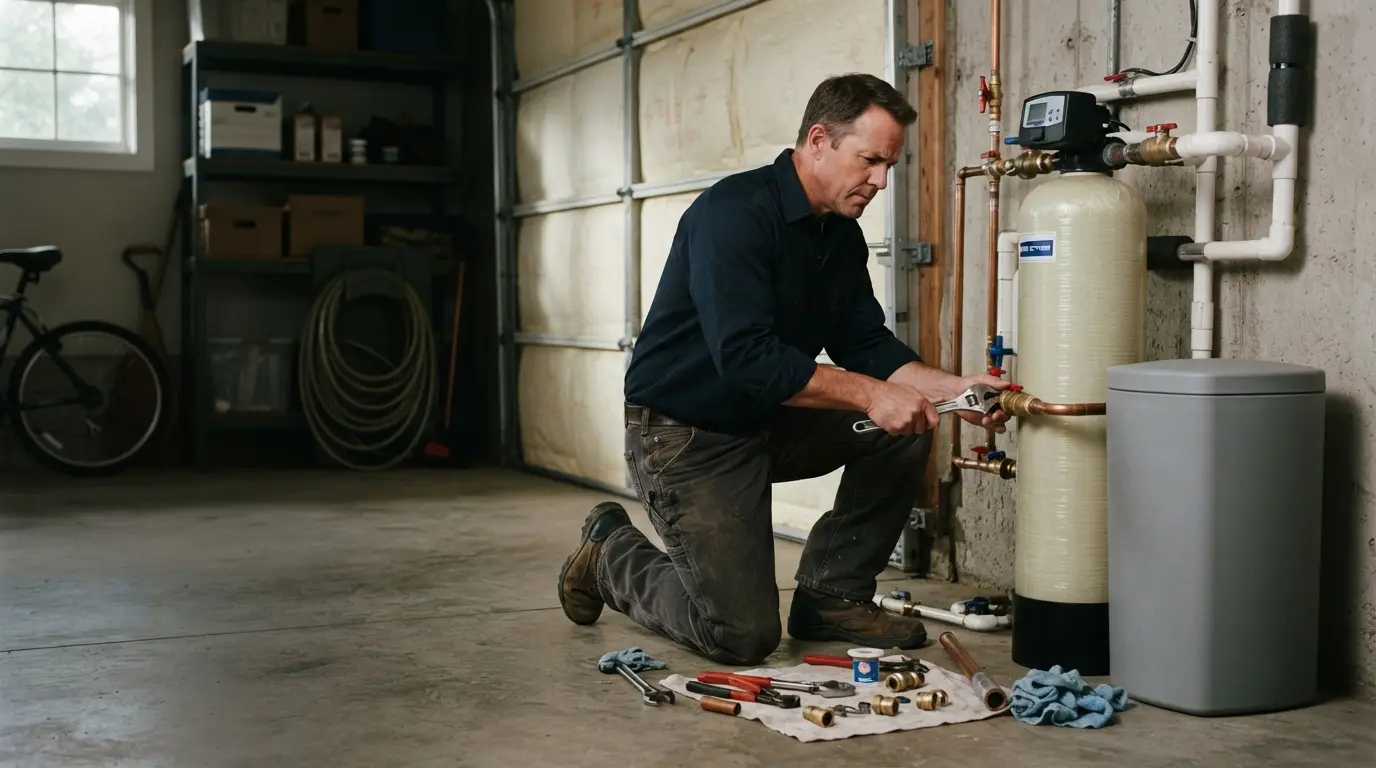
We test hardness and iron, count household members and fixtures, and size a softener so it regenerates efficiently. We install it with a bypass valve, a drain connection and a proper air gap, and set it up for your water. Outdoor faucets can stay on untreated water if you prefer.
We install sediment, carbon, iron or sulfur filters at the point where water enters the home, ahead of the softener when both are needed. Iron and sulfur systems are chosen by test results, since the right method depends on concentration and water chemistry.
We mount the system under the kitchen sink, add a dedicated faucet and can connect a refrigerator ice maker. We show you how and when to change the filters and membrane.
Typical cost
We give you a written price for the equipment and installation, and tell you what upkeep to expect.
Get a written price: (833) 733-2357Iron and sulfur treatment cost more than a basic softener.
Bigger households need higher-capacity equipment.
A garage near the main line is simplest; tight spaces or long pipe runs add labor.
Softeners and some filters need both nearby.
Salt, filter cartridges and membranes are a recurring cost.
Benefits
Less scale means elements and burners transfer heat better.
Iron filters stop the orange rings in toilets, tubs and laundry.
Soft water rinses soap away and leaves fewer spots.
Carbon filters and reverse osmosis remove chlorine and off flavors.
If you have a recent water report from your city or a well test, keep it ready. Note any stains, smells and how quickly problems return after cleaning. Find the spot where the main line enters the house so we can see the room available for equipment.
If an existing softener is leaking or flooding, put it in bypass or close the valves around it, unplug it and call us. Do not add chemicals to a well yourself.
Of the 625 Arkansas places in our Census data, many are small towns where homes outside the town limits rely on private wells or rural water systems. Well owners are responsible for their own water quality. We recommend a lab test for bacteria and nitrates in addition to the hardness and iron testing we do for treatment, and the county health unit can point you to testing options.
Installing a softener or filter usually needs no permit, though some cities require one for new plumbing connections or a drain tie-in. Our plumbers hold the Arkansas license their work requires, and the drain connection is installed with a proper air gap so treatment water cannot siphon back.
Why choose us
What you can count on every time one of our plumbers comes to your door.
Every job is handled by a plumber who holds the license your state or city requires, backed by liability insurance.
Our plumber explains the problem and the options, and you approve a written price before any work begins.
Burst pipes, sewage backups and failed water heaters get priority scheduling, including nights and weekends.
We pull permits when the job needs one and schedule the inspection, so the work holds up when you sell.
Repairs and installations come with a written warranty on labor, on top of the manufacturer's warranty on parts.
Our pages and plumbers account for your area's water, soil, climate and the age of the homes around you.
Service area
We test water and install softeners and filters across Arkansas. Choose your city:
It depends on hardness, household size and the installation location. We test your water first, then give you a written price for the equipment and installation.
Usually, yes. Iron filters often need their own equipment ahead of a softener, and the right method depends on how much iron your water carries.
Upkeep is mainly filter and membrane replacement on a set schedule, plus a little water sent to the drain. We tell you the intervals at installation.
Yes. We test hardness, iron and other basics at your tap so we only recommend equipment your water actually needs.
Near where the main water line enters, often in a garage or utility room, with a drain and an outlet close by. We plan it during the visit.
Yes. We can route the softener so hose bibs stay on hard water, which saves salt and keeps softened water off your lawn.
For most people, yes. Softening adds a small amount of sodium. Anyone on a low-sodium diet can use a reverse osmosis tap for drinking water.
Treatment for hardness or iron does not test for bacteria or nitrates. Have a lab test done; the county health unit can help with options.
Most softener or filter installs take a few hours. Combined iron, sulfur and softener systems can take most of a day.
Right away with new water, though it takes some time for existing scale on fixtures and pipes to stop building and clean up.
It depends on hardness and water use; many homes add salt every month or two. Keep the level above the water line in the tank.
Every year or two, and whenever taste, smell or color changes. Retesting also shows whether treatment equipment is still working.
Put it in bypass or close the valves around it, unplug it and call us. Leaking softeners usually have a failed valve or drain line.
It depends where you are. Lake-fed city water is often fairly soft, while many Ozark wells are hard and many Delta wells carry iron.
Dissolved iron, common in wells in eastern Arkansas, turns orange or brown when exposed to air. An iron filter removes it before it reaches fixtures.