Gas tank
Good fit for: Homes with gas service and steady hot water demand
Points to weigh: Needs proper venting and a gas line in good shape
Lukewarm showers, or a puddle under the tank in the garage? We handle water heater repair and replacement in Arkansas, gas, electric and tankless. Arkansas homes are split nearly evenly between gas and electric heat, so we service both every week, along with the sediment and scale that hard well water leaves in tanks. We tell you honestly whether a repair makes sense or the tank is done. Below: the warning signs, our repair and installation process, tankless options and what affects the price.
The service
Statewide, 51% of the homes in our Arkansas Census data heat with electricity and 45% with utility gas, with 3% on propane. Fuel for space heating often matches the water heater, so we see plenty of both. Gas is especially common in Rogers (66% of homes) and Maumelle (60%), while electric dominates in Bella Vista and Paragould, where gas heats only 4% and 14% of homes.
Tank, tankless and heat pump at a glance
Good fit for: Homes with gas service and steady hot water demand
Points to weigh: Needs proper venting and a gas line in good shape
Good fit for: Homes without gas, small households
Points to weigh: Simple to install; slower recovery than gas
Good fit for: Families who run out of hot water, tight spaces
Points to weigh: Higher upfront cost; gas line or electrical service may need upgrading
Good fit for: Electric homes with garage or utility room space
Points to weigh: Lower running cost; needs room for airflow
Why Arkansas
Wells in parts of the Ozarks draw hard water, and minerals settle in the tank as a crust. That layer makes gas heaters rumble and burns out electric elements. Iron-rich well water in the Delta adds rusty sediment.
Many Arkansas water heaters sit in garages, closets or attics. Attic units leak through ceilings when they fail, and garage units work harder in cold snaps. Placement affects both the risk and the cost of a replacement.
In older homes, flue pipes may be rusted or poorly pitched and gas connectors may be outdated. Those parts affect safety, and we check them on every gas heater visit.
Without a working expansion tank or pressure regulator, pressure spikes strain the tank and make the relief valve drip.
Warning signs
Our process
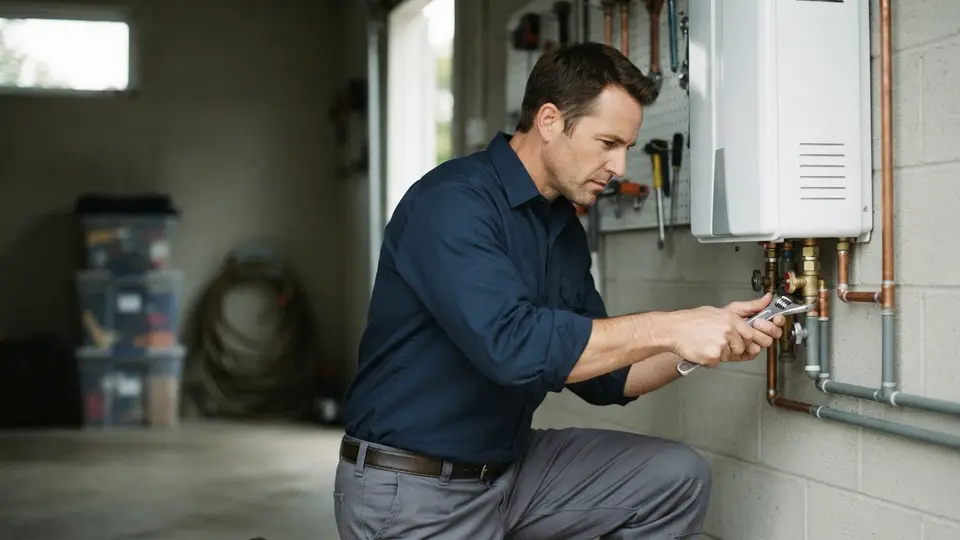
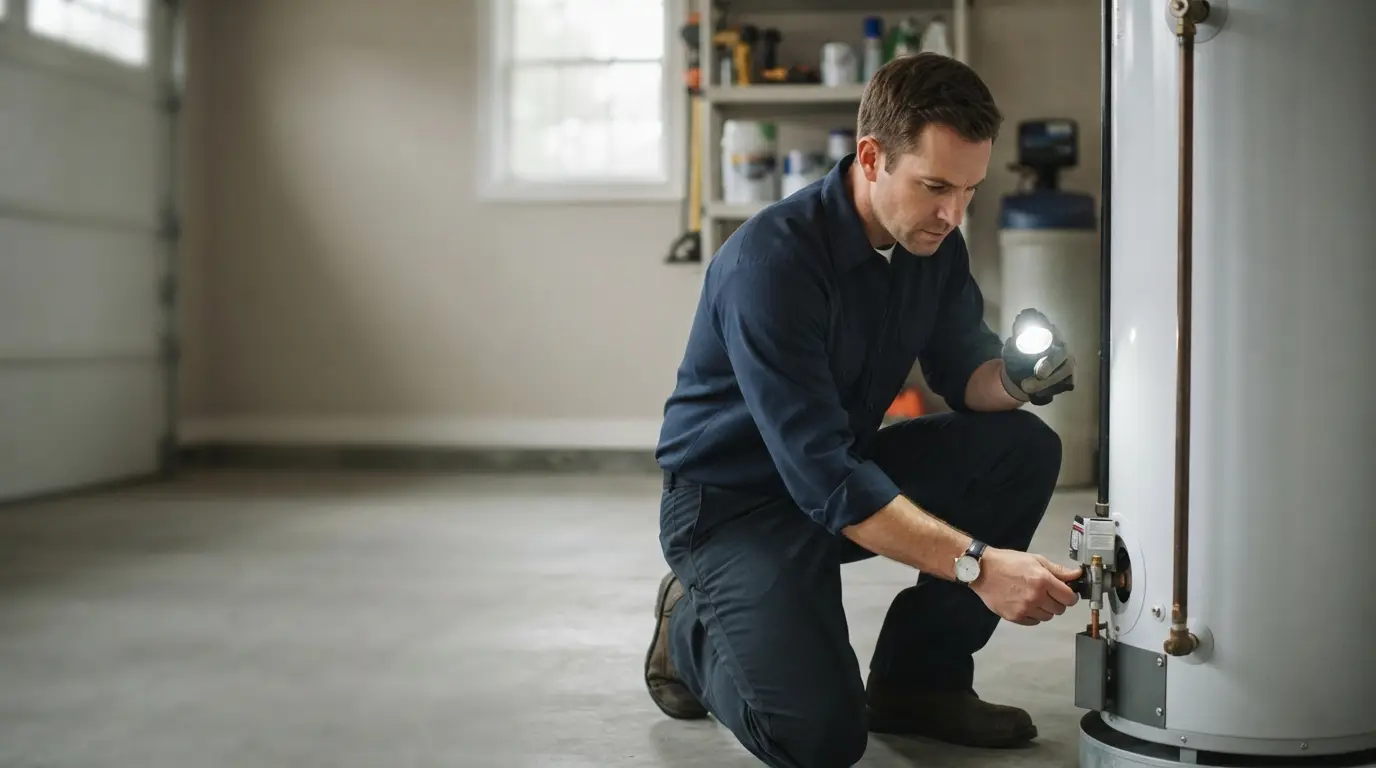
We test the thermostat, elements, gas valve, thermocouple or flame sensor, igniter and relief valve. Most repairs replace one of those parts. We also check the anode rod, which protects the tank from rust, and flush sediment when it is causing the trouble.
When a tank leaks from the body or repairs no longer make sense, we size a replacement to your household, remove the old unit, install the new one with code-required parts such as a relief valve discharge line, drain pan and expansion tank where needed, and haul the old heater away.
Tankless units heat water as it flows. We check that your gas line or electrical service can support one, size it to your peak demand, install venting and set up a flush port, because tankless units in hard water areas need periodic descaling.
Typical cost
You get a written price with each part listed before we start.
Get a written price: (833) 733-2357A thermostat or element costs far less than a new heater.
Tankless and heat pump models cost more upfront than standard tanks.
Switching from electric to gas, or adding tankless, may need gas line or electrical work.
Attic and tight closet installs take more labor than garage installs.
Venting, drain pans, expansion tanks and earthquake straps where required.
Most Arkansas cities require one for replacement.
Benefits
A heater sized to your household keeps up with morning showers and laundry.
Correct flue and combustion air on gas units keep exhaust out of the house.
A clean tank or a newer efficient unit heats water with less fuel.
Drain pans and relief lines direct water away when a tank eventually fails.
Renters occupy 41% of the homes in our Arkansas Census data, and water heaters are one of the most common rental repair calls. In duplexes and small apartment buildings, heaters are often packed into closets where access is tight and venting is shared. We work with landlords and property managers on repairs and planned replacements, and we can schedule work around tenants. Tenants should report a leaking or failed heater to the property owner, who arranges the visit with us.
If the tank is leaking, close the cold water valve above it. For an electric unit, switch off its breaker; for gas, turn the control to off or pilot. If you smell gas, leave the house and call your gas utility first.
Do not open or cap the relief valve, and do not drain a hot tank yourself; the water can scald. Note the brand, age and any error lights, then call us.
Replacing a water heater usually needs a permit in Arkansas cities, and gas units must meet venting and gas piping rules. Our plumbers hold the Arkansas license required for water heater and gas work, and we pull the permit and schedule the inspection.
Why choose us
What you can count on every time one of our plumbers comes to your door.
Every job is handled by a plumber who holds the license your state or city requires, backed by liability insurance.
Our plumber explains the problem and the options, and you approve a written price before any work begins.
Burst pipes, sewage backups and failed water heaters get priority scheduling, including nights and weekends.
We pull permits when the job needs one and schedule the inspection, so the work holds up when you sell.
Repairs and installations come with a written warranty on labor, on top of the manufacturer's warranty on parts.
Our pages and plumbers account for your area's water, soil, climate and the age of the homes around you.
Related services
Service area
We repair and install water heaters across 625 Arkansas places, from Conway, where 55% of homes are rented, to Bella Vista retirement homes. Choose yours:
Most repairs replace a single part, such as a thermostat, element or gas control, so the price depends on that part and access. You get a written price first.
A repair is usually cheaper if the tank is younger than about ten years and not leaking. A leaking tank body means replacement.
Yes, upfront. It may need a larger gas line, new venting or electrical upgrades. It uses less energy over time and lasts longer than most tanks.
We count bathrooms, people and how much hot water you use at once, then size a tank or tankless unit to that peak.
Yes. Removal and disposal are part of our installation and are listed on your written price.
If gas service is available, yes. We run or extend the gas line, add venting and handle the permit, all priced before we start.
Leave the house without switching anything on or off and call your gas utility from outside. Once it is safe, we repair the problem.
Usually pressure or temperature is too high, or the valve is worn. Do not cap it; it protects the tank. We find the cause and fix it.
A standard tank swap often takes a few hours. Tankless conversions and attic installs can take most of a day.
Most repairs are finished on the first visit when we carry the part. Replacements depend on the model, and we tell you the timeline with the price.
Once a year for most homes, and more often with hard or iron-rich well water. Tankless units need regular descaling as well.
Many tanks last around eight to twelve years. Hard water shortens that, while yearly flushing and anode checks help them last longer.
Close the cold supply valve, cut the power or gas and call us. A leaking tank is urgent and gets priority scheduling.
It depends on the source. City water from lakes is often fairly soft, but many private wells, especially in the Ozarks and Delta, leave scale or iron in tanks.
Both are common. Our Census data shows Arkansas homes split close to evenly between gas and electric heating, and water heaters tend to follow.