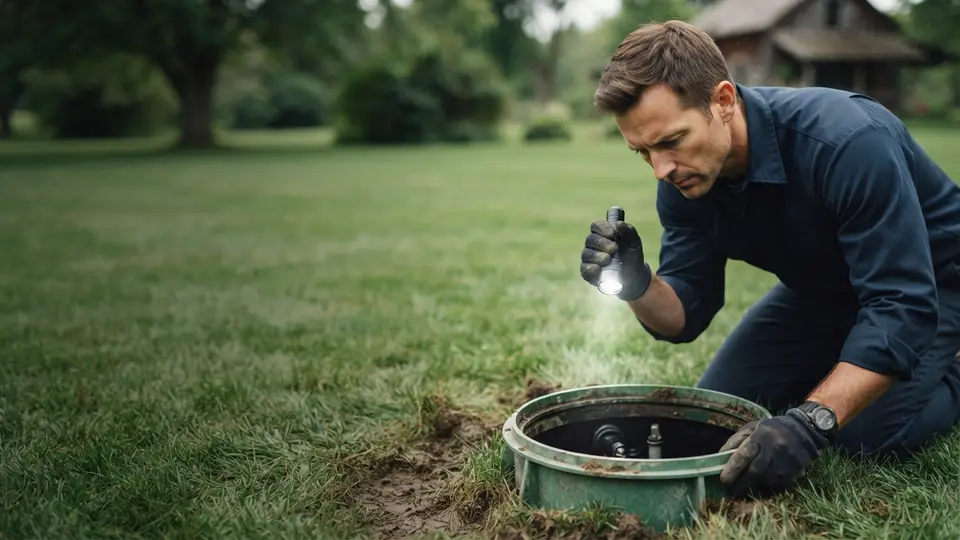
Septic pumping
When you need it: Every few years, or when sludge is high
What we do: Open the tank, pump sludge and scum, check baffles
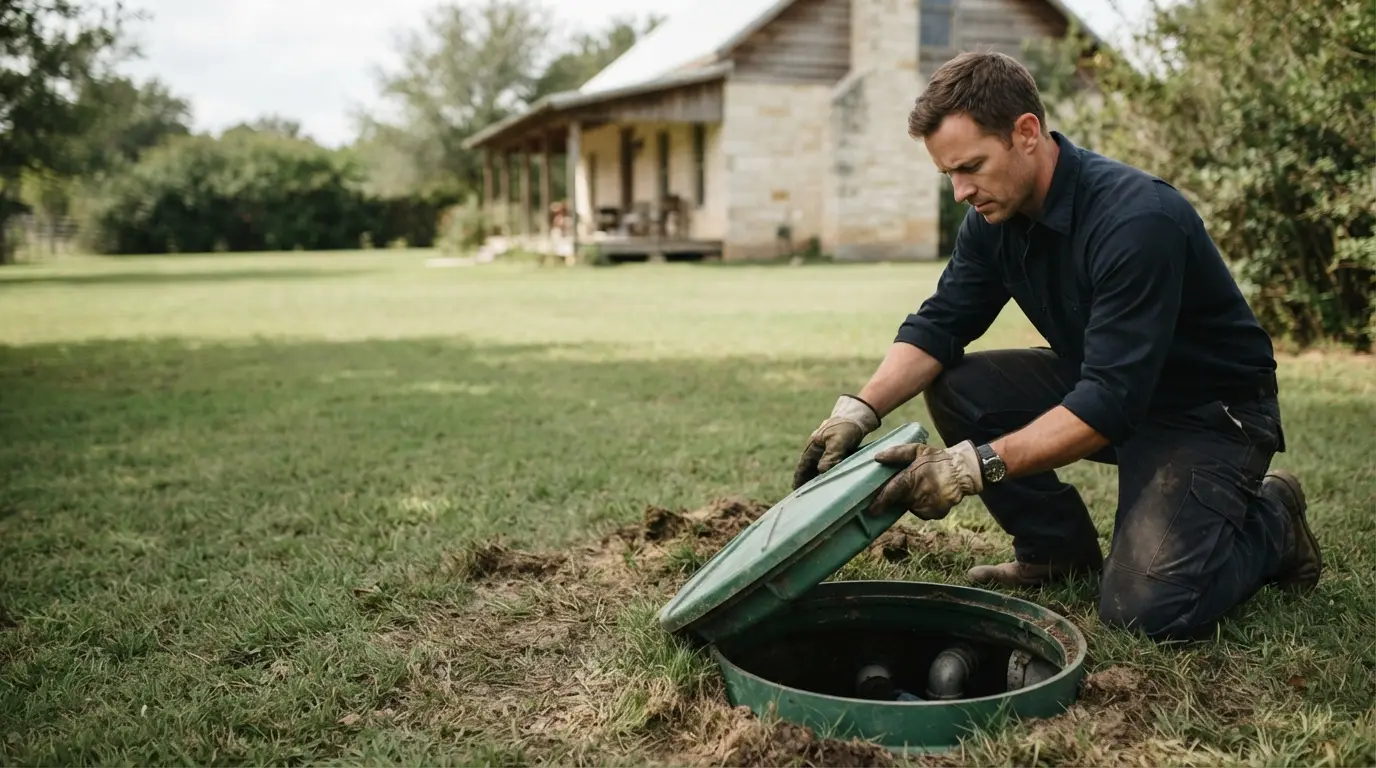
Toilets slow after a week of rain, or a smell near the tank lid? We provide septic tank services in Arkansas for homes beyond the city sewer. Rural Arkansas leans on septic, and the state's soils make it harder than it looks: dense clay in the lowlands drains slowly, thin rocky ground in the hills leaves little room for a field, and long wet springs can flood both. We pump tanks, inspect systems and repair drain fields. This page covers the warning signs, how each service works, cost factors and how to make a system last.
The service
Waste leaves the house into a buried tank. Solids sink to the bottom as sludge, grease and light material float as scum, and the clearer water in the middle flows out to a drain field, where it soaks into the soil and is treated there. Some Arkansas lots use alternative designs with pumps, sand filters or aerobic treatment units when the soil is too tight or too shallow for a standard field.
Our septic services
When you need it: Every few years, or when sludge is high
What we do: Open the tank, pump sludge and scum, check baffles
When you need it: Buying or selling, or when problems start
What we do: Measure layers, check baffles, lines, pump and field
When you need it: Wet ground, odors, slow drains after pumping
What we do: Find failed lines, clear or replace them, restore flow
When you need it: Alarm sounding on a pumped system
What we do: Test floats, pump and controls, replace failed parts
Why Arkansas
Across the Delta, the Gulf Coastal Plain in the south and many river bottoms, soils are heavy clay that takes in water slowly. A field in that ground has less capacity, and heavy use or a leaking toilet can push it past its limit.
In the Ozarks and Ouachitas, bedrock often sits close to the surface. There may be little soil depth to treat wastewater, and fields are sometimes squeezed onto narrow or sloping strips of land.
Arkansas gets plenty of rain, and wet springs can saturate the soil around a field for weeks. A saturated field cannot take water, so drains slow until the ground dries. Low-lying lots near rivers see this most.
When a tank is not pumped, sludge rises until solids wash into the field and clog it. Older concrete tanks can also lose baffles or crack, letting solids escape even when the tank was pumped on time.
Warning signs
Our process
We locate the lids, digging if needed, and open every compartment.
The liquid level tells us whether the field is backing up, which changes the diagnosis.
We remove sludge and scum, then check baffles, tees, filters and tank walls for damage.
We look for wet areas, probe distribution lines and run water to see how the field accepts it.
You get a written summary of what we found and a price for any repair.
Typical cost
You get a written price before we start, with each part of the work listed.
Get a written price: (833) 733-2357Larger tanks hold more to pump.
Buried lids add digging time; risers make future service easier.
Broken baffles, cracked lids or a failed pump add parts and labor.
Repairing a line costs far less than replacing a field.
Rock, slope and wet ground affect any digging.
New fields and alternative systems need them; pumping does not.
Benefits
Pumping on schedule keeps solids out of the soil, which is the most expensive part to replace.
Catching a full tank early prevents backups into tubs and floor drains.
A documented inspection answers buyer and lender questions.
A working system keeps wastewater away from wells, creeks and ponds.
Not every wet field needs replacing. Sometimes a crushed pipe, a clogged distribution box or a root-filled line is starving part of the field while another part floods. We find the failed section and repair it. When the soil itself is clogged after years of solids washing in, a new field or an alternative system may be the only fix, and that requires a design and permit before work begins.
Cut water use as far as you can: no laundry, short showers, no dishwasher. Spreading laundry over the week helps any time the field is struggling. If a pump alarm is sounding, silence it but do not switch off the pump circuit unless it is tripping.
Never open a septic tank or climb into one. Tank gases can kill within minutes, and old lids can collapse. Keep everyone off wet ground over the field and call us.
Of the 625 Arkansas places in our Census data, 498 have fewer than 2,500 residents, and many homes in and around them sit beyond any sewer main. Manufactured homes make up 5% of Arkansas housing, and most of those in the country rely on septic as well. We serve these systems as a regular part of our work.
Onsite wastewater systems in Arkansas are regulated by the Arkansas Department of Health. New systems and major repairs need a design suited to the soil and a permit before installation; routine pumping does not. Our plumbers hold the Arkansas licenses their work requires, and we coordinate the design, permit and inspection when a job calls for them. Confirm local requirements for your county with us or the health unit.
Why choose us
What you can count on every time one of our plumbers comes to your door.
Every job is handled by a plumber who holds the license your state or city requires, backed by liability insurance.
Our plumber explains the problem and the options, and you approve a written price before any work begins.
Burst pipes, sewage backups and failed water heaters get priority scheduling, including nights and weekends.
We pull permits when the job needs one and schedule the inspection, so the work holds up when you sell.
Repairs and installations come with a written warranty on labor, on top of the manufacturer's warranty on parts.
Our pages and plumbers account for your area's water, soil, climate and the age of the homes around you.
Service area
Septic work is most common around smaller towns and outside city limits. Choose your area:
It depends on tank size, how hard the lids are to reach and what the inspection turns up. We give you a written price before we start pumping.
Field repairs involve locating and digging up buried lines, replacing pipe or gravel and sometimes a permit. Pumping is a single visit with no excavation.
Yes. A failed field can be one of the costliest repairs on a rural property, and an inspection shows the tank and field condition before you commit.
We open the tank, measure sludge and scum, check baffles and filters, look over the field for wet spots and test pumps or alarms if the system has them.
Yes. We locate and dig to the lids, and we can install risers so the tank can be opened from the surface next time.
We confirm it, explain the options and coordinate a new design and permit through the Arkansas Department of Health process before replacing it.
No. Gases in a tank can be deadly within minutes, and old lids can give way. Leave opening and entering the tank to our crew.
Yes. It carries bacteria and can reach wells and creeks. Keep children and pets away and call us to find and fix the cause.
Most residential tanks are pumped and inspected in one to two hours, longer if we have to dig to find the lids.
The work itself often takes a few days, but design and permit steps come first and can add time. We give you a timeline with the price.
Many households need it every three to five years, depending on tank size and how many people live there. We suggest an interval after measuring your tank.
We do not rely on them. Regular pumping, saving water and keeping grease and chemicals out do far more for a system than additives.
Stop all water use and call us. Septic backups get priority scheduling, and we pump the tank first to give you relief, then find the cause.
Heavy rain saturates clay and low-lying soil, so the field cannot absorb water. Saving water during wet stretches and diverting runoff helps a lot.
The Arkansas Department of Health regulates onsite wastewater systems, and new systems need a soil-based design and permit. We handle that process with you.