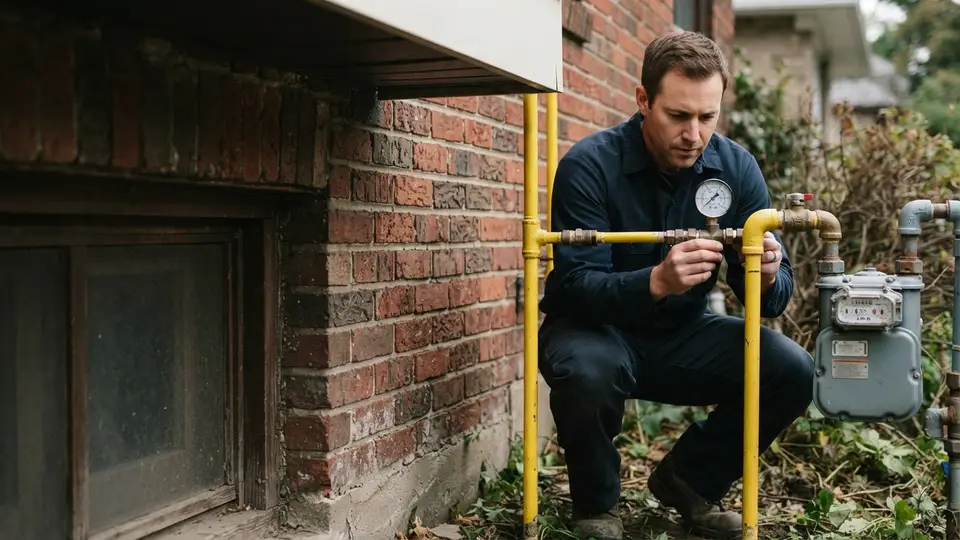
Gas leak repair
What it covers: Finding leaks with detectors and soap tests, replacing failed pipe, fittings and connectors
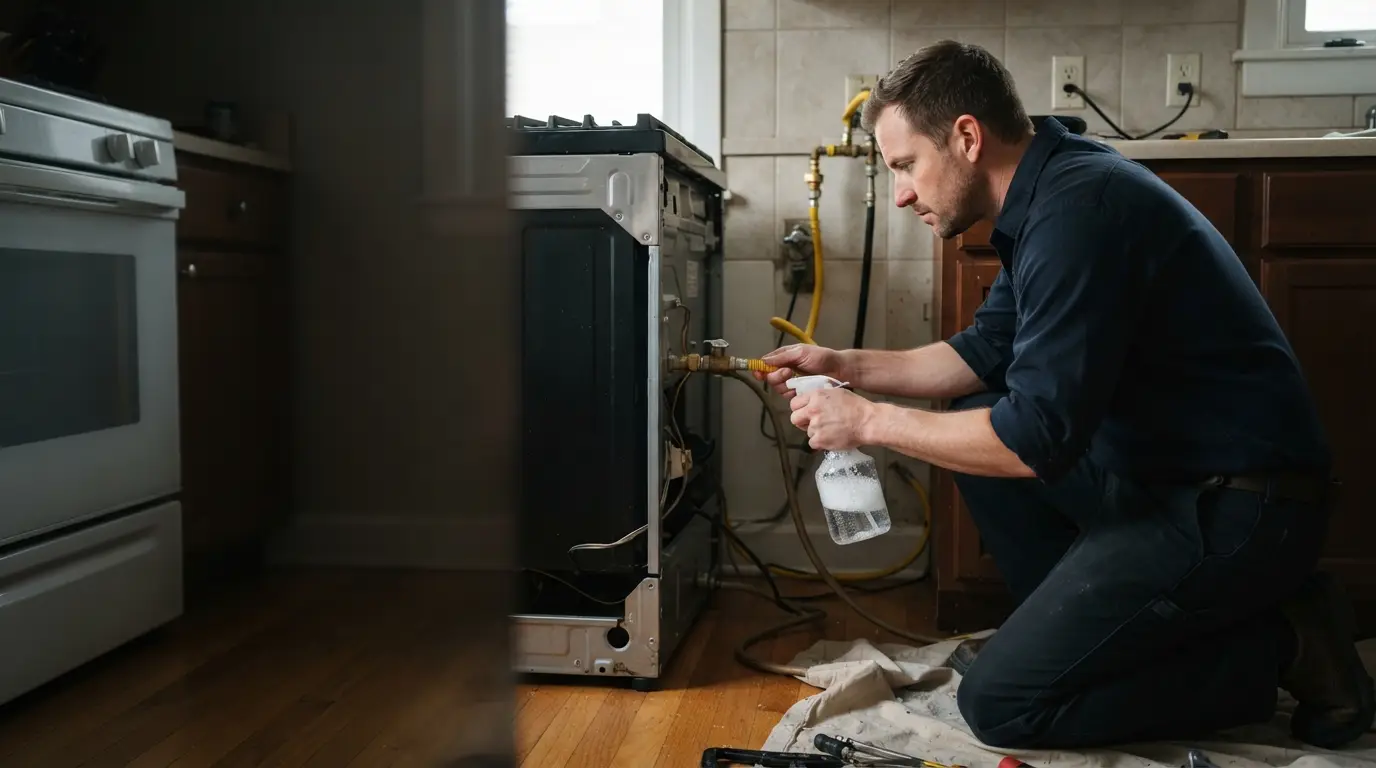
Smell of gas by the water heater, or a new range waiting for a line? Our plumbers handle gas line repair and installation in Arkansas, tested and inspected. Close to half of Arkansas homes heat with utility gas, and many more use gas for water heaters, ranges, dryers, fireplaces and outdoor grills. Older homes often have corroded pipe or outdated connectors, and new kitchens and outdoor spaces need new lines. We find and repair leaks, run new piping and hook up appliances. Here is how the work goes and what affects the cost.
The service
In our Arkansas Census data, 45% of homes heat with utility gas and 3% with propane. Gas use is highest in places like Rogers (66%), Sherwood (64%) and Centerton (59%). The gas utility owns the line up to the meter; everything after the meter, through the house to each appliance, belongs to the owner, and that is the piping we repair and install.
Our gas line services
What it covers: Finding leaks with detectors and soap tests, replacing failed pipe, fittings and connectors
What it covers: New lines for additions, kitchens, generators, pool heaters and outdoor kitchens
What it covers: Connecting ranges, dryers, water heaters, fireplaces and grills with shutoffs and proper connectors
What it covers: Testing new or repaired piping before it goes into service and for inspections
Why Arkansas
Older homes, 42% of the Arkansas housing in our data and 67% in Pine Bluff, often have gas pipe that has been in place for decades. Pipe in damp crawl spaces rusts, and threaded joints loosen over time.
Some older appliance connectors, including uncoated brass types, are no longer considered safe and can crack. We replace them whenever we find them.
Buried gas lines to detached garages, shops and grills can be stressed by shifting clay, or cut by fence posts and landscaping. Calling for utility locates before digging is required, and it protects these lines.
Lines extended piece by piece for new appliances may be undersized, which starves burners, or may lack proper shutoffs and support.
Warning signs
Our process
After the utility has made the site safe, we test the system to confirm a leak, locate it with an electronic detector and soap solution, and replace the failed pipe, fitting or connector. The system is pressure tested before gas is restored, and appliances are relit and checked.
We size the new line for the total load of every appliance on it, choose black iron or approved flexible stainless tubing, and run it with proper support and bonding. New lines are pressure tested and inspected before the utility or our plumber turns the gas on.
We connect ranges, dryers, water heaters, fireplaces, generators and grills with a dedicated shutoff, a proper connector and a sediment trap where required, then check for leaks and correct flame.
Typical cost
You receive a written price before we begin.
Get a written price: (833) 733-2357Longer runs and lines through finished walls cost more.
Black iron takes more labor; flexible stainless tubing installs faster.
Trenching to a shop, pool heater or outdoor kitchen adds time.
Adding a large appliance may require upsizing existing pipe or the meter.
Gas work almost always needs them.
Urgent leak repairs after hours cost more than scheduled work.
Benefits
Correct sizing, fittings and testing prevent leaks.
A properly sized line gives every burner the gas it needs.
A passed inspection protects you with insurers and buyers.
Each appliance gets its own valve for safe servicing.
If you smell gas, get everyone outside first and call the gas utility from a safe distance. Do not try to find the leak yourself and do not relight pilots. If the utility shuts off your meter, let us know when you call so we can plan to restore service after the repair.
For new installations, gather the appliance model numbers and where you want each one. That lets us size the line and give you an accurate price.
Beyond the reach of gas mains, rural Arkansas homes often use propane from a tank in the yard. The piping inside the house works much like natural gas piping, but appliances need propane-specific settings. The propane supplier owns and services the tank and regulator in most cases; we handle the piping and appliance connections after it.
Gas piping in Arkansas falls under state rules administered by the Arkansas Department of Health, and most cities require a permit and inspection for new gas lines and many repairs. Our plumbers doing gas work hold the Arkansas license it requires. We pull the permit, pressure test the work and schedule the inspection.
Why choose us
What you can count on every time one of our plumbers comes to your door.
Every job is handled by a plumber who holds the license your state or city requires, backed by liability insurance.
Our plumber explains the problem and the options, and you approve a written price before any work begins.
Burst pipes, sewage backups and failed water heaters get priority scheduling, including nights and weekends.
We pull permits when the job needs one and schedule the inspection, so the work holds up when you sell.
Repairs and installations come with a written warranty on labor, on top of the manufacturer's warranty on parts.
Our pages and plumbers account for your area's water, soil, climate and the age of the homes around you.
Service area
We repair and install gas lines across 625 Arkansas places, from Little Rock, where 50% of homes heat with gas, to Springdale at 54%. Choose yours:
It depends on where the leak is, how much pipe needs replacing, access and permits. After the leak is found, you get a written price before we repair it.
Distance from the existing line, the route, pipe material and whether the system needs upsizing drive the price. We give a written quote first.
Underground runs need trenching and the right buried pipe, so they cost more than indoor hookups. Length and what lies along the route matter most.
We pressure test the system, then use an electronic gas detector and soap solution on joints and fittings to locate the exact spot.
Yes. We install a shutoff, a new approved connector and check for leaks and proper flame once the appliance is running.
Always. New and repaired piping is pressure tested before it goes into service, and the inspector checks the test where one is required.
Leave the house, do not use switches or phones inside and call your gas utility or 911 from outside. Call us after it is safe.
Modern coated stainless connectors are safe when installed correctly. Old uncoated brass connectors are not, and we replace them.
Many repairs to accessible pipe take a few hours, plus the inspection. Long reroutes or underground lines can take a day or more.
After the repair passes a pressure test and, where required, an inspection. We coordinate with the utility to restore service quickly.
Have piping and connectors looked at when appliances are serviced, when you buy a home and any time you notice a gas smell.
Yes. Place them near bedrooms and on each level. They warn of exhaust problems a gas smell would not reveal.
Call us. Once we repair and test the line, the utility can restore service and we relight and check your appliances.
Our Census data shows close to half of Arkansas homes heat with utility gas, with rates varying widely between cities.
Gas piping in buildings follows state rules overseen by the Arkansas Department of Health, and local permits apply in most cities.