Meter and pressure test
What it tells us: Whether there is a leak at all, and on which part of the system
Meter spinning with every tap off, or a ceiling stain that keeps growing? We do leak detection and repair in Arkansas with as little demolition as possible. Hidden leaks here usually come from aging galvanized pipe, fittings loosened by soil movement, supply lines that burst during the occasional hard freeze, and pinholes in older copper. Our plumbers locate the leak with listening gear, thermal cameras and pressure tests, then repair it. Below: the signs, how we search, the repair options for burst and frozen pipes, and what drives cost.
The service
Leak detection is the search; repair is the fix. We look for leaks inside walls, ceilings and floors, in crawl spaces, under slabs and in the buried line between the meter and the house. Once we know the exact spot, we open the smallest area we can, repair the pipe and test the system under pressure.
Tools we use and what they find
What it tells us: Whether there is a leak at all, and on which part of the system
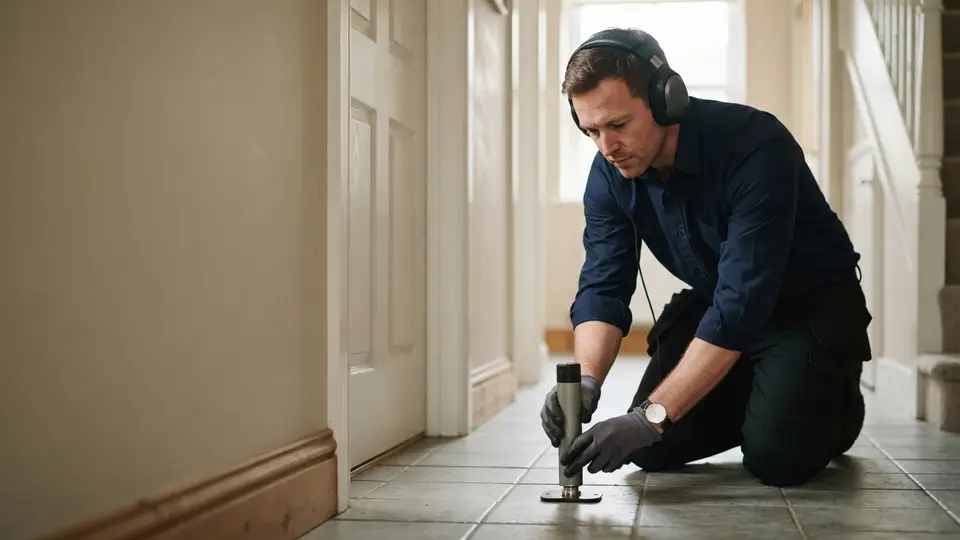
What it tells us: The sound of water escaping under floors, in walls or underground
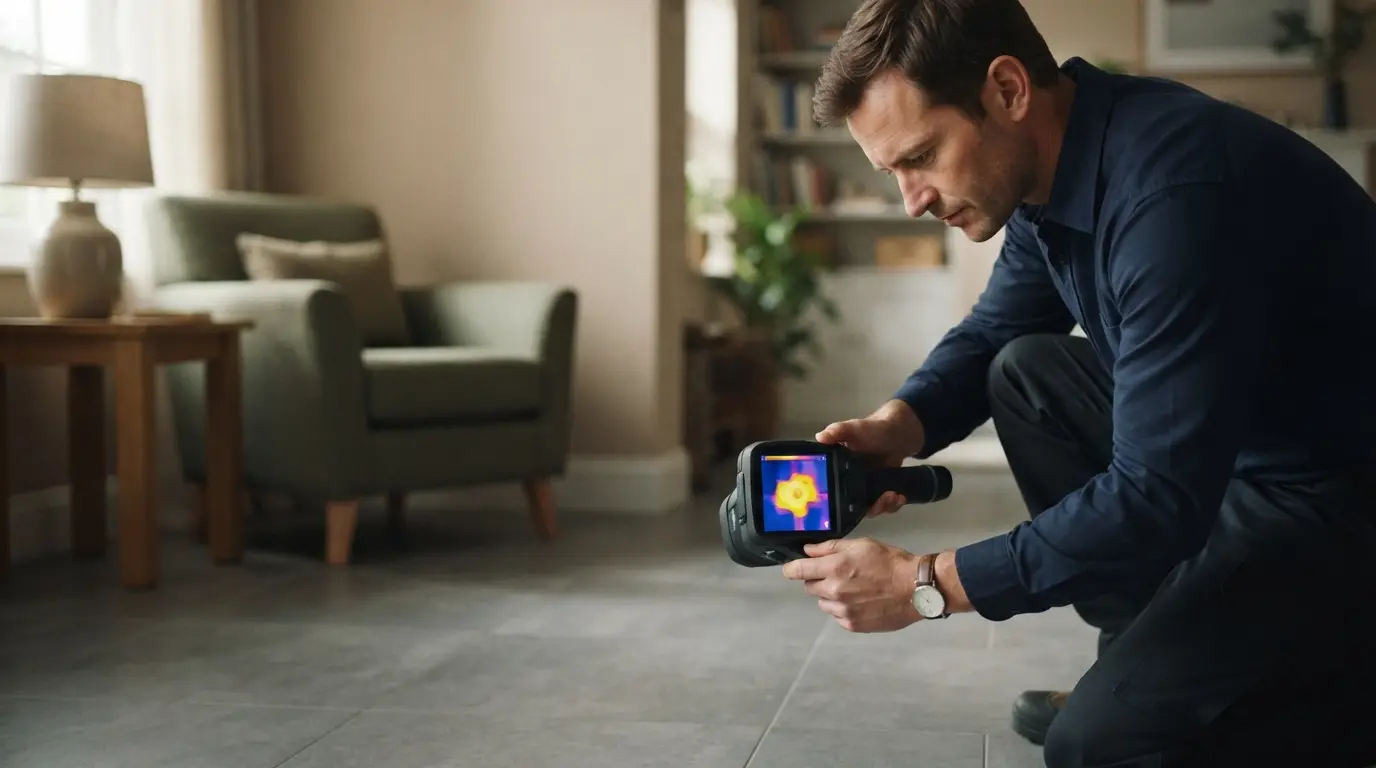
What it tells us: Warm or cool spots from hot or cold water lines leaking behind surfaces
What it tells us: How far water has spread into drywall, wood or flooring
What it tells us: The route of buried water lines so we dig in the right place
Why Arkansas
42% of homes in our Arkansas Census data were built before 1980, 53% in Little Rock and 34% in Jonesboro. Galvanized steel from those decades rusts from inside, and threaded joints are the first to weep. Older copper can develop pinholes, especially where water chemistry is aggressive.
Arkansas does not freeze often, so many homes have pipes in exterior walls, attics and open crawl spaces with little insulation. When a cold snap drops temperatures into the teens or lower, those pipes freeze and split. The leak often shows only after the thaw.
Clay soils across central and southern Arkansas and the Delta expand and contract with rain and drought. Buried service lines and pipes under slabs flex with them until a joint or fitting gives.
Supply hoses to toilets, sinks and washers, old shutoff valves and water heater connections fail with age. They are simple parts, but a failed washer hose can flood a room in minutes.
Warning signs
Our process
We read the meter with all fixtures off and pressure test sections to see if water is escaping and where.
Isolating hot, cold, indoor and outdoor lines tells us which part of the system to search.
Listening gear, thermal imaging and moisture readings lead us to the exact location.
You get options, such as a section repair or a reroute, with a written price.
We fix the pipe, pressure test the system and check the meter again before we leave.
Typical cost
We give you a written price before repairs begin, and we tell you if what we find changes the plan.
Get a written price: (833) 733-2357A dripping valve is quick; a leak under a slab takes equipment and time to find.
Crawl spaces are easier than finished ceilings, tile walls or concrete.
Joining to old galvanized pipe can mean replacing a longer section.
Freeze damage can involve several splits on one line.
Urgent night or weekend calls cost more than scheduled visits.
Benefits
Knowing the exact spot means we open one small area instead of searching with a saw.
A hidden leak can run around the clock, so stopping it shows up on the next bill.
Catching a slow leak early keeps water out of framing, subfloors and insulation.
Our notes and photos help with insurance claims for sudden leaks.
If water stops at a faucet during a hard freeze, a pipe is frozen somewhere along its run. We find the frozen section, thaw it with safe heat and check it for splits before turning the water back on.
A burst pipe needs the water shut off, the damaged section cut out and new pipe joined in. We look along the rest of the run, since a freeze often splits more than one spot, and we suggest insulation or a reroute so the line is protected next winter.
Find your main shutoff now, before you need it. If water is pouring out, close the main and turn off the water heater. If water is near outlets, light fixtures or the electric panel, stay clear and shut off power at the breaker only if you can do so from a dry spot.
Move valuables out of the wet area, take photos for your insurer and put towels or buckets down. For a frozen pipe, open the faucet it feeds and leave it open. Never use an open flame to thaw a pipe. Then call us.
Many policies treat a sudden burst differently from a slow leak that went on for months. We document what we find, with photos and a description of the cause, which helps when you file a claim. Your insurer decides coverage, so check your own policy.
Most leak repairs need no permit. Larger work, such as replacing a service line, rerouting supply lines or repiping, may need one from your city. Our plumbers hold the Arkansas license required for the work, and we pull any permit a repair calls for.
Why choose us
What you can count on every time one of our plumbers comes to your door.
Every job is handled by a plumber who holds the license your state or city requires, backed by liability insurance.
Our plumber explains the problem and the options, and you approve a written price before any work begins.
Burst pipes, sewage backups and failed water heaters get priority scheduling, including nights and weekends.
We pull permits when the job needs one and schedule the inspection, so the work holds up when you sell.
Repairs and installations come with a written warranty on labor, on top of the manufacturer's warranty on parts.
Our pages and plumbers account for your area's water, soil, climate and the age of the homes around you.
Related services
Service area
We find and repair leaks across 625 Arkansas places, from older Little Rock neighborhoods to newer homes in Springdale, where the median house was built in 1994. Choose yours:
It depends on how hidden the leak is, the equipment needed and access. We give you a written price for the search and a separate one for the repair.
Yes. Once we know where the leak is and what the pipe looks like, we give you a written price for the repair options before opening anything.
Often, because freeze damage can split pipe in several places and may need wall or ceiling access. We check the whole run and price everything up front.
We use pressure tests, listening equipment, thermal imaging and moisture meters to narrow the leak to a small area before we open anything.
We show you where it is, explain the cause and repair options, and once you approve, fix it and pressure test the system.
We keep openings small and tidy. Drywall finishing and painting are usually separate, and we tell you what to expect before we cut.
Close the main water shutoff, turn off the water heater and stay away from wet electrical outlets or fixtures. Then call us right away.
No. Open flames can crack pipe, melt plastic and start fires in walls and crawl spaces. Open the faucet and let us thaw it safely.
Many leaks are found in an hour or two. Leaks under slabs or in long buried lines can take longer, depending on the system.
A single break in an accessible spot is often fixed in a few hours. Several breaks or pipe inside finished walls take longer.
Insulate exposed pipes, open cabinet doors on outside walls, disconnect hoses and let faucets drip. We can add insulation or reroute vulnerable lines.
Check your meter with all water off every few months, and look under sinks and around the water heater when you change seasons.
Shut off the main water, keep clear of any light fixtures in the wet area and call us. Active leaks get priority scheduling.
Because freezes are rare, many pipes sit in exterior walls and open crawl spaces with little insulation. A short hard freeze can catch them unprotected.
Often, yes. Homes from before 1980 commonly have galvanized pipe that corrodes from inside, and its threaded joints are frequent leak points.