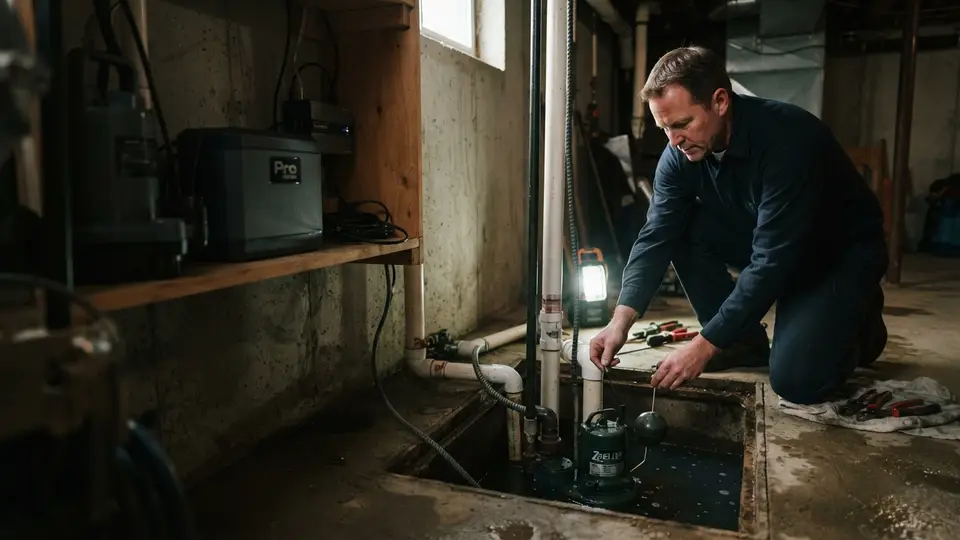
Submersible pump
Where it fits: Most crawl space and basement pits
Notes: Quiet, sits in the pit, handles larger volumes
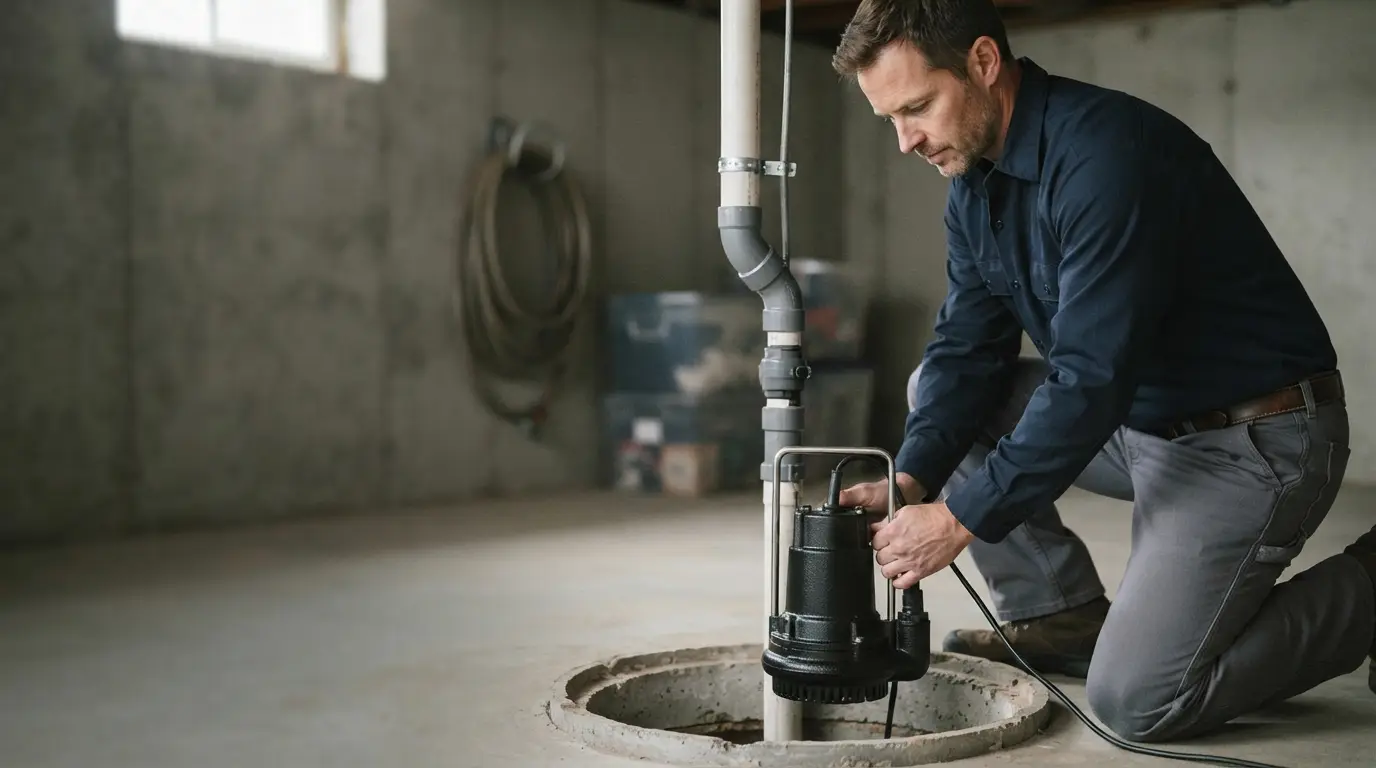
Standing water in the crawl space after a storm, or a pump that hums but never empties? We do sump pump repair and installation in Arkansas. Basements are uncommon here, but crawl spaces are everywhere, and heavy spring rain, high groundwater near rivers and clay soil that drains slowly push water under a lot of houses. A working sump pump keeps that water away from framing, ductwork and insulation. Below we cover the warning signs, repair and installation, battery backups and what drives the price.
The service
A sump pump sits in a pit at the lowest point of a basement or crawl space. Water drains into the pit through gravel or perforated pipe, and when it rises, a float switch turns the pump on and sends the water out through a discharge line away from the house. In Arkansas we install them most often in crawl spaces that flood after storms, in the few homes with basements, and under homes on low ground near rivers and creeks.
Pump options
Where it fits: Most crawl space and basement pits
Notes: Quiet, sits in the pit, handles larger volumes
Where it fits: Narrow or shallow pits
Notes: Motor sits above the water; easy to service
Where it fits: Any home that floods during storms
Notes: Runs when the power is out or the main pump fails
Where it fits: Homes on city water with good pressure
Notes: Uses water pressure instead of a battery
Why Arkansas
Arkansas gets a lot of rain, often in heavy spring storms. Water that cannot soak into the ground fast enough runs toward the house and under it, especially where gutters dump next to the foundation.
Clay in central and southern Arkansas and across the Delta absorbs water slowly. Rain pools around foundations and seeps into crawl spaces instead of draining away.
Homes in the Arkansas River Valley, around Fort Smith, Van Buren and Russellville, and along other rivers and bayous can see high groundwater during wet seasons. Many of these neighborhoods are older too: 56% of Fort Smith homes predate 1980, 36% in Van Buren and 40% in Russellville.
Thunderstorms and ice storms knock out power, often at the moment a pump is needed most. Without a backup, the pit fills and overflows.
Warning signs
Our process
We test the float switch, check the motor and impeller, clear debris from the pit and intake, and inspect the check valve and discharge line. Stuck floats and clogged intakes are common, quick fixes. A burned-out motor usually means replacing the pump.
For a new system, we find the low point, dig and line the pit, set the pump with a check valve, and run the discharge line far enough from the house that water does not cycle back. We size the pump to the volume of water your crawl space actually gets.
A backup pump sits next to the main pump and switches on if the power fails or the main pump cannot keep up. We install the pump, battery and charger, and show you how to test it and when to replace the battery.
Typical cost
We give you a written price before any work begins.
Get a written price: (833) 733-2357A new float switch costs much less than a new pump.
Installing a new pit in a crawl space takes digging and sometimes drain pipe.
Higher-capacity and submersible pumps cost more.
Battery and water-powered backups add equipment.
Long or buried discharge runs add materials and labor.
Low crawl spaces take longer to work in.
Benefits
Keeping water out of the crawl space prevents rot in joists and subfloors.
Many Arkansas homes run HVAC ducts through the crawl space; water ruins them.
A dry crawl space means less mold and musty air rising into the house.
A backup pump keeps working when the power goes out.
A sump pump can only remove water that reaches the pit. In wide or uneven crawl spaces, we may add perforated drain pipe in gravel along the low side to guide water to the pit. Outside, extending downspouts and sloping soil away from the foundation cuts the amount of water that gets under the house at all. We tell you which of these steps your home needs, so the pump runs less and lasts longer.
Check that the pump is plugged in and its breaker or GFCI outlet has not tripped. If the float is tangled or stuck against the pit wall, you may free it with a stick after unplugging the pump.
Never step into standing water in a crawl space or basement where electrical cords or equipment are in the water. Shut off power to that area at the panel from a dry location if you can, and call us.
Replacing a sump pump usually needs no permit. New pits, new discharge lines or connections to storm drains may, depending on your city, and some cities do not allow discharge into the sanitary sewer. Our plumbers hold the Arkansas license their work requires, and we check the local rules and pull permits when needed.
Why choose us
What you can count on every time one of our plumbers comes to your door.
Every job is handled by a plumber who holds the license your state or city requires, backed by liability insurance.
Our plumber explains the problem and the options, and you approve a written price before any work begins.
Burst pipes, sewage backups and failed water heaters get priority scheduling, including nights and weekends.
We pull permits when the job needs one and schedule the inspection, so the work holds up when you sell.
Repairs and installations come with a written warranty on labor, on top of the manufacturer's warranty on parts.
Our pages and plumbers account for your area's water, soil, climate and the age of the homes around you.
Service area
We repair and install sump pumps across 625 Arkansas places. Choose yours:
Many repairs, such as a new float switch or check valve, are modest. A burned-out pump means replacement. You get a written price before we start.
It depends on whether a pit exists, the pump type, the discharge line length and crawl space access. We price it after looking at the site.
If your crawl space floods during storms, yes. Power often fails during the same storms that bring the water, and a backup keeps pumping.
If water stands in your crawl space after rain, a sump pump with proper drainage is often the most practical fix. We check the cause first.
We look at how much water reaches the pit, how high the pump must lift it and how far it must travel, then choose a pump that keeps up.
Far enough from the house that water flows away and does not return to the foundation, and never into the sanitary sewer where that is prohibited.
Not if electrical cords or equipment may be in the water. Shut off power to the area from a dry location if you can, and wait for us.
A damaged cord or missing GFCI protection can be a hazard. We check the electrical connection and recommend a GFCI outlet where required.
Swapping a pump in an existing pit often takes one to two hours. A new pit and discharge line can take most of a day.
As soon as you see water standing in the pit or crawl space and the pump is not clearing it. Water left under the house leads to rot and mold.
Every few months, and before spring storm season. Pour water into the pit and make sure the pump starts, empties it and shuts off.
Many last around seven to ten years, depending on how often they run. Pumps that run constantly wear out sooner.
Check the pump power and breaker, keep away from water near electrical equipment and call us. Flooding calls get priority scheduling.
Heavy rain, slow-draining clay soil and high groundwater near rivers all push water under houses, especially where gutters drain next to the foundation.
Most do not; crawl spaces and slabs are far more common. Sump pumps here are mostly installed in crawl spaces and the homes that do have basements.