Direct repair through the slab
When it fits: A single leak in otherwise sound pipe
Trade-offs: Opens the floor in one spot; flooring must be patched
Hot spot on the tile, or the sound of water under the floor? We do slab leak repair in Arkansas, from locating the leak to fixing or rerouting the line. Slab foundations are common in newer Arkansas subdivisions, and the clay soil many of them sit on swells and shrinks with the weather, putting stress on the pipes buried in and under the concrete. We find the leak precisely, explain whether to repair it in place or reroute around it, and give you a written price. Here is how it works.
The service
A slab leak is a leak in a water or drain line that runs under or through a concrete foundation. Hot water lines leak most often, because heat makes the pipe expand and contract every time a tap opens. The water may soak into the soil for months before anything shows on the floor, so the first sign is often the bill.
Not every Arkansas home sits on a slab. Many older houses, especially in the Delta and around Little Rock, are built on crawl spaces, where leaks are easier to reach. Slabs dominate in many subdivisions built since the 1980s.
Ways we fix a slab leak
When it fits: A single leak in otherwise sound pipe
Trade-offs: Opens the floor in one spot; flooring must be patched
When it fits: Older pipe likely to leak again, or a leak under cabinets or tile
Trade-offs: New pipe runs through walls or the attic and the old line is abandoned
When it fits: Several slab leaks or failing pipe throughout
Trade-offs: Largest job, but ends slab leaks on the supply side
Why Arkansas
Clay soils in central and southern Arkansas and the Delta take on water in wet seasons and dry out in summer heat. The ground under a slab rises and falls slightly, and pipes locked in concrete get bent and rubbed at every point where they pass through.
Many slab homes from the 1980s and 1990s were plumbed with soft copper under the slab. Over decades, contact with soil and concrete, plus rubbing as the pipe expands, can wear pinholes in it.
High water pressure and hot water lines that cycle many times a day both stress buried pipe. A pressure regulator that has failed can make every weak spot worse.
Pipes nicked during construction, or bent tight where they rise through the slab, can hold for years before they fail.
Warning signs
Our process
A meter test and pressure tests on hot and cold lines tell us which line is leaking.
Acoustic equipment and thermal imaging locate the leak, usually to within a small area.
We weigh the age of the pipe, the location and your flooring, then give you a written price for repair and reroute.
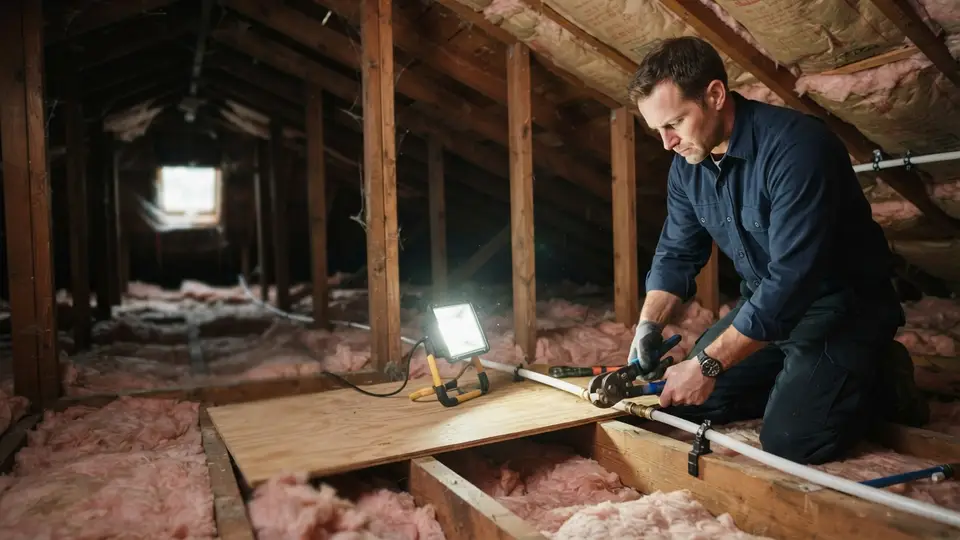
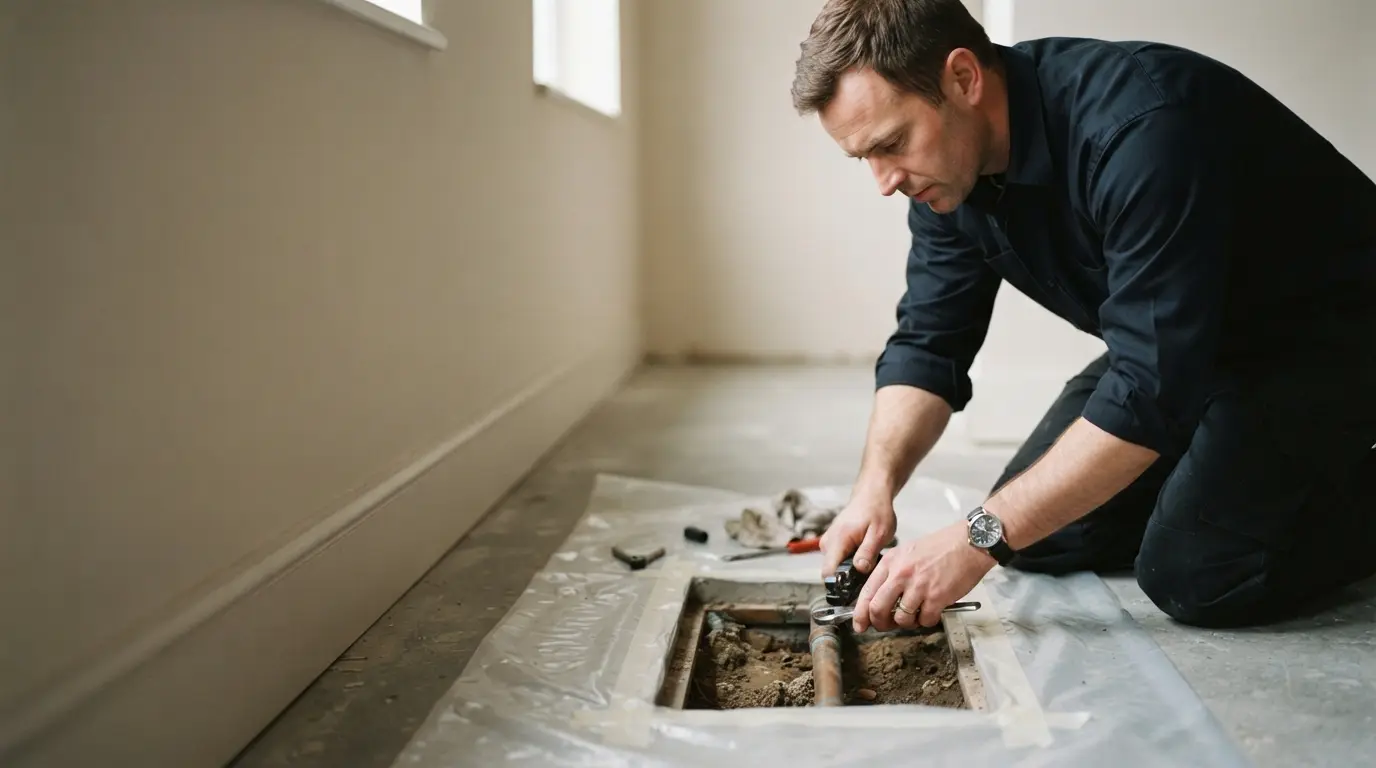
For a direct repair we cut a small opening, repair the pipe and close the concrete. For a reroute we run new pipe above the slab.
We pressure test the line and recheck the meter before we leave.
Typical cost
You see a written price for each option before we start any work.
Get a written price: (833) 733-2357Under a closet floor is simpler than under kitchen cabinets or a tiled shower.
A reroute often avoids breaking the floor but uses more pipe and labor.
Tile and hardwood cost more to open and patch than carpet.
Pipe that is thin everywhere may push the choice toward a reroute or repipe.
Drying and flooring repair are separate from the plumbing.
Benefits
Water pooling under a slab on clay soil can make the soil swell or wash out.
A slab leak runs day and night, raising water and energy bills.
Moisture wicking into flooring and walls feeds mold growth.
Early leaks are easier to repair or reroute than ones that have damaged floors.
Suburbs around Little Rock and in Northwest Arkansas have built heavily on slabs. The median home in Benton dates from 1995, in Bryant and Cabot from 2000 and 2000, and in Sherwood from 1986. Homes from the 1980s and 1990s are now at the age where copper under the slab starts to fail, so we see slab leak calls in these areas often.
If you suspect a slab leak on a hot water line, turn off the water heater supply valve, which stops the leak and saves energy. If it is on a cold line or the leak is large, close the main shutoff between uses.
Take photos of warm spots, damp flooring and your water bills for your insurer. Do not try to break the slab or remove flooring to look. Call us and we will locate the leak first.
Spot repairs usually do not need a permit, but reroutes and repipes often do, depending on your city. Our plumbers hold the Arkansas license their work requires, and we pull permits and schedule inspections when the job calls for them.
Why choose us
What you can count on every time one of our plumbers comes to your door.
Every job is handled by a plumber who holds the license your state or city requires, backed by liability insurance.
Our plumber explains the problem and the options, and you approve a written price before any work begins.
Burst pipes, sewage backups and failed water heaters get priority scheduling, including nights and weekends.
We pull permits when the job needs one and schedule the inspection, so the work holds up when you sell.
Repairs and installations come with a written warranty on labor, on top of the manufacturer's warranty on parts.
Our pages and plumbers account for your area's water, soil, climate and the age of the homes around you.
Service area
We locate and repair slab leaks across 625 Arkansas places. Choose yours:
It depends on where the leak is, whether we repair or reroute, your flooring and the pipe condition. You get a written price for each option first.
Sometimes. A reroute avoids concrete and flooring repair but uses more pipe. We price both so you can compare them before deciding.
Often, yes. If the pipe under your slab keeps failing, a repipe ends the cycle and can cost less than several separate repairs.
We isolate the leaking line with pressure tests, then use acoustic listening gear and thermal imaging to pinpoint the spot before opening anything.
Usually a small opening over the leak, large enough to work on the pipe. Pinpointing first keeps it as small as we can.
The leaking section is cut off and capped where it leaves the slab. New pipe runs through walls or the attic to the fixtures it supplies.
It can. Water under a slab on clay can make the soil swell or wash away, which may lead to cracks. Fixing the leak early limits that risk.
For short periods, usually yes, but close the valve to the leaking line between uses and call us. A large leak needs the main shut off.
A direct repair is often done in a day. A reroute can take one to two days depending on how far the new line has to run.
Most slab leaks are located during the first visit, often in one to three hours depending on the size of the house.
Keep water pressure normal, keep drainage away from the slab, water evenly in drought and act on a first leak by considering a reroute.
Yes. Comparing each bill with the same month last year is one of the simplest ways to catch a slab leak early.
Shut off the main water valve and call us. A leak surfacing through the floor is urgent and gets priority scheduling.
Clay soil swells when wet and shrinks when dry, so the ground under a slab moves slightly with the seasons and stresses buried pipe.
Spot repairs usually do not, while reroutes and repipes often do, depending on the city. We pull any permit the work requires.