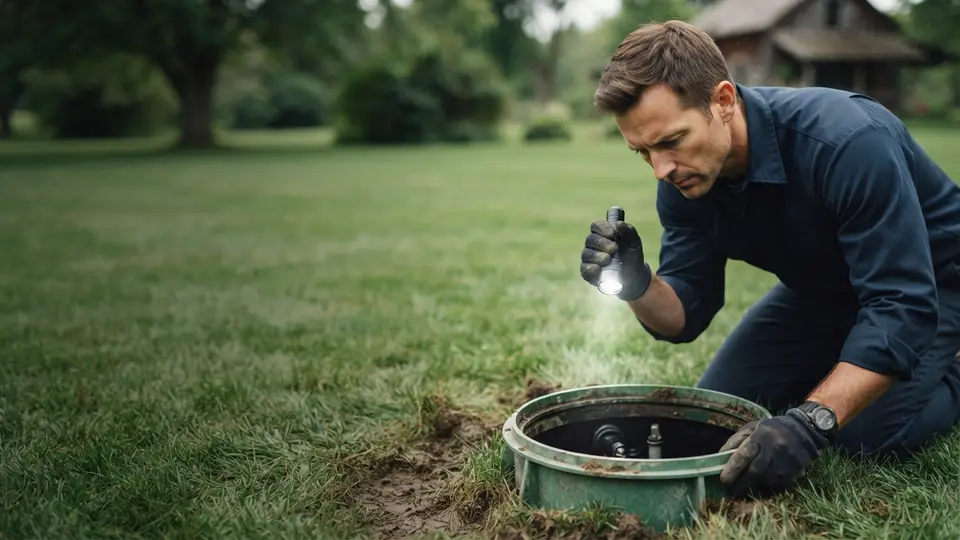
Septic pumping
When: Every few years or when sludge is high
What it includes: Uncover lids, pump all compartments, check baffles and filter
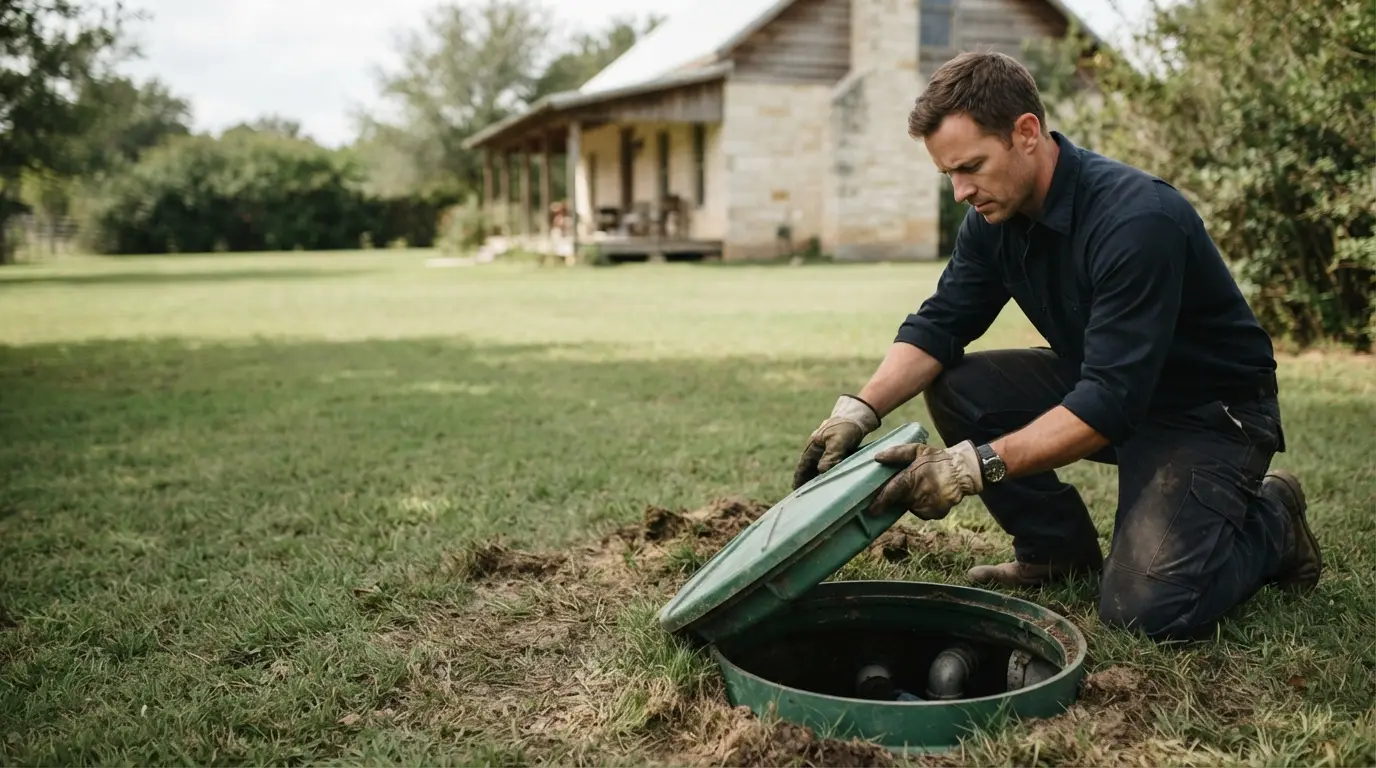
Toilets gurgling after a week of rain, or a soggy strip over the drainfield? We provide septic tank services in Georgia for homes beyond the sewer. Septic is common across Georgia, not only on farms but in large suburban subdivisions around Atlanta and in growing counties statewide. Red clay drains slowly, so drainfields struggle when the ground is wet, and sandy coastal soils come with a high water table. We pump, inspect and repair systems, and work with the county environmental health office when permits are needed.
The service
A septic system has a tank, where solids settle and scum floats, and a drainfield of trenches where clarified effluent soaks into the soil. In tight clay or high groundwater, Georgia systems may use longer trenches, pumps or alternative designs to spread effluent where the soil can take it.
Our septic services
When: Every few years or when sludge is high
What it includes: Uncover lids, pump all compartments, check baffles and filter
When: Home sale, refinance or trouble
What it includes: Measure layers, inspect tank, check the drainfield
When: Wet areas, odors, backups after pumping
What it includes: Locate and repair failed lines or distribution
When: Alarm on a pump system
What it includes: Test floats, pump, controls and alarm
Why Georgia
Much of the Piedmont is dense clay that takes in water slowly. Drainfields in clay have less capacity and fail sooner when overloaded or when solids escape the tank.
Georgia gets plenty of rain, and long wet stretches saturate the soil around drainfields, slowing every drain in the house.
Subdivisions built on septic in the 1970s through 1990s now have systems at or past their expected life, often with tanks that were seldom pumped.
Sandy soils near the coast drain quickly but sit over a high water table, which limits treatment depth and floods fields in wet seasons.
Warning signs
Our process
We locate the lids and dig if needed.
High liquid tells us the field is not keeping up.
We pump every compartment and check baffles, filters and tank condition.
We look for wet areas and test any pump or alarm.
You get findings and a written price for any repair.
Typical cost
You get a written price before work begins.
Get a written price: (833) 733-2357More volume takes longer to pump.
Buried lids and fenced yards add time.
Baffles, lids, filters and pumps add parts.
Line repair costs far less than a new field.
Clay and rock make digging slower.
Needed for replacements and major repairs.
Benefits
Pumping keeps solids out of the costliest part.
A working system keeps wastewater out of groundwater.
Healthy systems protect local waters.
An inspection report answers buyer questions.
Some drainfield problems are fixable: a crushed line, a blocked distribution box or roots in a trench. When the clay itself has sealed after years of solids washing in, the field needs replacing, usually in a new area of the yard. Replacement needs a soil evaluation, a design and a permit from the county environmental health office. We coordinate those steps and complete the work.
Many homes in growing metro counties are on septic, including large-lot areas such as Milton, where the median home dates from 2002, and parts of Coweta and Hall counties around Newnan and Gainesville. Homeowners there sometimes do not realize they are on septic until a problem appears. If your home is outside a sewer district, regular pumping is part of normal upkeep.
Our Georgia data includes 138 unincorporated places and 410 places with fewer than 2,500 residents, many surrounded by homes on wells and septic. Manufactured homes, 4% of Georgia housing and 9% in Waycross, usually have their own systems too.
Buyers and lenders often ask for a septic inspection on Georgia homes with private systems, and some counties have their own requirements at sale. We pump the tank, inspect it and the drainfield, and give a written report with a price for any repairs, so buyer and seller can settle the details before closing.
Garbage disposals add food solids that fill a tank faster, so homes that use one need more frequent pumping. Big laundry days push a lot of water into a clay drainfield at once. Spreading loads over the week and using the disposal sparingly help a struggling system recover.
Many Georgia homes with septic also have a private well. Required setbacks keep them apart, but a failing system can still affect groundwater. Regular pumping and prompt repairs protect your drinking water; if your well water changes, have it lab-tested.
Floodwater can push silt into the tank and saturate the field. Limit water use until the ground drains, and have the system checked by our crew if drains stay slow afterward.
Cut water use: delay laundry, shorten showers and skip the dishwasher. If a pump alarm is sounding, silence it but leave the pump circuit on unless the breaker trips.
Never open or enter a septic tank; gases inside can kill and old lids can collapse. Keep people and vehicles off the field and call us.
Onsite sewage systems in Georgia follow state rules administered by the Department of Public Health, with county environmental health offices issuing permits for new systems and repairs. Routine pumping needs no permit. Our team holds the licenses the work requires and coordinates permits with the county. Confirm local requirements before planning new work.
Why choose us
What you can count on every time one of our plumbers comes to your door.
Every job is handled by a plumber who holds the license your state or city requires, backed by liability insurance.
Our plumber explains the problem and the options, and you approve a written price before any work begins.
Burst pipes, sewage backups and failed water heaters get priority scheduling, including nights and weekends.
We pull permits when the job needs one and schedule the inspection, so the work holds up when you sell.
Repairs and installations come with a written warranty on labor, on top of the manufacturer's warranty on parts.
Our pages and plumbers account for your area's water, soil, climate and the age of the homes around you.
Service area
We service septic systems around Newnan (18,160 homes), Gainesville (18,001) and many other Georgia communities. Choose the nearest place:
Tank size, access to the lids and what the inspection finds set the price. We give you a written price before we start pumping.
It needs a soil evaluation, a design, a county permit and excavation, often in heavy clay. Pumping and line repairs cost far less.
Yes. Drainfield replacement is a major expense, and an inspection shows the condition before you commit to the purchase.
We pump and inspect the tank, measure layers, check baffles and filters, look over the drainfield and test any pump or alarm.
Yes. Risers bring lids to the surface so the tank can be pumped and inspected quickly.
Yes. For replacements and major repairs, we coordinate the evaluation, design and permit with county environmental health.
Yes. Gases inside can be fatal and old lids can give way. Leave tank work to our crew.
Yes. It carries pathogens and can reach wells and streams. Keep people and pets away and call us.
Most home tanks are pumped and inspected in one to two hours, longer if lids are buried.
Construction often takes a few days, but evaluation and permitting come first. We give a realistic timeline.
Many households need it every three to five years. We suggest an interval after measuring your tank.
Yes. Saturated clay cannot absorb effluent, so drains slow during long wet spells. Save water until the ground dries.
Stop using water and call us. Septic backups get priority scheduling, and pumping usually brings quick relief.
The Department of Public Health sets the rules, and county environmental health offices issue permits.
Check your water bill for a sewer charge or ask your county. Many suburban Georgia homes are on septic.