Gas tank
Good fit: Metro Atlanta homes with gas
Points to know: Needs a sound flue or power vent
Showers turning cold early, or a tank dripping in the attic? We handle water heater repair and replacement in Georgia for gas, electric and tankless units. Gas water heaters are common in metro Atlanta, while electric heaters dominate in much of Middle and South Georgia. Many sit in attics, where a failure means water through the ceiling, or in garages that get cold in winter. Hard water in South Georgia adds scale. We repair what is worth repairing, replace what is not and match the new heater to your home.
The service
In our Georgia Census data, 58% of homes heat with electricity and 39% with utility gas. Gas is the norm in suburbs such as Johns Creek (75%) and Peachtree Corners (73%), while gas heats only 13% of homes in Warner Robins and 11% in Valdosta. Water heaters usually follow the home's fuel.
Water heater types
Good fit: Metro Atlanta homes with gas
Points to know: Needs a sound flue or power vent
Good fit: Most of Middle and South Georgia
Points to know: Elements and thermostats are common repairs
Good fit: Garages and basements with space
Points to know: Lower electricity use; needs airflow and a drain
Good fit: Larger households, tight spaces
Points to know: May need larger gas line and new venting
Why Georgia
Many Georgia homes have water heaters in the attic. Summer heat stresses components, and when the tank fails, water comes through the ceiling unless the drain pan and line work.
Groundwater in South and coastal Georgia is often hard, coating electric elements and filling tanks with scale.
Older gas heaters may vent into chimneys that no longer draft properly after a furnace upgrade, a safety issue we check on every visit.
Heaters in garages work harder in winter, and pipes to them can freeze during hard cold snaps in North Georgia.
Warning signs
Our process
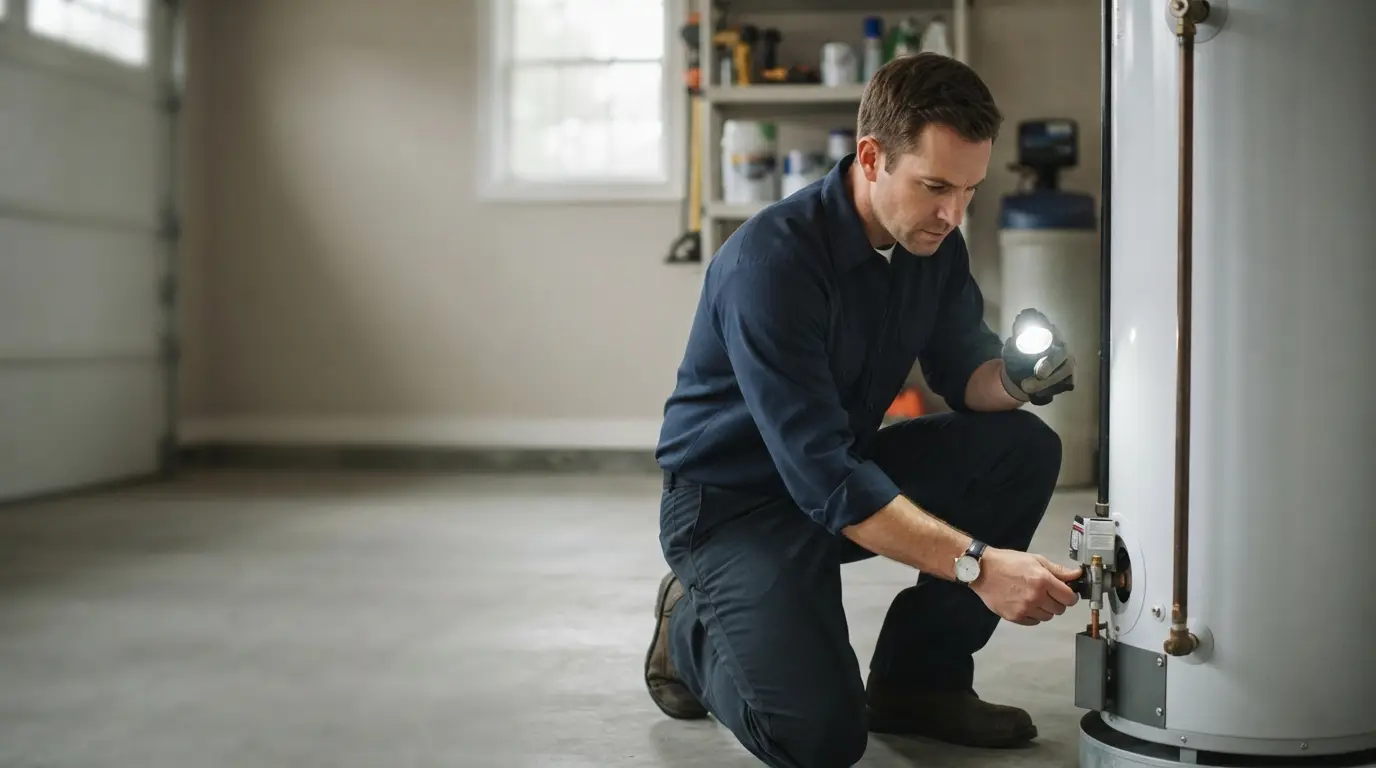
We test elements, thermostats, gas controls, thermocouples, igniters and relief valves, check the anode rod and flush sediment.
We size the replacement, install it with a drain pan and line where required, a relief valve discharge, an expansion tank where needed and correct venting or wiring, and haul the old heater away.
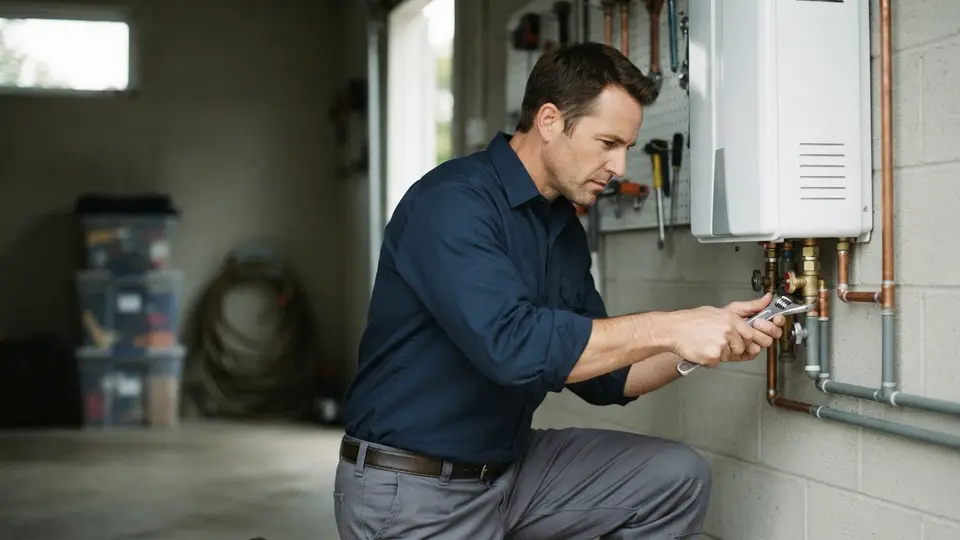
We confirm your gas supply can carry a tankless unit, size it to peak demand, install venting and add isolation valves for descaling.
Typical cost
You get a written price before work starts.
Get a written price: (833) 733-2357A part costs far less than a new heater.
Tankless and heat pump units cost more upfront.
Attics and tight closets take more labor.
Pans, drain lines, expansion tanks and venting may be required.
Most jurisdictions require one for replacement.
Benefits
Proper pans and sensors protect attic installs.
Gas heaters vent exhaust outside.
Efficient and heat pump units use less energy.
Flushing and water treatment fight scale.
An attic water heater without a working drain pan is a ceiling waiting to fail. On every replacement we install a pan piped to a safe location, and we can add a leak sensor or automatic shutoff valve. When an attic heater reaches the end of its life, we sometimes recommend relocating it to a garage or utility room, or switching to a tankless unit, and we price both.
In electric homes, a heat pump water heater can cut water heating costs substantially. Georgia garages and basements are often warm enough most of the year. The unit needs room for airflow, a condensate drain and a suitable circuit. Utility programs sometimes offer incentives; check what is available for your address.
Renters occupy 59% of homes in Athens-Clarke County and 55% in Savannah. Apartments and rental houses often have small heaters in closets, and turnovers are a good time to replace aging ones. We work with owners on scheduled replacements and emergency repairs.
Homes with a pressure-reducing valve or backflow device at the meter have a closed system. When water heats and expands, pressure rises and the relief valve drips. A thermal expansion tank absorbs that extra volume. We check for one on every replacement and install it when the system needs it, which also eases stress on fixtures and supply lines throughout the house.
Homes on wells in South Georgia sometimes notice a rotten-egg smell only in hot water. It usually comes from a reaction between the water and the magnesium anode rod. Replacing the anode with a different type, and sometimes sanitizing the tank, usually fixes it without whole-house treatment.
Power surges and outages during summer storms can damage thermostats and the controls on tankless and heat pump units. If hot water does not return after the power comes back, a tripped high-limit switch or damaged control is a common cause, and we replace the part.
Lake and mountain homes in North Georgia often sit empty for weeks. Turn off the heater and close its supply before leaving, and refill the tank before restoring power when you return.
Homes with several bathrooms or many residents may need a larger tank, two heaters or a tankless unit so nobody runs out during the morning rush.
If the tank is leaking, close the cold water valve and switch off the breaker or turn the gas control to off. If you smell gas, leave and call your gas company from outside.
Do not cap the relief valve and do not drain a hot tank. Then call us.
Water heater replacement generally requires a permit and inspection in Georgia. Our plumbers hold the Georgia licenses required, and we pull the permit and schedule the inspection.
Why choose us
What you can count on every time one of our plumbers comes to your door.
Every job is handled by a plumber who holds the license your state or city requires, backed by liability insurance.
Our plumber explains the problem and the options, and you approve a written price before any work begins.
Burst pipes, sewage backups and failed water heaters get priority scheduling, including nights and weekends.
We pull permits when the job needs one and schedule the inspection, so the work holds up when you sell.
Repairs and installations come with a written warranty on labor, on top of the manufacturer's warranty on parts.
Our pages and plumbers account for your area's water, soil, climate and the age of the homes around you.
Service area
We repair and replace water heaters in 675 Georgia places, from Columbus (92,031 homes) to Johns Creek and Valdosta. Choose yours:
Most repairs replace one part, such as an element, thermostat or gas control, so the part and access set the price. You get a written price before we start.
Repair usually wins if the tank is under about ten years old and not leaking. A leaking tank means replacement.
Usually, because of the extra labor carrying it in and out and the drain pan and line requirements.
We count bathrooms, people and peak use, then choose a tank or tankless unit to match.
Yes. Removal and disposal are included in the installation price.
Often, yes, to a garage or utility room. We price the move alongside a like-for-like replacement.
Leave the house, avoid switches and call your gas company from outside. We repair it once it is safe.
High pressure or temperature, or a worn valve. Do not cap it. We find the cause, often a missing expansion tank.
A standard tank swap takes a few hours. Attic installs or tankless conversions can take most of a day.
Most repairs are done on the first visit, and we give you a timeline for replacements.
Once a year for most homes, more often with hard water in South Georgia.
Many tanks last eight to twelve years. Hard water and attic heat shorten that.
Close the cold supply, cut power or gas and call us. This gets priority scheduling.
Electric overall, but gas is common in metro Atlanta suburbs.
Often, in a garage or basement with enough space. It uses much less electricity than a standard electric tank.