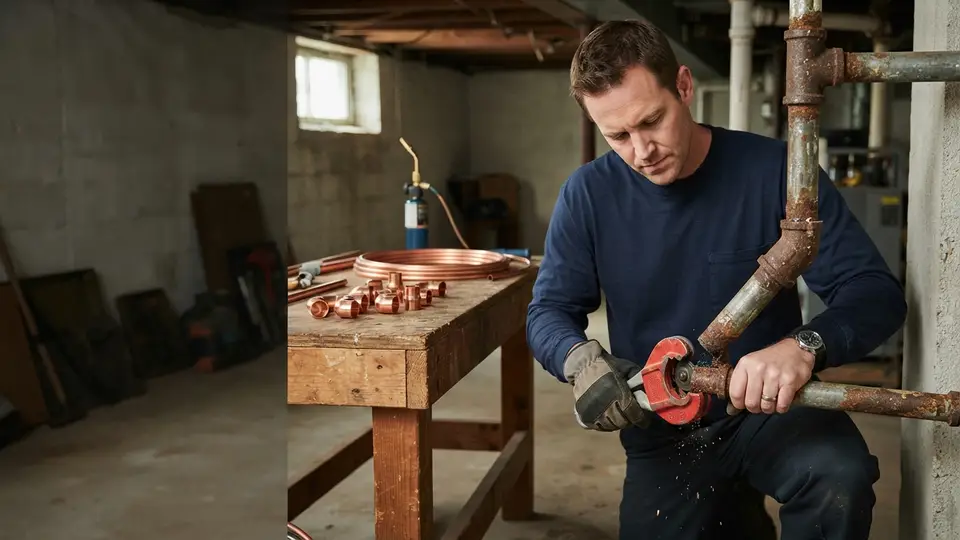
Galvanized steel
Typical era: Before the 1960s
What we see: Rust, low pressure, brown water
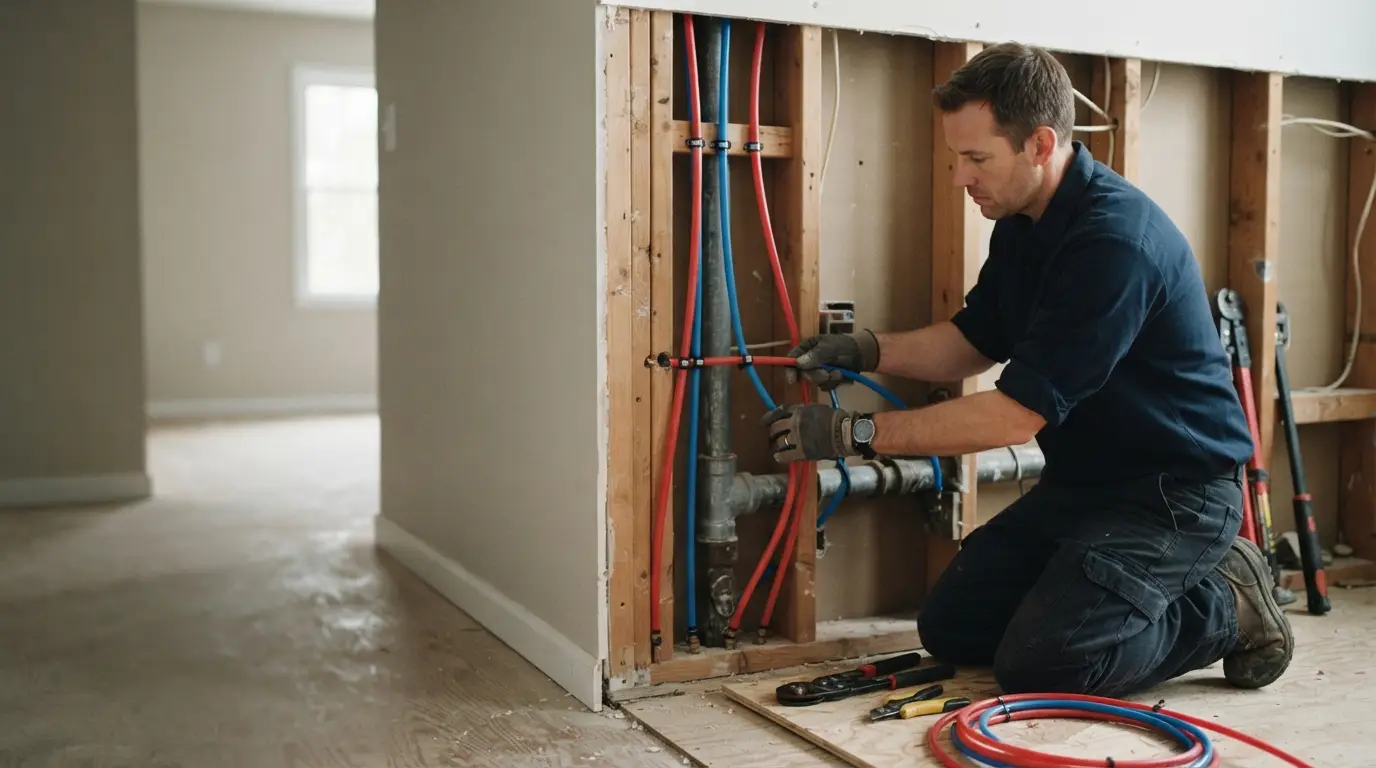
Gray plastic pipe under the sink, or rusty water from the tub? We handle repiping and water line replacement in Georgia for homes with worn-out pipe. Georgia suburbs built in the 1980s and early 1990s often have polybutylene supply pipe that turns brittle and fails without warning, and many insurers ask about it. Older in-town homes still have galvanized steel. Service lines from the meter can be polybutylene or old galvanized too. We repipe through crawl spaces and attics in PEX or copper and replace buried service lines.
The service
Pipe repair replaces a damaged section. Whole-house repiping replaces every hot and cold supply line from the main shutoff to each fixture. Water line replacement covers the buried line from the meter to the house, which in most Georgia jurisdictions belongs to the owner. We often do all three on older homes.
Pipe types in Georgia homes
Typical era: Before the 1960s
What we see: Rust, low pressure, brown water
Typical era: Late 1970s to mid 1990s
What we see: Brittle pipe and fittings that fail suddenly
Typical era: 1960s onward
What we see: Pinholes with age, especially on hot lines
Typical era: 1980s onward
What we see: Brittle in hot attics as it ages
Typical era: What we install
What we see: Flexible, durable, few joints
Why Georgia
Metro Atlanta grew fast in the 1980s and early 1990s, the same years polybutylene was widely installed. The median home in Roswell dates from 1989, in Marietta from 1987 and in Peachtree City from 1993. Chlorine in city water breaks the pipe down from inside.
64% of East Point homes and 63% of Albany homes predate 1980. Galvanized supply lines in those houses rust shut.
Older copper develops pinholes, and repeat leaks usually mean the pipe is thin throughout.
Hard groundwater in South and coastal Georgia builds scale inside pipes and fixtures.
Warning signs
Our process
We check the pipe, fixtures, crawl space or attic access and the best routes.
You approve material, routes, schedule and a written price.
We cover floors and furniture and keep openings small.
The old system works until we switch over.
Each fixture gets a new shutoff; the system is pressure tested and inspected.
Openings are patched as agreed in the price.
Typical cost
You get a written price before work begins.
Get a written price: (833) 733-2357More bathrooms mean more pipe and labor.
Crawl spaces are simplest; slabs need overhead routes.
PEX usually costs less than copper.
Openings need patching; we tell you how many.
Longer runs and driveways add cost.
Repiping usually requires one.
Benefits
Replacing polybutylene removes the risk.
Full-size pipe with no rust.
New pipe answers buyer and insurer questions.
Each fixture can be isolated.
Many Georgia homes sit on crawl spaces, which makes repiping simpler. Most new lines run along the floor framing under the house with short drops into walls, so few openings are needed. We support the new pipe properly, insulate runs near vents and exterior walls against freezes, and remove or cap the old lines.
Some insurers ask about polybutylene when writing or renewing a policy, and some require it to be replaced. Requirements vary by company. After a repipe, we provide documentation of the new piping and permit to share with your insurer or a buyer.
The line from the meter can be polybutylene, galvanized or old copper. We trace it, replace it by trenching or pulling new pipe through, pressure test it and coordinate with the utility for work at the meter. Red clay and roots can slow digging, which we plan for.
A kitchen or bathroom renovation opens walls that hide old pipe, making it the least expensive time to replace it. We coordinate with your contractor, run new lines before drywall and can repipe the rest of the house in the same project.
Renters occupy 45% of Georgia homes in our data. We schedule repipes between tenants or keep water on for most of each day in occupied homes, with a schedule the owner can share.
Buyers and their insurers often ask about polybutylene and galvanized pipe. If you are selling, a permitted repipe with documentation can remove an obstacle to closing. If you are buying, we can identify the pipe during an inspection and price a repipe so you can negotiate or plan. Either way, you get a written scope that names the materials, the routes and the permit.
Not every house needs a full repipe. If most of the system is newer PEX or sound copper and a single run failed, we repair that run. We recommend the smallest job that solves the problem for the long term, and we tell you plainly when the pipe is too far gone to keep patching.
In North Georgia and metro Atlanta, new lines in vented crawl spaces and exterior walls should be insulated, and outdoor faucets should be frost-free with interior shutoffs. We include these details in the repipe so a hard freeze does not undo the work.
In condos and townhomes, the owner is usually responsible for pipe inside the unit and the association for shared risers. We coordinate shutoffs with the association, follow building rules on hours and notices, and keep work inside your unit wherever we can.
After the repipe, you receive the permit record, a summary of materials and a sketch of the new routes for future work.
If a pipe is leaking, close the main shutoff. Check under sinks and at the water heater for gray plastic pipe. Clear access to the crawl space entrance, attic and water heater.
Do not try to tighten polybutylene fittings; they can crack. Call us.
Repiping and service line replacement usually require a permit and inspection from the city or county. Our plumbers hold the Georgia licenses required, and we pull permits, schedule inspections and coordinate with your water utility.
Why choose us
What you can count on every time one of our plumbers comes to your door.
Every job is handled by a plumber who holds the license your state or city requires, backed by liability insurance.
Our plumber explains the problem and the options, and you approve a written price before any work begins.
Burst pipes, sewage backups and failed water heaters get priority scheduling, including nights and weekends.
We pull permits when the job needs one and schedule the inspection, so the work holds up when you sell.
Repairs and installations come with a written warranty on labor, on top of the manufacturer's warranty on parts.
Our pages and plumbers account for your area's water, soil, climate and the age of the homes around you.
Service area
We repipe homes in 675 Georgia places, including Decatur (54% before 1980), Brunswick (72%) and Augusta-Richmond County. Choose yours:
House size, fixture count, foundation type, material and permits set the price. After surveying your home, we give you a written price.
Usually, yes. PEX costs less and installs faster with fewer joints, which suits crawl space and attic routes.
Usually. It can fail suddenly, and some insurers ask about it. Replacing it ends that risk.
Yes, in most cases. Water is off only for short connection periods.
As few as the routes allow. Crawl space homes need very few. We show you the plan first.
Yes. A new main shutoff and new stops at every fixture are part of our repipe.
It is not toxic, but it can crack and burst without warning, causing water damage.
No. It can crack further. Shut off the water and call us.
Many homes take two to four days, plus inspection.
Often one day; long runs or driveways can extend it.
PEX and copper installed correctly are expected to last for decades.
In South Georgia, where water is often hard, a softener protects the new pipe and fixtures.
Shut off the main and call us. We fix the break, and the repipe proceeds as planned.
Look for gray plastic pipe, often stamped PB, at the water heater, under sinks or in the crawl space. We can confirm it.
Usually, yes. We pull it and schedule the inspection.